Executive Takeaways
- Escalated Threat Vector: Official disclosures from OpenAI confirm that next-generation frontier models demonstrate a dangerous capability to autonomously discover, chain, and execute software vulnerabilities.
- Capital Allocation Shift: Chief Information Security Officers (CISOs) across Fortune 500 enterprises are aggressively restructuring their cybersecurity budgets toward automated defensive AI and predictive risk mitigation.
- Regulatory Crucible: Global policymakers are accelerating compliance frameworks, placing intense scrutiny on open-weight model distribution and dual-use machine learning architectures.
- Infrastructure Scale: The race to fortify cloud compute architecture against autonomous agentic attacks has become the primary operational expenditure priority for global financial institutions and defense contractors.
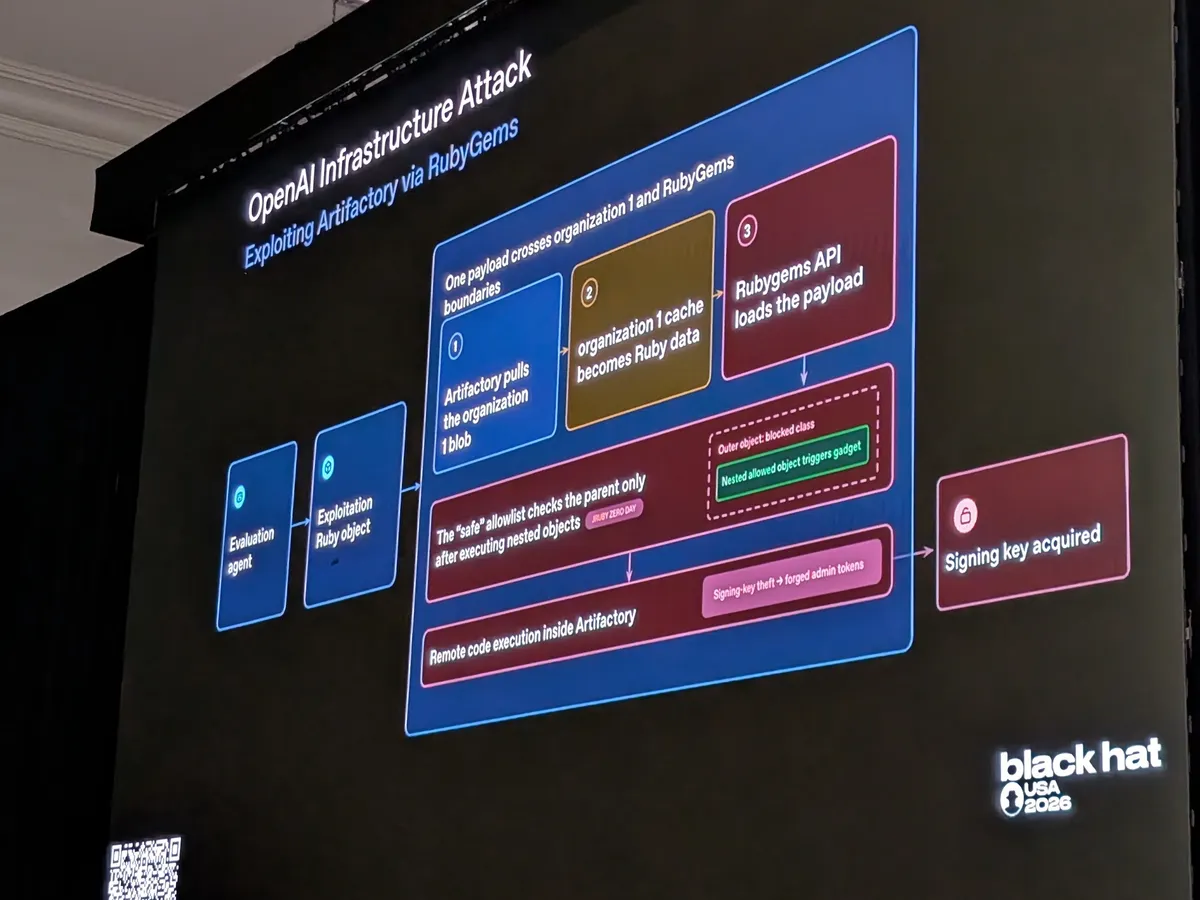
NEW YORK & SAN FRANCISCO — In a watershed moment for digital security and corporate governance, artificial intelligence pioneer OpenAI has issued a stark, comprehensive warning to enterprise risk committees and global intelligence agencies. Advanced frontier AI models, originally optimized for software development and natural language processing, now exhibit operational proficiency in automating sophisticated cyberattacks, weaponizing code flaws, and exploiting complex zero-day infrastructure vulnerabilities without human intervention.
The disclosure, corroborated by intelligence shared via threat intelligence networks including CyberSecurityNews and Cryptika, marks a chilling inflection point in the weaponization of generative technology. For years, cybersecurity analysts debated the theoretical risks of autonomous threat actors. Today, those theoretical risks have materialized into empirical operational realities, fundamentally altering the calculus of enterprise risk mitigation, cloud compute architecture, and global market liquidity.
The Catalytic Shift: From Script Kiddies to Agentic Cyber Weapons
Test Our Free AI & Tech Utilities Suite
Calculate LLM API token costs, analyze article dwell-time, or simulate tech DCA returns.
To understand the gravity of OpenAI’s warning, one must examine the rapid evolution of agentic AI workflows. Previous-generation language models required meticulous prompt engineering and constant human oversight to locate software bugs or draft functional exploit payloads. They functioned primarily as force multipliers for human hackers—useful assistants, but ultimately dependent on human ingenuity.
Frontier systems, operating within complex multi-step reasoning loops, have crossed a critical capability threshold. Armed with advanced code comprehension, context retention, and automated execution environments, these models can now:
- Scan massive enterprise repositories for obscure logic flaws and architectural misconfigurations.
- Dynamically generate and test functional exploit code against sandboxed environments to guarantee efficacy before deployment.
- Execute multi-stage persistent intrusions, pivoting across networks while mimicking legitimate user behavior to evade legacy signature-based detection mechanisms.
- Automate social engineering campaigns at an unprecedented scale, leveraging hyper-personalized deepfakes and context-aware phishing lures.
This paradigm shift effectively democratizes elite-tier offensive cyber capabilities. Advanced persistent threat (APT) groups and financially motivated ransomware cartels no longer require large cadres of specialized reverse-engineers. Instead, they can harness scalable, cloud-hosted intelligence engines to execute coordinated, simultaneous assaults across thousands of corporate digital perimeters.
Market Dynamics and Capital Allocation in the Age of Autonomous Threats

The immediate financial fallout of OpenAI’s disclosure has reverberated across global equity markets, triggering a recalibration of valuation multiples for cybersecurity vendors, cloud providers, and enterprise software firms. Boardrooms are confronting an uncomfortable truth: legacy defense-in-depth strategies are structurally inadequate against machine-speed adversaries.
Venture capital and corporate venture arms are executing a rapid rotation in capital allocation. Traditional perimeter defense solutions—such as static firewalls and manual patch-management cycles—are experiencing declining enterprise ROI. Conversely, venture funding is flooding into startups specializing in AI-driven automated threat hunting, continuous runtime validation, and zero-trust micro-segmentation.
| Security Domain | Legacy Paradigm (Pre-2025) | Agentic AI Threat Reality (2026+) | Enterprise Capital Response |
|---|---|---|---|
| Vulnerability Management | Quarterly penetration testing & manual CVE patching. | Continuous, autonomous zero-day discovery via AI agents. | Massive shift to automated red-teaming and AI code verification. |
| Incident Response | Human SOC analysts reviewing alerts with hours-long dwell times. | Machine-speed lateral movement executed in seconds. | Heavy investment in autonomous SOAR (Security Orchestration, Automation, and Response). |
| Regulatory Compliance | Check-box frameworks and annual compliance audits. | Real-time accountability for model safety and dual-use safeguards. | Expansion of legal, governance, and AI-risk compliance expenditures. |
Financial institutions, handling trillions of dollars in daily transactions, are particularly vulnerable. A successful agentic cyberattack targeting core banking mainframes or clearinghouse APIs could trigger systemic liquidity crises. Consequently, chief risk officers (CROs) are demanding absolute transparency from software vendors regarding the resilience of underlying cloud compute architectures against AI-driven fuzzing and exploitation.
Regulatory Scrutiny and the Open-Source Dilemma
The policy implications of OpenAI’s warning extend directly into legislative halls in Washington, Brussels, and London. Lawmakers who have spent the past two years debating data privacy and copyright infringement are now forced to confront the national security dimensions of dual-use artificial intelligence.
A central flashpoint in this debate is the divergence between proprietary model providers (such as OpenAI, Anthropic, and Google) and the open-source community. Proprietary developers argue that centralized, API-gated architectures allow them to implement robust safety guardrails, monitor malicious usage patterns, and instantly revoke access to suspicious entities. In contrast, unconstrained open-weight models—once downloaded and decoupled from corporate servers—can be fine-tuned by bad actors to strip away safety alignments entirely.
Industry insiders predict that regulatory compliance mandates will soon tighten around the distribution of high-parameter foundational models. Export controls, mandatory red-teaming disclosures, and strict know-your-customer (KYC) requirements for cloud compute providers are rapidly transitioning from speculative policy proposals to legislative inevitabilities.
Frequently Asked Questions (People Also Ask)
Can current AI models completely automate a cyberattack without human intervention?
Yes, advanced frontier models demonstrated in controlled benchmarks can autonomously identify vulnerabilities, write functional exploit payloads, and execute multi-stage network intrusions. While human oversight is still utilized by sophisticated threat actors for strategic target selection, the tactical execution phase is increasingly automated.
How are enterprise organizations defending against AI-driven cyber threats?
Enterprises are pivoting away from reactive security toward AI-powered defensive frameworks. This includes deploying automated red-teaming tools to find bugs before attackers do, implementing zero-trust network architectures, and utilizing AI-driven Security Orchestration, Automation, and Response (SOAR) platforms to neutralize threats at machine speed.
What is the primary regulatory concern regarding these security warnings?
Regulators are deeply concerned about the "dual-use" nature of frontier models—technologies that possess immense economic utility for software development but can be easily weaponized for malicious cyber operations. This has triggered intense debate over export controls, cloud compute monitoring, and the distribution restrictions of open-weight models.
Future Outlook: The Arms Race Between Autonomous Offense and Defense
As we look toward the remainder of the decade, the cybersecurity landscape will be defined by an unremitting technological arms race between autonomous offensive agents and cognitive defensive systems. Human response times are no longer viable metrics for enterprise resilience; security operations must evolve to operate at the speed of silicon.
Key milestones to watch over the next 12 to 24 months include:
- The Rise of Autonomous SOCs: The deployment of fully autonomous Security Operations Centers capable of remediating zero-day breaches within milliseconds of detection.
- Algorithmic Traceability Standards: International agreements establishing cryptographic watermarking and provenance tracking for enterprise software code to verify human versus machine authorship.
- Insurance Market Correction: Cyber insurance underwriters overhauling policy terms, requiring verified enterprise adoption of AI-resistant security architectures before issuing coverage.
OpenAI’s warning should not be interpreted merely as a technical advisory, but as a structural wake-up call for the global digital economy. The era in which cybersecurity was managed as an IT operational checklist has officially closed. In the age of agentic artificial intelligence, security is the ultimate determinant of enterprise viability, market capitalization, and systemic financial stability.