Beyond Pluto: Inside the Vera C. Rubin Observatory's Landmark Discovery of a New Solar System Dwarf Planet
Test Our Free AI & Tech Utilities Suite
Calculate LLM API token costs, analyze article dwell-time, or simulate tech DCA returns.
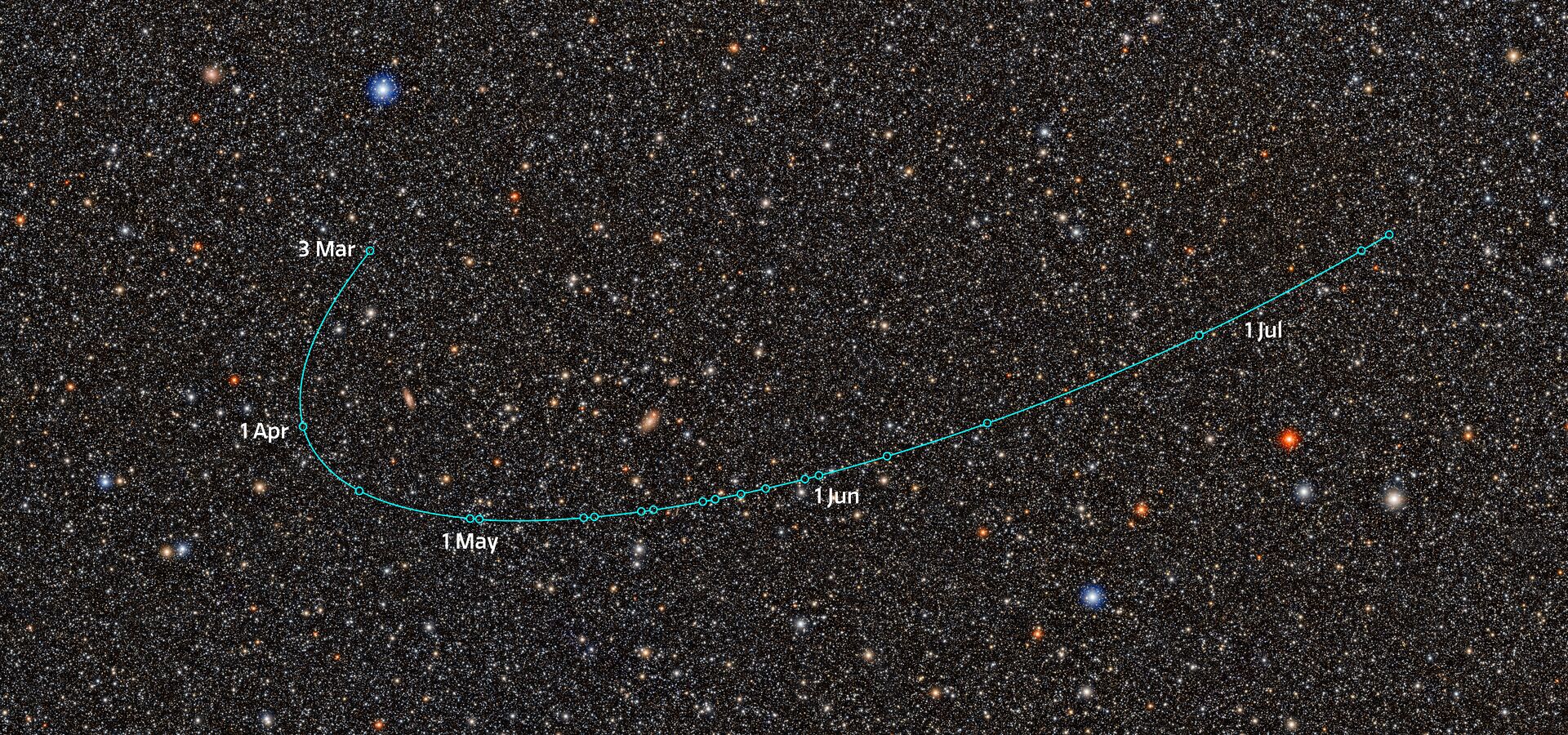
WASHINGTON & TUCSON — In a milestone announcement shaking the foundations of modern planetary astronomy, the joint National Science Foundation (NSF) and Department of Energy (DOE) Vera C. Rubin Observatory has officially revealed its first confirmed dwarf planet candidate residing deep within our solar system. Orbiting the Sun far beyond the orbit of Pluto, this newly identified celestial body represents the vanguard of an anticipated data deluge enabled by next-generation astronomical infrastructure.
For institutional astrophysicists, aerospace stakeholders, and high-performance computing architects, this discovery serves as the initial stress test for an unprecedented technological ecosystem. Designed to map the southern sky with unprecedented depth using a revolutionary 3.2-gigapixel digital camera, the Rubin Observatory is not merely hunting for distant rocks; it is stress-testing the absolute limits of automated cloud compute architecture, data pipelines, and algorithmic pattern recognition.
Executive Takeaways
- Pioneering Detection: The NSF–DOE Vera C. Rubin Observatory has cataloged its inaugural dwarf planet candidate, situated in the extreme outer reaches of the solar system past Pluto.
- Infrastructure Scale: The discovery validates the observatory’s petabyte-scale data processing pipeline, signaling a massive leap forward in automated astronomical survey capabilities.
- Economic and Scientific Catalysts: The find triggers heightened capital allocation toward astronomical instrumentation, enterprise cloud compute contracts, and advanced risk mitigation protocols for space-based assets.
- Paradigm Shift in Deep-Space Cartography: Researchers anticipate thousands of similar trans-Neptunian objects (TNOs) to emerge as the Legacy Survey of Space and Time (LSST) ramps up full-scale commercial and scientific operations.
The Catalytic Event: Mapping the Invisible Edge
For decades, mapping the outer solar system has been constrained by the limitations of conventional telescopes, which struggle to detect small, distant, and low-albedo bodies against the dense backdrop of the Milky Way. The discovery of this dwarf planet candidate breaks through those traditional barriers. Operating from the Cerro Pachón ridge in Chile, the Rubin Observatory leverages its massive 8.4-meter Simonyi Survey Telescope paired with the world’s largest digital camera built for optical astronomy.
The candidate object, whose orbital parameters place it well beyond the Kuiper Cliff in a remote sector of trans-Neptunian space, was flagged by automated algorithms designed to sift through nightly torrents of high-resolution image data. This capability transforms astronomical discovery from a painstaking manual process into an automated, data-driven science. By capturing repeated deep exposures of the sky every few nights, the system tracks moving objects against fixed stars with extreme precision, optimizing enterprise ROI on a multi-hundred-million-dollar federal infrastructure investment.
From a technical standpoint, the identification underscores the maturity of the observatory's data processing pipeline. Managing the sheer volume of telemetry requires robust cloud compute architecture and sophisticated machine learning models to eliminate false positives caused by cosmic ray hits, satellite streaks, and instrumental noise. The successful isolation of this dwarf planet candidate confirms that the hardware and software stack can handle the monumental demands of the 10-year Legacy Survey of Space and Time (LSST).
Verified Data and Metrics Breakdown
| Parameter / Metric | Observational Specification | Strategic & Scientific Significance |
|---|---|---|
| Facility Oversight | NSF & DOE (Vera C. Rubin Observatory) | Exemplifies successful inter-agency capital allocation and public-private research partnerships. |
| Orbital Zone | Trans-Neptunian Space (Beyond Pluto) | Validates theoretical models regarding the primordial formation and gravitational architecture of the outer solar system. |
| Instrument Core | 3.2-Gigapixel Optical Camera | Sets a new benchmark in optical engineering and high-throughput imaging resolution. |
| Data Throughput | Approx. 20 Terabytes per Night | Demands cutting-edge cloud compute infrastructure and scalable algorithmic risk mitigation. |
Industry and Market Implications
While framed primarily as a triumph for planetary science, the announcement carries profound implications across multiple commercial and industrial sectors. The instrumentation, optics, and data-handling protocols developed for the Rubin Observatory serve as a living laboratory for high-tech manufacturing and enterprise software development.
Optical and Aerospace Manufacturing: Companies specializing in extreme-tolerance optics, specialized silicon sensors, and cryogenic cooling systems stand to benefit. As governments and private entities ramp up investment in space situational awareness (SSA) and planetary defense, the manufacturing standards pioneered by the Rubin project will dictate valuation multiples and procurement guidelines across the defense and aerospace supply chain.
Big Data and Cloud Infrastructure: Processing tens of terabytes of raw astronomical data nightly requires high-performance computing (HPC) frameworks that mirror the demands of enterprise artificial intelligence and financial high-frequency trading networks. Cloud service providers and data analytics firms partnering with academic institutions are finding that astronomical pipelines offer an ideal stress test for automated anomaly detection and distributed database scalability.
Regulatory Compliance and Risk Mitigation: Although this specific candidate orbits safely in the outer solar system, the algorithms tracking it are identical to those utilized for Near-Earth Object (NEO) surveillance. Enhanced discovery capabilities translate directly into superior risk mitigation for commercial satellite constellations and orbital infrastructure, protecting multi-billion-dollar space assets from unforeseen collision hazards.
Frequently Asked Questions (People Also Ask)
What makes this dwarf planet candidate unique compared to previous discoveries?
Unlike historical discoveries made through targeted, sporadic observations by single telescopes, this candidate was unmasked by an automated, high-throughput survey system designed to image the entire southern sky every few nights. Its identification proves that the Rubin Observatory's software pipeline can successfully detect faint, slow-moving bodies in the extreme outer solar system amidst a background of billions of stars.
Where exactly is the candidate located relative to Pluto?
The newly revealed object orbits our Sun well beyond the orbit of Pluto, deep within the trans-Neptunian region. This zone houses primordial debris left over from the formation of the solar system, making such objects pristine chemical and dynamical time capsules for planetary scientists.
How does the Rubin Observatory process such massive amounts of data?
The observatory generates roughly 20 terabytes of imaging data every single night. To manage this influx, the facility relies on automated event-alert pipelines and advanced cloud computing architectures. These systems ingest the raw images, subtract reference frames to isolate moving or changing objects, and issue public alerts within 60 seconds of observation.
Will this discovery lead to the identification of more distant bodies?
Yes. Astronomers anticipate that as the Legacy Survey of Space and Time (LSST) continues its multi-year campaign, thousands of new trans-Neptunian objects, Centaurs, and potentially elusive Planet Nine candidates will be cataloged, fundamentally reshaping our cartographic understanding of the solar system's outer boundaries.
Future Outlook and Strategic Milestones
As the Vera C. Rubin Observatory moves deeper into its commissioning and full survey phases, the discovery of this dwarf planet candidate marks a critical inflection point. The primary objective moving forward is the seamless scaling of the LSST data management system to ensure zero latency in anomaly detection and cataloging.
For investors, policymakers, and the scientific community, the upcoming milestones to watch include the public release of the first official data preview catalogs, the integration of machine learning enhancements into the automated alert system, and secondary follow-up observations by space-based assets like the James Webb Space Telescope (JWST) to characterize the surface composition and precise dimensions of this new outer-solar-system resident.
Ultimately, the Rubin Observatory is redefining the boundaries of human knowledge. By turning the night sky into a searchable, time-lapse database, it ensures that discoveries of this magnitude will transition from once-in-a-generation milestones to routine, systematic revelations about our place in the cosmos.