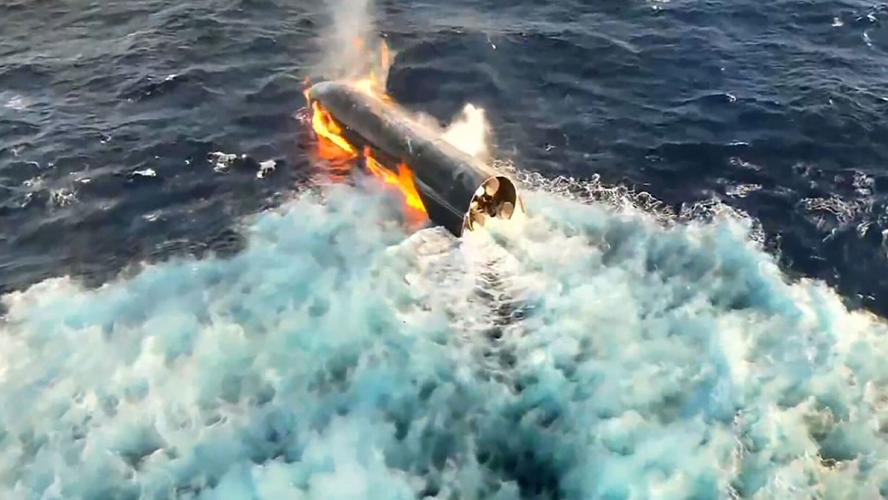
SpaceX’s High-Stakes Indian Ocean Hunt: Satellite Imagery Reveals Race to Recover 170-Foot Starship
WASHINGTON & MUMBAI — High-resolution commercial satellite imagery has captured a high-stakes maritime recovery operation unfolding in the remote expanses of the Indian Ocean, where recovery vessels are scrambling to secure the remains of a monumental piece of aerospace hardware. At the center of the operation is a 170-foot segment of a SpaceX Starship vehicle, a crucial artifact in Elon Musk’s aggressive push to build a fully reusable interplanetary transportation system.
The operation, brought to light by detailed orbital reconnaissance and confirmed by tracking data, underscores the intense pressure facing SpaceX engineers. Every flight test of the world's most powerful rocket serves as a massive data-gathering exercise. Securing the physical hardware—particularly components like Ship 40's advanced heat shield—allows engineers to perform forensic analysis that telemetry alone simply cannot provide.
The Anatomy of a High-Risk Flight Test
The journey of the recovered 170-foot structure was anything but routine. During a recent ambitious flight test, SpaceX’s visionary CEO Elon Musk and his engineering teams had set a series of aggressive operational milestones. Among the primary objectives was a scheduled demonstration of the Starship’s payload bay capability: releasing a series of mock satellites into a simulated orbit shortly after liftoff.
However, mission parameters hit a significant roadblock mid-flight. The intended deployment sequence was abruptly nixed after the vehicle's specialized payload door failed to open as programmed. Despite the mechanical anomaly, the massive vehicle continued along its planned trajectory, ultimately executing a controlled descent toward its designated splashdown zone in the Indian Ocean.
- The Hardware: A 170-foot segment of the SpaceX Starship vehicle.
- The Target: Ship 40's critical heat shield tiles and structural integrity.
- The Location: Deep-water recovery zone in the Indian Ocean.
- The Complication: A payload door malfunction scrubbed planned satellite deployment tests.
For SpaceX, anomalies during developmental flight tests are treated as expected milestones rather than failures. The company operates on a rapid-iteration philosophy, building, testing, launching, and crashing rockets to gather real-world data at an unprecedented pace. Yet, recovering the physical debris is the gold standard of aerospace validation, offering tangible proof of how materials behave under extreme thermal and aerodynamic stress.
Decoding the Heat Shield: Why Recovery Matters

At the heart of the Indian Ocean recovery race is Ship 40’s heat shield. As Starship attempts to pioneer rapid reusability for orbital-class vehicles, surviving the blistering heat of atmospheric re-entry is the single greatest engineering hurdle. Millions of stainless steel and ceramic thermal protection tiles are designed to insulate the vehicle as it plows through the upper atmosphere at hypersonic speeds.
| Mission Parameter | SpaceX Starship Objective | Observed Outcome |
|---|---|---|
| Payload Operations | Deploy a series of mock satellites post-liftoff | Nixed due to payload door mechanical failure |
| Structural Integrity | Test 170-foot vehicle limits during descent | Achieved controlled splashdown in Indian Ocean |
| Thermal Protection | Validate Ship 40 heat shield durability | Subject of current high-priority maritime recovery |
By analyzing the recovered tiles and structural joints, SpaceX materials scientists can determine precisely where thermal loads exceeded expectations and which bonding agents held firm. This empirical data feeds directly into the manufacturing lines at Starbase in Boca Chica, Texas, shaping the design of subsequent iterations currently awaiting launch authorization.
The Global Race for Commercial Space Dominance
The stakes for Starship's success extend far beyond corporate milestones. NASA has staked a significant portion of its Artemis lunar exploration program on a modified version of the Starship, designated as the Human Landing System (HLS), which aims to return American astronauts to the surface of the Moon. Furthermore, Musk envisions fleets of Starships eventually carrying cargo and crew to Mars, laying the groundwork for a multiplanetary civilization.
As commercial space race pressures intensify, international maritime spotters and aerospace analysts are closely monitoring the movements of SpaceX’s contracted recovery vessels in the Indian Ocean. The ability to routinely land, recover, and inspect orbital-class hardware will define the economic viability of the entire enterprise.
While the payload door malfunction serves as a reminder of the immense complexity involved in orbital rocketry, the sheer speed at which SpaceX mobilizes recovery operations demonstrates an unyielding commitment to data-driven progress. Whether the recovered 170-foot structural segment reveals flawless thermal performance or unexpected wear, the insights gleaned from the Indian Ocean will undoubtedly dictate the trajectory of humanity's most ambitious rocket program.
Frequently Asked Questions
What is the significance of the 170-foot Starship segment in the Indian Ocean?
The 170-foot structure provides critical physical evidence, particularly regarding the performance of Ship 40's heat shield. Recovering the hardware allows SpaceX engineers to perform forensic analysis on thermal protection tiles and structural joints after atmospheric re-entry.
Why was the planned satellite deployment canceled during the flight?
The test sequence to release a series of mock satellites following liftoff was nixed because the vehicle's specialized payload door failed to open properly during flight.