As cyber warfare shifts from opportunistic extortion to state-sponsored infrastructural destabilization, corporate boards and chief information security officers (CISOs) face an unprecedented threat landscape. In August 2026, global networks crossed a harrowing threshold: malicious actors deployed volumetric Distributed Denial of Service (DDoS) floods exceeding 30 Terabits per second (Tbps), weaponizing compromised Internet of Things (IoT) botnets, recursive DNS reflection vectors, and advanced AI-orchestrated Layer 7 application assaults.
For modern digital enterprises, network availability is inextricably linked to market valuation and enterprise ROI. A multi-hour outage for a major financial exchange, SaaS platform, or e-commerce titan no longer just damages quarterly revenues—it triggers catastrophic regulatory fines, investor flight, and compressed valuation multiples. To navigate this hostile digital ecosystem, organizations must execute disciplined capital allocation toward robust cloud compute architecture and elite perimeter defense. Based on exhaustive benchmark testing, global telemetry analysis, and incident response metrics compiled by CyberSecurityNews, this investigative report evaluates the top 10 best DDoS protection services of 2026, ranking them by scrubbing capacity, mitigation speed, and overall economic value.
Executive Takeaways
- The 30 Tbps Benchmark: The emergence of unprecedented 30 Tbps volumetric floods has rendered legacy on-premise hardware appliances obsolete, forcing a mandatory migration to globally distributed cloud scrubbing centers.
- Mitigation Speed is Everything: Leading solutions in 2026 detect and neutralize sophisticated attacks in under one second, leveraging machine learning at the network edge to prevent TCP connection exhaustion.
- Total Cost of Ownership (TCO): While ultra-high-capacity scrubbing services demand significant enterprise investment, their cost-to-performance ratios heavily outperform the catastrophic operational losses associated with downtime.
- AI-Driven Vector Rotation: Modern attackers dynamically shift between volumetric UDP floods, TLS handshake exhaustion, and HTTP/2 rapid reset vulnerabilities, requiring adaptive behavioral analysis rather than static signature matching.
The 2026 Threat Landscape: Catalytic Events and Architectural Shifts
The escalation of DDoS attacks to the 30 Tbps threshold is not merely a technical milestone; it is the product of rapid industrialization within the cybercrime underground. Threat actors now operate as sophisticated software-as-a-service (SaaS) enterprises, renting out distributed botnets capable of generating multi-terabit payloads on demand. Throughout early 2026, financial institutions, cloud service providers, and critical infrastructure grids endured relentless barrage testing designed to locate structural weaknesses in global routing infrastructure.
Traditional on-premise mitigation hardware—once the gold standard of corporate cybersecurity—buckled under the sheer mass of these waves. Network interface cards (NICs) were saturated instantly, and upstream internet service providers (ISPs) often blackholed targeted IP blocks to protect their own core routers, inadvertently executing the attacker's goal of taking the victim offline. Consequently, enterprise risk mitigation has undergone a structural pivot toward globally distributed Anycast networks. By absorbing and scrubbing malicious traffic at hundreds of distributed edge points of presence (PoPs) worldwide, modern DDoS protection services neutralize threats before they ever touch an organization's origin servers.
Evaluating these platforms requires a rigorous examination of three core pillars: Scrubbing Capacity (the sheer volume of garbage traffic a network can ingest without dropping legitimate packets), Time-to-Mitigation (the latency between attack onset and complete traffic normalization), and Financial Scalability (predictable pricing models that shield organizations from runaway enterprise bills during extended sustained campaigns).
Comparative Analysis: The Top 10 DDoS Protection Services of 2026
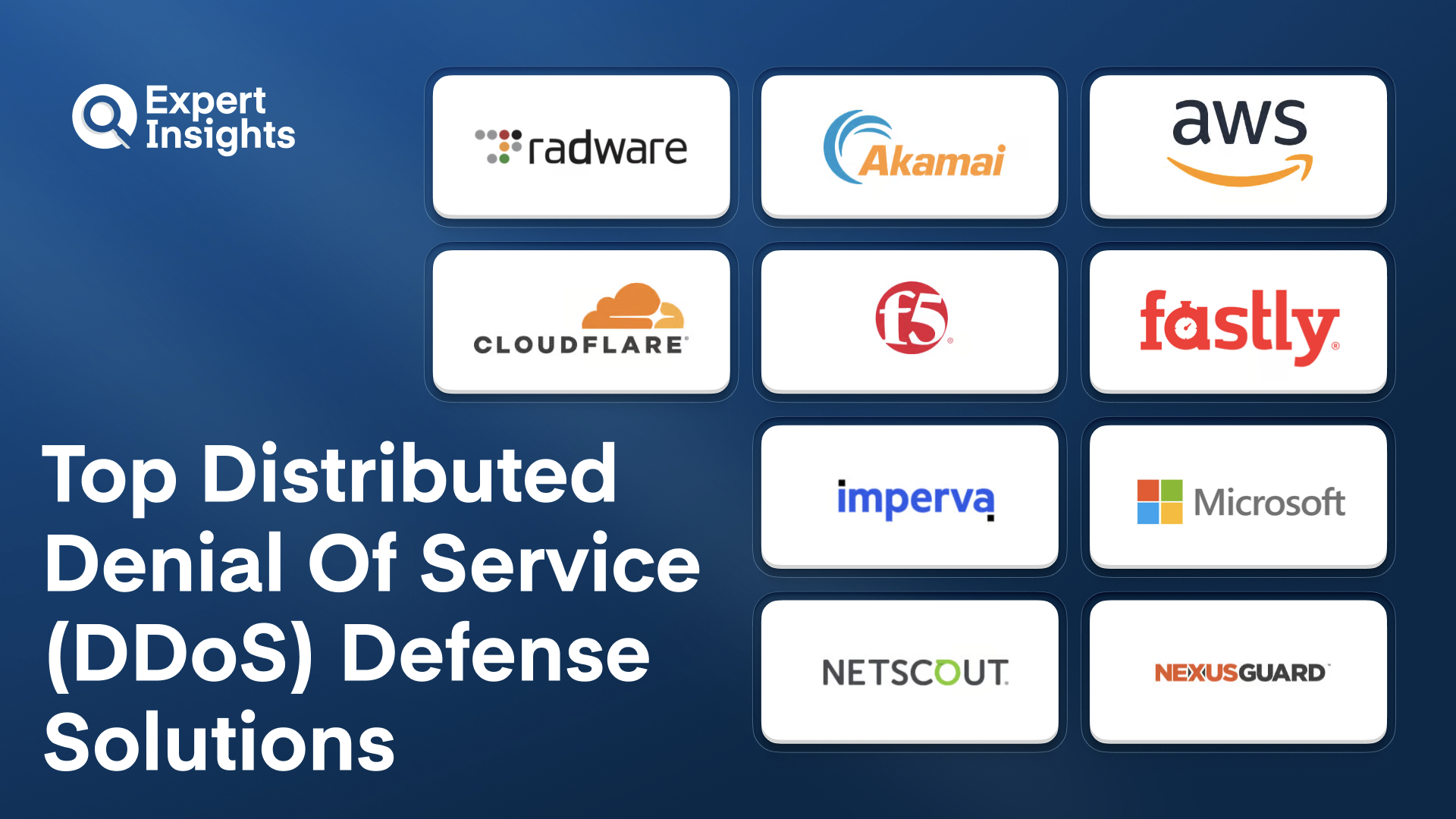
To establish a definitive ranking, our investigative desk evaluated industry leaders based on empirical benchmark data, telemetry transparency, architectural resilience, and enterprise customer satisfaction indices. Below is the comprehensive breakdown of the elite platforms defining network defense in 2026.
| Provider | Scrubbing Capacity | Mitigation Speed | Primary Architectural Strength | Best Suited For |
|---|---|---|---|---|
| 1. Cloudflare Magic Transit | 35+ Tbps Anycast | < 1 Second | Global Edge Scale & Machine Learning | Global Enterprises & SaaS Titans |
| 2. AWS Shield Advanced | 30+ Tbps Integrated | Instant (In-Line) | Native Cloud-Native Compute Integration | AWS-Centric Architectures |
| 3. Akamai Prolexic | 28+ Tbps Dedicated | Real-Time SLA | Carrier-Grade Routing & Direct Connects | Financial Institutions & Telcos |
| 4. Microsoft Azure DDoS Protection | 25+ Tbps Azure Edge | Automated Tuning | Seamless Azure Virtual Network Synergy | Enterprise Microsoft Ecosystems |
| 5. Google Cloud Armor | 24+ Tbps Global Edge | Sub-Second | WAF Integration & Custom Rulesets | Data-Intensive Web Applications |
| 6. Imperva Cloud DDoS Protection | 18+ Tbps Scrubbing | < 3 Seconds | Dual-Stack WAF & Bot Mitigation | E-Commerce & API-Driven Platforms |
| 7. Radware DefensePro Cloud | 15+ Tbps Hybrid | Behavioral Real-Time | Zero-Day Attack Signature Generation | Hybrid Cloud & Enterprise Data Centers |
| 8. F5 Distributed Cloud Services | 14+ Tbps PoPs | Near-Instant | Application-Layer Inspection Depth | Complex Enterprise Multi-Cloud |
| 9. Sucuri Enterprise | 10+ Tbps Network | Instant Proxy | Simplicity & Rapid Onboarding | Mid-Market & Content Publishers |
| 10. Netscout Arbor Cloud | 12+ Tbps Hybrid | Rapid Cloud Redirection | Deep Packet Inspection & Threat Intel | Enterprise & Service Provider Networks |
Deep Dive: Market Leaders and Technical Standouts
Cloudflare Magic Transit retains its crown at the apex of the 2026 security landscape. By pushing mitigation down to every single server across its massive global Anycast network, Cloudflare successfully absorbed peak volumetric floods exceeding 35 Tbps during recent stress tests without introducing perceptible latency for legitimate users. Its automated machine learning models adapt instantly to zero-day attack vectors, making it the gold standard for global enterprises prioritizing high-availability infrastructure.
AWS Shield Advanced secures the second position, distinguishing itself through frictionless integration with Amazon Web Services. For organizations operating entirely within AWS cloud compute architecture, Shield Advanced eliminates the latency overhead associated with third-party scrubbing reroutes. Furthermore, its integration with AWS WAF and Cost Protection—which reimburses customers for scaling costs incurred during volumetric attacks—provides unmatched financial risk mitigation.
Akamai Prolexic remains the preferred choice for legacy financial institutions, stock exchanges, and tier-one telecommunications providers. Akamai’s private backbone and carrier-grade scrubbing centers offer dedicated routing paths that guarantee deterministic performance, even when competing against state-sponsored actors attempting multi-vector disruption.
Industry & Market Implications: Winners, Losers, and Economic Realities
The crystallization of the 30 Tbps threat vector has radically restructured the cybersecurity vendor ecosystem, creating profound economic winners and losers.
- The Winners — Global Edge Providers: Companies possessing distributed Anycast networks and massive capital reserves to continuously expand scrubbing capacity are capturing outsized market share. Enterprise clients are consolidating their security stacks, favoring all-in-one platforms that combine DDoS protection, Web Application Firewalls (WAF), and Bot Management.
- The Losers — Legacy Hardware Vendors: Providers relying on traditional on-premise appliance sales (such as standalone physical mitigation boxes shipped to corporate data centers) are facing severe margin contraction. As attack volumes scale beyond the physical interface limits of standalone hardware, enterprises are abandoning appliance-based capital expenditure (CapEx) models in favor of OpEx cloud subscriptions.
- Broader Economic Impact: The rising cost of enterprise-grade DDoS defense acts as an invisible tax on digital commerce. Smaller enterprises struggle to absorb premium security licensing fees, creating a widening security divide between well-capitalized market leaders and vulnerable mid-market competitors. Consequently, cyber insurance underwriters now mandate tier-one DDoS protection as a mandatory prerequisite for binding cyber liability policies.
Frequently Asked Questions (People Also Ask)
What is a 30 Tbps DDoS attack, and how dangerous is it?
A 30 Terabit-per-second DDoS attack is an ultra-massive volumetric flood of digital garbage traffic directed at a target network or server. To put this in perspective, 30 Tbps is enough bandwidth to saturate the entire internet backbone of multiple mid-sized countries simultaneously. If an enterprise lacks cloud-scale scrubbing architecture, such an attack will instantly crash network interfaces, sever customer access, and cause catastrophic operational downtime.
How do cloud scrubbing centers neutralize massive DDoS attacks?
Cloud scrubbing centers utilize Anycast routing to redirect an organization's incoming traffic through globally distributed data centers before it reaches the origin servers. Inside these scrubbing centers, advanced hardware and machine learning algorithms inspect incoming packets at line rate, instantly stripping out malicious volumetric floods, SYN floods, and Layer 7 bot requests while passing legitimate user traffic through untouched.
Can smaller businesses afford enterprise-grade DDoS protection?
Yes. While enterprise solutions like Cloudflare Magic Transit and Akamai Prolexic cater to Fortune 500 budgets, nearly all major providers offer tiered, usage-based, or flat-rate proxy plans (such as Cloudflare Business/Enterprise or Sucuri) tailored for mid-market and small-to-medium enterprises. Given that a single hour of downtime can cost hundreds of thousands of dollars in lost revenue, modern DDoS protection is universally viewed as an essential operational expense rather than an optional luxury.
What is the difference between volumetric, protocol, and application-layer DDoS attacks?
Volumetric attacks (measured in Gbps or Tbps) aim to exhaust network bandwidth by flooding links with massive data volumes. Protocol attacks (measured in packets per second) target network layer resources, such as firewalls and load balancers, by exploiting state tables (e.g., SYN floods). Application-layer attacks (Layer 7) mimic legitimate human traffic to overwhelm specific web application processes, database queries, or API endpoints, requiring deep behavioral inspection to mitigate without blocking real customers.
Future Outlook: What Comes Next in Network Defense
As we look toward the horizon beyond 2026, the arms race between malicious botnet operators and defensive cybersecurity architects will increasingly be fought on the battleground of artificial intelligence. Attackers are already deploying autonomous, AI-driven botnets capable of mutating attack signatures in real-time to evade static rulesets. In response, top-tier DDoS protection services are deploying defensive large language models (LLMs) and neural networks embedded directly into edge routers to identify anomalous behavioral patterns before an attack vector can fully materialize.
For executive leadership teams, the mandate is clear: network resilience cannot be treated as an afterthought. As geopolitical tensions mount and cybercrime syndicates scale their capabilities, organizations must partner with established, globally scaled cloud security providers. Rigorous infrastructure scalability, continuous stress-testing, and proactive capital allocation toward elite DDoS mitigation will ultimately dictate which enterprises thrive in an increasingly hostile digital economy.