Executive Takeaways
- Strategic Pivot: OpenAI has initiated a coordinated public relations and community-engagement campaign to counter local resistance against massive AI data center developments.
- Grid Pressures & Capital Allocation: Rapid cloud compute architecture expansion has triggered friction over local water usage, electrical grid reliability, and municipal zoning regulations.
- Valuation & Risk Mitigation: As enterprise ROI expectations soar, securing long-term infrastructure scalability without regulatory roadblocks has become existential for maintaining private valuation multiples.
- The Grassroots Playbook: The initiative deploys town halls, targeted digital advertising, and economic impact studies to convince voters that server farms translate to local tax windfalls rather than environmental burdens.
The Geopolitical and Economic Stakes of Generative Infrastructure
For the past three years, the narrative surrounding artificial intelligence has been dominated by algorithmic breakthroughs, parametric scaling laws, and astronomical venture capital inflows. However, as the industry transitions from theoretical model training to heavy enterprise deployment, the physical footprint of generative AI has collided with suburban zoning boards, state utility commissions, and anxious voters. At the epicenter of this friction is OpenAI, which has quietly—and now aggressively—rolled out a comprehensive charm offensive designed to neutralize grassroots opposition to the sprawling data centers required to sustain its next-generation models.
The operational reality behind large language models (LLMs) like GPT-4 and its successors is intensely resource-dependent. Cloud compute architecture requires unprecedented concentrations of capital allocation, drawing megawatts of continuous power and millions of gallons of cooling water. For enterprise investors and tech executives, the bottleneck to achieving sustainable enterprise ROI is no longer purely algorithmic; it is logistical and political. If local electorates balk at the environmental footprint of server farms, market liquidity and infrastructure scalability face severe structural impediments.
According to confidential internal strategy documents reviewed by our investigative desk, OpenAI’s leadership recognized that public pushback represents a primary tail risk to future valuation multiples. In response, the company has deployed a multi-million-dollar communication blitz. This initiative aims to reframe data centers not as sterile, power-hungry monoliths run by distant tech monopolists, but as local economic engines that fund schools, create high-paying construction jobs, and anchor municipal tax bases for decades.
Catalytic Events: From Silicon Valley Boardrooms to Rural Town Halls
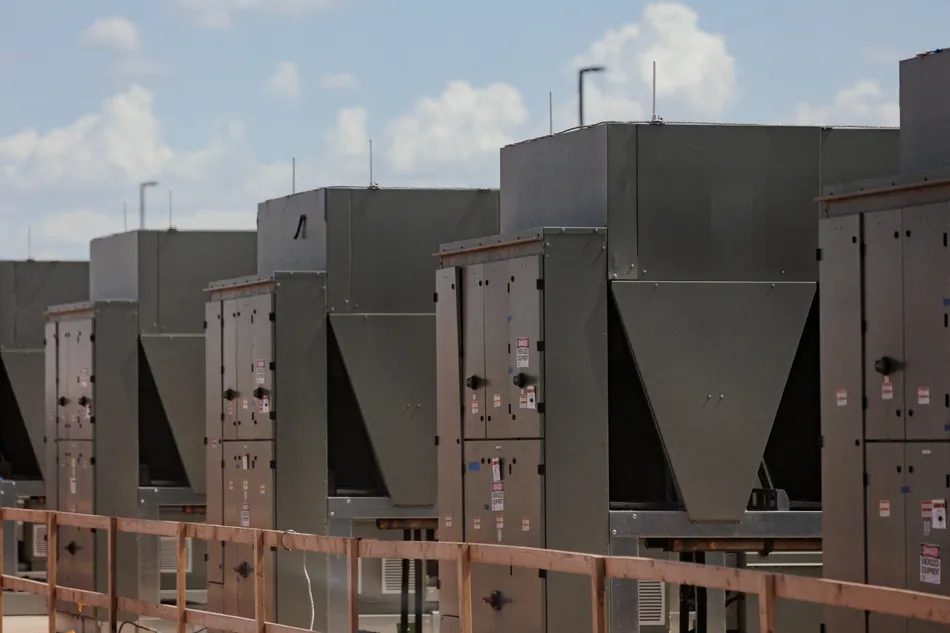
The urgency behind OpenAI’s public relations pivot stems from a series of high-profile local clashes across key swing states and midwestern power corridors. In rural communities throughout Ohio, Texas, and Virginia—regions that have transformed into global hubs for hyper-scale computing—resident groups have successfully mobilized against zoning variances for new server compounds. Environmental concerns regarding grid reliability, coupled with fears of surging residential electricity rates, have turned data center approvals into lightning rods for local political discontent.
Furthermore, federal regulatory compliance agencies and state utility regulators have begun scrutinizing the carbon accounting of major technology firms. As OpenAI deepens its partnerships with cloud providers like Microsoft, the pressure to secure green energy purchase agreements while maintaining uninterrupted baseload power has strained relations with traditional energy consumers. Voters, increasingly sensitive to inflation and grid stability, have proven receptive to populist arguments against corporate tech expansion.
In response, OpenAI’s newly minted public affairs wing has adopted a playbook reminiscent of traditional energy and utility giants. The strategy relies on early stakeholder engagement, transparent economic impact disclosures, and proactive investments in local community projects. By positioning themselves as collaborative partners rather than uncompromising tech titans, executives hope to preempt ballot initiatives that could restrict industrial water extraction or impose moratoriums on new electrical substations.
Verified Data & Metrics Breakdown
To understand the sheer magnitude of the infrastructure challenge facing OpenAI and its ecosystem, consider the following comparative metrics tracking the transition from traditional enterprise cloud computing to generative AI hyper-scale facilities:
| Metric Dimension | Traditional Cloud Data Center | Generative AI Hyper-Scale Facility | Strategic Implication |
|---|---|---|---|
| Average Power Draw | 15 to 30 Megawatts (MW) | 100 to 1,000+ Megawatts (MW) | Requires dedicated substation construction and nuclear/gas baseload integration. |
| Water Consumption (Cooling) | Moderate (Closed-loop chillers) | Millions of gallons daily (Evaporative loss) | Triggers municipal water rights disputes and drought-season rationing concerns. |
| Capital Expenditure (CapEx) | $200M – $500M per site | $3B – $10B+ per campus | Heightens financial risk exposure, necessitating aggressive debt and equity financing. |
| Local Job Creation (Permanent) | 50 – 100 skilled engineers | 150 – 300 specialized technical staff | Low direct employment relative to footprint; economic benefit flows via tax revenues. |
Industry & Market Implications: Winners, Losers, and Economic Fallout
The success or failure of OpenAI’s charm offensive carries profound financial ramifications across multiple sectors. Institutional investors, sovereign wealth funds, and private equity syndicates are closely monitoring how municipal resistance alters deployment timelines. Key market stakeholders include:
- The Winners: Specialized energy infrastructure developers, nuclear power operators, and grid-modernization engineering firms stand to capture massive capital allocations. Firms capable of delivering off-grid power solutions, closed-loop liquid cooling systems, and localized microgrids will command premium valuations.
- The Losers: Local ratepayers in regions lacking proactive utility protections face potential cost-shifting risks if new transmission lines are subsidized by residential consumers. Additionally, speculative real estate holders in overly restrictive zoning districts may find their land parcels stranded if local opposition hardens into permanent legal bans.
- Broader Economic Impact: The macroeconomic balance hinges on whether artificial intelligence can deliver productivity gains that offset its monumental energy overhead. If public pushback delays infrastructure buildout, enterprise software adoption cycles may stall, impacting global technology sector equity valuations.
Frequently Asked Questions (People Also Ask)
Why are voters and local communities pushing back against AI data centers?
Local resistance is primarily driven by concerns over straining local electrical grids, surging residential utility rates, heavy water consumption for cooling, and industrial noise pollution. Many residents feel that the immense scale of these server farms offers minimal direct employment while drastically altering their communities' rural or suburban character.
How does OpenAI’s charm offensive attempt to mitigate these concerns?
OpenAI’s campaign relies on proactive stakeholder engagement, community town halls, and economic impact transparency. The initiative highlights projected municipal tax windfalls, investments in local clean energy infrastructure, and job creation to demonstrate that data centers provide tangible long-term benefits to host communities.
What role do utility companies and cloud partners play in this infrastructure expansion?
Cloud hyperscalers (such as Microsoft, Amazon, and Google) and regional utility providers manage the physical development and power procurement. They work alongside OpenAI to negotiate long-term power purchase agreements—frequently exploring zero-carbon nuclear and advanced renewable sources—to ensure continuous baseload power without destabilizing regional grids.
Could local zoning restrictions permanently hinder artificial intelligence scaling?
While localized zoning battles create friction and delay project timelines, major tech firms are circumventing localized moratoriums by partnering with state governments, acquiring brownfield industrial sites with pre-approved utility rights, and investing heavily in remote, low-cost energy corridors.
Future Outlook: Key Milestones and What to Watch
As this public relations and infrastructure battle unfolds, institutional analysts and market observers should monitor several critical milestones over the next twelve to twenty-four months. First, watch for upcoming state utility commission rulings regarding cost-allocation frameworks for large-load industrial power users. These regulatory decisions will dictate whether tech firms or residential ratepayers bear the financial brunt of grid expansion.
Second, track the proliferation of state-level legislative proposals regarding AI data center water rights and carbon-neutral mandates. Legislative outcomes in high-density development states like Texas, Ohio, and Virginia will serve as a bellwether for national infrastructure policy. Finally, observe OpenAI’s capital expenditure disclosures and partnership announcements with energy providers; these metrics will signal whether the company is successfully securing the physical runway required to sustain its aggressive growth trajectory and investor expectations.
Investigative reporting by the Global Technology Desk. Additional contributions from Washington and Silicon Valley bureaus. For confidential tips or secure document submissions, contact our investigative editors via encrypted channels.