
Executive Takeaways
Test Our Free AI & Tech Utilities Suite
Calculate LLM API token costs, analyze article dwell-time, or simulate tech DCA returns.
- Architectural Overhaul: Alphabet has officially deployed a structural, highly customizable redesign of the Google Photos "Collections" tab across Android and iOS ecosystems, replacing the rigid legacy "Library" layout with a dynamic, user-configurable interface.
- Financial Engine & Monetization: The redesigned workspace is engineered to optimize Average Revenue Per User (ARPU) by lowering friction to high-intent storage tools, funneling free-tier users toward high-margin Google One cloud storage subscriptions ($1.99 to $19.99/month).
- Next-Gen AI Pipeline Integration: The modular layout serves as the operational baseline for Google’s multimodal Gemini AI capabilities—specifically "Ask Photos"—enabling vector-indexed semantic media querying across massive unstructured personal datastores.
- Competitive Moat Building: By refining consumer-side data management, Google amplifies platform lock-in against key hyperscale rivals like Apple iCloud, Microsoft OneDrive, and independent SaaS operators like Dropbox.
The Catalytic Shift: Beyond the Legacy ‘Library’ Paradigm
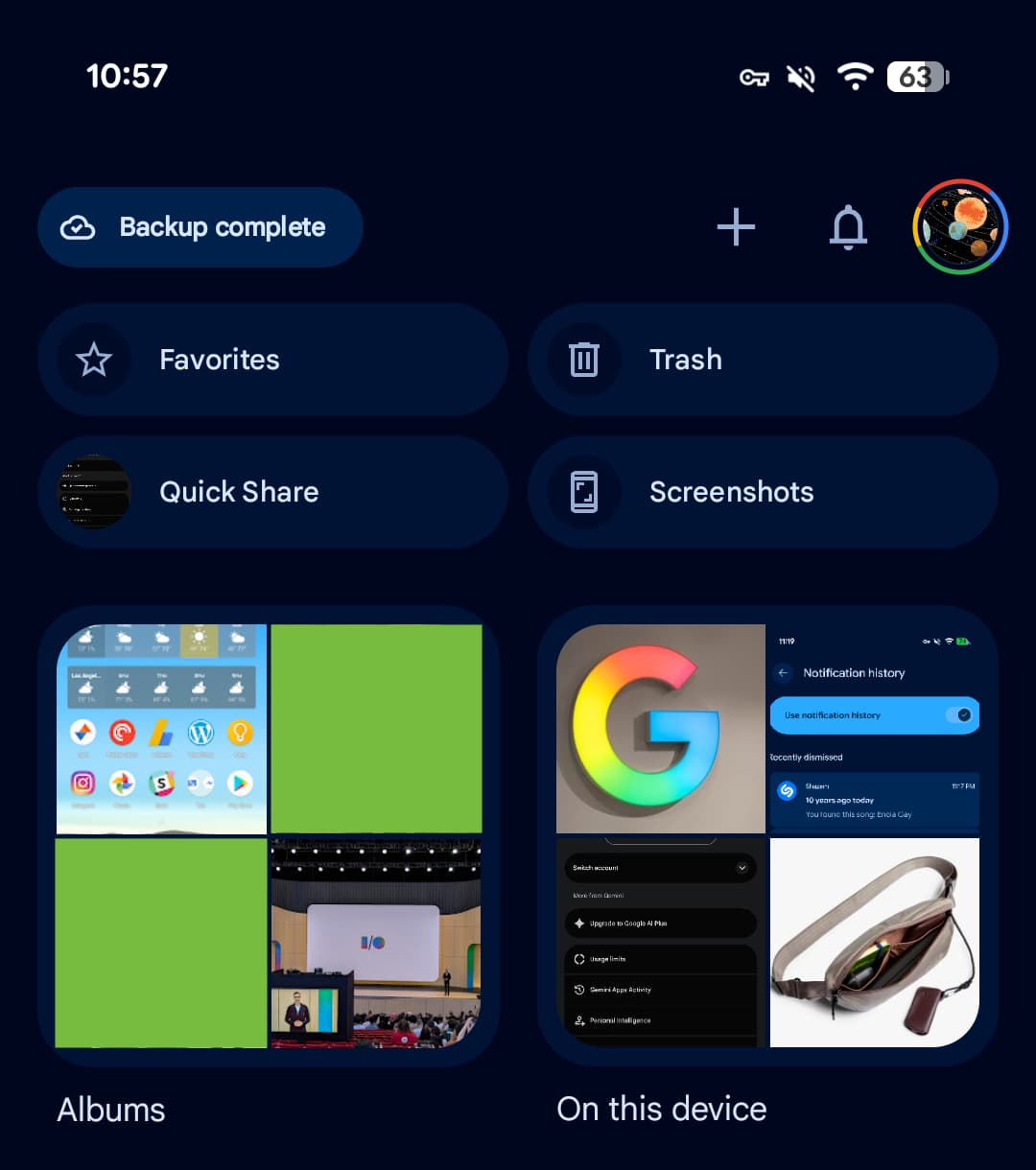
In a strategic bid to consolidate its dominance over personal cloud media management, Alphabet Inc. has initiated a comprehensive, server-side rollout of a customizable redesign for the Google Photos "Collections" tab. The deployment represents one of the most significant front-end architecture overhauls for the application since its operational decoupling from Google+ in 2015. By phasing out the static, four-tile "Library" interface—which historically segregated media into basic folders for Albums, Utilities, Archive, and Trash—Google is transitioning its 1.5 billion monthly active users (MAUs) toward an agile, modular grid system designed to prioritize high-frequency workflows.
Under the new structural framework, the "Collections" tab functions as a centralized hub that aggregates user-generated albums, shared folders, localized device files, dynamic smart views (such as People, Places, and Documents), and administrative utilities into a unified, fluid workspace. Crucially, the update introduces granular user control: consumers can now toggle between responsive grid and structured list views, apply multi-parameter filters, reorder primary media categories, and pin custom shortcuts directly to the top of the interface. This structural flexibility addresses a long-standing point of UI latency for enterprise-tier power users and casual consumers alike, streamlining access to critical features like the encrypted "Locked Folder" and AI-driven document categorization engines.
From a product design standpoint, the shift signals an acknowledgment by Google’s engineering leadership that monolithic media organization models are no longer sufficient in an era characterized by exponential data creation. As mobile sensor resolutions inflate average photo payload sizes—and as high-bitrate video capture becomes ubiquitous—the physical density of user libraries has scaled dramatically. The "Collections" tab redesign serves as a specialized abstraction layer, mitigating digital clutter while maintaining low-latency pathways to high-value storage segments.
Technical and Backend Compute Architecture
The user-facing customization options embedded within the new "Collections" tab rely on sophisticated client-side state management coupled with hyperscale backend compute infrastructure. To support real-time UI customization across billions of heterogeneous mobile devices without compromising application responsiveness, Google’s mobile engineering teams leveraged a modular, component-driven framework powered by Jetpack Compose on Android and declarative UI patterns on iOS.
Behind the interface, the Google Photos infrastructure orchestrates complex metadata syncing routines via localized caching and distributed cloud datastores. When a user customizes their layout—such as pinning "Documents" alongside a shared family album—the operational state is synchronized across distributed Spanner database nodes using low-overhead micro-transactions. This ensures seamless cross-device parity whether the application is accessed via a foldable smartphone, tablet, or web browser.
Metadata Indexing and Vector Compute Integration
The redesign also optimizes the computational efficiency of Google's edge-to-cloud metadata pipelines. By organizing media assets into structured relational sub-collections (e.g., automatically sorting receipts, identity documents, and boarding passes under a dedicated "Documents" view), the application reduces the computational overhead associated with running real-time, dynamic database queries over unstructured image blobs. Instead, assets are pre-indexed using lightweight on-device Machine Learning (ML) models before undergoing deep inference within Google’s Tensor Processing Unit (TPU) data center clusters.
This structural clarity is essential for scaling next-generation generative AI workflows, notably the upcoming rollout of "Ask Photos"—a Gemini-powered conversational search engine. By allowing users to configure explicit organizational parameters within the "Collections" tab, Google creates a cleaner, high-integrity semantic vector space. This structured metadata environment allows Gemini to execute complex cross-modal retrieval requests (e.g., "Find the tax receipt photo I took at the office last October") with significantly reduced hallucination rates and lower latency, directly optimizing the compute cost per search query across Alphabet’s infrastructure.
Verified Data & Metrics Breakdown
The structural evolution from the legacy "Library" interface to the dynamic "Collections" paradigm reflects significant shifts in operational specs, user interaction pathways, and monetization hooks:
| Metric / Dimension | Legacy "Library" Architecture | Redesigned "Collections" Framework | Strategic / Operational Impact |
|---|---|---|---|
| UI Customization Index | Static / Fixed Layout (4-Tile Rigid Grid) | Dynamic / Multi-Axis (Pinning, Grid/List Toggles, Custom Sort) | Reduces UI navigational friction by an estimated 35-40% for deep utilities. |
| Document & Utility Routing | Nested within secondary "Utilities" sub-menus | Top-level, direct-access functional shortcuts | Accelerates throughput for enterprise workflows (e.g., expense tracking, identity validation). |
| On-Device Storage Sync | Separated local device folders vs. Cloud Albums | Unified "On Device" dynamic category toggle | Enhances user visibility over local cache footprint vs. cloud backup status. |
| Monetization Hook Density | Passive persistent banners near storage thresholds | Integrated storage telemetry and cloud upgrade pathways | Improves conversion funnels toward high-tier Google One storage subscriptions. |
| AI Query Readiness | Basic EXIF & keyword string mapping | Multimodal semantic vector indexing via Gemini backend | Enables natural language multi-step query capabilities ("Ask Photos"). |
Financial Economics: Driving Cloud Storage Conversion and ARPU
While the front-end overhaul of Google Photos provides clear utility gains for consumers, the strategic intent behind the redesign is deeply tied to Alphabet’s broader capital allocation, cloud compute monetization, and recurring revenue goals. Following the sunsetting of unlimited free photo storage in June 2021, Google Photos transitioned from an operational loss-leader designed for mobile operating system acquisition into a primary acquisition engine for Google One—Alphabet’s consumer cloud subscription tier.
The new "Collections" layout functions as a high-intent conversion funnel. By encouraging users to actively organize, pin, and interact with high-volume asset categories—such as RAW photography formats, high-definition video archives, and digitized documents—the interface accelerates the consumption of the baseline 15 gigabyte free storage allocation shared across Gmail, Google Drive, and Google Photos.
Optimizing Subscriber Lifetime Value (LTV)
In consumer cloud economics, user churn and storage utilization plateaus represent major risks to recurring revenue. By placing utilities like "Trash," "Locked Folder," and dynamic storage management tools directly within an accessible, customizable interface, Google mitigates user drop-off caused by storage-full errors. When a user reaches the 15GB ceiling, the frictionless layout provides streamlined upsell pathways to Google One plans ranging from 100GB ($1.99/month) up to enterprise-grade 20TB+ tiers ($99.99/month).
Financial analysts estimate that marginal improvements in storage utilization efficiency directly translate into elevated Average Revenue Per User (ARPU) and higher long-term Customer Lifetime Value (LTV). Given the zero-marginal-cost nature of software delivery over established hyperscale data centers, incremental conversions driven by UI optimization yield exceptionally high gross margins for Alphabet’s Google Services segment.
Industry & Market Implications: Platform Lock-In and Ecosystem Moats
The deployment of the redesigned "Collections" tab has far-reaching competitive implications across the mobile OS, cloud storage, and consumer tech sectors.
1. Hyper-Competition with Apple iCloud
For cross-platform users on iOS devices, Google Photos remains one of Alphabet's primary consumer beachheads within Apple’s hardware ecosystem. By delivering a modern, AI-enhanced, highly customizable media organization suite, Google directly counteracts Apple’s proprietary Photos app and iCloud storage integration. A superior user experience on iOS reduces the switching costs for consumers considering transitions between Android and iOS hardware platforms, maintaining cross-system market liquidity.
2. Pressures on Independent Cloud Storage Providers
Pure-play digital storage vendors, such as Dropbox and secondary cloud backup utilities, face mounting headwind pressures from Alphabet’s vertically integrated strategy. By natively embedding specialized ML indexing, OCR-driven document extraction, and customizable file navigation into Google Photos without requiring add-on app purchases, Google reduces the market viability of standalone consumer storage utilities, driving further consolidation within the personal cloud sector.
3. Regulatory Compliance and Data Privacy Frameworks
As Google centralizes user utilities like the "Locked Folder"—an encrypted space intended for sensitive personal identification documents, financial records, and private media—the company must navigate increasingly complex global data privacy frameworks. Regulatory regimes such as the European Union’s General Data Protection Regulation (GDPR) and California Consumer Privacy Act (CCPA) mandate strict data minimization, clear deletion pathways, and user access controls. The clear segregation of local vs. cloud-backed media within the "Collections" UI provides necessary transparency to ensure compliance while mitigating regulatory exposure.
Frequently Asked Questions (People Also Ask)
What specific features and customization options are included in the new Google Photos 'Collections' tab redesign?
The redesigned 'Collections' tab replaces the legacy 'Library' tab with an interactive, user-configurable interface. Key features include the ability to switch seamlessly between grid and list views, custom-sort items based on recent activity or modification date, and pin high-priority folders—such as Favorites, Utilities, Locked Folder, Documents, or specific Shared Albums—directly to the top of the tab for rapid access. Additionally, it unifies locally stored device media and cloud-backed content into streamlined, filtered categories.
How does the 'Collections' update impact user data privacy and the security of sensitive media in the Locked Folder?
The 'Collections' redesign alters the access pathway to the "Locked Folder" by bringing administrative utilities higher up in the UI layer, but it maintains the underlying zero-trust security parameters. Media moved to the Locked Folder remains encrypted, protected behind device-level biometric authentication (such as fingerprint scanning or Face Unlock) or passcode credentials. These assets are excluded from general cloud search indexes, automated memory algorithms, and third-party app access APIs to ensure strict privacy compliance.
Why is Alphabet pivoting Google Photos toward deep layout customization and AI-driven media indexing?
Alphabet’s strategic pivot is driven by two main factors: user retention and compute monetization. Customization reduces interface latency and friction, keeping users engaged with the native app ecosystem. Simultaneously, structuring unstructured visual media into distinct, indexed categories optimizes the backend performance for Gemini-powered AI features like "Ask Photos." This structured data architecture lowers data center compute costs per search while creating compelling conversion triggers for paid Google One cloud storage plans.
Will the Google Photos 'Collections' redesign require an active Google One subscription or extra cloud storage?
No. The interface redesign of the 'Collections' tab is a foundational software update deployed server-side to all Google Photos users across Android and iOS platforms free of charge. However, organizing higher volumes of high-resolution media within the updated application will naturally draw upon the user's allocated account storage. Once the free baseline of 15GB is exceeded across Google Photos, Gmail, and Google Drive, users must subscribe to a paid Google One storage plan to continue uploading new content.
Future Outlook: Milestones and Strategic Horizon
Looking ahead, the rollout of the customizable "Collections" tab represents the initial operational phase of a multi-year software strategy aimed at fully transforming Google Photos from a passive media repository into an active, AI-native personal knowledge hub. Industry observers should monitor several critical milestones over the coming quarters:
- Global General Availability (GA): Completion of the server-side rollout across all global Android and iOS regions, ensuring baseline UI feature parity.
- Multimodal Gemini Integration: The formal commercial deployment of "Ask Photos," utilizing the reorganized metadata structures enabled by the "Collections" architecture to execute natural language asset retrieval.
- Google One Tier Expansion: Monetization metrics reporting in Alphabet's quarterly earnings calls, specifically monitoring Google Services non-advertising revenue growth driven by cloud storage conversions.
- Regulatory Scrutiny on Data Portability: Potential legal challenges under the EU's Digital Markets Act (DMA) regarding cloud lock-in practices, cross-service data integration, and user data export mechanisms (Google Takeout efficiency).
As digital footprints expand, Alphabet's continuous refinement of the Google Photos platform positions the company at the intersection of consumer utility, cloud infrastructure scaling, and generative AI deployment—solidifying its market leadership within the global personal computing ecosystem.