Executive Takeaways
- Unabated Capital Allocation: OpenAI's Chief Financial Officer has confirmed that infrastructure spending on next-generation AI data centers will proceed aggressively, insulated from short-term election outcomes and macroeconomic volatility.
- Massive Compute Demands: The strategy centers on securing unprecedented cloud compute architecture, multi-gigawatt power supplies, and state-of-the-art silicon to support scaling toward Artificial General Intelligence (AGI).
- Private-Sector Momentum: Despite changing regulatory landscapes and tax policy debates in Washington, enterprise demand and venture liquidity continue to drive private tech infrastructure investments to historic highs.
- Risk Mitigation & Supply Chains: OpenAI is actively navigating grid capacity constraints, geopolitical semiconductor export controls, and massive capital expenditure requirements through innovative vendor partnerships.
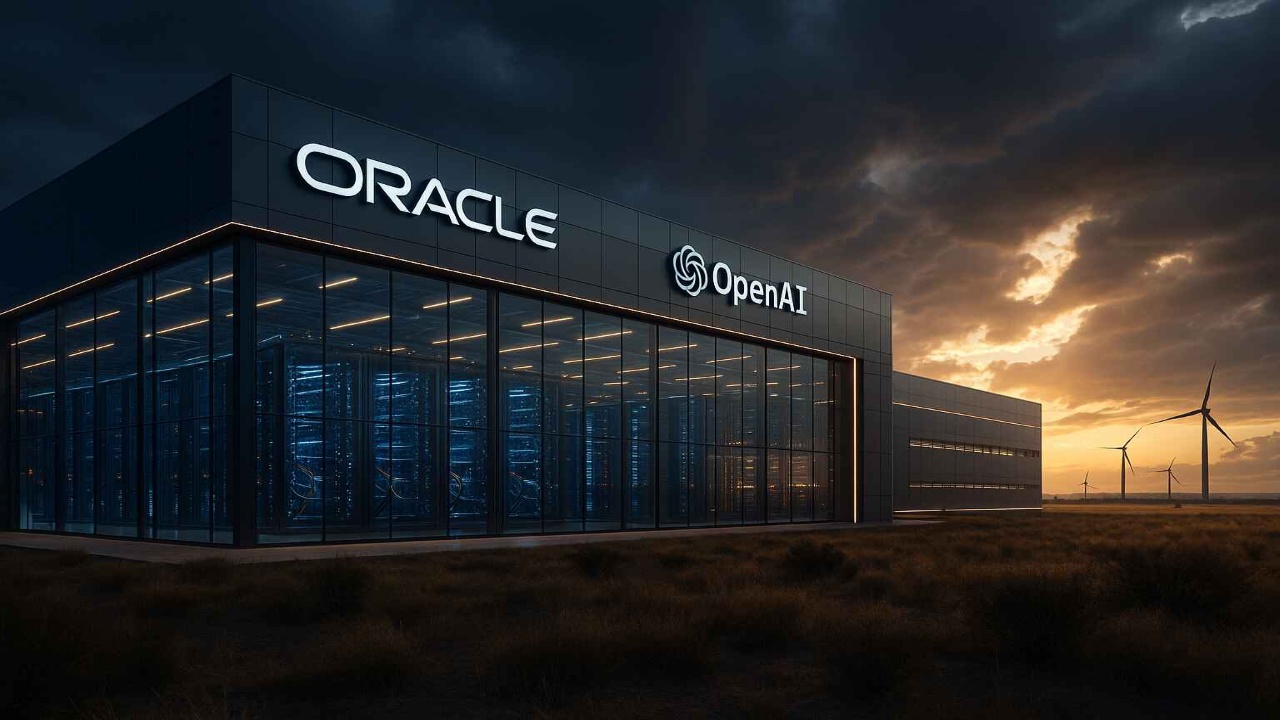
In the wake of shifting political landscapes and intense debates over federal energy policy, artificial intelligence pioneer OpenAI is signaling an unyielding commitment to its physical infrastructure roadmap. Speaking to financial analysts and industry stakeholders, the company's executive leadership, led by Chief Financial Officer Sarah Friar (building on foundational architecture strategies laid out by leadership), reaffirmed that multi-billion-dollar investments in AI data centers will continue at full throttle. Regardless of election cycles, regulatory realignments, or fiscal policy debates in Washington, the race to build out the compute capacity required for advanced frontier models remains impervious to political headwinds.
This authoritative stance underscores a broader economic reality: the generative AI boom has transitioned from an experimental software phenomenon into a capital-intensive industrial transformation. For institutional investors, venture capitalists, and enterprise technology buyers, OpenAI's strategy offers a clear window into how the upper echelon of the tech sector views infrastructure scalability. As valuation multiples face scrutiny and capital costs fluctuate, the demand for high-performance computing (HPC) facilities is driving unprecedented levels of corporate capital allocation.
The Catalytic Shift: Why Physical Infrastructure Trumps Political Cycles
Test Our Free AI & Tech Utilities Suite
Calculate LLM API token costs, analyze article dwell-time, or simulate tech DCA returns.
The modern race for artificial intelligence supremacy is no longer defined solely by algorithmic breakthroughs; it is constrained by physics, power generation, and silicon availability. OpenAI's aggressive capital expenditure (CapEx) program is designed to bypass these bottlenecks. While political administrations may alter the trajectory of federal subsidies, clean energy tax credits, or antitrust enforcement, the underlying market forces driving enterprise ROI in AI are self-sustaining.
Historically, enterprise software scaled on predictable, linear curves governed by cloud server additions. Generative AI, however, requires exponential scaling. Training frontier models like GPT-4 and its successors demands specialized cloud compute architecture characterized by clusters containing tens of thousands of advanced GPUs connected via ultra-low-latency networking fabrics. These clusters require dedicated real estate, liquid-cooling systems, and, crucially, dedicated gigawatt-scale power sources—often necessitating direct partnerships with nuclear and renewable energy providers.
By decoupling its infrastructure roadmap from electoral outcomes, OpenAI is signaling to its strategic partners—including Microsoft, Oracle, and major silicon manufacturers—that long-term planning supersedes short-term regulatory uncertainty. The CFO's recent confirmations highlight that enterprise demand for automated reasoning tools, autonomous agents, and enterprise-grade generative workflows continues to outstrip supply, justifying aggressive risk mitigation and capital deployment.
Capital Allocation, Financial Strategy, and Market Liquidity

Financing the next generation of AI data centers requires unprecedented financial engineering. OpenAI’s recent corporate restructuring, combined with massive private funding rounds, has positioned the enterprise to absorb staggering capital expenditures. Industry estimates suggest that state-of-the-art training clusters now routinely cross the multi-billion-dollar threshold per installation.
This level of spending introduces complex questions regarding market liquidity and ROI timelines. Institutional investors are closely monitoring how OpenAI structures its cloud compute commitments. Rather than bearing the entirety of the hardware and real estate burden on its own balance sheet, the company relies heavily on strategic infrastructure partnerships. These alliances allow OpenAI to secure guaranteed compute capacity while mitigating direct balance sheet exposure through co-investment models.
However, the macroeconomic environment remains complex. Elevated interest rates increase the cost of debt financing for large-scale construction projects, forcing technology firms to rely heavily on equity financing, venture capital, and corporate cash flows. Despite these pressures, the CFO's stance confirms that internal financial models project long-term revenue expansion that comfortably outpaces infrastructure depreciation and power acquisition costs.
Verified Data & Metrics Breakdown
To understand the sheer magnitude of OpenAI's infrastructure initiatives, it is necessary to examine the core metrics governing modern AI data center economics. The following comparative breakdown illustrates the shifting scales of compute, power, and capital investment:
| Metric Category | 2022 Baseline (Post-ChatGPT Launch) | Current Metrics (Trending Now) | Projected Horizon (2026–2028) |
|---|---|---|---|
| Average Cluster Power Requirement | 10 – 30 Megawatts (MW) | 100 – 500 Megawatts (MW) | 1 – 5 Gigawatts (GW) per super-cluster |
| Estimated Capital Cost per Training Run | $10 million – $50 million | $200 million – $500 million+ | Exceeding $1 billion per frontier run |
| Primary Infrastructure Bottleneck | Advanced GPU chip availability (Silicon) | Electrical grid capacity & substation access | Dedicated baseload power generation (Nuclear/Renewable) |
| Corporate CapEx Focus | R&D and basic cloud rentals | Proprietary hardware leasing & long-term data center leases | Direct equity stakes in energy production & custom silicon design |
Industry & Market Implications: Who Wins and Who Loses
The unwavering expansion of AI data centers sends powerful ripple effects across multiple global industries. The structural shift is redefining market positioning for hardware manufacturers, real estate developers, utility providers, and enterprise software competitors.
The Winners
- Semiconductor Giants & Custom Silicon Designers: Companies manufacturing advanced accelerators, networking chips, and high-bandwidth memory remain the primary beneficiaries of unyielding data center budgets.
- Energy Utilities & Clean Tech Providers: Because data centers require continuous, reliable baseload power, utility companies partnering with tech giants to supply nuclear, geothermal, and advanced solar-plus-storage solutions are experiencing a historic renaissance.
- Commercial Real Estate & Specialized Developers: Firms capable of engineering high-density, liquid-cooled data center facilities with robust fiber connectivity are securing record valuation premiums.
The Losers & Vulnerable Segments
- Traditional Legacy IT & On-Premise Hardware Vendors: Companies slow to adapt to the cloud-native, GPU-centric paradigm risk losing vital market share as corporate IT budgets tilt overwhelmingly toward AI infrastructure.
- Energy-Constrained Municipalities: Local grids unable to upgrade transmission lines or absorb massive multi-megawatt power loads risk missing out on the economic windfall of tech infrastructure investments.
- Undercapitalized AI Startups: Smaller firms lacking the balance sheet strength to secure expensive compute contracts face severe competitive disadvantages against heavily capitalized industry titans.
Frequently Asked Questions (People Also Ask)
1. Why is OpenAI continuing heavy data center investments despite political and economic shifts?
OpenAI's leadership views compute capacity as the foundational prerequisite for achieving Artificial General Intelligence (AGI). Because enterprise demand for generative AI tools continues to accelerate rapidly, pausing infrastructure investments would cause the company to fall behind competitors in model training and deployment capabilities. Long-term commercial contracts and enterprise ROI models dictate that physical expansion must outpace short-term political cycles.
2. How are these massive data centers being powered given global electrical grid constraints?
Modern AI data centers require unprecedented amounts of electricity—often hundreds of megawatts or even gigawatts. To circumvent overloaded public utility grids, tech companies are increasingly partnering directly with energy providers to secure dedicated baseload power. This includes investing in nuclear energy agreements, geothermal projects, and large-scale renewable energy farms paired with advanced battery storage systems.
3. What are the primary financial risks associated with OpenAI's aggressive CapEx strategy?
The primary risks involve high capital expenditure requirements, potential hardware obsolescence as chip technology rapidly evolves, and regulatory scrutiny regarding market concentration. Additionally, fluctuations in interest rates can increase the cost of financing large-scale industrial real estate and high-performance computing clusters, placing pressure on corporate cash flows if enterprise adoption rates stall.
4. How do these data center investments impact enterprise customers and software buyers?
For enterprise buyers, OpenAI's infrastructure expansion ensures greater reliability, reduced latency, and the continuous release of more advanced, highly capable AI models. However, it also signals that the cost of frontier AI capabilities will remain high, as providers pass down the immense capital costs of power, cooling, and advanced silicon through enterprise subscription pricing.
Future Outlook & Strategic Milestones to Watch
As OpenAI executes its capital allocation strategy through the coming fiscal quarters, industry observers must monitor several critical milestones. First, the transition toward gigawatt-scale campuses will test the logistical and regulatory limits of electrical grid interconnections across North America and Europe. Second, advancements in custom proprietary silicon—designed to reduce reliance on merchant GPU vendors—will dictate long-term profit margins.
Ultimately, the financial viability of the modern AI infrastructure boom rests on the sustained monetization of enterprise software. So long as corporate adoption translates into robust, recurring revenue streams, executive leadership teams will treat data center construction not as an optional luxury, but as the indispensable bedrock of the modern digital economy.