
NEW YORK — In the high-stakes theater of enterprise technology, capital allocation has officially emerged as the ultimate competitive moat. Oracle Corp., the legacy database titan turned aggressive cloud-compute challenger, is reportedly moving to orchestrate a massive $20 billion debt financing package. The primary objective: to fund an unprecedented expansion of its artificial intelligence infrastructure, securing the high-performance GPUs and data center real estate required to capture a dominant share of the generative AI boom.
As corporate balance sheets across Silicon Valley and Wall Street race to keep pace with soaring demand for large language model (LLM) training and inference capabilities, Oracle’s maneuver signals a dramatic pivot. No longer content with incremental market share gains in traditional enterprise software, Chairman and Chief Technology Officer Larry Ellison is betting the house on cloud compute architecture. Yet, this aggressive strategy raises urgent questions regarding valuation multiples, enterprise ROI, long-term credit risk, and market liquidity in an era of tightening monetary policy.
Executive Takeaways
- Massive Capital Deployment: Oracle is targeting a staggering $20 billion debt raise to accelerate its aggressive enterprise AI cloud infrastructure buildout.
- The GPU Arms Race: The capital will directly fund the procurement of next-generation NVIDIA accelerators and advanced liquid-cooled data center facilities.
- Balance Sheet Pressures: While revenue growth in Oracle Cloud Infrastructure (OCI) remains robust, analysts warn that soaring capital expenditures could squeeze free cash flow and pressure credit ratings.
- Strategic Positioning: Oracle is positioning itself as an agile, cost-effective alternative to hyperscale giants like Amazon Web Services (AWS), Microsoft Azure, and Google Cloud.
The Catalytic Shift: Why Oracle Needs $20 Billion Now
Test Our Free AI & Tech Utilities Suite
Calculate LLM API token costs, analyze article dwell-time, or simulate tech DCA returns.
The genesis of Oracle’s capital-raising initiative lies in an unrelenting supply-and-demand imbalance within the global AI ecosystem. Over the past twenty-four months, enterprise adoption of generative AI has transitioned from proof-of-concept pilot programs to mission-critical production environments. Consequently, the demand for enterprise-grade cloud compute architecture has skyrocketed far beyond initial capacity projections.
Historically, Oracle relied on steady organic cash flows and disciplined capital allocation to fund its operations and shareholder return programs. However, the economics of modern artificial intelligence defy traditional enterprise software models. Training foundational models requires clusters containing tens of thousands of specialized graphics processing units (GPUs) interconnected via ultra-low-latency fabric. Building, powering, and maintaining these massive AI superclusters demands billions of dollars in upfront capital expenditure (CapEx) long before enterprise ROI materializes on the balance sheet.
Industry insiders note that Oracle’s cloud infrastructure division, OCI, has secured high-profile contracts with leading AI developers, including Elon Musk’s xAI and OpenAI. To service these massive workloads without risking catastrophic service degradation or capacity bottlenecks, Oracle must drastically accelerate its physical footprint. A $20 billion debt injection provides the necessary liquidity to lock in hardware supply chains, secure long-term power purchase agreements for energy-hungry data centers, and outmaneuver rival cloud service providers in a fierce race for technological supremacy.
Financial Engineering and Debt Market Dynamics
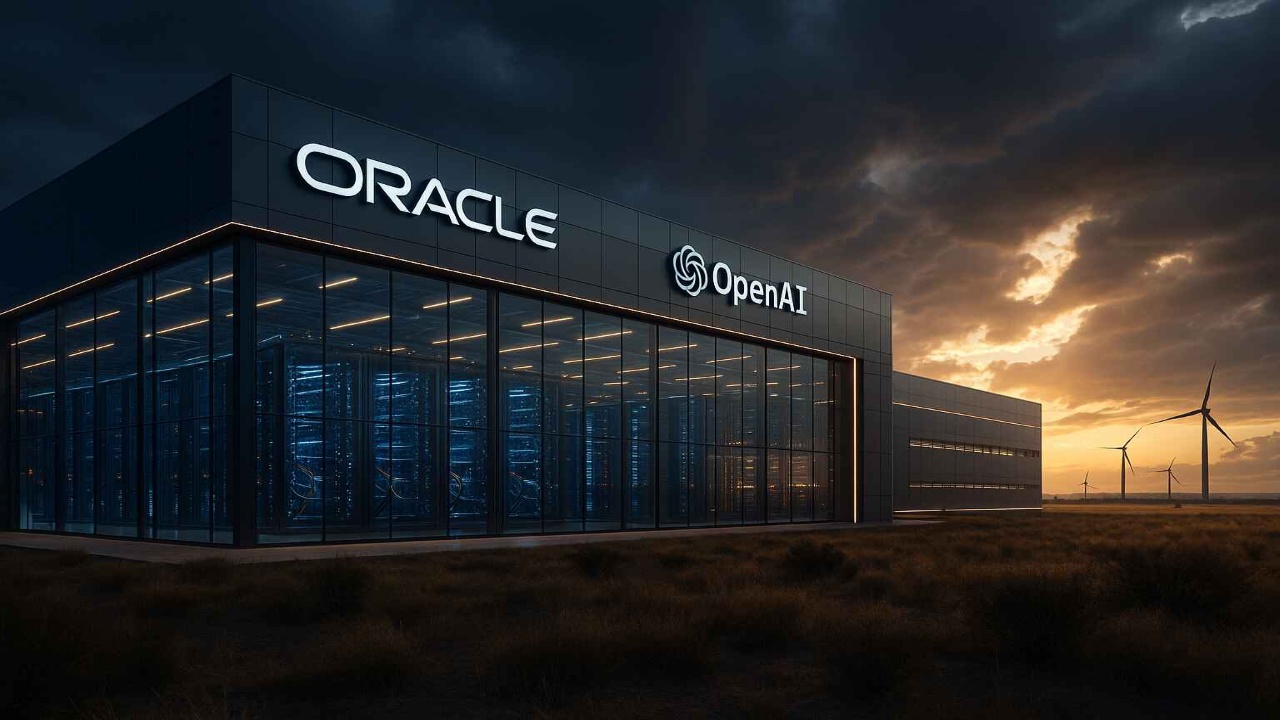
Executing a debt issuance of this magnitude requires navigating complex credit markets characterized by shifting interest rate expectations and fluctuating investor appetite for tech sector leverage. Wall Street debt syndication desks report that institutional investors are carefully evaluating Oracle’s current leverage ratios, debt-to-EBITDA multiples, and overall risk mitigation strategies.
Oracle’s leadership team faces a delicate balancing act. On one hand, maintaining a strong investment-grade credit rating is paramount to keeping borrowing costs manageable. On the other hand, failing to invest aggressively in AI infrastructure risks marginalization in the fastest-growing sector of the global technology economy. By tapping the corporate bond market, Oracle aims to lock in long-term capital while leveraging its robust enterprise software revenue base to service the newly acquired liabilities.
Financial analysts emphasize that the success of this $20 billion capital allocation hinges on infrastructure scalability and rapid customer onboarding. If OCI can maintain high utilization rates across its newly funded data centers, the revenue acceleration will comfortably offset the interest expense. Conversely, any sudden macroeconomic cooling or deceleration in enterprise AI spending could leave Oracle burdened with expensive, underutilized infrastructure.
Verified Data & Metrics Breakdown
The following data table outlines the core financial, operational, and infrastructural metrics driving Oracle’s strategic decision to secure $20 billion in new funding:
| Metric / Parameter | Current Status / Target | Strategic Implication |
|---|---|---|
| Target Capital Raise | Approx. $20 Billion | Funds massive data center expansion and advanced GPU procurement. |
| Primary Hardware Focus | Next-Gen NVIDIA GPUs (H100, B200) | Essential for high-speed LLM training and enterprise inference workloads. |
| OCI Revenue Growth | Consistently exceeding 20%–40% YoY | Provides top-line momentum required to justify heavy capital expenditure. |
| Key Enterprise Clients | xAI, OpenAI, major multinational corporations | Secures long-term contracted demand, mitigating utilization risk. |
| Regulatory Compliance Focus | Global Sovereign Cloud standards | Ensures data residency compliance for government and financial sector clients. |
Industry & Market Implications: Winners, Losers, and Economic Ripples
The ripple effects of Oracle’s $20 billion capital mobilization will be felt across the entire technology and financial landscape. Understanding the competitive chessboard requires analyzing how this move alters the balance of power among cloud hyperscalers, semiconductor manufacturers, and enterprise customers.
The Winners
- Semiconductor Manufacturers: Companies like NVIDIA and AMD stand to capture a significant portion of these capital expenditures as Oracle procures cutting-edge AI accelerators.
- Data Center Developers & Energy Providers: Firms specializing in high-density power infrastructure, liquid cooling, and modular data center construction will benefit from Oracle’s rapid physical expansion.
- Enterprise AI Adopters: Increased market competition among cloud providers helps drive down compute costs, fostering greater accessibility and innovation for enterprise end-users.
The Losers and Risk Bearers
- Traditional Hyperscale Laggards: Smaller cloud providers lacking access to deep capital markets may struggle to compete with the sheer scale of Oracle’s infrastructure investments.
- Conservative Bondholders: Fixed-income investors holding existing Oracle debt may experience spread widening as the company increases its overall leverage profile to fund high-risk technology bets.
Frequently Asked Questions (People Also Ask)
Why does Oracle need to raise $20 billion specifically for AI?
Training and running advanced artificial intelligence models requires unprecedented computational power, massive clusters of specialized GPUs, and state-of-the-art data centers capable of supplying extreme amounts of electrical power and cooling. The $20 billion debt package provides the immediate liquidity required to secure these critical hardware supply chains and physical facilities at scale.
How will this massive debt raise impact Oracle’s credit rating?
Credit rating agencies closely monitor leverage ratios and free cash flow generation. While adding $20 billion in debt increases Oracle’s financial leverage, rating agencies will weigh this against the contracted, high-margin revenue growth of Oracle Cloud Infrastructure (OCI). If OCI successfully monetizes these investments, credit metrics are expected to stabilize over the medium term.
Who are Oracle’s primary competitors in the enterprise AI cloud market?
Oracle competes directly with major hyperscalers, including Amazon Web Services (AWS), Microsoft Azure, and Google Cloud Platform (GCP). Oracle has carved out a distinct competitive advantage by offering high-performance networking and aggressive pricing designed to attract massive standalone AI developers like xAI.
What are the primary risks associated with Oracle’s capital allocation strategy?
The primary risks include potential oversupply of compute capacity if enterprise AI adoption slows, supply chain bottlenecks for advanced hardware, rising energy costs for data center operations, and potential interest rate volatility increasing the cost of servicing the newly issued debt.
Future Outlook & Key Milestones to Watch
As Oracle finalizes the structural mechanics of its $20 billion financing initiative, institutional investors and technology analysts will be closely monitoring several critical operational milestones over the next twelve to eighteen months.
First, market participants will scrutinize upcoming quarterly earnings reports for concrete data regarding OCI revenue acceleration and gross margin trends associated with AI workloads. Maintaining pricing power while scaling infrastructure will be the definitive test of management’s execution capability.
Second, observers must track the physical completion dates of Oracle’s announced next-generation data centers, particularly regarding their integration with advanced liquid-cooling technologies and green energy procurement agreements. Environmental sustainability and power availability have emerged as critical bottlenecks for modern AI infrastructure buildouts.
Ultimately, Oracle’s bold financial gamble represents a defining moment in the corporate history of the company. By leveraging its balance sheet to stake a dominant claim in the generative AI economy, Larry Ellison and CEO Safra Catz are signaling that Oracle is not merely participating in the current technological revolution—it intends to power its infrastructure.