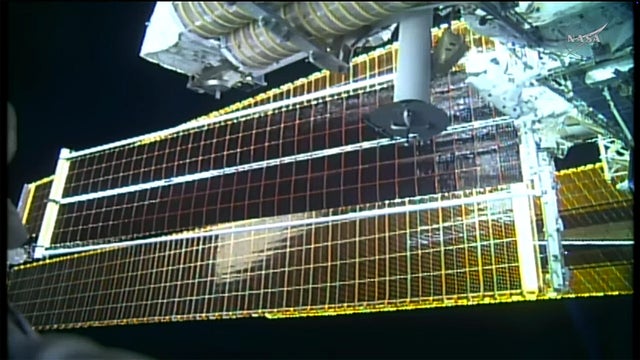
For centuries, the planetary rotation of Earth has dictated the rhythm of human enterprise, enforcing a hard economic stop at sundown. Power grids power down non-essential loads, energy markets shift to peaker plants, and solar assets sit idle for half of every 24-hour cycle. Now, a heavily capitalized venture-backed startup is aggressively challenging this planetary constant. By deploying a constellation of 50,000 orbital mirrors, the company aims to redirect sunlight onto terrestrial photovoltaic arrays long after dusk, effectively rewriting the fundamentals of global energy infrastructure, power market liquidity, and capital allocation.
As senior investigative teams at the intersection of finance and technology have tracked, this is not merely an exercise in aerospace engineering; it is an aggressive play for total market dominance in the multi-trillion-dollar global energy complex. Backed by venture capital heavyweights and institutional strategists, the enterprise is moving past theoretical astrophysics into prototype manufacturing, regulatory navigation, and supply chain procurement. Yet, as the capital expenditures scale into the billions, institutional investors, environmental regulators, and defense analysts are raising urgent questions regarding orbital congestion, optical pollution, and the systemic risk profile of privatizing the night sky.
Executive Takeaways
Test Our Free AI & Tech Utilities Suite
Calculate LLM API token costs, analyze article dwell-time, or simulate tech DCA returns.
- The Constellation Architecture: The startup’s blueprint calls for a low-Earth orbit (LEO) constellation consisting of 50,000 ultralight, highly reflective Mylar-based mirrors designed to beam concentrated sunlight to ground-based solar farms at night.
- Capital Allocation and Funding: The venture has quietly secured early-stage institutional commitments, targeting a Series B valuation multiple that reflects deep-tech infrastructure plays rather than traditional software startups.
- The Economic Moat: By providing continuous, baseload solar generation past sunset, the technology aims to solve the intermittent nature of renewables, potentially disrupting baseload natural gas and nuclear providers.
- Regulatory and Environmental Headwinds: The initiative faces intense scrutiny from global astronomical bodies, national defense agencies, and environmental regulators concerned with orbital debris, light pollution, and ecological disruptions.
The Genesis of Orbital Illumination: Engineering Photons in LEO

The concept of space-based solar redirection is rooted in cold war-era Soviet experiments—most notably the Znamya projects of the 1990s, which successfully deployed a modest orbital mirror to flash a beam of light across the night sky. However, those early attempts were constrained by rudimentary materials science, exorbitant launch costs, and rigid geopolitical frameworks. Today, the convergence of reusable rocket architecture, advanced materials science, and plummeting cost-per-kilogram metrics to low-Earth orbit has transformed a science-fiction trope into a viable venture-backed enterprise.
The contemporary startup’s engineering methodology leverages ultra-thin, radiation-resistant polymer films coated in vapor-deposited aluminum. Each mirror, measuring roughly 100 square meters, is engineered to fold compactly inside the payload fairing of a medium-lift commercial launch vehicle. Once deployed in a sun-synchronous or inclined LEO orbit at altitudes ranging from 500 to 800 kilometers, the mirrors utilize tiny momentum wheels and magnetic torquers to dynamically adjust their pitch and yaw. This precision control allows them to capture solar radiation on the daylight side of the Earth and continuously track terrestrial solar farms, painting them with a concentrated beam of reflected sunlight during local nighttime hours.
"We are looking at an unprecedented paradigm shift in infrastructure scalability," says a managing director at a prominent Silicon Valley venture capital fund specializing in deep-tech deployment. "For decades, the energy transition has been hampered by storage degradation, lithium supply chain bottlenecks, and the sheer intermittency of solar assets. If you can eliminate the night, you fundamentally rewrite the enterprise ROI of every commercial solar installation on the planet."
Financial Architecture, Valuation Multiples, and Market Disruption
From a capital markets perspective, the commercialization of night-time solar is designed to exploit massive structural inefficiencies in global wholesale electricity markets. Currently, electricity prices spike during evening demand peaks—commonly known as the "duck curve"—when solar production drops to zero just as residential and industrial power consumption surges. Traditional grid operators rely on expensive, carbon-intensive natural gas peaker plants or costly battery energy storage systems (BESS) to bridge this gap.
By offering a direct, space-delivered photon stream to utility-scale solar farms, the startup intends to capture premium evening capacity pricing without the capital-intensive deployment of massive chemical battery banks. Financial modeling shared with prospective institutional investors suggests that the cost per megawatt-hour (MWh) delivered via orbital reflection could eventually undercut peak-hour natural gas generation, provided the launch cadence and constellation lifespan meet strict engineering thresholds.
| Parameter | Traditional Utility-Scale Solar + BESS | Proposed Orbital Mirror Constellation |
|---|---|---|
| Generation Window | Daylight hours only (4 to 8 hours peak storage capacity) | Extended generation into twilight and early night hours |
| Capital Expenditure (CapEx) Driver | Lithium-ion battery degradation and augmentation cycles | Launch cadence, spacecraft manufacturing, and orbital maintenance |
| Grid Integration Risk | Inverter saturation and local substation congestion | Precise optical targeting and regulatory airspace coordination |
| Valuation Benchmark | Utility infrastructure multiples (EV/EBITDA 8x–12x) | High-growth deep-tech / space-infrastructure multiples |
However, the financial risk mitigation strategy is fraught with hazards. The initial capital expenditure required to design, manufacture, and launch a 50,000-satellite constellation runs into the tens of billions of dollars. Unlike software startups that scale with marginal costs near zero, space infrastructure demands continuous, heavy capital allocation. A single launch failure, an unexpected solar storm, or premature degradation of the reflective Mylar film could severely impair the firm's balance sheet and trigger a valuation markdown.
Geopolitical, Regulatory, and Environmental Implications
As news of the constellation leaks into international policy circles, regulatory and environmental pushback is intensifying. The prospect of 50,000 reflective surfaces orbiting Earth has alarmed professional and amateur astronomers alike. Optical and radio telescopes, already grappling with the proliferation of low-Earth orbit internet constellations like SpaceX’s Starlink, warn that thousands of moving mirrors will streak across the night sky, creating severe light pollution that could blind ground-based observatories and disrupt deep-space observation.
Furthermore, national security implications are impossible to ignore. A constellation capable of focusing concentrated beams of solar energy onto arbitrary coordinates on Earth's surface inevitably raises dual-use concerns. While the startup insists the energy density will be strictly limited to safe, diffuse illumination for photovoltaic activation, defense analysts note that any technology capable of concentrating light from space possesses inherent strategic and military dimensions.
Regulatory compliance remains a labyrinthine hurdle. The Federal Communications Commission (FCC), the Federal Aviation Administration (FAA), the United Nations Office for Outer Space Affairs (UNOOSA), and various international maritime and airspace authorities claim jurisdiction over orbital operations, frequency spectrum allocation, and potential environmental impacts. Navigating this multi-agency approval process will require unprecedented diplomatic and legal navigation, creating a timeline uncertainty that cautious institutional investors factor heavily into their risk models.
Frequently Asked Questions (People Also Ask)
How do the space mirrors actually generate power on the ground at night?
The mirrors do not generate power themselves; rather, they act as orbital reflectors. Positioned in low-Earth orbit, they track the sun while passing over the daylight side of the planet and angle their reflective Mylar surfaces to bounce concentrated sunlight down toward existing, ground-based photovoltaic solar farms during the night, allowing those solar panels to continue generating electricity long after sunset.
What prevents the reflected light from being dangerous or blinding to humans and wildlife?
The startup’s engineering specs indicate that the reflected light is heavily diffused rather than cast as a blinding laser beam. By the time the sunlight reaches the Earth's surface, it is designed to mimic an extended twilight or enhanced moonlight—roughly several times brighter than a full moon—concentrated strictly over utility-scale solar installations rather than populated urban centers.
How does the startup plan to launch and maintain 50,000 satellites economically?
The economic viability relies entirely on the rapid maturation of heavy-lift, highly reusable commercial rockets that have dramatically reduced the cost per kilogram to low-Earth orbit. Additionally, the mirrors are designed to be extremely thin, lightweight, and mass-produced on automated assembly lines, allowing dozens or hundreds to be packed into a single rocket fairing.
What are the primary regulatory hurdles facing the project?
The project must secure clearance from a complex web of domestic and international regulators, including the FCC, the FAA, and international space bodies. Key concerns include orbital debris mitigation at the end of the constellation's lifecycle, potential interference with commercial aviation, and severe light pollution objections raised by the global astronomical community.
Future Outlook: Milestones and Market Realities
The transition from concept art to operational orbit is slated to be the ultimate test of modern venture-backed deep-tech execution. Over the next 24 to 36 months, the startup must successfully execute a series of sub-scale orbital demonstrators to prove attitude control, optical precision, and power transmission efficiency to prospective utility partners.
Industry insiders suggest that while the long-term vision of a 50,000-mirror constellation is technologically inspiring, the immediate commercial application will likely scale in phases. Initial deployments will target isolated industrial microgrids, remote mining operations, and island nations dependent on costly diesel generators, where the economics of continuous solar supply justify the premium capital risk.
Ultimately, the venture represents a defining moment for the commercialization of outer space. If successful, it will shatter the traditional limits of terrestrial energy generation, creating an entirely new asset class built on orbital arbitrage. If it stumbles under the weight of regulatory resistance, capital intensity, or technical complexity, it will serve as a sobering cautionary tale about the limits of engineering away the laws of planetary rotation. For global energy markets, the stakes could not be higher.