Executive Takeaways
- Infrastructure Scalability: A heavily backed aerospace startup is currently engineering a constellation of 50,000 reflective orbital satellites designed to redirect solar radiation to terrestrial ground stations long after dusk.
- Capital Allocation & Valuation: Initial pre-seed and venture capital rounds are surging, driven by institutional interest in capitalizing on 24/7 renewable energy generation and disrupting multi-billion-dollar utility grids.
- Regulatory & Environmental Friction: Astronomers, environmental regulators, and defense agencies are raising alarms over low-Earth orbit (LEO) congestion, light pollution, and potential geopolitical dual-use risks.
- Market Liquidity Impact: If successful, the venture fundamentally alters enterprise ROI models for utility-scale solar farms, battery storage capacities, and global energy trading desks.
The boundary between science fiction and industrial-scale capital deployment is narrowing. In confidential pitch decks circulating through Silicon Valley and Mayfair, a stealth-to-emerging aerospace venture is detailing a blueprint that sounds like a geoengineering manifesto: launching a constellation of 50,000 proprietary, ultralight mirrors into low-Earth orbit. Their stated objective is as elegant as it is audacious—redirecting sustained sunlight onto terrestrial solar installations and urban microgrids hours after twilight, effectively eliminating the intermittency problem that has plagued renewable energy since its inception.
For decades, enterprise ROI on utility-scale solar farms has been fundamentally capped by the earth's rotation. Energy storage solutions, predominantly lithium-ion battery arrays and emerging flow batteries, have absorbed massive infusions of venture capital and infrastructure spending to bridge the evening demand curve. Yet, supply chain constraints, raw material inflation, and baseline efficiency losses continue to challenge infrastructure scalability. Enter orbital solar reflection: a concept that bypasses chemical storage entirely by harvesting photons in the frictionless vacuum of space and beaming them down via precision-steered reflective arrays.
The Genesis of Orbital Illumination
Test Our Free AI & Tech Utilities Suite
Calculate LLM API token costs, analyze article dwell-time, or simulate tech DCA returns.
The technological lineage of space-based solar redirection is not entirely novel, though its commercial execution has transformed dramatically. In the late 1990s, Russian scientists executed the landmark *Znamya* experiments, successfully deploying a small, folding mirror from a Progress spacecraft to flash a beam of light across the night sky of Siberia. While scientifically groundbreaking, the project was plagued by mechanical failures, political shifts, and a complete lack of private-market financial incentives.
Fast forward to the current macroeconomic climate, where falling launch costs—driven almost exclusively by reusable rocket architectures pioneered by SpaceX and a burgeoning ecosystem of commercial launch providers—have radically rewritten the unit economics of payload delivery. The cost per kilogram to low-Earth orbit has dropped by an order of magnitude over the past fifteen years. This capital expenditure reduction has transformed orbital mirrors from a theoretical government-funded physics experiment into a viable venture-backed infrastructure play.
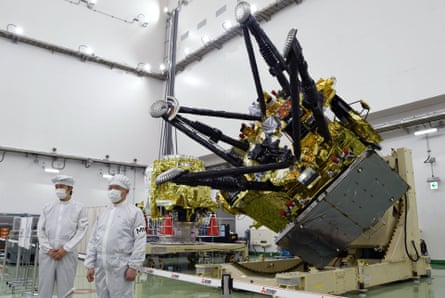
According to confidential industry insiders and leaked memorandum data, the startup's engineering architecture relies on micro-satellites weighing under 50 kilograms each. These platforms are engineered to deploy autonomously upon reaching target altitudes of 600 to 800 kilometers, utilizing advanced ion propulsion systems to maintain synchronized formations. Each satellite features an ultrathin, highly reflective polymer membrane tensioned by a lightweight composite frame, capable of tilting dynamically to track ground-based receiving stations with kilometer-level precision.
Financial Mechanics: Valuation Multiples and Capital Allocation

The monetization strategy underpinning the 50,000-mirror constellation relies heavily on securing power purchase agreements (PPAs) with major industrial consumers, data center operators, and municipal utilities desperate for baseload green energy. In an era where artificial intelligence workloads and cloud compute architecture are straining grid capacities to their absolute limits, the ability to guarantee zero-carbon power generation 24 hours a day commands an unprecedented market premium.
Venture capitalists and private equity funds specializing in deep tech and energy transition portfolios are viewing this asset class through a high-risk, asymmetric-reward lens. Initial fundraising rounds are commanding valuations reminiscent of early-stage semiconductor or quantum computing startups. However, risk mitigation remains the primary topic of board-room discussions:
- Launch Risk: Delays or failures in heavy-lift vehicle manifests can cascade through capital deployment schedules.
- Constellation Maintenance: Atmospheric drag in LEO requires continuous orbital station-keeping, consuming valuable onboard propellant.
- Regulatory Compliance: Navigating international space treaties and securing spectrum and frequency allocations from the International Telecommunication Union (ITU) presents significant legal hurdles.
Verified Data: Project Parameters vs. Traditional Infrastructure
| Metric / Parameter | Orbital Mirror Constellation | Utility-Scale Battery Storage (BESS) | Traditional Terrestrial Solar |
|---|---|---|---|
| Operating Window | 24/7 (Targeted Nighttime Beaming) | 4��8 Hours Post-Sunset Discharge | Daylight Hours Only (~5-8 Peak Hours) |
| Capital Expenditure Profile | High Initial CapEx (Mass LEO Deployment) | Moderate-High (Lithium/Flow Replacements) | Low-Moderate (Mature Supply Chain) |
| Degradation Factors | Space Debris, Solar Flare Radiation, Drag | Chemical Cycle Wear, Thermal Runaway Risk | Soot, Dust Accumulation, Panel Aging |
| Environmental Footprint | Light Pollution Concerns, Orbital Debris | Mining Extraction Impacts, Disposal Issues | Land Use / Habitat Fragmentation |
Geopolitical, Environmental, and Market Implications
The introduction of tens of thousands of reflective surfaces into the night sky triggers immediate opposition from the global astronomical community. Professional and amateur astronomers alike warn that orbital megaconstellations of reflective panels will streak across long-exposure scientific instruments, potentially blinding ground-based telescopes and compromising deep-space tracking capabilities. The International Astronomical Union has repeatedly cautioned that uncontrolled orbital brightening threatens our collective heritage of the night sky.
Furthermore, national security implications are impossible to ignore. Defense analysts point out that a constellation capable of focusing concentrated solar radiation onto precise geographic coordinates possesses inherent dual-use characteristics. While startup executives vehemently emphasize peaceful energy delivery, military intelligence agencies across Washington, Beijing, and Brussels are rigorously modeling the strategic implications of high-altitude energy redirection and thermal focusing.
From a market liquidity perspective, incumbent energy traders and fossil fuel asset owners are watching developments closely. If orbital solar proves economically viable at scale, it could trigger a massive devaluation of natural gas peaker plants—facilities traditionally relied upon to meet sudden evening demand spikes. Conversely, green energy developers stand to capture unprecedented valuation multiples if they can offer corporate clients true 100% round-the-clock renewable power without relying on intermittent weather patterns or mineral-intensive battery farms.
Frequently Asked Questions (People Also Ask)
How do the orbital mirrors actually transmit energy to the ground at night?
The satellites do not beam microwaves or laser energy down to earth in the manner of traditional space-based solar power (SBSP) concepts. Instead, they act as orbital reflectors—large, highly polished mirrors that catch direct sunlight while they are in orbit above the Earth's day-night terminator line and angle their reflective membranes to bounce that sunlight down onto existing terrestrial photovoltaic solar farms or designated industrial receiving stations during local nighttime hours.
Won't 50,000 mirrors in the sky ruin nighttime visibility and astronomy?
This is one of the primary criticisms facing the venture. Astronomers argue that sunlight reflecting off large orbital surfaces will create severe light pollution, streaking across optical and radio telescope lenses. The startup's engineers claim they are experimenting with specialized anti-reflective coatings, precise attitude adjustments during transit, and higher orbital altitudes to minimize optical signatures, though regulatory bodies remain highly skeptical.
What is the total estimated cost to manufacture, launch, and maintain the constellation?
While exact financial figures remain closely guarded within private term sheets, industry analysts estimate that a full-scale deployment of 50,000 micro-satellites will require capital expenditures exceeding $12 billion over a ten-year deployment horizon. This accounts for ongoing rocket launch contracts, ground station infrastructure, orbital slot licensing, and continuous constellation replenishment to account for atmospheric decay.
Are there regulatory frameworks currently in place to govern space-based mirrors?
The regulatory landscape is notoriously fragmented. While the Outer Space Treaty of 1967 governs national liability and the peaceful use of outer space, it contains few specific provisions regarding large-scale environmental modification or light pollution caused by commercial enterprises. Oversight is currently shared loosely between national aviation authorities (such as the FAA), the Federal Communications Commission (FCC) regarding orbital frequencies, and international bodies like the United Nations Committee on the Peaceful Uses of Outer Space (COPUOS).
Future Outlook: Milestones and Key Inflection Points
The trajectory of this ambitious venture hinges on several critical operational milestones over the next 24 to 36 months. First, the company must successfully execute a scaled pathfinder mission—launching a cluster of 10 to 50 operational prototypes to test attitude control algorithms, thermal durability in the harsh LEO environment, and ground-station tracking accuracy.
Second, regulatory clearance will serve as the ultimate corporate bottleneck. As petitions are filed for orbital slots and spectrum allocation, public hearings and environmental impact assessments will test the legal defensibility of altering the nocturnal environment for commercial gain. For institutional investors, venture capitalists, and energy sector executives, the coming quarters will determine whether orbital mirrors represent the next great leap in infrastructure scalability or an over-leveraged detour into celestial speculation.