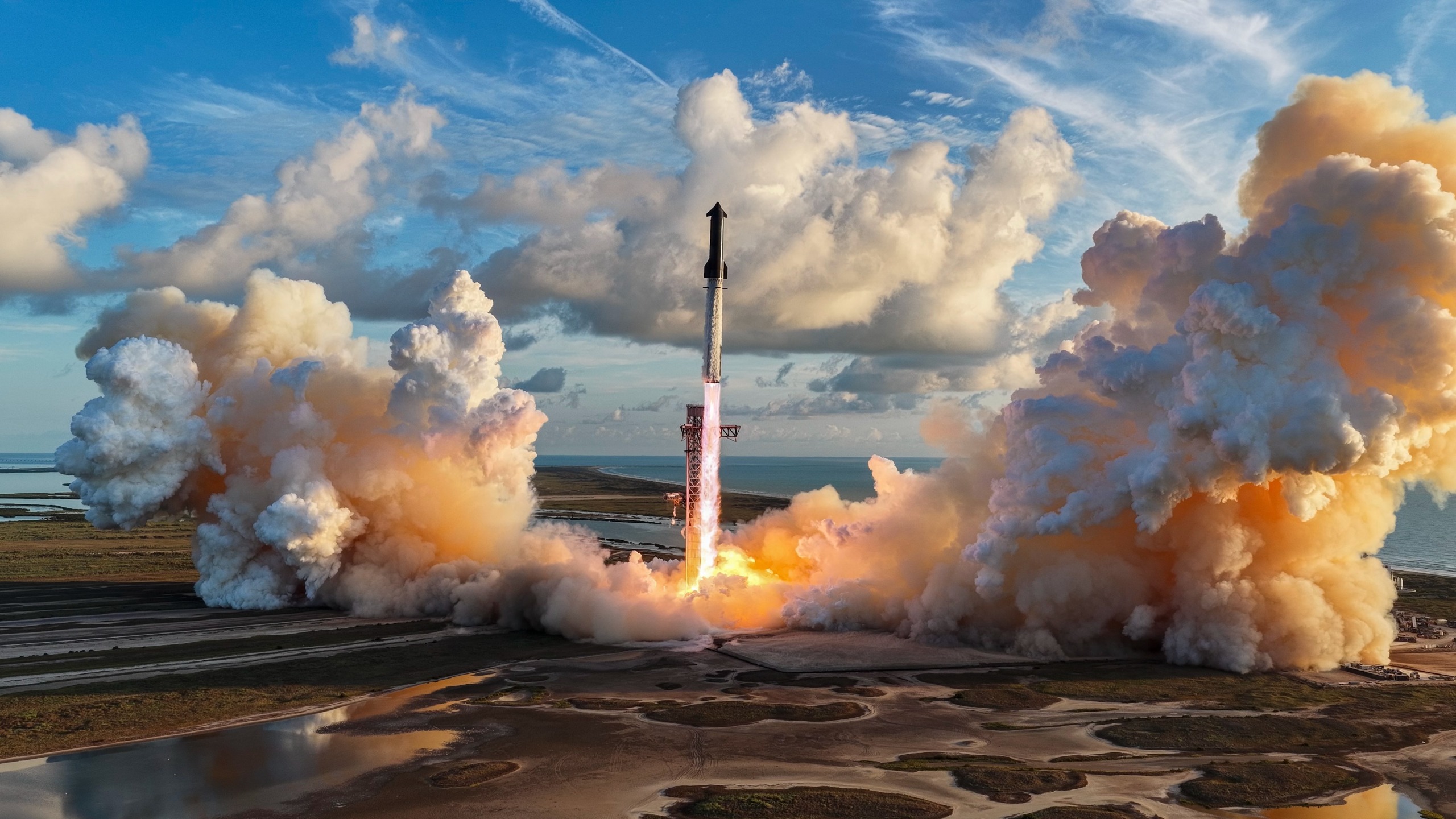
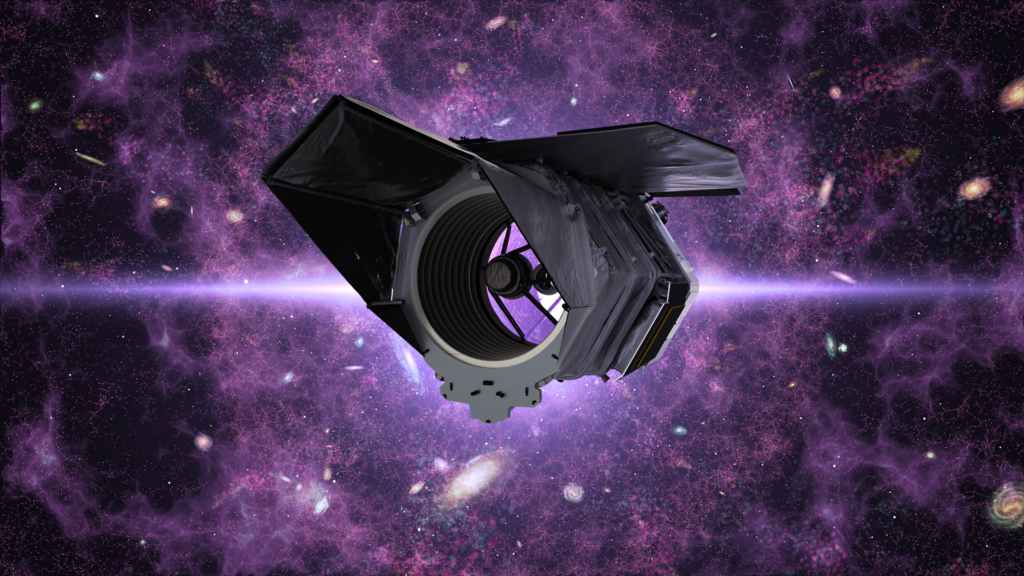
WASHINGTON & PASADENA — In what senior defense and aerospace analysts are characterizing as the most technologically aggressive scientific deployment since the commissioning of the James Webb Space Telescope (JWST), an elite global consortium led by premier astrophysicists has formally finalized operational architectures for NASA’s next-generation deep-space initiative. Tasked with reconstructing the universe’s earliest structural formations, the mission targets the enigmatic "Cosmic Dawn"—the epoch between 100 million and one billion years following the Big Bang when the first generation of stars permanently reshaped cosmological topology.
The enterprise, backed by multi-billion-dollar congressional appropriations and syndicated across sovereign aerospace bodies, transcends fundamental academic inquiry. Beneath the surface of pure science lies a multi-tiered technological proving ground. The program leverages next-generation focal plane arrays, cryogenic orbital refrigeration, quantum-limited infrared sensors, and distributed exascale cloud compute architecture. For institutional investors, defense prime contractors, and semiconductor consortiums, this initiative provides a critical lens into the dual-use pipeline shaping terrestrial infrastructure scalability, quantum-sensing intellectual property, and high-margin federal procurement contracts over the coming decade.
Executive Takeaways
- Unprecedented Cosmological Scope: The consortium’s mission profile is engineered to capture high-redshift ($z > 10\text{ to }15$) spectral emissions, deploying high-resolution wide-field infrared spectroscopy to chart millions of the earliest primordial galaxies simultaneously.
- Disruptive Infrastructure & Cloud Telemetry: Generating an estimated 25 petabytes of raw uncompressed telemetry per operating cycle, the ground-segment pipeline relies on real-time, hybrid sovereign cloud architectures, establishing new engineering standards for low-latency optical downlinks and decentralized machine-learning pipelines.
- Industrial Base Acceleration: Tier-1 aerospace primes—including advanced photonics and sensor subcontractors—stand to capture extensive enterprise ROI via the commercialization of mission-qualified mercury-cadmium-telluride (HgCdTe) detector arrays and sub-Kelvin closed-cycle cryocoolers.
- Fiscal Architecture & Risk Mitigation: Structured to avert the programmatic cost overruns that historically characterized 20-year flagship projects, the initiative employs a modular, fixed-milestone framework that blends federal R&D allocations with allied international space agency cost-sharing.
The Genesis of the Initiative: Piercing the Primordial Dark Ages

For decades, empirical observational cosmology has collided with an observational wall known as the Cosmic Dark Ages. Prior to the formation of the first nuclear-burning stellar bodies, the cosmos was a dense, opaque continuum of neutral hydrogen and helium, devoid of optical illuminators. As the initial stellar clusters collapsed under gravitational instability, their intense ultraviolet radiation initiated the Epoch of Reionization (EoR), ionizing surrounding hydrogen gas and rendering the universe transparent to electromagnetic radiation.
While JWST demonstrated the presence of unexpectedly massive, luminous galaxy candidates residing at redshifts $z > 10$, its narrow field-of-view architecture restricts its capacity to systematically measure cosmic variance or model the broad-scale topological structure of reionization. The newly consolidated NASA-led consortium, uniting over 40 research universities across North America, Europe, and Asia-Pacific, was mobilized to resolve this exact bottleneck.
"We are no longer looking through a cosmic keyhole," said the consortium's Principal Investigator during a briefing at NASA’s Jet Propulsion Laboratory. "By engineering an ultra-wide, multi-band spectroscopic survey operating at the Second Sun-Earth Lagrange Point (L2), we are transitioning from high-magnification snapshots of isolated anomalies to an authoritative, dynamic census of the cosmos during its foundational phase. We are tracing the transition from non-linear density perturbations into the first self-sustaining luminous structures."
Deep Technical Breakdown: Sensor Architecture and Exascale Data Processing
To capture the faint, redshifted emissions stretched across billions of light-years of expanding spacetime, the mission's payload integrates an uncompromising suite of optoelectronic innovations. The core scientific instrument comprises an expansive mosaic of 4K-by-4K pixel HgCdTe focal plane arrays, optically mated to wide-field astrometric collimators operating at an ultra-stable thermal floor of 35 Kelvin.
Capturing photons that departed their sources nearly 13.4 billion years ago requires unprecedented signal-to-noise optimization. Atmospheric distortion and solar radiation are mitigated via a passive deployable sunshield, coupled with vibration-isolated, pulse-tube cryocoolers engineered to suppress thermal noise below the single-electron-per-second threshold. The optical array executes low-resolution slitless spectroscopy and deep-band imaging across 0.75 to 5.0 micrometers, allowing the consortium to construct three-dimensional volumetric maps of galaxy distributions, star formation rates, and neutral hydrogen fractions.
The ground-segment architecture introduces an equally formidable engineering benchmark. Downlinking massive tranches of telemetry via advanced Ka-band and deep-space optical communication (laser) systems, the project circumvents conventional monolithic mainframe processing. Instead, the consortium has architected a secure, sovereign-cloud processing pipeline capable of ingesting high-throughput streaming data directly into distributed, machine-learning-driven cosmological reduction pipelines. This automated workflow catalogs point-sources, subtracts foreground zodiacal light contamination, and computes photometrically calibrated redshifts in near-real-time—reducing algorithmic workflows that previously required months of high-performance computing (HPC) allocation down to microservices-driven compute cycles lasting mere hours.
Capital Allocation, Defense Primes, and Enterprise Value Chains
The geopolitical and industrial ramifications of this mission reach deep into the defense and enterprise technology ecosystems. Aerospace and defense primes operate under an increasingly stringent capital allocation paradigm. Historically, flagship space science was viewed by Wall Street as high-risk, low-margin business characterized by cost-plus structures that incurred substantial regulatory scrutiny and unpredictable balance-sheet liabilities.
However, modern NASA mission management has dramatically adjusted this incentive framework. By instituting modular component development and competitive procurement mechanisms across commercial partners, the agency is leveraging commercial off-the-shelf (COTS) computing architectures hardened against ionizing space radiation alongside custom-fabricated optics. The resulting cross-pollination provides direct enterprise ROI for contractors operating across the commercial aerospace, optical satellite communications, and edge-computing spaces.
Subcontractors manufacturing ultra-pure optical crystals, lightweight beryllium structural spars, and autonomous calibration systems are deploying IP financed by civil space appropriations straight into high-eCPM defense contracts, including missile tracking sensor arrays and orbital surveillance systems. Furthermore, cloud hyperscalers underwriting the high-performance computing architecture are utilizing these unstructured, hyper-dimensional astrophysics datasets as a stress-test showcase for their enterprise data lakes, algorithmic scalability, and distributed database models, demonstrating resilient performance in zero-tolerance environments.
Mission Comparative Metrics & Strategic Benchmarks
To contextualize the scientific scale, technological differentiation, and capital dynamics of this initiative, the following matrix compares the mission against historical and concurrent orbital astronomical infrastructure:
| Mission Metric / Asset | Hubble Space Telescope | James Webb Space Telescope | Consortium Survey Mission |
|---|---|---|---|
| Primary Orbital Deployment | Low Earth Orbit (~550 km) | Sun-Earth L2 Lagrange Point | Sun-Earth L2 Lagrange Point |
| Core Spectral Wavelength | 0.1 – 1.0 μm (UV / Optical) | 0.6 – 28 μm (Near/Mid-Infrared) | 0.75 – 5.0 μm (Wide Near-Infrared) |
| Instantaneous Field of View | ~4.8 sq. arcminutes | ~9.7 sq. arcminutes | > 0.28 sq. degrees (>100x Webb) |
| Raw Telemetry Ingestion / Yr | ~10 Terabytes | ~20 Terabytes | > 25 Petabytes (Multi-Cloud Pipeline) |
| Capital Expenditure Profile | ~$4.7B (Inflation Adjusted) | ~$10.0B Lifecycle Cost | ~$3.2B Modular Distributed Model |
Geopolitical, Industrial, and Market Implications
The mission lands amid an accelerating global orbital economy, projected by Wall Street investment banks to surpass $1.8 trillion in aggregate capitalization by 2035. As civil space budgets face fiscal pressure in an era of sovereign debt discipline and elevated bond yields, NASA’s deployment of public-private-academic consortium models provides a framework for de-risking long-horizon R&D investments.
Winners in the Ecosystem: The unambiguous beneficiaries are tier-one precision optical manufacturers, advanced radiation-hardened semiconductor foundries, and enterprise cloud hyper-scalers. These organizations secure sticky, federally funded, non-cyclical contracts that insulate earnings multiples against macro recessionary cycles. Furthermore, academic institutions embedded in the consortium enhance their talent acquisition pipeline, attracting elite doctoral engineering talent whose computational breakthroughs routinely spin out into private-market quantitative finance, artificial intelligence research, and advanced machine-vision technologies.
Structural Risks and Disruption: Conversely, traditional single-supplier aerospace contractors that rely on outdated cost-plus delivery structures face compression on enterprise valuation multiples. The ongoing transition toward commercial launch vehicles and standardized, modular payload buses has substantially lowered the barrier to orbital entry, squeezing the operational margins of legacy contractors that fail to demonstrate rapid deployment capability, supply-chain resilience, and cloud-native software integration.
Frequently Asked Questions (People Also Ask)
What is the primary scientific objective of this NASA-led mission?
The mission is engineered to map the "Cosmic Dawn" and the subsequent Epoch of Reionization (EoR)—a period between 100 million and one billion years following the Big Bang. By using ultra-wide infrared spectroscopy to penetrate obscuring cosmic dust and neutral gas, the consortium aims to observe the universe's earliest galaxies and measure how their energetic output ionized the primordial intergalactic medium.
How does this mission differ from the James Webb Space Telescope (JWST)?
While the JWST provides exceptionally high-resolution, deep-focus imaging of narrow slices of the cosmos, this mission provides a wide-field survey with an instantaneous observational footprint more than 100 times larger. Instead of examining individual astronomical targets, it executes systematic, statistical surveys across millions of high-redshift objects simultaneously to establish large-scale cosmic evolution patterns.
What dual-use technologies are being developed through this initiative?
The initiative accelerates critical commercial and national-security capabilities, including radiation-hardened mercury-cadmium-telluride (HgCdTe) focal plane arrays, sub-Kelvin space-qualified cryogenic cooling systems, deep-space optical communication (laser downlinks), and exascale automated data-reduction pipelines deployed on distributed cloud infrastructures.
Where is the observatory located, and why was that orbit chosen?
The observatory operates at the Second Sun-Earth Lagrange Point (L2), approximately 1.5 million kilometers outside Earth’s orbit. This orbital configuration keeps the Earth, Moon, and Sun clustered in a single directional vector, allowing the spacecraft’s deployable heat shield to block disruptive thermal radiation and solar light, thereby maintaining the cryogenic conditions critical for high-fidelity infrared measurements.
Strategic Road Ahead: Milestones, Launch Windows, and Risk Mitigation
As the international consortium shifts from the Critical Design Review (CDR) phase toward mechanical assembly, integration, and environmental testing (AI&T), project directors face an unforgiving programmatic critical path. The immediate operating horizon centers on completing cryo-vacuum chamber testing of the optical core to verify baseline point-spread performance under deep-space thermal conditions.
The primary programmatic risk lies within the integration of the complex cryogenic cooling loops with the ultra-sensitive detector arrays. A thermal runaway or structural micro-vibration could degrade spectral precision, dampening high-redshift galaxy detections. To mitigate this risk, the consortium has instituted an iterative digital-twin testing model, conducting thousands of simulated stress events using predictive multi-physics computational engines before payload hardware touches flight integration benches.
With hardware validation advancing toward integration milestones and launch integration slated for the late 2020s, this coalition of astronomers, aerospace architects, and data scientists is redefining the economics and capability envelope of modern astrophysics. In probing the furthest horizons of cosmic time, the consortium is simultaneously validating the technical foundations of 21st-century aerospace, photonics, and enterprise-grade computing.