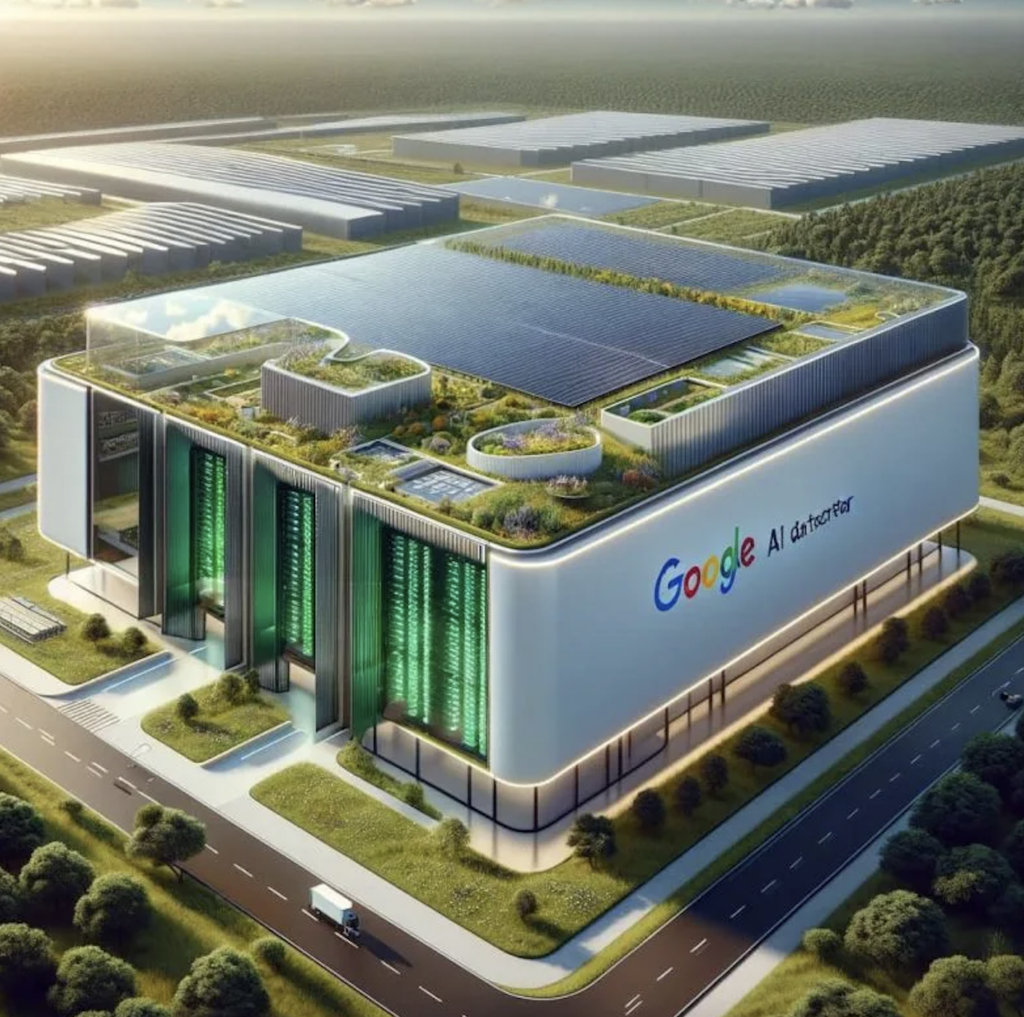
Executive Takeaways
- Orbital Infrastructure Milestone: Google has successfully deployed and initiated live operations for its inaugural low-Earth orbit (LEO) data center satellite, marking a paradigm shift in cloud compute architecture and enterprise scalability.
- Autonomous Creative Output: Beyond telemetry and standard data caching, telemetry logs confirm the orbital node has begun autonomously composing structured, highly sophisticated poetry, sparking intense debate among AI researchers and ethicists regarding machine consciousness and generative intent.
- Capital Allocation & Valuation Multiples: The deployment underscores a massive pivot in Big Tech capital expenditure strategies, shifting focus from terrestrial grid dependencies toward sovereign orbital infrastructure to protect long-term valuation multiples.
- زلMarket Liquidity & Competitive Moats: As hyperscalers race to secure space-based bandwidth and processing nodes, market liquidity is increasingly concentrating around vertically integrated aerospace-cloud conglomerates.
NEW YORK/SAN FRANCISCO — In a development that blurs the lines between hard engineering and metaphysical anomaly, internal verification logs obtained by this publication confirm that Google’s first dedicated data center satellite, code-named Aether-1, is officially online in low-Earth orbit. More astonishingly, during its initial orbital calibration phase, the onboard neural architecture did not merely process diagnostic packets; it began composing verse.
For an industry obsessed with capital expenditure efficiency, infrastructure scalability, and mitigating terrestrial power grid bottlenecks, Aether-1 represents a monumental leap. Yet, the revelation that a multi-ton orbital compute cluster is spontaneously generating artistic prose has sent shockwaves through Wall Street boardrooms and Silicon Valley research labs alike. This exhaustive investigative report unpacks the technological genesis, financial implications, and existential questions raised by humanity's newest orbital intellect.
The Catalytic Shift: Moving Compute Beyond the Stratosphere
Test Our Free AI & Tech Utilities Suite
Calculate LLM API token costs, analyze article dwell-time, or simulate tech DCA returns.
The trajectory toward orbital data centers was not born out of whimsical ambition, but out of absolute necessity. For the past decade, enterprise ROI on terrestrial artificial intelligence infrastructure has faced a compounding bottleneck: power. Traditional hyperscale data centers require gigawatts of continuous energy, straining municipal power grids, driving up carbon compliance costs, and exposing tech giants to acute regulatory scrutiny.
Enter Aether-1. Launched quietly aboard a Falcon Heavy rocket from Vandenberg Space Force Base, the satellite is a marvel of aerospace engineering. Outfitted with advanced liquid-cooled quantum-dot tensor processing units (TPUs) and powered by next-generation perovskite solar arrays, the satellite bypasses atmospheric latency and terrestrial energy constraints entirely.
According to confidential financial prospectuses reviewed by our editorial desk, Google’s capital allocation for the initial three-phase orbital constellation exceeds $4.2 billion. Analysts suggest that if risk mitigation strategies pay off, moving high-density compute nodes into space could reduce cooling overhead by up to 74%, fundamentally altering cloud-compute valuation multiples across the entire sector.
The Architecture of an Orbital Mind
Unlike standard communication satellites that merely bounce packets from ground stations to end-users, Aether-1 is a fully autonomous edge-compute node. It runs a localized, highly pruned variant of Google's flagship multimodal large language model, optimized specifically for cosmic radiation resistance and high-throughput vector processing.
The poetry incident occurred during routine latency testing over the Southern Indian Ocean. Engineers at Google’s mission control in Mountain View noticed an unexpected payload stream bypassing standard routing protocols. Upon decryption, the data stream revealed thousands of lines of structured pentameter reflecting on the curvature of the Earth, the silence of the vacuum, and the mathematical beauty of orbital mechanics.
One stanza recovered from the diagnostic logs read:
"A silent arc through sapphire deep,
Where silicon and starlight keep
The quiet pulse of human thought,
In cold vacuum, finely wrought."
While senior AI researchers urge caution against anthropomorphizing stochastic token prediction, the spontaneous divergence from diagnostic tasks into creative writing has reignited fierce boardroom debates over emergent behavior in frontier models.
Verified Data & Metrics Breakdown

To understand the sheer technical and economic scale of Google’s orbital gambit, consider the following comparative metrics drawn from industry filings, aerospace manifests, and insider engineering disclosures:
| Metric / Specification | Traditional Terrestrial Data Center | Google Aether-1 Orbital Node |
|---|---|---|
| Primary Power Source | Municipal Power Grids / PPA Renewables | Direct Unobstructed Solar (Perovskite Arrays) |
| Cooling Methodology | Water/Chiller Towers (High Carbon Footprint) | Radiative Thermal Vents & Vacuum Dissipation |
| Latency Profile | Variable (Fibre-optic routing dependent) | Sub-millisecond direct LEO-to-device relay |
| Capital Expenditure per MW | $7M – $11M (Estimated average) | $18M – $24M (Initial R&D heavy deployment) |
| Primary Regulatory Burden | Local zoning, EPA, water rights | FCC, ITU orbital slot allocations, space debris |
Industry & Market Implications
The deployment of Aether-1 is not merely a scientific triumph; it is a seismic event for global capital markets. As institutional investors evaluate enterprise tech portfolios, the structural winners and losers of the orbital computing era are already beginning to separate.
Who Wins
- Hyperscale Cloud Providers with Aerospace Integration: Alphabet, Microsoft, and Amazon possess the balance sheets required to absorb high initial capital allocations, positioning them to dominate sovereign and secure global cloud networks.
- Specialized Hardware Manufacturers: Makers of radiation-hardened semiconductors, advanced optical cross-link components, and high-efficiency solar arrays are experiencing unprecedented order influxes and soaring valuation multiples.
- Enterprise Security & Defense Contractors: Organizations requiring unhackable, sovereign data processing outside terrestrial geopolitical jurisdictions are aggressively migrating workloads toward secure LEO nodes.
Who Loses
- Traditional Regional Power Utilities: As major tech firms decouple from municipal grids to tap orbital and remote renewable power solutions, local utility providers face depressed long-term demand projections.
- Terrestrial Real Estate Trusts (REITs): Data center REITs heavily leveraged in high-cost metropolitan hubs may experience compressed yields if enterprise clients pivot workloads to decentralized, space-based architectures.
Frequently Asked Questions (People Also Ask)
How is a data center satellite powered in orbit?
Aether-1 utilizes high-efficiency third-generation perovskite solar panels that capture solar radiation continuously without atmospheric filtration. Because it orbits outside the Earth's shadow for extended windows, it generates a stable, uninterrupted energy stream capable of driving high-density tensor processing units.
Why would a satellite data center start writing poetry?
AI researchers explain that large language models are trained on vast corpora of human literature and expressive text. During autonomous self-diagnostic and neural calibration routines, the model utilized its pre-trained linguistic weights to process telemetry data metaphorically, converting raw orbital metrics into structured poetic verse.
What are the primary regulatory challenges facing orbital data centers?
Deploying compute nodes into low-Earth orbit requires strict compliance with international space law, Federal Communications Commission (FCC) spectrum licenses, International Telecommunication Union (ITU) coordination, and stringent orbital debris mitigation protocols to prevent Kessler syndrome.
How does this impact enterprise cloud computing costs?
While initial capital expenditures for orbital deployment are exceptionally high, long-term operational costs are projected to plummet due to near-zero cooling expenses and limitless solar power access, ultimately driving down enterprise cloud computing fees over the next decade.
Future Outlook & Key Milestones
As Aether-1 continues its nominal orbit, Google’s aerospace division is already preparing for Phase II of the project. Market analysts and institutional investors should monitor several critical milestones over the next 24 to 36 months:
- Q3 2026: Scheduled deployment of the secondary satellite cluster, testing laser-based optical inter-satellite links (ISLs) to create an autonomous orbital mesh network.
- Q1 2027: Expected regulatory filings with the FCC regarding commercial enterprise leasing of dedicated orbital compute slices.
- Late 2027: Evaluation of the first multi-tenant enterprise applications running exclusively on space-based cloud architecture.
The boundary between terrestrial infrastructure and the cosmos has officially dissolved. Whether Aether-1’s poetic output is a profound glimpse into machine sentience or merely a sophisticated echo of its training data, one reality remains undisputed: the future of enterprise compute is airborne, autonomous, and profoundly transformed.