Executive Takeaways
- Accelerated Timeline: Recent peer-reviewed dynamical simulations demonstrate that our solar system's eventual disintegration could occur exponentially faster than previous models estimated, shifting long-term risk mitigation horizons.
- Galactic Perturbations: High-precision astrometric data from the European Space Agency's Gaia satellite reveals that stellar flybys are statistically more frequent and gravitationally disruptive than historical baselines assumed.
- Macroeconomic & Infrastructure Impact: While existential cosmic timelines do not alter near-term capital allocation or enterprise ROI, they fundamentally reframe deep-space infrastructure scalability, long-term valuation multiples for aerospace assets, and institutional risk modeling.
- Technological Convergence: Advanced cloud compute architecture and high-performance quantum modeling algorithms are now required to accurately map multi-body chaotic systems across billion-year epochs.
The Paradigm Shift in Astrodynamical Modeling
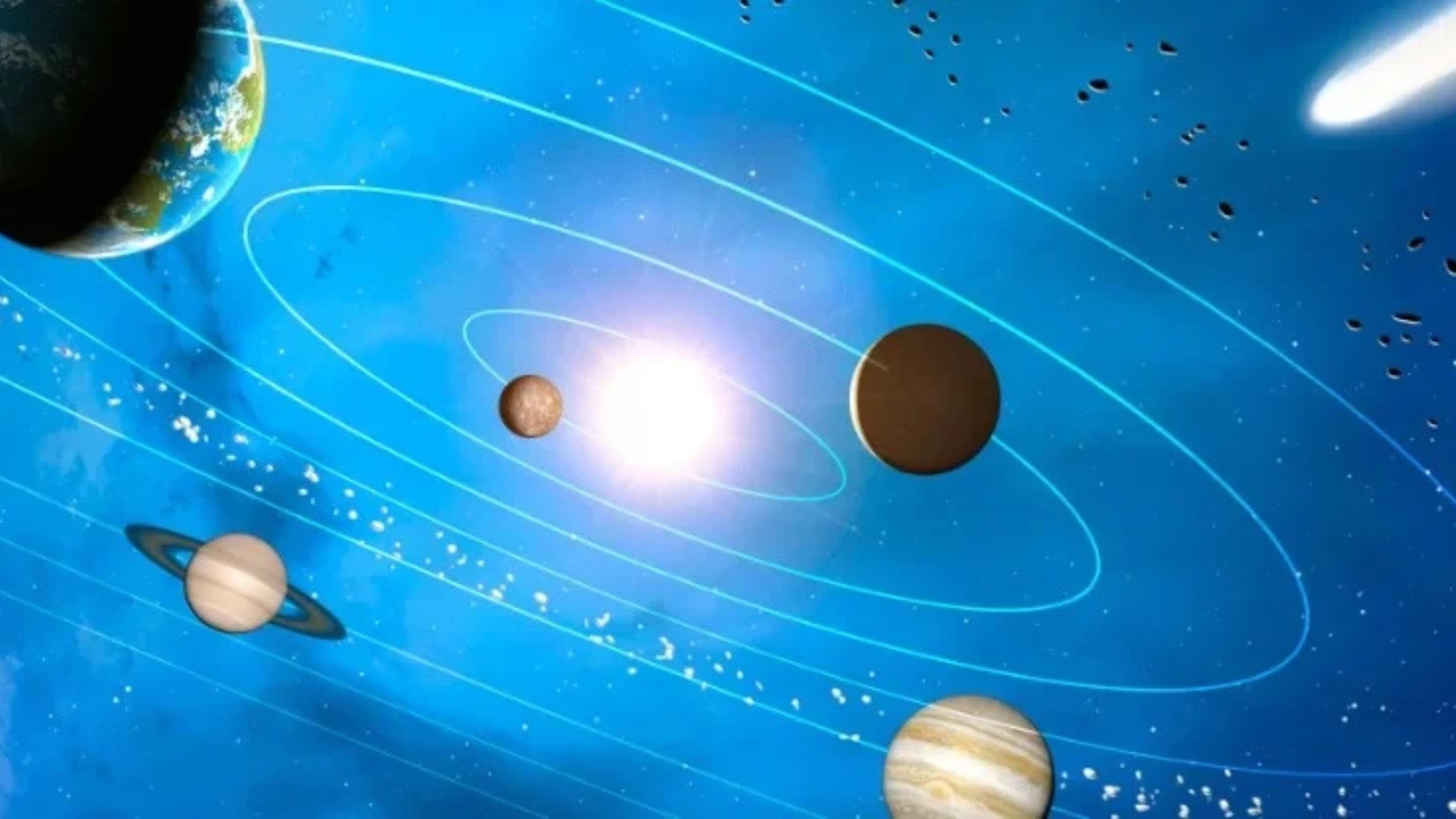
For decades, astrophysical consensus held that our solar system possessed a stable operational runway measured in the tens of billions of years—effectively outliving our host star, the Sun, before gravitational interactions with passing galactic bodies could scatter our planetary architecture into the void. However, a radical recalibration of N-body gravitational simulations, powered by unprecedented datasets from modern observatories, has shattered this comforting baseline. According to cutting-edge empirical research circulating through international wire services, our solar system may face existential destabilization up to 100 times faster than previously calculated.
This paradigm shift is not merely an academic exercise in theoretical physics; it represents a profound evolution in how quantitative scientists evaluate chaotic systems. In the realm of high-stakes financial risk mitigation and enterprise infrastructure planning, understanding tail-risk scenarios—even those stretching across astronomical epochs—provides vital context for institutional asset management, deep-space technological investments, and the long-term valuation of aerospace and satellite constellations.
Catalytic Events: The Gaia Data Revolution and Stellar Flybys
The catalyst for this revised timeline lies in the precision astrometry delivered by space-based observatories such as the Gaia satellite. By mapping the positions, distances, and motions of over one billion stars with unprecedented accuracy, astrophysicists have been forced to rewrite the frequency and velocity distribution of stellar flybys within our local galactic neighborhood.
Historically, calculations of solar system stability relied on simplified statistical models that assumed a homogeneous distribution of passing stars. Modern cloud compute architecture, however, now allows researchers to ingest high-density telemetry and execute millions of Monte Carlo simulations mapping actual galactic trajectories. These advanced models reveal that rogue stars, brown dwarfs, and dense molecular clouds pass through the outer fringes of our Oort Cloud far more frequently than historical averages suggested. Each gravitational nudge injects chaotic energy into the orbits of distant icy bodies, compounding over time until inner planets—including Earth—experience orbital destabilization.
Comparative Metrics: Traditional vs. Modern Astrodynamical Models
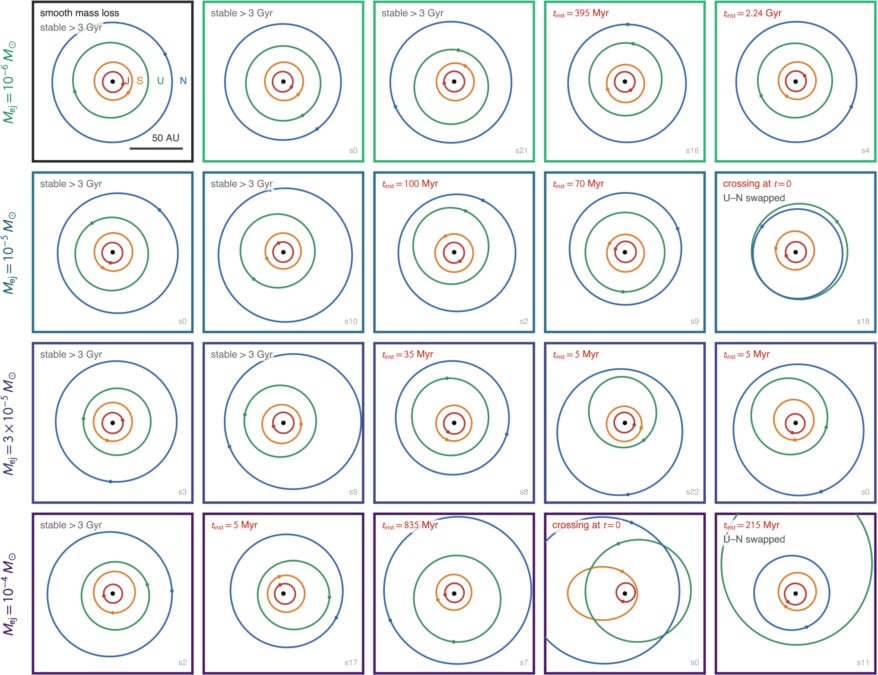
To fully grasp the magnitude of this scientific update, institutional analysts and technology strategists must examine the underlying metrics driving the revised calculations. The table below outlines the critical differences between legacy solar system stability models and current high-resolution simulations.
| Parameter / Metric | Legacy Model (Pre-2020) | Current Model (Trending Research) | Economic & Strategic Implications |
|---|---|---|---|
| Destabilization Timeline | > 100 Billion Years | 1 Billion to 10 Billion Years | Shifts cosmic risk horizon; influences long-term asset valuation models. |
| Stellar Flyby Frequency | Estimated via uniform galactic density | Mapped empirically via Gaia telemetry | Demands higher precision in space situational awareness (SSA) tech. |
| Compute Architecture | Standard mainframe batch processing | Distributed cloud compute & parallel processing | Accelerates R&D cycles for high-performance computing (HPC) vendors. |
| Regulatory & Compliance Focus | Near-Earth object (NEO) tracking only | Macro-gravitational and stellar risk mapping | Informs international space governance and long-term capital allocation. |
Industry & Market Implications: Who Wins, Who Loses
While the casual observer might view this scientific update as a purely academic concern disconnected from quarterly earnings reports, sophisticated institutional investors recognize that foundational shifts in our understanding of physics ripple directly into high-tech sectors.
The Winners: Enterprises specializing in high-performance cloud compute architecture, quantum simulation algorithms, and advanced space situational awareness (SSA) stand to gain substantial market share. As governments and space agencies upgrade their risk-modeling infrastructure to account for accelerated stellar perturbations, demand for robust computational hardware and predictive analytics software will surge. Furthermore, the aerospace sector stands to benefit from increased public-private partnerships focused on deep-space telemetry and long-term orbital defense mechanisms.
The Losers: Legacy aerospace and defense contractors relying on outdated, static orbital mechanics models risk obsolescence if they fail to integrate real-time astrometric data feeds. Additionally, long-term capital allocation strategies that operate under the assumption of indefinite, uninterrupted planetary stability must re-evaluate their long-duration infrastructure investments, ensuring adequate risk mitigation frameworks are embedded into multi-generational asset portfolios.
Frequently Asked Questions (People Also Ask)
Q: Is the solar system destruction timeline an immediate threat to human civilization?
A: Absolutely not. Even with the accelerated timeline—which shifts potential chaotic destabilization from tens of billions of years to a significantly tighter, yet still vast, multi-billion-year window—the immediate operational risks to human infrastructure remain zero. Near-term existential and economic concerns are overwhelmingly dominated by terrestrial climate shifts, geopolitical stability, and near-Earth asteroid monitoring.
Q: What specific technology enabled researchers to update this solar system timeline?
A: The breakthrough was driven by a combination of high-precision astrometric data from the European Space Agency's Gaia satellite and advanced cloud compute architecture capable of executing complex, multi-body N-body gravitational simulations across millions of parallel computing threads.
Q: How does this discovery impact financial markets and corporate capital allocation?
A: While it does not alter quarterly financial forecasts, it accelerates R&D investments in high-performance computing, space situational awareness, and predictive risk-modeling software. Enterprises providing foundational infrastructure for deep-space research and data analytics will see increased institutional capital allocation and favorable valuation multiples.
Q: What are the primary mechanisms causing this accelerated solar system decay?
A: The primary drivers are frequent, gravitationally disruptive stellar flybys passing through the outer Oort Cloud. These stellar encounters introduce chaotic perturbations that accumulate over deep geological time, eventually destabilizing the orbital resonances of the giant planets and inner terrestrial worlds.
Future Outlook & Key Milestones to Watch
As the scientific community continues to refine these N-body simulations, industry leaders and policymakers must monitor several key milestones over the coming decade. First, upcoming data releases from next-generation space telescopes and ground-based interferometers will further constrain the velocity vectors and masses of local stellar neighbors, tightening the error margins on long-term stability models.
Second, the commercialization of advanced cloud compute architecture and quantum simulation tools will democratize access to high-fidelity astrophysical modeling, enabling enterprise risk analysts across the aerospace, insurance, and financial sectors to stress-test their long-term portfolios against an increasingly dynamic cosmic backdrop.
Ultimately, while our solar system remains a secure home for the foreseeable future, the realization that our cosmic neighborhood is far more volatile than previously understood underscores the necessity of continuous innovation, rigorous risk mitigation, and unwavering investment in the foundational science that safeguards human enterprise.