Pope Warns of a ‘Paradise of Machines’ in High-Stakes France Visit: Why AI’s Rapid Rise Risks Eclipsing Humanity
PARIS — In a high-stakes diplomatic visit intersecting the frontiers of advanced technology with the twilight of a presidency, Pope Leo XIV commenced his landmark trip to France with a stark, sweeping warning against the unchecked rise of artificial intelligence. Addressing an audience of state dignitaries, cultural leaders, and policymakers, the Pontiff warned that humanity is racing toward a "paradise of machines" that risks hollow victories at the cost of human dignity, economic equity, and moral agency.
The visit, widely viewed as a historic capstone event as French President Emmanuel Macron’s final term enters its closing chapters, comes at a critical juncture. As France aggressively positions itself as Europe’s premier hub for AI innovation, the Vatican is stepping up its efforts to shape the global regulatory framework governing cognitive computing, automated warfare, and algorithmic labor substitution.
Executive Summary: The Vatican’s Tech-Ethics Manifesto
- The Core Warning: Pope Leo XIV cautioned that prioritizing algorithmic efficiency over human welfare will create a sterile "paradise of machines" where human labor is devalued and moral responsibility is outsourced.
- Call for Direct Action: The Pontiff demanded robust international monitoring systems and binding ethical frameworks to govern the development of large-scale generative models and autonomous decision-making engines.
- The Geopolitical Backdrop: The visit serves as a highly symbolic moment, occurring as President Emmanuel Macron prepares for the final phases of his presidency, aiming to balance France's techno-capitalist ambitions with European humanist values.
- Sovereign Implications: Vatican emissaries are pushing for the global adoption of the "Rome Call for AI Ethics," aiming to influence pending regulatory frameworks in the European Union, the United States, and across the G7.
Behind the Warning: The ‘Paradise of Machines’ Dilemma
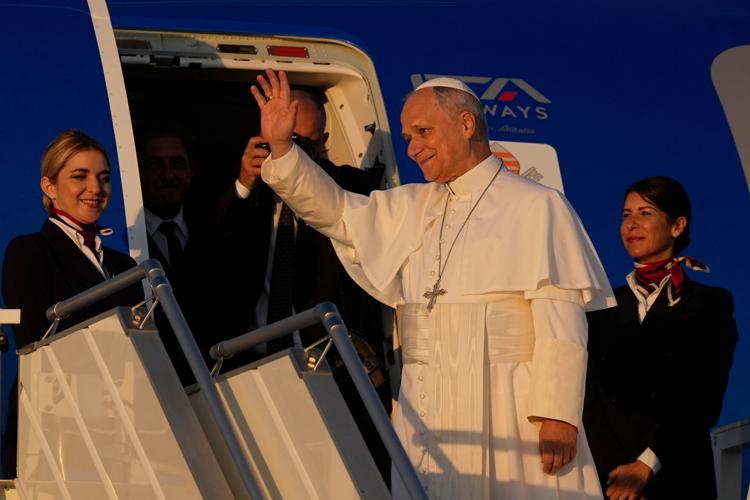
Delivering his address to a packed assembly, Pope Leo XIV did not mince words regarding the existential friction between human spiritual progress and technological accelerationism. While acknowledging the immense medical and scientific breakthroughs unlocked by computational technology, his message focused heavily on the systemic risks of unchecked automation.
"A world that sacrifices the dignity of human work on the altar of optimization is not a civilization of progress, but a paradise of machines," the Pontiff declared during his address. "When algorithms dictate who works, who receives care, and who is deemed valuable, we abdicate the very core of our humanity."
The Vatican's critique targets three primary pillars of modern AI deployment: the displacement of the white-collar and blue-collar workforces, the opacity of predictive algorithms in judicial and financial systems, and the psychological isolation engineered by hyper-personalized digital platforms. The Pope’s remarks build on his earlier delivery of the Angelus, during which he urged global leaders to place human beings back at the epicenter of technological design.
The Geopolitical Crucible: Macron's Tech Vision vs. Vatican Ethics
For President Emmanuel Macron, the Pope’s visit represents a profound diplomatic moment. Macron’s administration has spent years pouring billions of euros into the domestic tech sector, fostering the growth of French AI champions like Mistral AI and positioning Paris as a rival to Silicon Valley. Yet, Macron finds himself in agreement with the Pope on the necessity of regulatory guardrails.
As Macron's term nears its conclusion, this bilateral summit underscores the broader European challenge: how to remain economically competitive against the United States and China while preserving the social contract and democratic integrity. French officials have expressed hope that the Pope’s moral authority will help build a bridge between aggressive market-driven innovation and the stringent safety standards advocated by European regulators.
Comparing the Visions: Technological Dominance vs. Ethical Safeguards
To understand the policy rift that global executives must navigate, the table below highlights the key differences between the corporate-driven AI landscape and the Vatican’s proposed regulatory guardrails:
| Strategic Metric | The Industrial & Venture Capital Objective | The Vatican's Ethical Mandate |
|---|---|---|
| Primary Goal | Rapid scaling, market capture, and computational supremacy. | The preservation of human dignity, labor equity, and social cohesion. |
| Labor Approach | Cost reduction through automated workflows and generative agents. | Protecting meaningful human work as a source of personal dignity. |
| Regulatory Stance | Flexible, self-regulated sandboxes to avoid choking innovation. | Binding international treaties and robust algorithmic auditing. |
| Decision Making | Optimizing efficiency through deep-learning black-box models. | Maintaining mandatory human-in-the-loop oversight for ethical decisions. |
The Business Outlook: What This Means for Global Executives
The convergence of religious authority and state policy in France signals a tightening environment for tech multinational companies. For chief executives and technology officers, the Pope's intervention is not merely spiritual; it represents a powerful cultural current that will likely influence future EU policy initiatives.
Companies operating in Europe should expect heightened scrutiny regarding algorithmic transparency and labor transition policies. With the European Union’s AI Act already setting a global precedent, the Vatican's moral weight will likely accelerate calls for stricter enforcement, particularly in sectors such as healthcare, defense, and human resources where automated decisions have life-altering consequences.
Frequently Asked Questions
Why is the Pope focusing so heavily on Artificial Intelligence?
The Vatican views AI as a unique technological inflection point that threatens not just economic structures, but the very nature of human agency and morality. Unlike past industrial revolutions, cognitive automation directly mimics human decision-making, prompting the Church to intervene to prevent the erosion of human dignity and social equity.
How does this visit impact President Emmanuel Macron’s legacy?
As his presidency enters its final chapters, hosting Pope Leo XIV allows Macron to frame France as a nation capable of hosting the grand moral and technological debates of the 21st century. It highlights Macron's dual ambition to make France a tech powerhouse while remaining a leading voice in global humanist and regulatory policy.