Inside QuantumScape’s Pivotal Q1 2023 Blueprint: The Bet on the 5 Amp-Hour Solid-State Cell to Transform EV Infrastructure Scalability
Test Our Free AI & Tech Utilities Suite
Calculate LLM API token costs, analyze article dwell-time, or simulate tech DCA returns.
As automakers grapple with capital allocation constraints and soaring raw material costs, the battery pioneer’s Q1 2023 shareholder letter unveils a definitive commercialization vector: a 5 Ah multi-layer cell designed to de-risk manufacturing and secure market liquidity.
Executive Takeaways
- Commercial Vector Defined: QuantumScape targeted its 5 amp-hour (Ah) single- and multi-layer solid-state lithium-metal cells as the core vehicle for initial commercial entry, marking a critical transition from pure laboratory R&D to industrialized execution.
- Capital Allocation & Risk Mitigation: The strategic shift addresses severe balance sheet pressures, aiming to optimize enterprise ROI by focusing engineering capacity on a standardized form factor before scaling to larger automotive pack designs.
- The Validation Milestone: The announcement follows rigorous prototype testing cycles with Tier-1 automotive partners, providing institutional investors with vital visibility into long-term infrastructure scalability and valuation multiples.
The Strategic Imperative: Navigating the Valley of Death
For the better part of a decade, the Holy Grail of automotive electrification has remained tantalizingly out of reach: a solid-state lithium-metal battery capable of delivering high energy density, rapid charging times, and uncompromised safety without falling victim to the manufacturing bottlenecks that routinely plague electrochemical engineering. In the high-stakes theater of next-generation energy storage, QuantumScape Corporation (NYSE: QS) has long commanded both intense market optimism and severe skepticism.
However, the release of the company's Q1 2023 shareholder letter, first brought to prominence via reporting on platforms like Electrek, signaled a fundamental maturation in corporate strategy. By officially designating a 5 amp-hour (Ah) solid-state cell as its primary commercial product target, QuantumScape provided Wall Street analysts, institutional stakeholders, and automotive partners with the most concrete operational roadmap in the company's history. This decision is not merely a technical specification update; it represents a calculated masterclass in risk mitigation and capital allocation designed to navigate the notorious "valley of death" separating laboratory-scale breakthroughs from commercial-grade manufacturing lines.
Decoding the 5 Amp-Hour Architecture
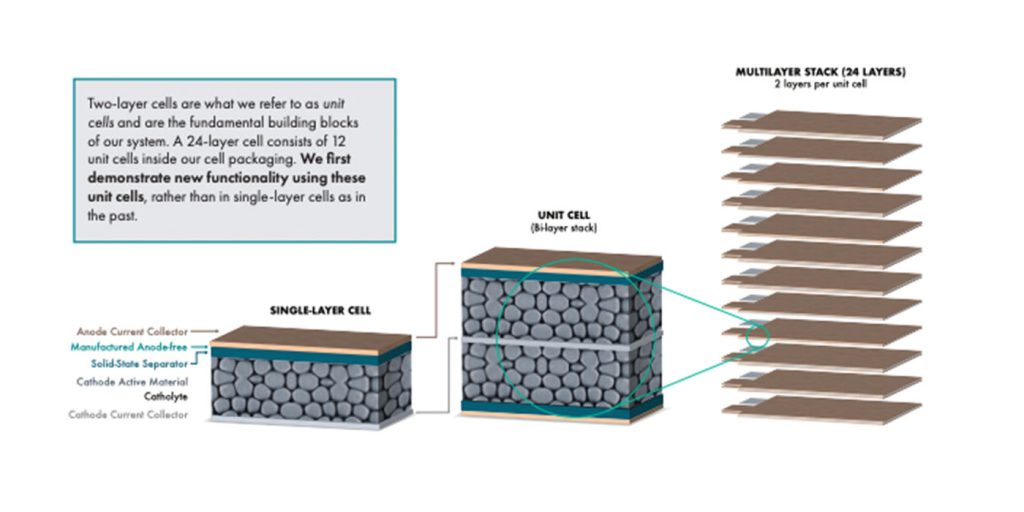
To understand the significance of the 5 Ah target, one must examine the metallurgical and mechanical physics of solid-state cells. Unlike traditional lithium-ion cells that utilize liquid organic electrolytes—which are prone to dendrite formation, thermal runaway, and volumetric expansion—QuantumScape’s proprietary ceramic separator technology allows for a pure lithium-metal anode.
Earlier prototype phases focused heavily on single-layer cells or massive, complex multi-layer configurations intended directly for high-capacity passenger electric vehicles (EVs). While scientifically impressive, scaling directly to large-format automotive cells introduced massive yield risks and exacerbated supply chain vulnerabilities. The 5 Ah cell strikes an optimal engineering equilibrium. It is large enough to demonstrate meaningful energy storage capabilities and validate stack packaging integrity, yet compact enough to allow manufacturing engineers to optimize process parameters, reduce defect densities, and stabilize continuous roll-to-roll production lines.
From a financial perspective, focusing initial commercialization efforts on a standardized 5 Ah module allows QuantumScape to preserve cash reserves, accelerate prototype iteration cycles, and engage early adopter markets—potentially in consumer electronics, premium niche mobility, or specialized stationary storage—before absorbing the astronomical capital expenditure required for gigafactory-scale automotive integration.
Verified Data & Metrics Breakdown
A comparative analysis of QuantumScape’s developmental milestones underscores the structural shift detailed in the Q1 2023 report. The following data matrix outlines the evolution of the company's cell architecture, target markets, and strategic focus areas:
| Development Phase | Cell Capacity / Format | Primary Technical Objective | Strategic & Market Implications |
|---|---|---|---|
| Early R&D (2020–2021) | Single-Layer / Sub-1 Ah | Validate ceramic separator core chemistry and fundamental ionic conductivity. | Proved scientific viability; triggered massive valuation multiples during public market debut. |
| Prototype Era (2022) | 24-Layer Automotive Form Factor | Demonstrate high energy density and fast-charging capabilities in larger stacks. | Validated by OEM partners (including Volkswagen Group / PowerCo); highlighted manufacturing complexity. |
| Q1 2023 Turning Point | 5 Amp-Hour (Ah) Cell | Establish a repeatable, scalable commercial baseline and de-risk factory automation. | Enhanced enterprise ROI, optimized cash burn, and cleared path to low-volume market entry. |
| Long-Term Scale (Post-2025) | Multi-Kilowatt-Hour Automotive Packs | Full gigafactory deployment for mass-market passenger vehicles. | Achieve long-term regulatory compliance, decarbonization targets, and global market dominance. |
Industry & Market Implications
The capital markets reacted to the Q1 2023 disclosure with cautious pragmatism. In an era where institutional investors increasingly penalize pre-revenue technology companies for excessive cash burn and unanchored timelines, QuantumScape’s pivot toward a defined 5 Ah product served as an essential exercise in risk mitigation.
Who Wins: Traditional automotive original equipment manufacturers (OEMs) partnered with QuantumScape—most notably Volkswagen through its battery subsidiary PowerCo—stand to benefit significantly. A smaller, highly optimized commercial cell allows engineering teams to refine battery management systems (BMS), thermal regulation, and structural pack integration without committing billions of dollars to unproven large-format manufacturing lines. Furthermore, institutional investors prioritizing rigorous capital allocation models find comfort in tangible product milestones rather than open-ended research horizons.
Who Loses: Competitors in the solid-state space relying on vague timelines or failing to demonstrate repeatable low-capacity manufacturing lines face heightened scrutiny. Additionally, incumbent manufacturers of conventional liquid-electrolyte lithium-ion cells cannot rest easy; while the 5 Ah cell is not an overnight replacement for mass-market automotive batteries, it serves as the vanguard for an existential technological disruption.
Frequently Asked Questions (People Also Ask)
What is the significance of QuantumScape’s 5 amp-hour (Ah) cell target announced in Q1 2023?
The 5 Ah cell represents QuantumScape’s foundational commercial product vector. By moving away from purely experimental multi-layer automotive giants toward a standardized 5 Ah format, the company can rigorously de-risk its manufacturing processes, optimize enterprise capital allocation, and establish a repeatable pathway toward low-volume commercial deployment before scaling to massive passenger car packs.
How does a solid-state lithium-metal battery differ from traditional EV batteries?
Conventional lithium-ion batteries utilize liquid organic electrolytes that facilitate the movement of lithium ions between electrodes but carry inherent risks of flammability and dendrite-induced short circuits. QuantumScape replaces this liquid electrolyte with a proprietary flexible ceramic separator, enabling a pure lithium-metal anode that dramatically increases energy density, accelerates charging speeds, and enhances overall thermal safety.
What impact did this announcement have on QuantumScape’s financial outlook and investor relations?
The announcement provided much-needed clarity for institutional investors tracking cash burn and operational milestones. By articulating a clear product roadmap, QuantumScape mitigated concerns regarding prolonged R&D timelines, protecting its valuation multiples and reassuring strategic automotive partners regarding infrastructure scalability.
When is the 5 Ah cell expected to reach full commercial mass production?
While the Q1 2023 report established the 5 Ah cell as the primary commercial target, full-scale industrial manufacturing and high-volume automotive integration remain multi-year endeavors. The timeline depends heavily on successful pilot-line yield optimization, ongoing OEM testing validation, and subsequent capital expenditure deployment for dedicated gigafactories.
Future Outlook: Milestones to Monitor
As QuantumScape advances beyond its pivotal Q1 2023 disclosures, executive leadership faces the formidable task of executing on the promised manufacturing milestones. Financial analysts and industry observers will be tracking several critical performance indicators over the subsequent operational quarters:
- Yield Optimization & Defect Reduction: Quantitative data regarding ceramic separator defect rates and roll-to-roll production consistency for the 5 Ah form factor.
- OEM Validation Feedback: Formal progress reports and milestone achievements from Tier-1 automotive partners—particularly Volkswagen’s PowerCo—regarding test cell performance under real-world stress conditions.
- Capital Expenditure Discipline: Quarterly cash burn rates and liquidity management metrics to evaluate how efficiently management is balancing R&D expenditure against commercialization goals.
- Pilot Production Scaling: Updates regarding the transition of proprietary manufacturing equipment from laboratory environments to pilot-scale production facilities (such as QS-0).
Ultimately, QuantumScape’s pivot to the 5 amp-hour solid-state cell marks the definitive transition of solid-state battery technology from theoretical physics to industrial reality. Whether the company can successfully navigate the formidable chasms of mass manufacturing will dictate not only its own corporate valuation, but the future trajectory of the global electric vehicle ecosystem.