Executive Takeaways
- Novel Measurement Framework: Research published by the Federal Reserve Bank of Atlanta introduces an advanced monetary policy index that bridges the gap between official interest rate stances and real-world financial conditions.
- Corporate Capital Allocation Shift: Enterprise risk mitigation strategies are undergoing radical revision as valuation multiples react to lagging transmission mechanisms across global markets.
- Liquidity Re-Pricing: Institutional investors must recalibrate their infrastructure scalability assumptions and cash-flow projections in response to non-linear shifts in credit availability.
- Regulatory Compliance Impact: Banking institutions face heightened scrutiny over how asset-liability management models incorporate these granular, high-frequency monetary indicators.
For decades, Wall Street traders, corporate treasurers, and central bankers have relied on blunt instruments—primarily the federal funds rate and forward guidance—to gauge the trajectory of the global economy. Yet, a persistent disconnect has repeatedly baffled economists: why do rapid shifts in monetary policy stance often take quarters to permeate corporate borrowing costs, asset valuations, and capital expenditure? The answer lies within the opaque plumbing of financial conditions. A groundbreaking analytical framework released by the Federal Reserve Bank of Atlanta seeks to dismantle this black box, offering unprecedented visibility into how central bank posture translates into real economic velocity.
As institutional asset managers scramble to protect enterprise ROI against a backdrop of sticky inflation and shifting yield curves, this new index provides a vital lens for risk mitigation. By mapping the friction between nominal rate adjustments and underlying market liquidity, the Atlanta Fed’s research—spearheaded by senior economists including Nikolay Gospodinov and building upon foundational working papers such as Atlanta Working Paper 2022-5—is forcing a systemic re-evaluation of how financial markets price risk. For executive leadership teams, corporate boards, and sovereign debt strategists, understanding this transmission mechanism is no longer optional; it is the cornerstone of defensive positioning in an increasingly volatile macroeconomic ecosystem.
Decoding the Transmission Mechanism: From Policy Stance to Market Reality
Test Our Free AI & Tech Utilities Suite
Calculate LLM API token costs, analyze article dwell-time, or simulate tech DCA returns.
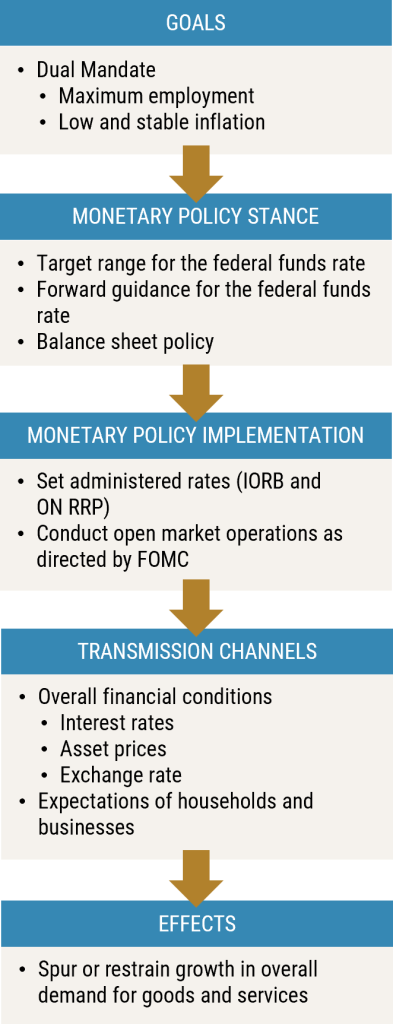
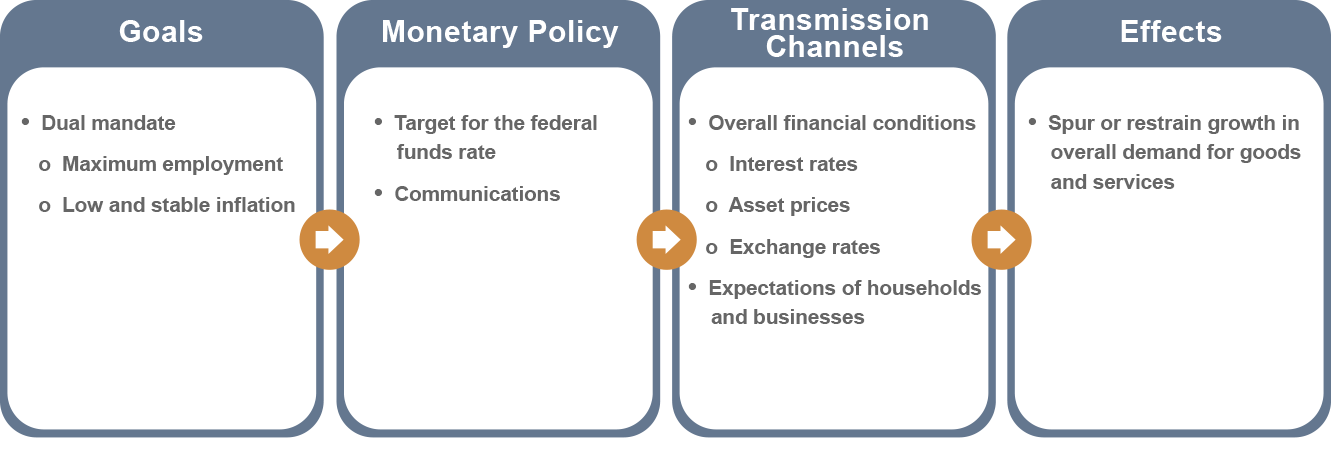
To understand the magnitude of the Federal Reserve Bank of Atlanta’s recent analytical intervention, one must examine the historic friction inherent in monetary transmission. When the Federal Open Market Committee (FOMC) adjusts the benchmark interest rate, the policy stance shifts immediately on paper. However, the transmission pipeline—comprising commercial bank lending standards, corporate bond spreads, mortgage rates, and equity market valuations—acts as a complex resistor network. Broad financial conditions can either amplify or dampen the central bank’s intent.
For instance, an aggressive tightening cycle can be temporarily neutralized if equity markets surge and corporate credit spreads remain historically tight. Conversely, an accommodative stance can fail to stimulate economic growth if systemic banking stress causes credit availability to contract severely. This divergence creates severe complications for corporate capital allocation. Chief Financial Officers trying to model long-term debt issuance or cloud compute infrastructure scalability find themselves flying blind when traditional indicators send conflicting signals.
The Atlanta Fed’s newly constructed monetary policy index directly addresses this diagnostic failure. By synthesizing a wide array of high-frequency financial variables—spanning short-term money market rates, long-term Treasury yields, credit risk premiums, and foreign exchange values—the index constructs a unified gauge of monetary tightness or ease. This methodology aligns closely with international benchmarks established by institutions like the European Central Bank and the Banco de España, as highlighted in their respective oversight reports on financial stability indicators. By isolating the independent impact of monetary policy from broader macroeconomic noise, the index grants market participants a clearer view of whether financial conditions are actively working with or against the central bank's mandate.
Verified Data and Metrics Breakdown
| Analytical Metric / Framework | Primary Data Source | Core Focus & Variables | Implications for Valuation Multiples |
|---|---|---|---|
| Atlanta Fed Monetary Policy Index | Federal Reserve Bank of Atlanta (Policy Hub: Macroblog) | Yield curve slopes, credit spreads, equity valuations, and short-term rates. | Provides early warning signals for multiple compression in growth-oriented sectors. |
| Atlanta Working Paper Series (2022-5) | FRB Atlanta Economic Research Division | Macroeconomic feedback loops, financial stability indicators, and transmission lags. | Guides institutional asset allocation and liability matching strategies. |
| Eurosystem Financial Stability Overview | European Central Bank / Banco de España | Cross-border liquidity flows, bank lending surveys, and systemic risk indices. | Highlights global contagion risks affecting multinational enterprise valuations. |
Industry and Market Implications: Winners, Losers, and Systemic Risk
The operationalization of sophisticated monetary and financial condition indices carries profound implications across global industries. As capital becomes more precisely tracked and modeled, market participants are repositioning their balance sheets to exploit structural shifts in liquidity.
The Winners: Data-Driven Asset Managers and Agile Financial Institutions
Quantitative hedge funds, private credit platforms, and sophisticated treasury departments stand to gain immensely. By integrating high-frequency monetary indices into their proprietary algorithmic models, these entities can anticipate credit tightening cycles weeks before they materialize in lagging economic reports. Furthermore, financial institutions with robust digital infrastructure scalability and rigorous regulatory compliance frameworks are better positioned to dynamically adjust lending criteria, capturing profitable market share as weaker competitors retreat.
The Losers: Highly Leveraged Enterprises and Illiquid Asset Classes
Conversely, businesses reliant on continuous, low-cost debt refinancing face severe headwinds. Companies in capital-intensive sectors—such as commercial real estate, telecommunications infrastructure, and speculative technology ventures—will experience sustained pressure on valuation multiples. When financial conditions tighten faster than nominal interest rate cuts suggest, debt service coverage ratios deteriorate rapidly, forcing painful restructuring or equity dilution.
From a macroeconomic perspective, the broader impact centers on risk mitigation. Central banks are increasingly utilizing these multi-variable indices to avoid policy overshoots. By recognizing when financial markets are tightening conditions independently of rate hikes, monetary authorities can calibrate their policy stance with surgical precision, minimizing the collateral damage of credit crunches on employment and growth.
Frequently Asked Questions (People Also Ask)
What is the primary difference between a monetary policy stance and financial conditions?
Answer: The monetary policy stance refers specifically to the actions taken by a central bank (such as setting the federal funds rate or implementing quantitative tightening). Financial conditions, on the other hand, represent the broader economic environment—encompassing corporate bond spreads, equity valuations, exchange rates, and bank lending standards—that dictates how easily businesses and consumers can access capital. Financial conditions are influenced by monetary policy but also driven by market sentiment and risk appetite.
How does the Federal Reserve Bank of Atlanta’s new index improve upon traditional economic indicators?
Answer: Traditional indicators often look at isolated metrics, such as the prime rate or sovereign bond yields, which can send contradictory signals. The Atlanta Fed’s index constructs a synthesized, dynamic framework that aggregates multiple financial variables into a single, cohesive measurement. This allows economists, portfolio managers, and corporate strategists to track the true, net impact of monetary policy on market liquidity in near real-time.
What does this research mean for corporate valuation multiples and capital expenditure?
Answer: For corporate leadership teams, a tightening financial conditions index signals that equity and debt markets are demanding higher risk premiums. Consequently, valuation multiples for growth-heavy or leveraged enterprises face downward pressure. CFOs must factor these tighter liquidity realities into their capital expenditure models, prioritizing operational efficiency and internal cash generation over external debt financing.
How do international central banks utilize similar financial condition frameworks?
Answer: Global institutions, including the European Central Bank and the Banco de España, routinely publish specialized economic bulletins and financial stability reports that monitor comparable indices. These international tools help cross-border investors evaluate currency risk, sovereign debt exposure, and regional credit availability, ensuring that global portfolios remain resilient against localized monetary shocks.
Future Outlook and Strategic Milestones
As we look toward the remainder of the decade, the integration of advanced monetary and financial condition indices into mainstream corporate and institutional planning will accelerate. The days of relying solely on baseline central bank announcements are officially over. Moving forward, executive leadership must treat financial conditions as a high-frequency operational variable, akin to supply chain velocity or consumer demand metrics.
Key milestones to watch in the coming quarters include the formal adoption of multi-variable transmission models by major commercial banking institutions for stress-testing under Basel guidelines, as well as the potential incorporation of real-time machine learning models by central banks to guide open market operations. For enterprises navigating this evolving landscape, the mandate is clear: upgrade financial analytics architecture, fortify balance sheets against non-linear liquidity shifts, and treat transparency in capital markets as the ultimate competitive advantage.