Executive Takeaways
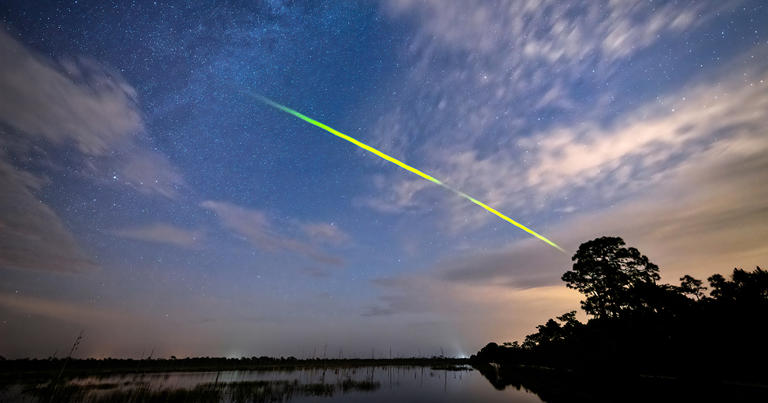
- Phenomenon Overview: The annual convergence of the Southern and Northern Taurid meteor streams is generating high-magnitude "fireball" events—exceptionally bright meteors capable of outshining the planet Venus—visible globally through the first week of November.
- Optimal Viewing Parameters: Peak activity occurs between midnight and 3:00 AM local time across Northern Hemisphere latitudes, with optimal radiant targeting anchored near the constellation Taurus, adjacent to the Pleiades cluster.
- Orbital Risk Vector: Low Earth Orbit (LEO) satellite constellation operators, including SpaceX (Starlink) and Eutelsat OneWeb, are monitoring potential hypervelocity kinetic disruptions caused by pebble-to-boulder-sized debris fragments traveling at 27 kilometers per second.
- Commercial & Capital Allocation Dynamics: Defense Space Situational Awareness (SSA) providers and orbital telemetry firms are capitalizing on heightened demand for real-time tracking, driving increased enterprise software valuations and dynamic risk-hedging protocols for satellite payload insurers.
The Celestial Mechanics of the "Halloween Fireballs"
Test Our Free AI & Tech Utilities Suite
Calculate LLM API token costs, analyze article dwell-time, or simulate tech DCA returns.
Astronomers, commercial aerospace analysts, and orbital risk strategists are shifting their optics toward the night sky this weekend as the Earth passes through the densest filament of the Taurid Complex. Known colloquially as the "Halloween Fireballs," this rare astronomical event represents an intersecting overlap between two distinct meteor streams: the Southern Taurids, which peaked in late October, and the Northern Taurids, reaching maximum density in early November.
Unlike standard annual meteor showers such as the Perseids or Geminids—which primarily consist of microscopic dust grains burning up instantaneously in the upper mesosphere—the Taurid streams are populated by significantly larger fragments of space debris. Originating from the periodic comet 2P/Encke, as well as the remnants of a massive ancient parent body that disintegrated over the past 20,000 years, the Taurid stream contains a disproportionate fraction of macro-sized solids ranging from gravel pebbles to meter-wide bolides.
When these dense chunks of iron, silicates, and nickel strike Earth's upper atmosphere at atmospheric entry speeds of roughly 27 kilometers per second (approximately 60,000 miles per hour), they create long-duration, highly luminous entry paths. In astronomical terminology, a meteor is classified as a "fireball" if it reaches an absolute visual magnitude of -4 or brighter—surpassing the luminosity of the planet Venus. Extremely energetic Taurid detonations, known as bolides, frequently undergo terminal fragmentation, resulting in bright sonic booms and luminous persistent trains that linger in the stratosphere for several minutes.
Observational Protocols: Where and When to Target the Horizon

For celestial observers, amateur astronomers, and dark-sky tourism ventures, maximizing visual ROI during this year's event requires precise geographic positioning and precise temporal calibration. Dark-sky conditions are particularly favorable during this cycle due to favorable lunar phase timing, which minimizes ambient light interference.
Key Viewing Parameters for Peak Output
- Temporal Window: The highest hourly rates of fireball generation occur between 00:00 (Midnight) and 03:30 AM local time across Friday, Saturday, and Sunday nights.
- Radiant Position: The meteors appear to radiate from the constellation Taurus, which rises in the East-Northeast shortly after sunset and reaches its highest meridian elevation directly overhead around 1:00 AM.
- Targeting Vector: Observers should not stare directly at Taurus itself, as meteors appearing near the radiant point produce short, foreshortened trails. Instead, direct optical focus approximately 45 degrees away from the radiant—toward the constellations Orion, Perseus, or Aries—to capture long-duration horizontal fireballs.
- Environmental Conditions: Rural locations designated under Bortle Class 1 to Class 3 scale ratings offer up to 400% higher visual contrast compared to suburban environments. Zero optical instrumentation (telescopes or binoculars) is required, as fireballs span wide angular fields across the celestial dome.
Comparative Analysis: Taurid Stream Metrics vs. Standard Showers
To quantify the physical characteristics, atmospheric impact profiles, and operational parameters of the Taurid fireball swarm compared to conventional meteor streams, refer to the verified telemetry and observational dataset compiled below.
| Parameter / Metric | Southern Taurids | Northern Taurids | Standard Stream (e.g., Perseids) |
|---|---|---|---|
| Primary Parent Body | Comet 2P/Encke | Asteroid 2004 TG10 / 2P/Encke | Comet 109P/Swift-Tuttle |
| Relative Entry Velocity | 27 km/s (Slow) | 29 km/s (Slow) | 59 km/s (Ultra-Fast) |
| Mean Debris Mass Range | 10g to 10kg+ (Macro-solids) | 10g to 50kg+ (Macro-solids) | 0.001g to 1g (Micro-dust) |
| Visual Magnitude Potential | -4.0 to -8.0 (Venus/Full Moon) | -4.0 to -12.0 (Super-Bolide) | +2.0 to -2.0 (Standard Star Brightness) |
| Peak Temporal Window | October 28 – November 5 | November 4 – November 12 | August 11 – August 13 |
| Primary Chemical Composition | Magnesium, Silicates, Nickel-Iron | Iron, Sodium, Chondritic Rock | Volatile Ice & Silicate Grains |
Macro Trends: Commercial Space Telemetry, Risk Management, and Enterprise Implications
While the Taurid Fireball swarm presents a captivating natural spectacle for earthbound enthusiasts, the underlying physics of the event introduces non-trivial risk vectors for the rapidly growing commercial space economy. The deployment of massive LEO satellite constellations—ranging from communications networks to high-resolution Earth observation platforms—has dramatically increased the spatial density of operational hardware in orbit.
1. Kinetic Impact Risk & Satellite Hull Integrity
Unlike atmospheric entry, where Earth's dense atmospheric shield dissipates hypervelocity kinetic energy through thermal ablation, space assets operating at altitudes between 350 km and 1,200 km lack natural atmospheric protection. A 10-gram Taurid particle traveling at a relative speed of 27 km/s possesses kinetic energy equivalent to several kilograms of high explosive upon impact.
Insurance underwriters specializing in commercial space ventures are increasingly incorporating meteor-stream density forecasts into their actuarial frameworks. Companies operating multi-billion-dollar satellite constellations must balance the operational cost of evasive orbital maneuvering—which consumes finite onboard propellant—against the statistical probability of micro-meteoroid hull breaches. Enterprise ROI for constellation management platforms now heavily depends on predictive Space Situational Awareness (SSA) analytics to automate risk-mitigation maneuvers during high-density stream crossings.
2. Space Defense & Early Warning System Recalibration
Defense infrastructure operators, including the U.S. Space Force's Space Operations Command and European Space Surveillance and Tracking (EU SST), closely monitor high-magnitude fireball events. Infrared sensor arrays deployed on early-warning defense satellites (such as the Space-Based Infrared System, or SBIRS) frequently detect bright atmospheric detonations caused by large Taurid bolides.
To prevent these high-energy thermal blooms from triggering false-positive alerts within strategic missile defense networks, defense algorithms must perform real-time trajectory cross-referencing. Enterprise software contractors providing cloud-based analytics to defense agencies are deploying automated machine learning models to differentiate between hypervelocity exo-atmospheric kinetic threats and naturally occurring Taurid debris entries.
3. Financial Monetization of Astrotourism & Optical Infrastructure
The economic impact of the Halloween Fireball phenomenon extends into commercial consumer sectors. High-end hospitality platforms, dark-sky resort operators, and specialized optical equipment manufacturers experience significant spikes in capital allocation during late-autumn astronomical events. Manufacturers of advanced digital telemetry equipment, automated tracking mounts, and ultra-low-light sensors are seeing heightened consumer demand, driven by dark-sky enthusiasts seeking high-definition footage of rare super-bolide fragmentation events.
Frequently Asked Questions (People Also Ask)
What makes a "fireball" meteor different from regular shooting stars?
A fireball is a meteor that burns with an exceptionally high degree of luminosity, defined by the International Astronomical Union (IAU) as reaching an apparent visual magnitude of -4 or brighter—making it brighter than any natural night-sky object other than the Moon. Fireballs are caused by larger physical debris fragments entering the atmosphere, which allow them to penetrate deeper into denser air layers, often resulting in visible fragmentation explosions (bolides) and persistent glowing trains.
Do the Taurid Halloween Fireballs pose any physical threat to people on Earth?
The vast majority of Taurid meteors disintegrate completely at altitudes between 30 and 80 kilometers above Earth's surface due to intense atmospheric friction. While exceptionally large fragments (meteorites) occasionally survive atmospheric entry and land on Earth's surface, the statistical probability of structural damage or human impact is exceedingly low. The primary operational risks are limited to unshielded satellite assets in Low Earth Orbit.
Why are the Taurids associated with late October and Halloween?
The Earth passes through the orbital plane of Comet 2P/Encke every year between late September and late November. The dense central core of the debris trail aligns perfectly with Earth's orbital position during the final week of October and the first week of November. Because this alignment coincides annually with Halloween, the bright, slow-moving meteors produced by the stream have historically earned the moniker "Halloween Fireballs."
What gear or optical setup is required to capture images of Taurid fireballs?
Binoculars and optical telescopes are not recommended for viewing or capturing meteors because their field of view is too narrow. For optimal photography, use a full-frame camera mounted on a stable tripod paired with a fast, wide-angle lens (f/1.4 to f/2.8, 14mm to 24mm focal length). Set the camera to continuous intervalometer shooting with exposures between 10 and 25 seconds at ISO 1600–3200 to maximize light capture across a wide swath of the sky.
Future Outlook: Strategic Milestones and Orbital Debris Modeling
Looking ahead, orbital dynamicists project that future encounters with the Taurid Complex may yield even higher debris densities. Advanced orbital resonance models indicate that Earth periodically intersects the "Taurid Swarm"—a concentrated resonant pocket of larger boulders trapped by Jupiter's gravitational field—approximately every seven to ten years. The next major predicted swarm encounter is forecasted for late 2025 and 2032, during which fireball activity could surge by orders of magnitude.
In response to these periodic hazards, the commercial space sector is accelerating investments in resilient cloud compute architecture, advanced orbital shielding materials, and automated space traffic management (STM) protocols. As public interest in cosmic phenomena converges with the expansion of satellite megaconstellations, the capability to accurately predict, analyze, and commercialize atmospheric meteor entry events will remain a key convergence point for space technology, strategic defense networks, and global scientific research.