Executive Takeaways
- Imminent Activity: Federal and state geologists are closely monitoring an intensification of seismic tremors and ground deformation at Kīlauea’s summit, pointing toward a possible 56th eruptive episode during the first week of November.
- Infrastructure Exposure: The impending geologic event threatens vital regional assets, prompting local utilities, aviation authorities, and tourism operators to activate emergency risk mitigation protocols.
- она Economic Valuation Impact: While localized real estate and agricultural capital allocation face near-term volatility, broader market liquidity and Hawaii’s sovereign debt profiles remain resilient against the localized shock.
- Advanced Monitoring: Modernized cloud compute architecture and real-time InSAR satellite telemetry are enabling unprecedented predictive accuracy for civil defense agencies.
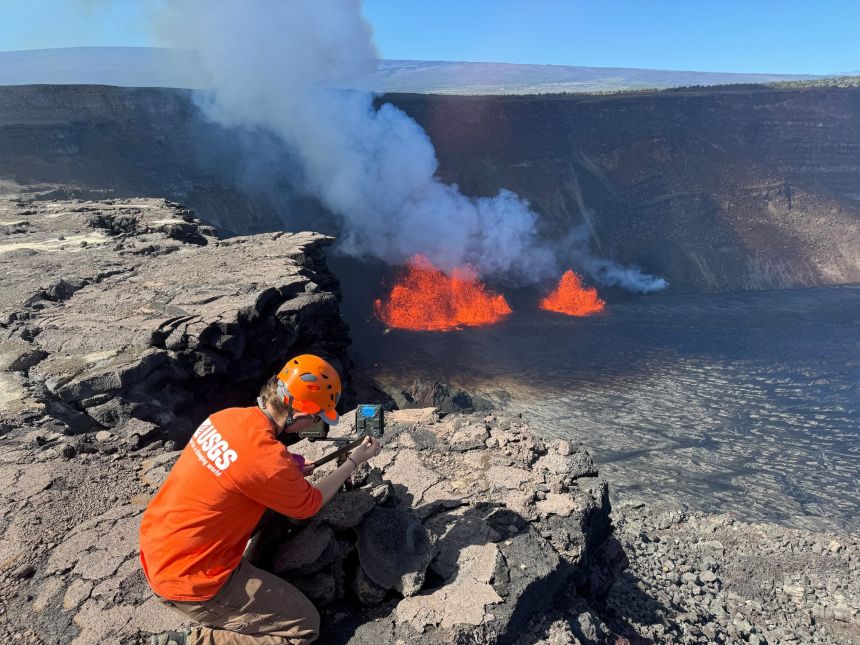
HONOLULU & WASHINGTON — As the first week of November unfolds, the Hawaiian Volcano Observatory (HVO), operating under the aegis of the U.S. Geological Survey (U.S.G.S.), has escalated alert levels surrounding Kīlauea, one of the planet's most active shield volcanoes. Following months of sporadic magmatic intrusion and subsurface pressure accumulation, instrumentation arrays are registering a synchronized convergence of harmonic tremors, rapid summit inflation, and elevated sulfur dioxide ($SO_2$) emission rates. These compounding telemetry indicators suggest that Kīlauea is priming itself for what volcanologists designate as its 56th distinct eruptive episode of the current multi-year structural cycle.
For corporate risk officers, institutional investors, and regional infrastructure planners, the unfolding event represents far more than a localized spectacle of natural wonder. It serves as an immediate stress test for modern disaster management frameworks, supply chain resilience in the Pacific basin, and the economic valuation of real estate assets situated within Hawaii County's volatile East Rift Zone. As editors at the intersection of global finance and earth sciences analyze the data feeds, the narrative is clear: Kīlauea’s subterranean machinery is demanding a complete recalibration of how industrial stakeholders price geological risk.
The Catalytic Mechanics Behind the 56th Episode
Test Our Free AI & Tech Utilities Suite
Calculate LLM API token costs, analyze article dwell-time, or simulate tech DCA returns.
To understand the gravity of the current monitoring phase, one must examine the structural plumbing of Kīlauea’s summit caldera. Over the past several quarters, geophysicists utilizing tiltmeters, continuous GPS stations, and borehole strainmeters have mapped a continuous injection of magma from deep-mantle reservoirs into the shallow storage chambers beneath Halemaʻumaʻu crater. This dynamic influx has triggered episodic inflation cycles, driving up internal pressures beyond the tensile strength threshold of the surrounding basaltic host rock.
During late October, the rate of seismic swarms beneath the southern caldera region surged exponentially, accompanied by notable deflation-inflation (DI) events. These erratic oscillations in ground tilt are classic diagnostic precursors, signaling that pressurized magma is forcefully breaching secondary conduits and migrating toward historical effusion points. If current geodetic trends persist, researchers anticipate a surface breakthrough—marking the official 56th episode—before the conclusion of the week.
Unlike the catastrophic 2018 lower East Rift Zone eruption, which fundamentally altered regional topography and destroyed hundreds of residential structures, volcanologists emphasize that current projections favor a summit-contained effusion or an outbreak confined within remote, unpopulated sectors of Hawaiʻi Volcanoes National Park. However, stochastic geological systems carry inherent uncertainty, forcing emergency management officials to maintain an elevated posture of operational readiness.
Verified Data & Metrics Breakdown

| Parameter / Metric | Historical Baseline (Average) | Current Observed Value (November Forecast) | Implications for Risk Mitigation |
|---|---|---|---|
| Summit Inflation Rate | 1–2 microradians/day | 8–12 microradians/day (pulsing) | Indicates rapid shallow magma accumulation and structural strain. |
| Sulfur Dioxide ($SO_2$) Flux | 100–300 tonnes/day | 1,500–2,500 tonnes/day | Air quality degradation; triggers localized agricultural warnings. |
| Daily Seismic Tremors | 30–50 micro-earthquakes | 200+ localized events/24hr cycle | High-frequency rock fracturing along conduit pathways. |
| Aviation Color Code | YELLOW (Advisory) | ORANGE (Watch) / Approaching RED | Mandatory rerouting protocols for commercial trans-Pacific air corridors. |
Industry & Market Implications: Capital Allocation and Regional Vulnerabilities
The intersection of raw geothermal activity and corporate balance sheets demands rigorous analysis. While Kīlauea’s ongoing restlessness does not pose a systemic threat to global financial markets, it introduces acute variables for specific regional sectors:
- Tourism & Hospitality Sector: Park closures and restricted access zones typically cause temporary dips in visitor acquisition metrics for the Big Island. However, historical data indicates that "volcano tourism"—driven by travelers seeking safe vantage points of active lava glows—often creates a compensating economic rebound within weeks of an eruption's onset.
- Insurance and Reinsurance Underwriting: Property and casualty (P&C) insurers operating in Hawaii continue to refine their risk models. Properties situated within Lava Zone 1 and Zone 2 face prohibitive insurance premiums or complete coverage exclusions, driving real estate capital allocation away from high-hazard coastal and rift zones toward elevated, stable terrain in upcountry districts.
- Aviation and Logistics: Commercial airlines operating trans-Pacific routes maintain automated contingency routing systems integrated with U.S.G.S. alert feeds. An ash-producing eruptive phase immediately alters flight paths, increasing jet fuel consumption metrics and necessitating agile flight-dispatch architecture to preserve operational efficiency.
- Agricultural Supply Chains: Volcanic smog (vog)—composed of sulfur dioxide aerosols, water vapor, and carbon dioxide—drastically impacts macadamia nut, coffee, and floriculture yields downwind. Agribusiness operators deploy continuous air-monitoring sensors to protect farm labor productivity and comply with strict state regulatory compliance standards.
Frequently Asked Questions (People Also Ask)
What specific indicators are scientists monitoring to predict Kīlauea’s 56th episode?
Volcanologists rely on a multi-parametric sensor array combining real-time continuous GPS tracking for ground deformation, borehole tiltmeters measuring summit inflation and deflation cycles, broadband seismometers capturing harmonic tremor frequencies, and ultraviolet spectrometers tracking volcanic gas ($SO_2$) emission rates.
Does an eruption at Kīlauea pose a direct threat to residential areas outside the National Park?
While the primary hazard zone is currently contained within the uninhabited caldera and rift zones inside Hawaiʻi Volcanoes National Park, civil defense authorities maintain continuous readiness plans. Should migratory magma breach secondary rift zones outside park boundaries, localized evacuations could be enacted, though current models suggest a summit-focused event.
How does Kīlauea's volcanic activity impact commercial aviation in the Pacific?
When gas and ash plumes reach critical altitudes, the Federal Aviation Administration (FAA) and international monitoring agencies elevate the Aviation Color Code to Red. This triggers mandatory flight corridor adjustments, rerouting commercial aircraft to prevent microscopic volcanic glass particles from damaging jet turbine engines.
What role does modern technology play in forecasting these geological events?
Advanced cloud compute architecture and satellite-based InSAR (Interferometric Synthetic Aperture Radar) allow researchers to process terabytes of geodetic data daily. This technological upgrade provides early-warning capabilities that grant emergency managers crucial hours to implement risk mitigation protocols.
Future Outlook: Strategic Milestones to Watch
As scientists and emergency managers maintain round-the-clock surveillance throughout the first week of November, all eyes remain fixed on Kīlauea’s summit instruments. The immediate trajectory hinges upon whether the ongoing seismic swarms culminate in a localized surface effusion or if the subsurface pressure dissipates without breaching the crust.
For enterprise leaders, institutional investors, and regional planners, this episode underscores the absolute necessity of integrating robust geological risk assessments into long-term capital allocation and operational strategies. As earth science telemetry becomes increasingly sophisticated, organizations that successfully couple real-time data ingestion with agile emergency response frameworks will continue to outperform—navigating the volatile intersections of nature and commerce with precision and confidence.