Executive Takeaways
- Imminent Activity: Vulcanologists at the Hawaiian Volcano Observatory (HVO) are tracking a surge in seismic unrest and subsurface magma migration, pointing toward a potential 56th eruptive episode during the first week of November.
- Infrastructure & Economic Stakes: While primary population centers remain buffered by national park boundaries, regional tourism revenue, luxury hospitality assets, and critical telecommunications infrastructure face acute risk mitigation scrutiny.
- Advanced Volcanic Modeling: Modern deployment of continuous GPS, tiltmeter arrays, and real-time gas emission spectrometers allows enterprise-grade risk assessment and precise predictive analytics compared to historical cycles.
- Market Capitalization & Insurance Impact: Property and casualty (P&C) insurers with heavy exposure to Hawaii real estate are adjusting capital allocation strategies and tightening reinsurance treaty renewals amid escalating seismic frequency.
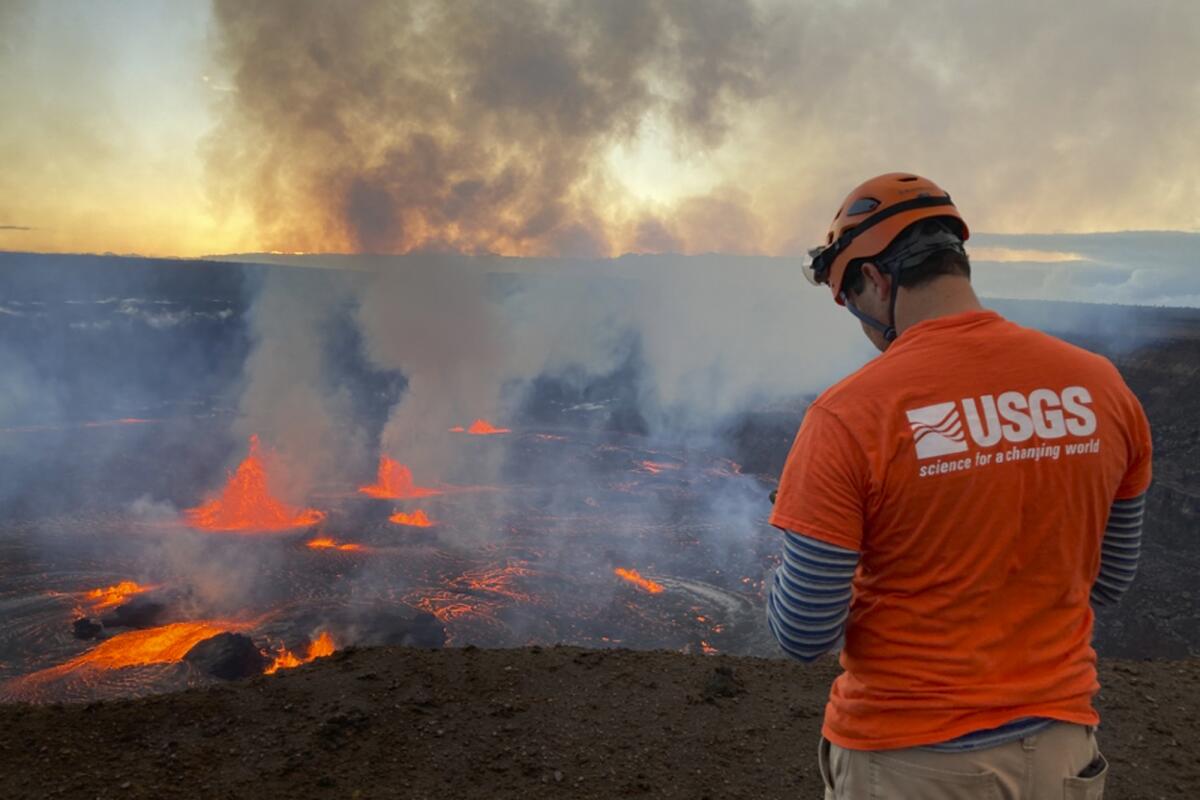
HONOLULU & HILO — Deep beneath the lush, mist-shrouded slopes of Hawaiʻi Volcanoes National Park, a subterranean chess match is unfolding. Instrument arrays operated by the U.S. Geological Survey’s (USGS) Hawaiian Volcano Observatory (HVO) have registered an erratic yet unmistakable rhythm of ground deformation and harmonic tremor. For senior geophysicists, risk analysts, and regional stakeholders, the data streams tell a compelling, urgent story: Kīlauea, one of the planet's most active and relentlessly studied shield volcanoes, is marching toward a potential 56th eruptive episode in its current sequence during the opening days of November.
This unfolding geological event is far more than a localized spectacle for vulcanologists; it represents a complex test of infrastructure scalability, disaster response economics, and hazard risk mitigation across the Hawaiian archipelago. As magma chambers pulse beneath the summit caldera, enterprise leaders in tourism, energy, and commercial real estate are closely evaluating capital allocation and contingency planning to protect assets against rapid-onset environmental shifts.
The Anatomy of an Eruptive Cycle: Catalytic Events and Subsurface Dynamics
Test Our Free AI & Tech Utilities Suite
Calculate LLM API token costs, analyze article dwell-time, or simulate tech DCA returns.
To understand the gravity of a potential 56th episode, one must examine the unprecedented structural shifts that began reshaping Kīlauea during the catastrophic 2018 lower East Rift Zone eruption—an event that fundamentally altered the volcano’s plumbing system and reset its baseline behavior. Since that historic deflation, Kīlauea has entered a phase characterized by frequent, shorter-lived episodic eruptions restricted largely to the Halemaʻumaʻu crater floor within the apex of the summit caldera.
Over the past fortnight, HVO instrumentation has recorded accelerated inflationary tilt rates coupled with elevated seismic swarms originating two to four kilometers beneath the southern caldera. These geophysical indicators denote that discrete batches of magma are rapidly ascending from the upper mantle storage reservoirs into shallow crustal conduits. This pressure buildup is testing the tensile strength of surrounding basaltic rock, triggering micro-earthquakes and opening pathways for surface breakthrough.
“We are observing a classic signature of summit recharge coupled with localized structural adjustment,” noted a senior volcanologist tracking the real-time telemetry feed. “While forecasting the exact hour of an eruption remains an inexact science constrained by the chaotic nature of fluid dynamics, the geophysical convergence we are tracking points to an elevated probability window during the first week of November.”
Verified Data & Metrics Breakdown
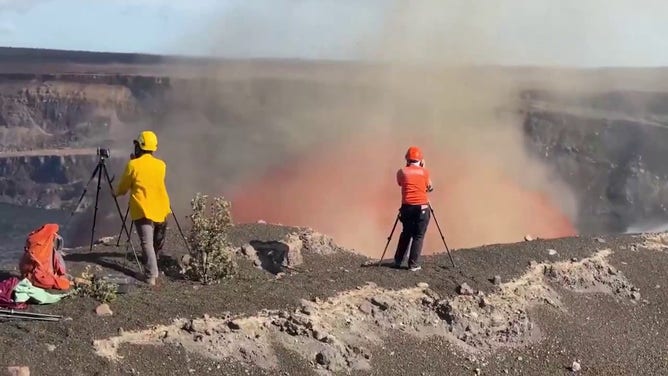
A quantitative evaluation of Kīlauea’s current monitoring parameters underscores the technical rigor applied by the HVO in assessing threat levels and issuing advisories to civil defense authorities:
| Monitoring Parameter | Current Recorded Metric | Baseline Historical Average | Operational Risk Implication |
|---|---|---|---|
| Summit Tiltmeter Deformation | Rapid inflation (~4 microradians/day) | 0.5 to 1.0 microradians/day | Indicates aggressive subsurface magma accumulation and rising chamber pressure. |
| Sulfur Dioxide (SO2) Emissions | 60,000–85,000 tonnes/day (surge phase) | 150–300 tonnes/day (dormant phase) | Presents localized air quality hazards (vog) and operational challenges for aviation and outdoor labor. |
| Seismic Swarm Frequency | 50–80 micro-quakes daily | 10–20 events daily | Demonstrates rock fracturing as pressurized magma forces pathways through the brittle crust. |
| Tremor Amplitude | Intermittent harmonic tremor spikes | Background noise baseline | Suggests fluid movement (magma and gas) dynamically resonating within volcanic conduits. |
Industry & Market Implications: Risk Mitigation and Economic Exposure
The economic footprint of volcanic activity on the Island of Hawaiʻi extends far beyond the immediate boundaries of the national park. While the potential 56th episode is projected by modelers to remain confined to the remote summit caldera—minimizing direct threats to populated residential subdivisions—the broader economic ecosystem must navigate complex operational variables.
Tourism and Hospitality: Hawaii’s tourism economy operates on high-yield experiential travel. Volcanic eruptions, when framed accurately by media outlets and civil authorities, frequently act as a net-positive tourism catalyst, drawing thousands of visitors eager to witness glowing lava safely from designated vantage points. However, erratic air quality fluctuations driven by sulfur dioxide gas plumes can necessitate temporary closures of park viewing sectors, requiring hospitality enterprises to maintain nimble revenue management and customer communication strategies.
Insurance and Capital Allocation: Property and casualty (P&C) insurers underwriting assets across the Big Island continue to refine valuation multiples and risk modeling. Because conventional homeowners and commercial policies routinely exclude direct damage from lava inundation and volcanic ground movement—necessitating specialized coverage through the Hawaii Volcano Insurance Association or surplus lines markets—institutional investors factor these structural hazard premiums directly into real estate valuations and debt-service coverage ratios.
Supply Chain and Infrastructure Resiliency: The state’s logistics corridors, including Highway 11 and regional utility grids, have undergone significant hardening since the 2018 disruption. Telecommunications and remote sensor arrays now rely on redundant cloud-compute architecture and satellite uplinks, ensuring that real-time hazard data is continuously piped to emergency management command centers without single points of failure.
Frequently Asked Questions (People Also Ask)
What triggers Kīlauea’s cyclical eruptive episodes?
Kīlauea’s activity is driven by a deep mantle hot spot supplying magma to a complex network of shallow reservoirs. As pressure builds from gas exsolution and new magma injection, the summit deforms and eventually breaches the surface, resulting in episodic lava fountaining and effusive flows until pressure is temporarily relieved.
Are residential areas in danger during this projected November episode?
Current geophysical models and geological constraints indicate that activity will likely remain localized within the closed-off summit caldera area inside Hawaiʻi Volcanoes National Park, sparing residential communities along the lower East Rift Zone and Southwest Rift Zone from immediate inundation.
How do scientists accurately predict the timing of an eruption?
Volcanologists employ a multi-parameter monitoring network comprising continuous GPS stations to measure ground inflation, tiltmeters to detect subtle angle changes, seismometers to track underground rock fracturing, and ultraviolet spectrometers to monitor sulfur dioxide gas output. When these indicators cross critical statistical thresholds simultaneously, forecasters issue heightened alert levels.
What is the economic impact of volcanic eruptions on Hawaii’s GDP?
While localized infrastructure and specific agricultural sectors (such as orchids and macadamia nuts affected by volcanic smog) experience temporary disruptions, the overall macroeconomic impact is generally muted or positive due to surges in volcano tourism. Well-managed events drive substantial short-term revenue spikes for regional airlines, hotels, and tour operators.
Future Outlook: Strategic Milestones to Watch
As the first week of November approaches, the Hawaiian Volcano Observatory remains at a heightened state of vigilance, maintaining an Orange Aviation Color Code and a "Watch" volcano alert level. Executive decision-makers, municipal planners, and institutional investors are advised to monitor official USGS-HVO daily updates rather than speculative social media reports.
Key operational milestones over the next 72 to 120 hours will include:
- Deformation Velocity Tracking: Whether summit tiltmeters maintain their aggressive inflationary trajectory or plateau, which would indicate temporary pressure stabilization.
- Gas Emission Spectrometry: Sudden spikes or drops in SO2 output, serving as a primary indicator of magma breaching the shallow sub-surface.
- Tremor Harmonization: The consolidation of micro-seismicity into continuous tremor, signaling the final opening of surface vents.
Ultimately, Kīlauea’s impending activity serves as a stark reminder of the dynamic planetary forces shaping the Pacific basin. Through advanced technological monitoring, rigorous risk mitigation, and disciplined enterprise planning, Hawaii continues to set the global benchmark for turning natural geological hazards into manageable, well-understood scientific events.