Executive Takeaways
Test Our Free AI & Tech Utilities Suite
Calculate LLM API token costs, analyze article dwell-time, or simulate tech DCA returns.
- Strategic Ambiguity: Sony Group Corporation has declined to confirm emerging supply-chain reports suggesting a complete phase-out of its dedicated standalone 4K Ultra HD Blu-ray player portfolio, including flagship units like the UBP-X700 and UBP-X800M2.
- Hardware Margin Pressure vs. Ecosystem Control: The shift reflects broader capital allocation changes within Sony’s Entertainment, Technology & Services (ET&S) division, balancing declining standalone consumer electronics volumes against high-margin PlayStation 5 modular optical disc drive production.
- Bitrate Paradox: While mainstream consumers migrate toward cloud streaming architectures, home theater enthusiasts and physical preservation markets face structural supply constraints, despite 4K UHD discs offering uncompressed audio and video bitrates up to four times higher than premium SVOD platforms.
- Boutique Consolidation: A potential market exit by Sony leaves Panasonic and high-end niche players like Magnetar and Reavon as sole custodians of high-margin playback hardware, signaling a total transition of physical media into an ultra-premium, luxury asset class.
The Tactical Silence from Tokyo
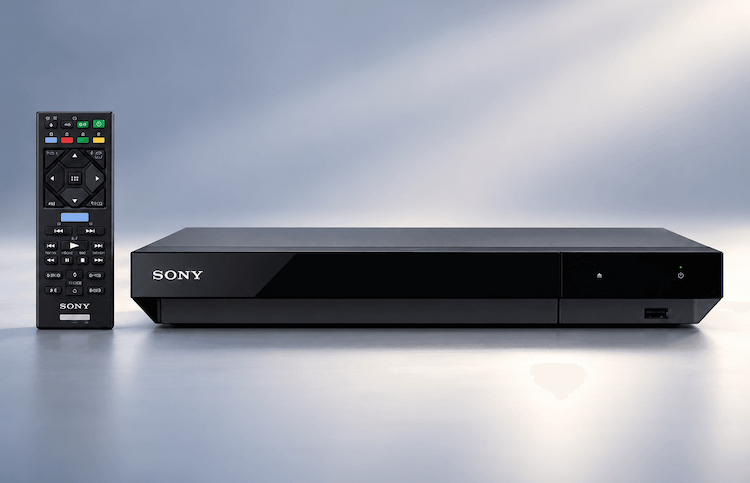
In the high-stakes arena of consumer electronics capital deployment, silence is rarely neutral. When pressed on supply-chain intelligence indicating a scheduled wind-down of standalone 4K Ultra HD Blu-ray player manufacturing lines, Sony Group Corp. issued a standard corporate response: refusing to confirm or deny product sunset schedules. Yet across consumer electronics distribution networks from North America to Western Europe, inventory depletion pattern analysis tells a far more definitive story.
For more than two decades, Sony has served as both architect and anchor of optical disc ecosystems. From the co-development of the Compact Disc and DVD to pioneering the Blu-ray format during the high-definition format wars of the mid-2000s, Tokyo’s hardware roadmap dictated the cadence of physical home entertainment. However, recent channel checks reveal that key enterprise SKUs—specifically the mass-market UBP-X700, the mid-tier UBP-X800M2, and the high-end custom-integration UBP-X1100ES—are experiencing extended replacement cycles without successive hardware revisions.
This deliberate ambiguity comes at a critical juncture for physical media. Following Samsung’s exit from the 4K hardware market in 2019 and LG’s subsequent quiet cessation of standalone player R&D, Sony’s standalone hardware presence represented the last major high-volume OEM bridging mass-market retail with videophile fidelity. Industry insiders suggest that Sony’s reluctance to issue a formal press announcement is less about preserving hardware roadmaps and more about protecting channel partner inventory, avoiding immediate write-downs, and maintaining goodwill with studio partners under the Sony Pictures Home Entertainment umbrella.
The Structural Economics of Optical Hardware Sunset
The macroeconomic catalysts driving Sony’s strategic pivot are rooted in unit economics, semiconductor supply chain rationalization, and capital optimization across its ET&S division. Dedicated optical disc players rely on specialized, low-margin System-on-Chip (SoC) platforms historically supplied by chipmakers such as MediaTek. As global silicon foundries prioritize high-margin wafer allocations for automotive AI, cloud compute infrastructure, and mobile processors, legacy AV processing chips face escalating cost structures and component obsolescence.
Furthermore, optical drive pickup assemblies—the mechanical laser engines required to read triple-layer BDXL 100GB discs—require high precision and manufacturing scale to yield profitable gross margins. With retail prices for entry-level 4K players compressed below $200, hardware margins have collapsed under the weight of shipping tariffs, intellectual property licensing fees (including Dolby Vision, Dolby Atmos, and Blu-ray Disc Association royalties), and ongoing firmware maintenance costs.
Concurrently, Sony has engineered an internal hedge by reallocating its optical drive production capacity directly into its gaming architecture. The launch of the modular, detachable disc drive for the PlayStation 5 Slim and PlayStation 5 Pro represents a masterclass in supply-chain consolidation. By standardizing a single optical drive assembly that serves millions of gaming consoles, Sony achieves economies of scale that dedicated AV components can no longer sustain independently.
Data Breakdown: Standalone Hardware vs. Streaming Ecosystems
To evaluate the structural shifts occurring across home infrastructure, the following matrix contrasts technical performance metrics, margin profiles, and infrastructure requirements across current playback paradigms.
| Metric / Feature Spec | Standalone 4K UHD Player (e.g., Sony UBP-X800M2) | Modulated Console Drive (PlayStation 5 Platform) | Premium Cloud SVOD (4K Stream Architecture) |
|---|---|---|---|
| Peak Video Bitrate | 82 to 128 Mbps (Uncompressed HEVC) | 82 to 128 Mbps (Uncompressed HEVC) | 15 to 25 Mbps (Compressed AV1/HEVC) |
| Audio Passthrough Capability | Bitstream Dolby Atmos / DTS:X (Lossless TrueHD) | Bitstream Dolby Atmos / Linear PCM | Dolby Digital Plus with Atmos (Lossy Compression) |
| Hardware Gross Margin (Est.) | 8% – 12% (Declining) | 18% – 25% (Scalable OEM Volume) | 70%+ (Recurring SVOD Platform Margin) |
| HDR Format Support | HDR10, Dolby Vision, HLG (Manual/Auto Switch) | HDR10 (System-level output constraints) | HDR10, Dolby Vision (Dynamic based on pipe) |
| SoC Lifecycle & Support | Legacy Static Silicon (Infrequent Updates) | Active Multi-Year APU Lifecycle | Server-Side Real-Time Transcoding |
| Bandwidth / Network Dependence | Zero (Local Physical Storage) | Zero (For Physical Disc Playback) | Requires Stable >50 Mbps Fiber/Broadband Pipe |
The High-Bitrate Paradox and Cloud Infrastructure Migration
The potential retirement of Sony's dedicated player line highlights a glaring technological divergence: the gap between physical presentation quality and cloud-based streaming infrastructure. Premium 4K Ultra HD Blu-ray discs deliver video data streams at bitrates frequently exceeding 100 Mbps, paired with object-based, uncompressed loss-less audio tracks (Dolby TrueHD and DTS-HD Master Audio). In contrast, standard streaming platforms compress 4K delivery down to 15–25 Mbps to mitigate network congestion and minimize cloud egress costs for platform operators.
For home theater installations and commercial integration environments, this compression differential yields visible micro-artifacts, dynamic range compression, and elevated noise floors. Yet, enterprise streaming operators face structural incentives to depress bitrates further. Cloud compute bandwidth, edge server caching, and content delivery network (CDN) fees represent variable operational expenses that scale with user engagement. Physical media transfers those operational infrastructure costs entirely to the end user via a one-time capital expenditure on hardware and disc media.
Sony’s refusal to confirm a total exit reflects an internal friction between two corporate divisions: Sony Electronics, which seeks to streamline low-yielding hardware lines, and Sony Pictures Entertainment, which continues to realize substantial high-margin revenue from physical collector sets, limited-edition SteelBooks, and physical vault remaster releases. Sony Pictures recently assumed control of Disney’s physical media distribution operations in North America—a paradox wherein Sony acts as the primary distributor of physical software while quietly scaling back the standalone hardware designed to play it.
Market Implications: Winners, Losers, and Niche Re-Pricing
The retreat of tier-one legacy manufacturers from the optical player space reshapes the competitive landscape into a bifurcated market defined by budget console integration on one end and luxury boutique hardware on the other.
1. Boutique Enterprise Winners
With Sony, LG, and Samsung vacating the mid-to-high-end standalone market, boutique hardware manufacturers are capturing elevated pricing power. Japanese competitor Panasonic, through its flagship DP-UB820 and audiophile-grade DP-UB9000 units, stands to inherit near-monopolistic control over the mid-tier videophile segment. Concurrently, ultra-premium brands such as Magnetar (UDP800/UDP900) and Reavon are successfully commanding MSRPs ranging from $1,500 to $3,000 per unit, serving ultra-high-net-worth custom installations where hardware margins remain resilient.
2. The Downstream Impact on Retail and Distribution
Big-box retail infrastructure has already begun adjusting to hardware supply dynamics. Best Buy’s complete phase-out of physical media from brick-and-mortar locations in early 2024 served as a leading indicator. Remaining shelf space at distributors such as Walmart and Amazon is increasingly dominated by direct-to-consumer boutique labels (Criterion Collection, Arrow Video, Kino Lorber) that depend on a stable installed base of physical playback hardware to justify high-restoration master costs.
3. IP Licensing and Format Stewardship
As standalone hardware production contracts, format licensing authorities such as the Blu-ray Disc Association (BDA) face long-term royalty yield contractions. Patent pool licensors managing Dolby Vision and DTS patents will increasingly depend on software-based streaming licenses rather than consumer AV hardware unit royalties, altering long-term enterprise valuation models for spatial audio and dynamic HDR patent portfolios.
Frequently Asked Questions (People Also Ask)
Is Sony officially discontinuing all 4K Ultra HD Blu-ray players?
Sony has declined to confirm an official corporate withdrawal or sunset timeline for its standalone 4K Blu-ray player product line. While manufacturing lines for specific legacy models have slowed or paused, Sony continues to sell existing stock and maintains optical disc playback functionality via the PlayStation 5 console platform and modular disc drive attachments.
Can a PlayStation 5 or PS5 Pro replace a dedicated high-end 4K Blu-ray player?
While the PlayStation 5 offers robust 4K Ultra HD disc playback, dedicated players like the Sony UBP-X800M2 or Panasonic DP-UB820 offer specialized AV processing features. These include auto-switching Dolby Vision profiles, advanced HDR tone-mapping engines, dual HDMI outputs for audio/video separation, legacy analog audio connectivity, and quieter operational noise floors favored in dedicated home theater environments.
Why are manufacturers moving away from physical 4K disc players despite high consumer demand for physical media?
The retreat is driven by declining mass-market unit volumes, shrinking gross margins, and supply chain bottlenecks for niche AV System-on-Chip (SoC) components. As the broader market shifted to subscription video-on-demand (SVOD), manufacturing scale collapsed, making standalone hardware R&D difficult to justify against high-margin enterprise investments in gaming and cloud infrastructure.
What happens to physical 4K disc releases if standalone hardware production stops entirely?
Physical media is rapidly transitioning into a high-margin, boutique collector market. Disc publishing continues through specialty labels and studio archives, relying on the massive installed base of gaming consoles (PS5 and Xbox Series X) alongside premium, high-end standalone players produced by specialized hardware manufacturers.
Strategic Outlook and Key Milestones
As Sony navigates the structural transition of its Consumer Electronics & Sound business segment, several key indicators will determine the final trajectory of standalone physical media hardware over the next 12 to 24 months:
- ET&S Capital Allocation Disclosures: Upcoming fiscal year earnings reports from Sony Group Corp. will provide insight into whether hardware R&D expenditures within the home AV segment are being zeroed out in favor of cloud services and display technologies (Bravia XR).
- Component Lifecycles & EOL Notices: End-of-Life (EOL) declarations from upstream optical pickup lens manufacturers and video decoder silicon vendors will serve as concrete operational confirmations of complete production halts.
- Panasonic Hardware Commitment: Industry monitoring of Panasonic’s hardware roadmap during major tradeshows (such as CES and IFA) will confirm whether the manufacturer intends to maintain its UB series as the definitive reference player for the global market.
- Boutique Licensing Consolidation: Watch for strategic alliances between film preservation entities, studio archives, and boutique hardware makers to create bundled hardware-software offerings targeted directly at high-end AV installation markets.
Sony’s refusal to issue a formal post-mortem on its standalone 4K player line is not a sign of corporate hesitation; it is the calculated managed decline of an legacy hardware category. As consumer viewing habits anchor permanently to cloud infrastructure, optical playback moves into a specialized domain—leaving physical fidelity as a luxury asset class defined by high margins, premium pricing, and enthusiast preservation.