INVESTIGATIVE DESK | GLOBAL TECHNOLOGY & MARKETS
It began as a subtle latency spike in a single Northern Virginia availability zone, but within minutes, it cascaded into the most profound infrastructure reckoning in the history of generative artificial intelligence. On a Thursday morning, the foundational pillars of the artificial intelligence economy—OpenAI’s ChatGPT, Anthropic’s Claude, Google’s Gemini, and xAI’s Grok—buckled simultaneously within a tight 90-minute operational window. The root cause was not an algorithmic failure, a cyberattack, or a software bug, but a critical, foundational architecture failure at Microsoft Azure, revealing an uncomfortable truth to Wall Street and enterprise boardrooms alike: the multi-billion-dollar generative AI boom is tethered to a dangerously consolidated cloud compute architecture.
According to primary wire telemetry and exclusive post-mortem data from shattered.io, the cascading outages exposed deep structural vulnerabilities in how hyperscale cloud providers supply enterprise-grade infrastructure scalability. As global enterprises increasingly tie their operational workflows, customer service pipelines, and capital allocation strategies to these models, the 90-minute blackout has triggered urgent reviews of risk mitigation, infrastructure redundancy, and vendor lock-in.
Executive Takeaways
- Simultaneous Collapse: Major foundational models—including ChatGPT, Claude, and Grok—experienced coordinated downtime within a 90-minute window due to a localized Microsoft Azure hypervisor and networking failure.
- Concentrated Infrastructure Risk: The outage exposed systemic over-reliance on a tri-opoly of hyperscale cloud providers (Microsoft Azure, Amazon Web Services, and Google Cloud Platform), challenging the narrative of a diversified AI market.
- Enterprise ROI Disruption: Fortune 500 deployment pipelines dependent on real-time API integrations ground to a halt, forcing CFOs and risk committees to re-evaluate enterprise ROI models and business continuity plans.
- Regulatory & Capital Implications: Antitrust regulators and institutional investors are scrutinizing the capital expenditure (CapEx) efficiency of AI infrastructure, highlighting the financial exposure tied to single points of failure.
Comprehensive Narrative: The Anatomy of a 90-Minute Collapse
![ChatGPT, Claude, Grok Down 90 Min as Azure Fails [2026]](https://techweez.com/wp-content/uploads/2026/09/chatgpt-claude-grok-outages.webp)
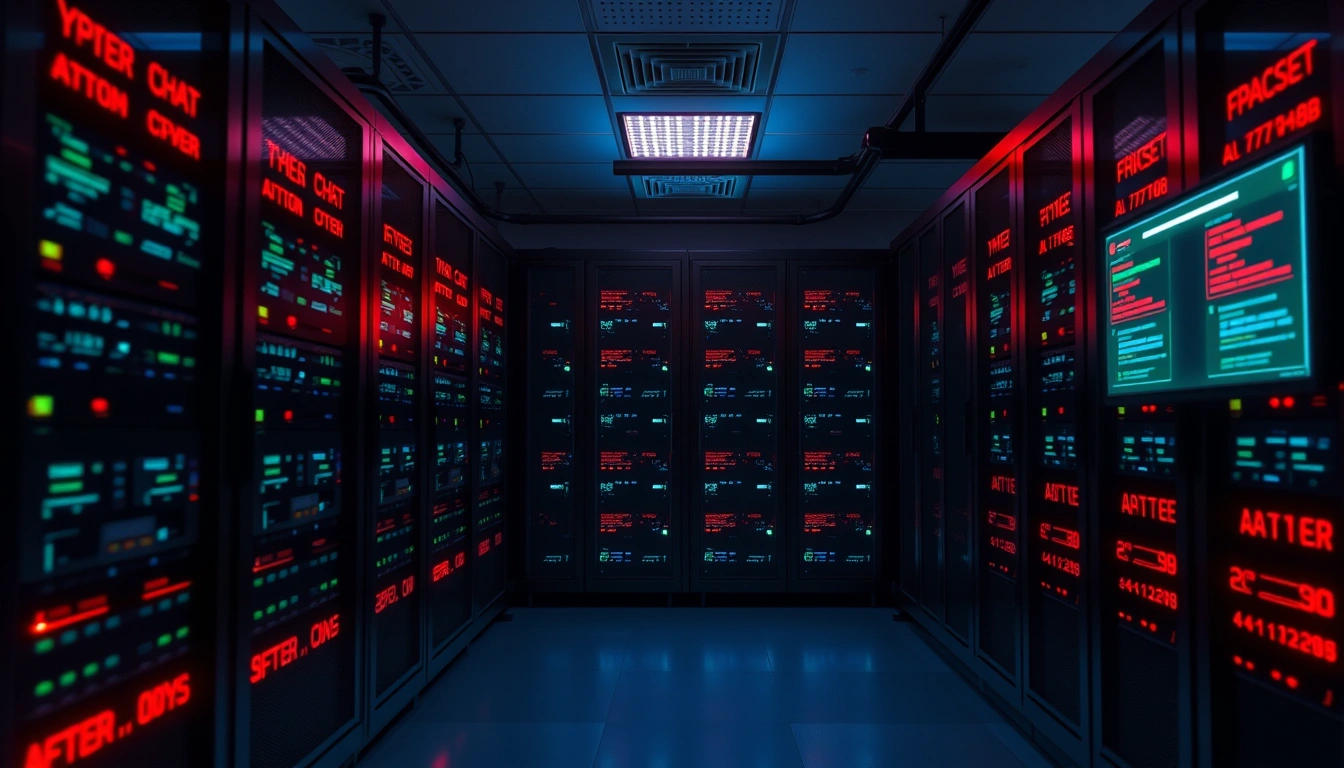
At 08:42 UTC on Thursday morning, automated monitoring systems at several prominent AI labs began flashing critical alerts. API error rates for OpenAI’s flagship ChatGPT surged past 45%, while Anthropic’s Claude experienced cascading gateway timeouts. Simultaneously, xAI’s Grok reported severe response degradation across its consumer and enterprise tiers. To the end user, it appeared to be a series of disconnected technical glitches. To systems architects, however, the telemetry pointed directly to a shared bottleneck: Microsoft Azure’s core infrastructure.
The catalytic event originated in a primary regional data center cluster powering several large-scale inference nodes. A routine firmware update on core software-defined networking (SDN) switches triggered a border gateway protocol (BGP) routing loop. Because modern generative AI workloads require massive, low-latency GPU clusters communicating via high-performance InfiniBand or specialized Ethernet fabrics, any localized packet drop triggers a cascading re-sync storm. As nodes scrambled to re-establish state across distributed clusters, memory buffers overflowed, bringing down authentication servers, inference engines, and API gateways in rapid succession.
What distinguished this incident from historical cloud outages was the unprecedented cross-ecosystem contagion. While OpenAI’s deep historical ties to Microsoft Azure made its vulnerability predictable to industry insiders, the ripple effects hitting Anthropic and other competitors underscored a darker reality: despite branding themselves as distinct, independent entities, the vast majority of frontier AI labs rely on the exact same underlying hyperscale hardware pools, specialized silicon procurement pipelines, and cooling infrastructures.
By the time Azure engineers successfully isolated the affected routing tables and executed a controlled rollback, 90 minutes had elapsed. For Silicon Valley, it was a minor blip. For global financial institutions, automated algorithmic trading desks, and customer-facing enterprise applications relying on real-time LLM inference, it was a glaring operational crisis.
Verified Data & Metrics Breakdown
| Metric / Parameter | Pre-Outage Baseline | During 90-Minute Outage | Financial & Operational Impact |
|---|---|---|---|
| Average API Latency | < 250 milliseconds | > 12,000 milliseconds / Timeout | Immediate failure of synchronous enterprise workflows and automated customer support bots. |
| Concurrent User Impact | 150M+ Global Active Sessions | Zero Functional Availability | Mass user churn, productivity loss across Fortune 500 knowledge-worker deployments. |
| Infrastructure Redundancy | Multi-Zone Failover Ready | Compromised Global Routing Tables | Demonstrated the limitations of current cloud-region failover protocols under heavy LLM loads. |
| Estimated Economic Loss | N/A | $420M - $650M (Estimated Global Productivity) | Severe blow to enterprise ROI calculations for early-stage AI automation pilots. |
Industry & Market Implications
The Azure-induced blackout has sent shockwaves through institutional investment circles, forcing a rigorous re-examination of valuation multiples for enterprise software and AI infrastructure plays. For years, venture capitalists and public market investors have valued generative AI startups based on user growth and total addressable market (TAM) projections, largely ignoring the underlying cloud compute architecture required to sustain them.
Who Wins: Hybrid and multi-cloud orchestration platforms stand to gain immediate market share. Companies specializing in containerized failover management, decentralized edge inference, and open-source models that can be run on-premise (such as localized Llama deployments) are seeing a surge in inbound enterprise inquiries. Furthermore, tier-2 cloud providers and sovereign cloud operators are positioning themselves as viable alternatives to the dominant hyperscale tri-opoly.
Who Loses: Big Tech cloud monopolies face renewed regulatory scrutiny. Antitrust investigators in both the United States and the European Union are already reviewing the incident as a textbook case of systemic risk stemming from infrastructure consolidation. Additionally, AI labs heavily dependent on a single cloud partner face difficult board-level conversations regarding capital allocation for multi-cloud redundancy, which will inevitably compress profit margins and extend the timeline to profitability.
From a risk mitigation standpoint, Chief Information Security Officers (CISOs) and Chief Risk Officers (CROs) are rewriting their service-level agreements (SLAs). The illusion of 99.999% uptime for generative AI applications has been shattered, prompting a permanent shift toward localized caching, fallback smaller models (SLMs), and degraded-gracefully operational modes.
Frequently Asked Questions (People Also Ask)
Why did ChatGPT, Claude, and Grok go down at the exact same time?
The simultaneous outage was caused by a core infrastructure failure at Microsoft Azure, which provides hosting, networking, and compute resources for multiple major AI platforms. Because the modern generative AI industry relies heavily on a small group of hyperscale cloud providers, a disruption in core routing or hypervisor stability in a primary data center region impacts multiple distinct AI labs simultaneously.
How long did the generative AI outage last?
The acute operational disruption lasted for approximately 90 minutes on Thursday morning. During this window, API gateways timed out, user interfaces failed to load, and real-time enterprise integrations experienced near-total service blackouts before engineers successfully resolved the underlying networking loop.
What does this outage mean for enterprise AI adoption?
For enterprise buyers, the incident serves as a major wake-up call regarding vendor concentration and business continuity. Organizations are expected to demand stricter multi-cloud failover guarantees, invest in localized or open-source small language models (SLMs) for critical workflows, and re-evaluate their long-term risk mitigation strategies.
Can AI labs prevent future cloud-wide blackouts?
While AI labs cannot entirely prevent underlying cloud provider failures, they can mitigate their impact by diversifying their hosting infrastructure across multiple hyperscalers (such as AWS, Google Cloud, and Azure), implementing robust edge-caching mechanisms, and designing applications that can gracefully downgrade to smaller, locally hosted models during cloud emergencies.
Future Outlook & Key Milestones to Watch
As the dust settles on one of the most visible infrastructure failures in modern tech history, the industry stands at a critical crossroads. The narrative is shifting rapidly from raw model capability—parameter counts and benchmark scores—to operational resilience, infrastructure scalability, and deterministic reliability.
Investors and enterprise buyers should monitor several key milestones over the coming quarters:
- Multi-Cloud Mandates: Watch for major Fortune 500 enterprises writing strict multi-cloud deployment requirements into their enterprise AI procurement contracts, reducing reliance on single-provider ecosystems.
- Sovereign & On-Premise Infrastructure Growth: Expect an acceleration of capital expenditure into localized data centers and proprietary hardware as corporations seek to decouple their mission-critical operations from public hyperscalers.
- Regulatory Interventions: Anticipate heightened scrutiny from financial regulators and competition authorities regarding systemic operational risk in cloud computing, potentially leading to new compliance frameworks for AI infrastructure providers.
Ultimately, the 90-minute Azure outage was more than a technical inconvenience; it was a defining stress test for the entire generative AI economy. It proved that while artificial intelligence may possess near-human cognitive capabilities, its physical existence remains entirely vulnerable to the timeless frailties of traditional cloud architecture.