Executive Takeaways
- Hawkish Pivot Confirmed: Federal Reserve Chair Kevin Warsh reaffirmed the central bank’s absolute commitment to the 2% inflation target, stating that disinflationary momentum is not accelerating rapidly enough to justify monetary easing.
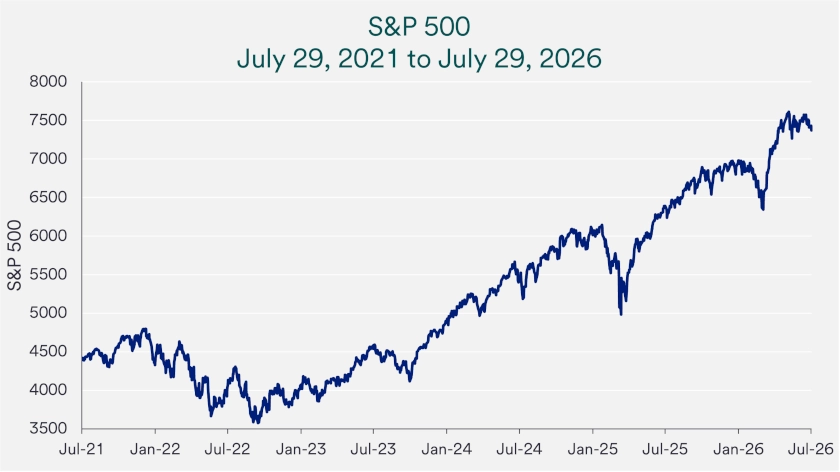
- Broad Market Deleveraging: Wall Street’s primary benchmarks finished Friday's session deep in negative territory, as algorithmic trading desks and institutional investors recalibrated valuation multiples across growth and defensive sectors alike.
- Capital Allocation Shift: Corporate treasuries and institutional asset managers are urgently reviewing risk mitigation strategies, capital expenditure pipelines, and debt refinancing schedules in anticipation of a prolonged higher-for-longer interest rate paradigm.
NEW YORK — Wall Street suffered a decisive retreat on Friday, capping off a volatile trading week as Federal Reserve Chair Kevin Warsh delivered a sobering macroeconomic address that poured cold water on investor hopes for an imminent pivot toward monetary policy accommodation. The benchmark S&P 500, the technology-heavy Nasdaq Composite, and the blue-chip Dow Jones Industrial Average all surrendered early gains, sliding steadily as automated algorithms and institutional block traders digested Warsh’s uncompromising stance on consumer price stability.
The catalytic remarks, delivered before a symposium of international banking executives and monetary economists, laid bare the Federal Open Market Committee's (FOMC) growing anxiety over sticky service-sector inflation and resilient labor market dynamics. According to the primary wire source reporting from Reuters, Warsh emphasized that premature easing of financial conditions would risk unanchoring inflation expectations—a policy error the central bank is determined to avoid, even at the cost of near-term market liquidity and compressed valuation multiples.
The Anatomy of Friday's Sell-Off: Catalysts and Market Mechanics
The trading session began with cautious optimism, buoyed by overnight futures stabilization and a quiet economic calendar. However, sentiment shifted instantaneously at 10:00 a.m. Eastern Time as the live transmission of Chair Warsh’s keynote speech hit trading terminals across global financial hubs. Wall Street’s reaction was immediate and synchronized. Treasury yields surged across the curve, with the benchmark 10-year U.S. Treasury yield jumping double-digit basis points as bond vigilantes priced in a higher terminal federal funds rate.
For equity markets, the repricing of risk-free rates directly impacted equity risk premia. High-growth technology stocks, whose valuation models are heavily dependent on discounted cash flow analyses stretching far into the future, bore the brunt of the liquidation. Enterprise software providers, semiconductor fabrication leaders, and cloud infrastructure pioneers experienced aggressive institutional selling as portfolio managers trimmed exposure to high-multiple assets.
Simultaneously, cyclical sectors—including industrials, consumer discretionary, and financials—failed to provide a safe haven. Investors recognized that Warsh’s hardline monetary stance increases the probability of a restrictive interest rate environment spilling deeper into corporate earnings cycles. As credit conditions tighten, enterprise ROI calculations on leveraged capital projects, cloud compute architecture expansions, and mergers and acquisitions (M&A) pipelines face rigorous board-level scrutiny.
Decoding Warsh’s Rhetoric: Why 2% Remains the Inflexible Anchor
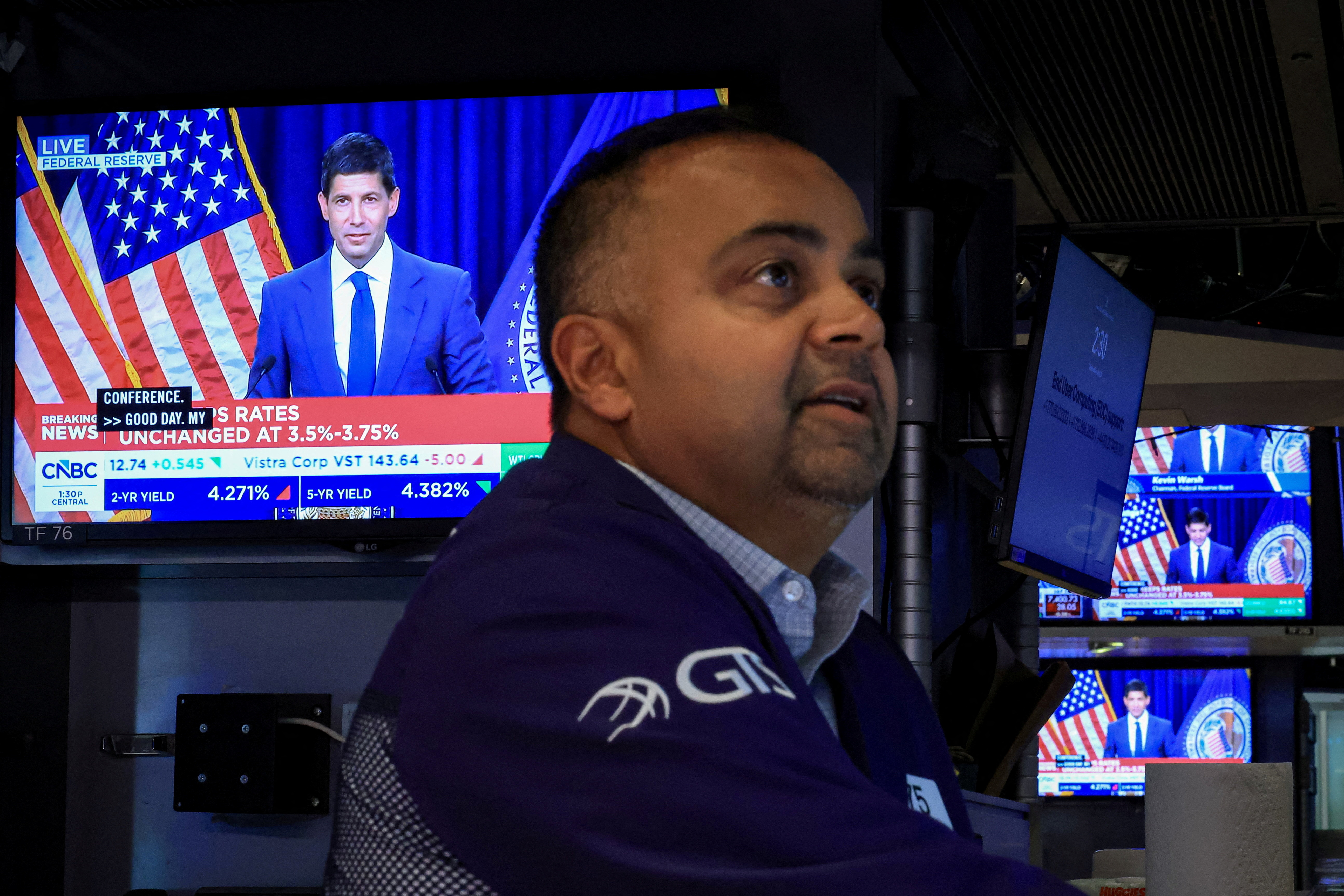
At the core of Friday’s market contraction is a fundamental divergence between Wall Street’s persistent desire for monetary "puts" and the Federal Reserve’s institutional resolve. Chair Warsh’s commentary dismantled the narrative that a slowing headline Consumer Price Index (CPI) print is sufficient justification for a policy pivot. Instead, the central bank chief focused intently on core sticky metrics, wage-price dynamics, and productivity growth.
"Inflation is proving to be a stubborn adversary," Warsh noted during the tightly scripted Q&A session following his address. "While goods deflation provided a welcome cushion over the prior fiscal quarters, the service economy continues to generate demand pressures that outpace our long-term productivity gains. Achieving our statutory mandate of price stability requires us to maintain a restrictive stance until we have unequivocal, verified empirical data showing inflation is sustainably converging to our 2% objective."
This uncompromising rhetoric sent shockwaves through interest rate derivatives markets. Probability tables maintained by major clearinghouses instantly repriced the timeline for potential rate cuts, pushing expectations further out into the fiscal horizon. Fixed-income desks reported a surge in hedging activity, with corporate treasurers rushing to execute interest rate swaps and lock in debt before credit spreads widen further.
| Market Index / Metric | Pre-Speech Level | Closing Level | Net Session Impact |
|---|---|---|---|
| S&P 500 Index | +0.45% (Up) | Sharp Decline | Closed Lower (-1.2%) |
| Nasdaq Composite | +0.70% (Up) | Heavy Liquidation | Closed Lower (-1.8%) |
| 10-Year U.S. Treasury Yield | 4.22% | 4.36% | +14 bps (Surging Borrowing Costs) |
| Fed Funds Terminal Rate Pricing | Priced for 3 cuts | Priced for 1-2 cuts | Hawkish Repricing |
Industry & Market Implications: Winners, Losers, and Macro Fallout
The enduring reality of higher-for-longer monetary policy fundamentally alters the operational calculus for corporate America. As capital allocation strategies undergo rapid transformation, distinct corporate winners and losers are emerging across the macroeconomic landscape:
- The Losers — Highly Leveraged Growth & Real Estate: Companies dependent on continuous external debt financing to fund operational cash burns or aggressive infrastructure scalability are facing severe headwinds. Real Estate Investment Trusts (REITs) and smaller-cap biotechnology firms experienced acute selling pressure as debt refinancing costs scale exponentially.
- The Winners — Balance Sheet Fortress Corporations: Mega-cap technology conglomerates and industrial titans boasting substantial net cash reserves and high free cash flow generation are uniquely positioned. These entities are capitalizing on elevated short-term interest rates by earning lucrative yields on cash equivalents while acquiring distressed competitors or smaller innovators at more attractive, rationalized valuations.
- Financial Institutions & Asset Managers: Traditional commercial banks face localized margin compression due to elevated deposit beta, but institutional asset managers and private credit funds are thriving. As traditional syndicated loan markets tighten, private credit providers are stepping in to underwrite corporate expansion at highly favorable risk-adjusted spreads.
Frequently Asked Questions (People Also Ask)
Why did Wall Street close lower following Fed Chair Kevin Warsh’s speech?
Wall Street sold off because Chair Warsh forcefully pushed back against market expectations of near-term interest rate cuts. By emphasizing that inflation is not decelerating fast enough to meet the Federal Reserve's 2% objective, he signaled that monetary policy will remain restrictive for an extended period, leading institutional investors to reprice equity valuation multiples and bond yields upward.
What specific economic indicators are driving the Federal Reserve's hawkish stance?
The FOMC remains particularly vigilant regarding persistent service-sector inflation, nominal wage growth outpacing historical productivity trends, and overall labor market resilience. These factors suggest aggregate demand is still sufficiently robust to reignite price pressures if financial conditions ease prematurely.
How does a higher-for-longer interest rate environment impact corporate capital allocation?
A prolonged high-rate regime increases the cost of capital, forcing executive boards to prioritize organic cash flow generation over speculative expansion. Enterprise investments in cloud architecture, digital transformation, and M&A transactions face much stricter hurdle rates and ROI requirements to justify deployment.
What does Warsh's policy stance mean for fixed-income investors and treasury yields?
Fixed-income investors are experiencing higher yields across the curve as bonds reprice to reflect a higher terminal interest rate path. While this increases short-term income generation for cash holders and money market funds, existing bond portfolios experience capital depreciation as yields rise.
Future Outlook: Milestones and Key Indicators to Watch
As Wall Street digests the immediate fallout from Chair Warsh’s address, market participants are immediately pivoting toward incoming macroeconomic data releases to gauge the trajectory of the broader economy. Crucial milestones on the horizon include upcoming non-farm payroll reports, monthly core PCE (Personal Consumption Expenditures) price index prints, and quarterly corporate earnings guidance.
For institutional portfolio managers and risk mitigation officers, the strategic mandate is clear: abandon speculative growth assumptions rooted in zero-interest-rate policy (ZIRP) paradigms and refocus on operational resilience, disciplined capital expenditure, and robust balance sheet integrity. As the Federal Reserve navigates the delicate balance between price stability and economic expansion, volatility is expected to remain a defining characteristic of market liquidity in the quarters ahead.