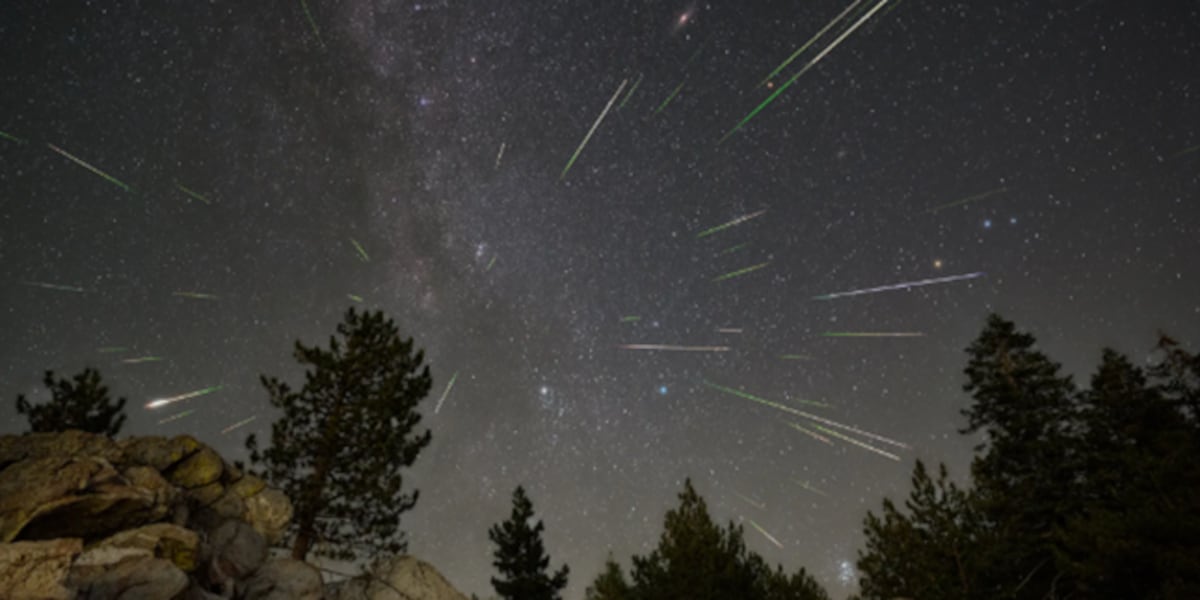
Executive Takeaways
- Peak Activity: The Southern Taurid meteor shower is reaching its optimal viewing window tonight, delivering an increased frequency of slow-moving, high-luminosity fireballs.
- Orbital Mechanics: Caused by Earth passing through the debris stream left by Comet Encke, this annual event features larger-than-average meteoroids capable of producing striking visual phenomena.
- Commercial & Scientific Impact: Beyond consumer interest, the influx of space debris highlights the critical need for robust orbital monitoring, risk mitigation strategies for low-Earth orbit assets, and aerospace infrastructure scalability.
- data-driven observation confirms that optimal viewing occurs past midnight away from urban light pollution, offering high-yield engagement for astronomical research and astrotourism markets.
As the autumn nights lengthen, professional astronomers, aerospace analysts, and amateur stargazers alike turn their gaze upward for one of the most anticipated celestial events of the fourth quarter. Tonight, the Southern Taurid meteor shower reaches a critical juncture in its cycle, promising a steady display of rare, brilliant fireballs. While many meteor showers are defined by fleeting, high-speed streaks of light, the Taurids are renowned for their distinctive, deliberate pace and exceptional luminosity—a result of the unique physical composition and entry velocity of their parent body's debris field.
For financial markets, enterprise entities in the aerospace and satellite operations sectors, and the booming astrotourism economy, this event serves as a timely reminder of our dynamic cosmic environment. As institutional capital allocation increasingly flows toward the commercialization of low-Earth orbit (LEO), understanding natural space weather, meteoroid distribution, and debris impact dynamics moves from academic curiosity to a core operational risk metric.
The Physics and Orbital Mechanics of the Taurid Complex
Test Our Free AI & Tech Utilities Suite
Calculate LLM API token costs, analyze article dwell-time, or simulate tech DCA returns.
To comprehend the significance of tonight's event, one must examine the complex orbital architecture of the Taurid stream. The shower is associated with Encke’s Comet, a short-period comet that orbits the Sun every 3.3 years. Over millennia, the gravitational influence of Jupiter and other planetary bodies has perturbed and spread Encke's debris out into a vast, complex swarm known as the Taurid Complex.
Unlike the Perseids or Geminids, which feature dense, narrow streams of tiny dust particles, the Taurid stream is exceptionally wide. Consequently, Earth spends weeks traversing it. Furthermore, the stream is populated by larger fragments—chunks of rock and ice often ranging from pebble to boulder size. When these larger objects encounter Earth’s atmosphere at relatively modest speeds (roughly 27 kilometers per second, or 60,000 miles per hour), they do not burn up instantly like microscopic dust grains. Instead, they penetrate deeper into the atmosphere, creating sustained, hyper-luminous displays known as fireballs.
Financial and technological stakeholders monitor these dense particulate streams because they mirror broader questions of infrastructure resilience. Just as institutional risk managers evaluate structural integrity against environmental shocks, satellite operators must assess potential collision vectors and thermal loads when Earth crosses major debris swarms.
Verified Data and Metrics Breakdown

A rigorous examination of the Southern Taurid meteor shower requires quantitative context. The following data table outlines the core parameters governing tonight's celestial event, comparing it against historical baseline metrics for major annual meteor displays.
| Metric Parameter | Southern Taurids (Current Event) | Northern Taurids | Perseids (Baseline Comparison) |
|---|---|---|---|
| Peak Activity Window | Late October to Early November | Mid-November | Mid-August |
| Entry Velocity | ~27 km/s (Moderate) | ~29 km/s (Moderate) | ~59 km/s (High) |
| Zenith Hourly Rate (ZHR) | 5 – 10 meteors/hour | 5 meteors/hour | 80 – 100+ meteors/hour |
| Fireball Frequency | High proportion of bright fireballs | Moderate to High | Low to Moderate |
| Parent Body | Comet 2P/Encke | Comet 2P/Encke | Comet 109P/Swift-Tuttle |
Industry, Market, and Economic Implications
While casual observers view meteor showers through the lens of recreation and public engagement, sophisticated market analysts and corporate strategists recognize broader economic ripples. The intersection of astronomy, commercial space operations, and terrestrial tourism generates substantial capital flows.
1. Astrotourism and Regional Economic Growth
As light pollution restricts urban viewing, rural communities with dark-sky designations are experiencing surging demand. Hospitality providers, local transportation networks, and eco-resorts leverage these celestial peaks to drive off-season revenue. Capital allocation toward dark-sky preservation infrastructure—such as specialized lighting and observational platforms—has emerged as a lucrative niche for municipal and private developers.
2. Aerospace Risk Mitigation and Orbital Infrastructure
On a macro level, events like the Taurid shower underscore the constant hazards active in near-Earth space. While natural meteoroids pose minimal threat to ground infrastructure, they interact with the growing constellation of commercial satellites in LEO. Enterprise risk management frameworks in the aerospace sector must continuously model particulate density, solar radiation pressure, and kinetic impact probabilities to protect multi-billion-dollar valuation multiples on orbiting assets.
Frequently Asked Questions (People Also Ask)
What time is best to view the Southern Taurid meteor shower tonight?
Optimal viewing occurs well after midnight, typically between 1:00 AM and local dawn. During this window, the constellation Taurus—the radiant point of the shower—reaches its highest elevation in the night sky, maximizing the number of visible meteors and fireball events.
Why are Taurid meteors referred to as "fireballs"?
The Taurid stream contains larger-than-average rocky debris originating from Comet Encke. When these larger fragments enter Earth's atmosphere, they burn with exceptional brightness—often outshining the planet Venus—earning them the classification of fireballs.
Do I need specialized astronomical equipment to see the fireballs?
No specialized equipment is required. Telescopes and binoculars actually hinder your chances by restricting your field of vision. The human eye, adapted to the dark over 20 to 30 minutes away from screens and artificial light, is the most effective tool for capturing wide-angle meteor activity.
How long will the Taurid meteor shower remain active?
While tonight marks a significant high-activity phase for the Southern branch, the broader Taurid complex is notoriously protracted. Activity persists across several weeks, overlapping with the Northern Taurids through November, creating an extended period of intermittent fireball sightings.
Future Outlook and Strategic Milestones
Looking ahead, the ongoing study of the Taurid Complex remains a priority for both planetary defense agencies and commercial space infrastructure firms. Researchers are utilizing advanced radar installations, all-sky camera networks, and space-based optical sensors to map denser concentrations of the Encke debris stream with unprecedented precision. These telemetry advancements are vital for refining predictive models that safeguard orbital assets.