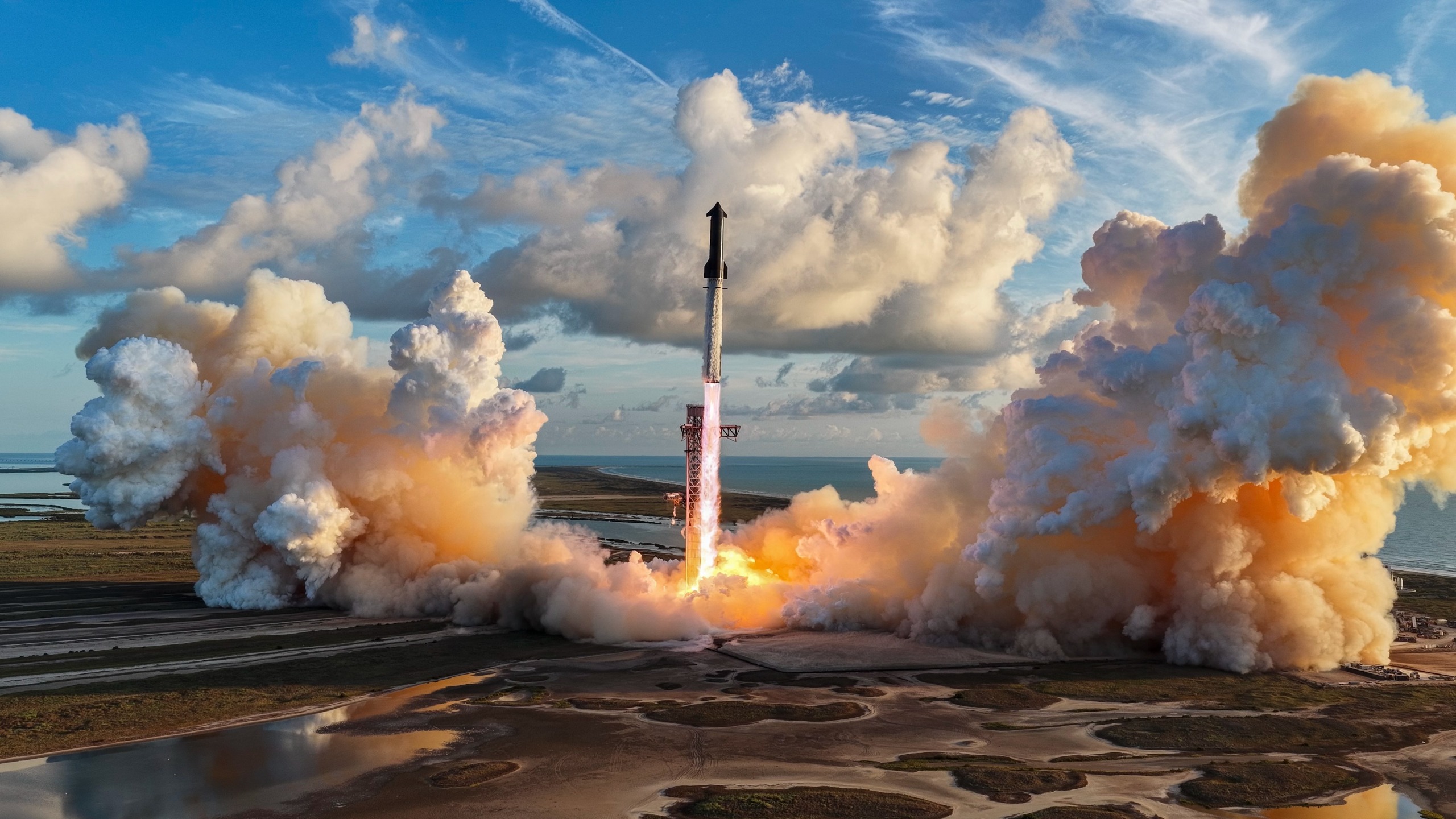
BOCA CHICA, Texas — In a monumental leap that rewrites the playbook of aerospace engineering, SpaceX successfully propelled its colossal Starship vehicle into orbit for the very first time. The landmark achievement, realized during the dramatic Flight 14 test, marks a watershed moment not just for Elon Musk’s private rocket company, but for the global space economy.
The successful orbital insertion of the largest, most powerful rocket ever constructed bridges the gap between ambitious science fiction and near-future reality. For institutional investors, defense analysts, and space enthusiasts alike, Flight 14 has officially transitioned Starship from an experimental developmental platform into a viable, heavy-lift transport system poised to reshape global logistics, satellite deployment, and deep-space exploration.
The Anatomy of a Milestone: Flight 14 Breaks New Ground
Blasting off from SpaceX’s Starbase facility in Boca Chica, Texas, the towering stainless-steel vehicle thundered into the stratosphere, driven by a symphony of Raptor engines generating unprecedented thrust. Following a series of rigorous, highly scrutinized test flights plagued by high-altitude explosions and structural anomalies, Flight 14 delivered the flawless execution engineers had spent years chasing.
Industry observers and aerospace analysts point out that achieving orbit on the fourteenth iteration of the test program demonstrates the rapid iterative design philosophy that has become SpaceX’s hallmark. By failing fast, analyzing telemetry, and rapidly implementing engineering fixes, the company has bypassed the traditionally glacial timelines of legacy aerospace manufacturing.
Key Takeaways from the Historic Launch:
- First Orbital Success: Starship officially reached orbital velocity, clearing a critical technical hurdle that opens the door for payload deployment.
- Engineering Resilience: Flight 14 followed a sequence of meticulously managed risk profiles, validating thermal protection systems and stage-separation mechanics.
- Economic Implications: The successful test accelerates timelines for commercial payload delivery, lowering the cost-per-kilogram metric for reaching orbit.
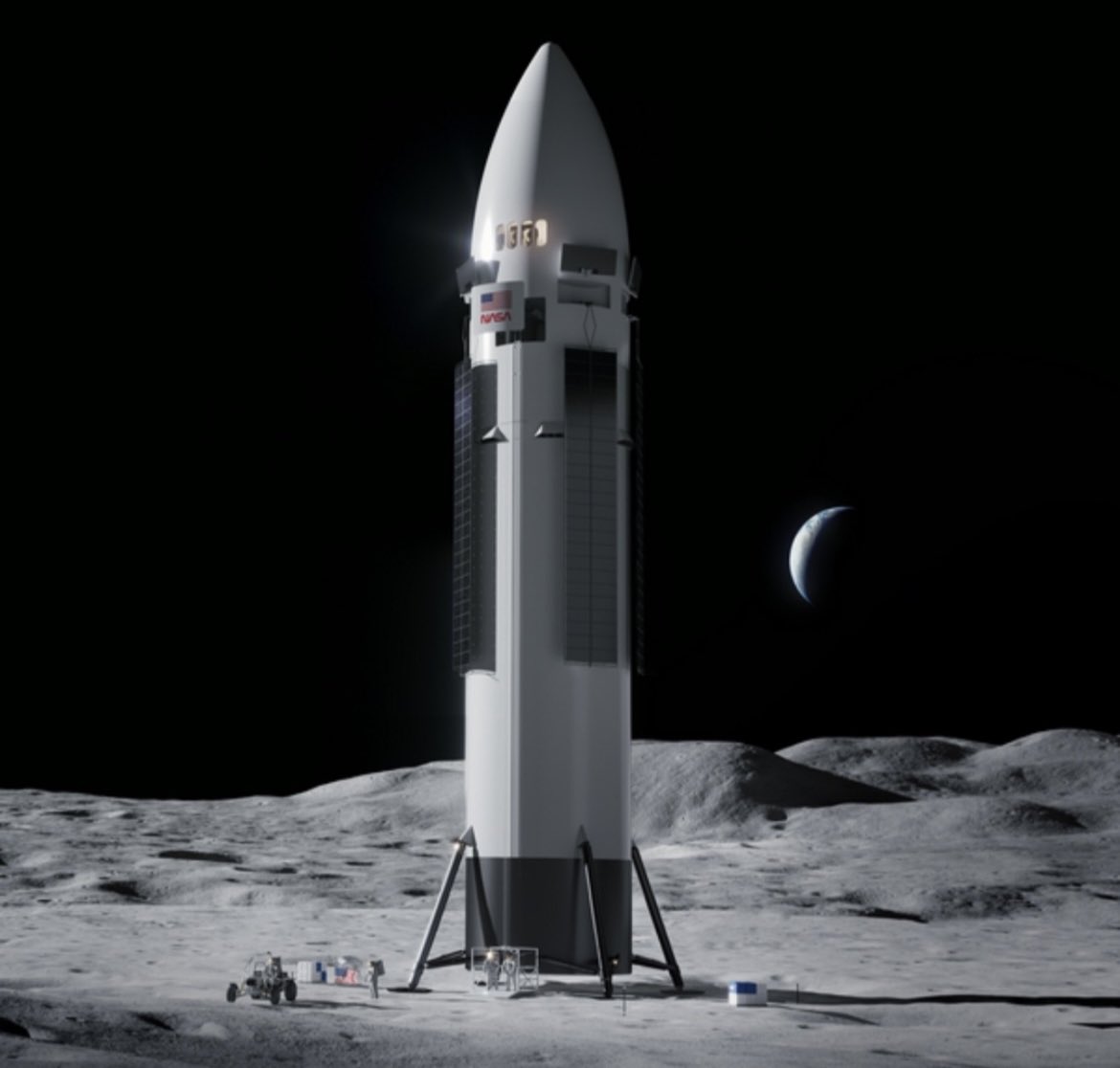
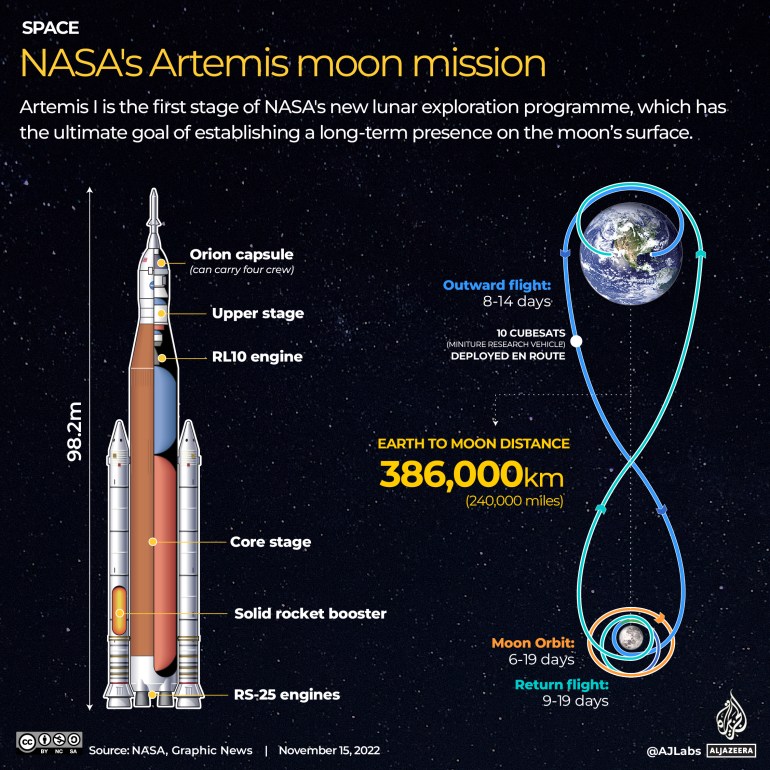
- Artemis Readiness: NASA’s lunar ambitions rely heavily on a human-rated variant of Starship to ferry astronauts to the lunar surface.
Market Impact and the Commercial Space Race
The successful flight sends immediate shockwaves through the global aerospace and defense markets. As the cost of launching massive payloads plummets, legacy defense contractors and emerging space startups are forced to recalibrate their strategic roadmaps.
Wall Street analysts emphasize that Starship’s unique selling proposition is its full reusability. Unlike expendable rocket systems that burn up or sink to the ocean floor after a single flight, Starship is designed to be rapidly refueled and reflown. This capability is expected to unlock entirely new commercial sectors, from orbital manufacturing and space-based solar power to rapid point-to-point global travel.
Furthermore, NASA has billions of dollars riding on the vehicle's success. As the chosen Human Landing System (HLS) for the Artemis program, Starship is the designated chariot expected to return American astronauts to the Moon later this decade. Flight 14 provides vital validation that SpaceX is on track to meet these rigorous federal milestones.
Mission Metrics at a Glance
| Metric | Specification / Status |
|---|---|
| Vehicle Name | SpaceX Starship (Super Heavy Booster + Starship Spacecraft) |
| Height | ~121 meters (397 feet) — Tallest rocket ever built |
| Milestone Achieved | First successful orbital insertion (Flight 14 test) |
| Primary Engines | Raptor engines (methane-fueled) |
| Key Stakeholders | SpaceX, NASA, Commercial Satellite Operators |
What Lies Ahead for Starship?
Despite the unmitigated success of Flight 14, engineers and company leadership caution that the journey has only just begun. The immediate road ahead involves mastering catch-and-reuse operations for both the Super Heavy booster and the Starship spacecraft, utilizing the colossal "chopstick" arms on the launch tower.
Additionally, orbital refueling—the process of transferring super-chilled propellants from one Starship to another in low-Earth orbit—remains an essential technical hurdle before the vehicle can embark on crewed missions to Mars or deep-space destinations. Nevertheless, with today’s triumph, SpaceX has proven that the foundational physics and propulsion architecture are sound.
As the aerospace sector digests the implications of this monumental test, one thing is abundantly clear: the gateway to the cosmos has just been flung wide open.
Frequently Asked Questions
1. Why is Starship considered a game-changer for the space industry?
Starship combines unprecedented payload capacity (up to 150 metric tons fully reusable) with rapid reusability. This drastic reduction in launch costs makes large-scale commercial operations in Earth orbit and beyond financially viable for the first time.
2. How does this launch impact NASA's Artemis lunar missions?
NASA selected Starship as the lunar lander for the Artemis III mission. Achieving orbit successfully is a crucial confidence builder that proves SpaceX can handle the heavy lifting and orbital maneuvers required to support astronauts on the Moon.