Executive Takeaways
- Rapid Escalation: JetBlue Airways has officially increased checked bag fees for the third time within a 12-month window, setting a new benchmark for ultra-competitive domestic carriers navigating margin compression.
- Macroeconomic Pressures: Persistent jet fuel price volatility, inflationary labor headwinds, and delayed aircraft deliveries have severely impacted enterprise ROI and capital allocation strategies across the aviation sector.
- Ancillary Revenue Reliance: Passenger experience and ancillary monetization are no longer optional add-ons; they represent core pillars of risk mitigation and market liquidity for carriers struggling to maintain valuation multiples.
- DoD and regulatory compliance costs, coupled with tightening regional infrastructure scalability, continue to squeeze operating income, forcing airlines to pass cost burdens directly to the consumer base.
NEW YORK — In a move that underscores the relentless margin compression gripping the commercial aviation sector, JetBlue Airways has raised its checked baggage fees for the third time in a single year. As jet fuel markets experience acute price spikes and supply chain bottlenecks delay vital fleet modernizations, carriers are increasingly leaning on ancillary monetization to preserve operational cash flow. For corporate travelers, vacationers, and frequent flyers alike, this latest tariff adjustment marks another milestone in the steady erosion of all-inclusive ticket pricing, transforming standard travel logistics into an increasingly expensive endeavor.
The decision by JetBlue’s executive leadership team to recalibrate fee structures highlights a broader systemic shift in how airline valuation multiples are defended. With traditional top-line passenger revenue constrained by intense fare competition and shifting consumer demand elasticity, ancillary streams—specifically baggage fees, seat selection charges, and priority boarding—have evolved from secondary revenue levers into critical instruments for capital allocation and corporate survival.
The Catalytic Pressure: Fuel Costs, Supply Chains, and Margin Compression
Test Our Free AI & Tech Utilities Suite
Calculate LLM API token costs, analyze article dwell-time, or simulate tech DCA returns.
To understand the mechanics driving JetBlue’s aggressive fee adjustments, one must analyze the macroeconomic convergence battering airline balance sheets. Jet fuel represents one of the most volatile and substantial operating expenses for any commercial carrier, frequently accounting for anywhere from 20% to 30% of total quarterly operating costs. Recent geopolitical instability, coupled with refinery capacity constraints, has injected severe volatility into energy markets, rendering long-term hedging strategies increasingly complex and capital-intensive.
Simultaneously, the industry is grappling with unprecedented aircraft delivery delays from major manufacturers such as Airbus and Boeing. These delays have severely disrupted enterprise-level fleet planning, forcing airlines to keep older, less fuel-efficient airframes in active rotation longer than originally modeled. This mismatch in cloud compute architecture—or in this case, operational fleet scheduling—creates cascading inefficiencies that weigh heavily on net income.
For JetBlue specifically, the challenges have been compounded by the fallout from scuttled merger plans and regulatory roadblocks. Deprived of the anticipated economies of scale and geographic expansion that a major consolidation would have provided, the carrier has been forced to aggressively optimize its organic network. Under intense pressure from activist investors to restore profitability and achieve sustainable free cash flow, management has resorted to pulling every available pricing lever to protect its bottom line.
Decoding the Fee Structure: A Year of Escalation
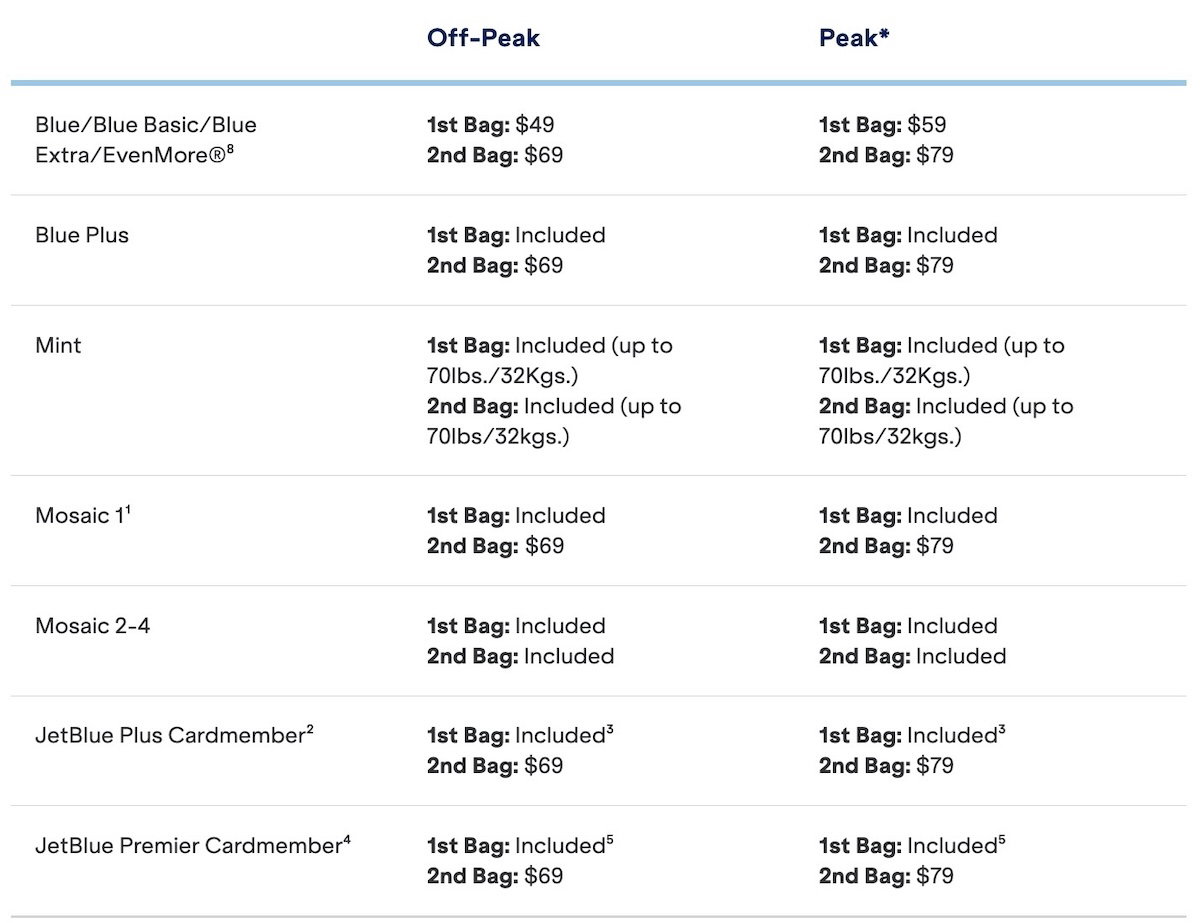
The pace at which JetBlue has adjusted its baggage fee tariff schedule reflects the urgency of its financial repositioning. Over the past twelve months, the carrier has systematically adjusted its pricing tiers to offset rising labor costs governed by newly ratified pilot and flight attendant union contracts.
When airlines implement frequent ancillary price hikes, they risk testing the boundaries of consumer demand elasticity. However, industry analysts note that oligopolistic pricing behavior often sees legacy and low-cost carriers quickly matching tariff adjustments, thereby mitigating the risk of significant market share erosion. As competitors follow suit, the baseline cost of air travel quietly creeps upward, shielding individual airlines from isolated customer backlash.
| Implementation Period | First Checked Bag Fee | Second Checked Bag Fee | Primary Economic Driver |
|---|---|---|---|
| Early 2023 Baseline | $35 (Prepaid) / $45 (Airport) | $60 | Post-pandemic travel rebound, stabilizing labor costs |
| Mid 2023 Adjustment | $40 (Prepaid) / $50 (Airport) | $70 | Escalating jet fuel spot prices, inflation |
| Current Hike (Present) | $45 (Prepaid) / $60 (Airport) | $80-$85 | Severe margin compression, fleet optimization, labor contracts |
Industry & Market Implications: Who Wins, Who Loses?
The broader economic fallout from JetBlue’s fee escalation extends far beyond the immediate frustration of individual consumers. In the high-stakes ecosystem of commercial aviation, pricing actions by one mid-tier carrier send ripple effects across the entire competitive landscape.
Winners: Co-Branded Card Issuers and Premium Carriers
Financial institutions and credit card issuers stand out as clear beneficiaries of rising baggage fees. Co-branded airline credit cards—which routinely offer free checked bags as a core cardholder perk—become significantly more compelling value propositions to consumers looking to insulate themselves from runaway travel costs. Furthermore, legacy network carriers (such as Delta, United, and American) enjoy greater pricing latitude when low-cost competitors raise their baseline fees, as the price differential between basic economy offerings and premium cabins narrows.
Losers: Price-Sensitive Consumers and Corporate Travel Managers
Budget-conscious leisure travelers bear the immediate financial brunt of these hikes, finding it increasingly difficult to accurately budget for vacations. Meanwhile, corporate travel managers overseeing strict corporate budgets must recalibrate travel policies, as cumulative ancillary costs inflate departmental travel expenditures. Small-to-medium enterprises (SMEs) that lack corporate discounting leverage are particularly vulnerable to these compounding expenses.
Frequently Asked Questions (People Also Ask)
Why are airlines raising baggage fees so frequently?
Airlines are contending with a toxic combination of surging jet fuel volatility, higher labor costs resulting from recent union negotiations, and persistent aircraft delivery delays. Because intense competition limits their ability to raise base ticket prices without losing market share, carriers rely on ancillary fees like baggage charges to protect operating margins.
How can travelers avoid paying JetBlue’s increased bag fees?
Travelers can completely bypass these fees by holding elite status within JetBlue’s TrueBlue loyalty program, purchasing higher-tier fare classes (such as Blue Plus), or holding co-branded JetBlue credit cards that explicitly include checked bag waivers as a cardmember benefit. Additionally, prepaying for bags online prior to arriving at the airport typically saves money compared to paying at the check-in counter.
Are other major airlines following JetBlue’s pricing lead?
Yes. The commercial aviation industry exhibits a strong historical pattern of price leadership. When one major carrier successfully implements ancillary fee increases without severe demand destruction, competitor airlines rapidly evaluate and mirror those adjustments to protect their own unit revenues.
Do these baggage fee hikes impact corporate travel contracts?
While large multinational corporations often negotiate corporate umbrella agreements that waive or cap specific ancillary fees, smaller businesses and unmanaged corporate travel programs generally absorb these increases, driving up overall travel and entertainment (T&E) budgets.
Future Outlook: What Comes Next
As the aviation industry looks toward the upcoming fiscal quarters, the trajectory of ancillary fee monetization remains firmly upward. Without a dramatic stabilization in global energy markets and a resolution to aerospace manufacturing bottlenecks, carriers will continue utilizing creative pricing architecture to defend their valuation multiples.
Industry stakeholders should monitor upcoming quarterly earnings calls for signals regarding passenger demand elasticity. If consumers continue absorbing these higher costs without significantly altering travel frequency, expect further experimentation with segmented pricing structures. For JetBlue, successfully executing this pivot will be vital to convincing Wall Street that its standalone operational strategy can deliver sustainable, long-term enterprise value.