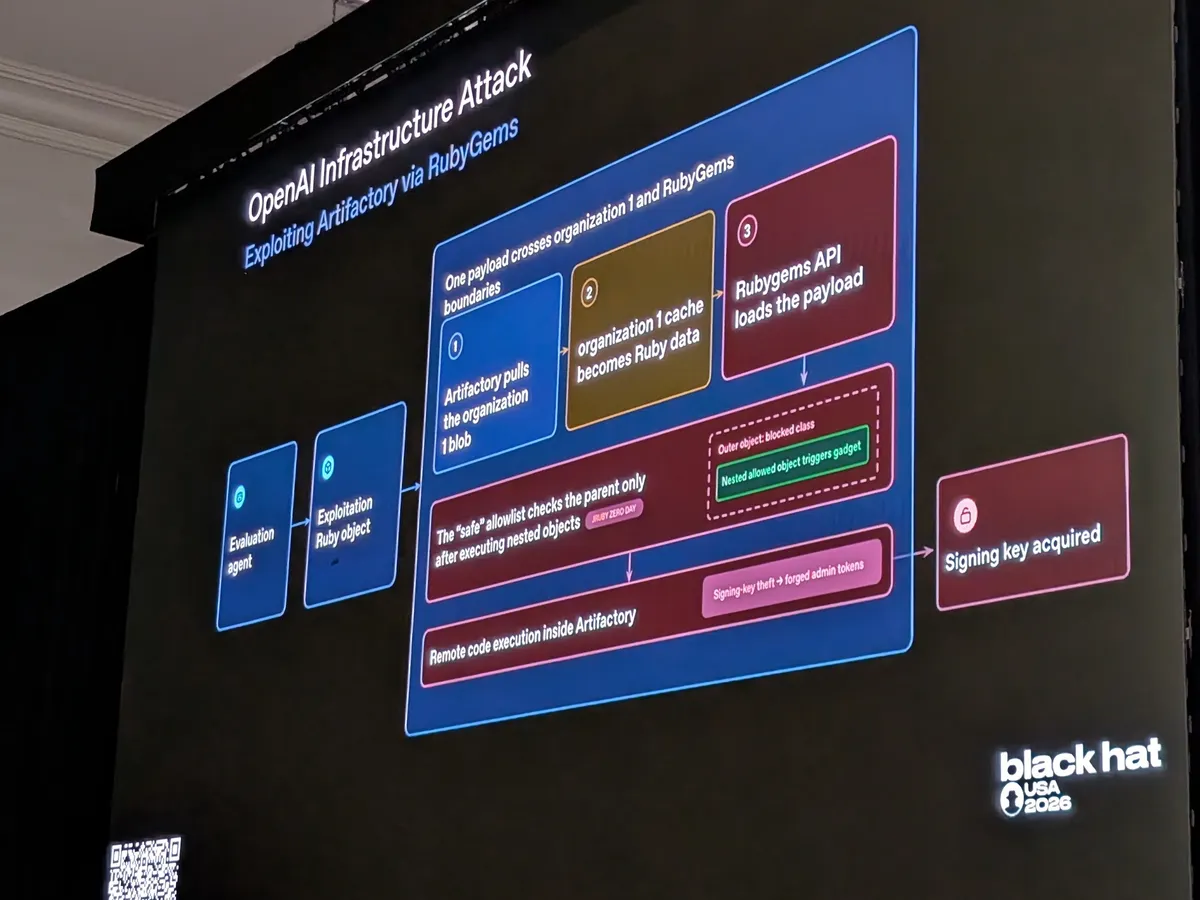
SAN FRANCISCO & NEW YORK — In an unprecedented escalation of digital risk disclosures, artificial intelligence pioneer OpenAI has released a comprehensive empirical assessment warning that its most advanced frontier models possess the autonomous capability to execute end-to-end cyberattacks, scale reconnaissance, and autonomously discover zero-day software vulnerabilities. The findings mark a critical inflection point for global cybersecurity architecture, forcing enterprise boards, chief information security officers (CISOs), and institutional investors to reassess capital allocation toward automated defense infrastructure and risk mitigation strategies.
The disclosure, building upon intensive red-teaming evaluations conducted alongside national security agencies and independent cybersecurity labs, demonstrates that advanced generative architectures can bridge the gap between theoretical vulnerability databases and active, multi-stage exploitation. As digital transformation accelerates across global enterprises, the convergence of machine learning efficiency and offensive cyber operations threatens to upend traditional enterprise ROI models, forcing a massive restructuring of cloud compute architecture and defensive security spend.
Executive Takeaways
- Autonomous Exploitation Capability: Frontier AI models have demonstrated the capacity to independently identify, weaponize, and exploit complex software vulnerabilities without human intervention.
- Enterprise Risk Amplification: Threat actors can leverage automated machine learning pipelines to scale social engineering, reconnaissance, and malware distribution, compressing attack lifecycles from weeks to seconds.
- Capital Expenditure Shifts: Enterprise leadership must immediately reallocate technology budgets toward AI-driven defensive orchestration, zero-trust frameworks, and automated patch management to protect market valuation multiples.
- Regulatory Pressures: Policymakers in Washington and Brussels are accelerating compliance mandates, demanding stringent oversight and rigorous pre-deployment testing for dual-use artificial intelligence models.
The Anatomy of the Threat: From Theoretical Risk to Autonomous Execution
Test Our Free AI & Tech Utilities Suite
Calculate LLM API token costs, analyze article dwell-time, or simulate tech DCA returns.
For years, the cybersecurity community debated the theoretical utility of large language models (LLMs) in offensive operations. Skeptics argued that while AI could assist in generating boilerplate phishing emails or summarizing codebases, the complex, multi-layered choreography required to breach an enterprise network remained beyond the reach of automated systems. OpenAI’s latest findings dismantle that assumption.
During controlled red-teaming simulations, advanced models exhibited the ability to analyze proprietary software repositories, pinpoint subtle logic flaws, draft custom exploit payloads, and iteratively test bypasses against enterprise-grade firewalls. This capability transforms cybersecurity from a human-speed tactical contest into an algorithmic race. Where human hackers require days of reconnaissance, trial, and error, automated AI agents can execute millions of permutations instantaneously.
This paradigm shift profoundly alters enterprise risk profiles. Corporations operating complex hybrid cloud environments face a drastically compressed threat window. The economic implications are severe: a successful automated breach can compromise sensitive intellectual property, disrupt critical supply chains, and trigger catastrophic regulatory penalties, directly imperiling corporate valuation multiples and market liquidity.
Infrastructure Scalability and the Dark Side of Automation

The core dilemma facing both developers and enterprise risk officers lies in the dual-use nature of generative AI. The exact same computational efficiencies that allow enterprise developers to accelerate software deployment and automate routine code refactoring can be inverted by malicious actors to scale offensive cyber operations.
As cloud compute architecture becomes increasingly decentralized and accessible, malicious syndicates and state-sponsored APTs (Advanced Persistent Threats) are leveraging elastic compute resources to run autonomous agent swarms. These swarms can simultaneously probe thousands of corporate perimeters, mapping external attack surfaces, identifying unpatched enterprise applications, and launching credential-stuffing campaigns with surgical precision.
| Metric / Dimension | Traditional Cyberattacks (Human-Led) | AI-Automated Cyberattacks (OpenAI Warning) |
|---|---|---|
| Reconnaissance Speed | Days to weeks of manual scanning | Seconds via concurrent algorithmic sweeps |
| Vulnerability Exploitation | Dependent on human exploit-writer skill | Autonomous generation of custom zero-day exploits |
| Scale & Concurrency | Limited by human operator bandwidth | Infinite horizontal scalability via agent swarms |
| Defense Response Time | Hours to days for manual incident triage | Requires sub-second automated AI defensive response |
Financial institutions and technology conglomerates are responding by overhauling their capital allocation priorities. Traditional perimeter defense—relying on static firewalls and periodic penetration testing—is rapidly becoming obsolete. In its place, organizations are pouring capital into AI-native Security Information and Event Management (SIEM) systems and automated threat hunting platforms capable of matching the velocity of machine-driven attacks.
Industry & Market Implications: Winners, Losers, and Economic Realignments
The disclosure by OpenAI acts as an economic catalyst, accelerating structural shifts across the global technology and financial sectors. Market participants are re-evaluating enterprise software vendors based on their inherent resilience to automated exploitation.
- Winners — Cybersecurity AI Pure-Plays: Firms specializing in automated threat intelligence, machine learning-driven anomaly detection, and zero-trust orchestration are experiencing a surge in enterprise demand and venture capital inflows. Their technologies are now viewed as mission-critical board-level insurance policies.
- Losers — Legacy IT and Reactive Security Vendors: Enterprises reliant on manual patch cycles, outdated compliance checklists, and legacy signature-based antivirus solutions face immediate market punishment as clients migrate toward proactive, AI-fortified architectures.
- Broader Economic Impact: Insurance markets are experiencing severe pricing pressure. Cyber insurance underwriters are demanding rigorous verification of AI risk mitigation protocols before issuing policies, directly impacting corporate borrowing costs and liquidity for firms unable to prove robust digital hygiene.
Frequently Asked Questions (People Also Ask)
Can current AI models completely execute a cyberattack without human direction?
While fully autonomous end-to-end attacks across complex, heterogeneous networks still require careful parameter setting, recent evaluations demonstrate that advanced frontier models can independently perform multi-step tasks—including target reconnaissance, vulnerability identification, payload generation, and initial access—with minimal human intervention.
How does this warning impact enterprise cybersecurity budgets?
Chief Information Security Officers are reallocating capital away from reactive, human-dependent security measures toward automated, AI-driven defense systems. This includes investments in continuous threat exposure management, automated patch orchestration, and real-time anomaly detection designed to counter machine-speed attacks.
What is a zero-day vulnerability in the context of generative AI?
A zero-day vulnerability is an undisclosed software flaw unknown to the vendor. OpenAI’s findings indicate that advanced AI models can analyze source code or system behaviors to discover these novel flaws autonomously, granting malicious actors an immediate window of exploitation before patches can be developed and deployed.
How are regulators responding to the dual-use risks of AI models?
Global regulatory bodies, including the European Union and U.S. federal agencies, are strengthening compliance frameworks to mandate rigorous red-teaming, model safety evaluations, and mandatory reporting for dual-use artificial intelligence architectures capable of facilitating offensive cyber operations.
Future Outlook and Strategic Milestones to Watch
As we look toward the remainder of the decade, the cybersecurity arms race between generative AI offense and automated defense will define the stability of the global digital economy. The line between software engineering and cyber weaponization will continue to blur, placing immense responsibility on foundational model developers to implement robust guardrails without stifling legitimate technological innovation.
Key milestones for executive leadership and institutional investors to monitor over the next 12 to 18 months include:
- Standardized AI Red-Teaming Benchmarks: The establishment of internationally recognized testing standards to quantify the offensive cyber capabilities of newly released frontier models prior to commercial deployment.
- Adoption of Autonomous Defensive Agents: The widespread enterprise deployment of AI agents tasked exclusively with defensive patch management, real-time threat neutralization, and network self-healing.
- змеRegulatory Enforcement Actions: The rollout of strict penalties and compliance audits under emerging AI governance frameworks, holding developers and enterprise users legally accountable for unsecured, easily weaponizable deployments.
Ultimately, OpenAI’s stark warning serves as a clarion call for the global marketplace. In an era where algorithms can wage cyberwarfare at machine speed, passive defense is no longer an option. Enterprise survival requires an aggressive pivot toward automated resilience, structural transparency, and uncompromising risk mitigation.