Executive Takeaways
- Commercial Transition: Following the successful validation of the Vikram-1 launch vehicle, Skyroot Aerospace is aggressively pivoting toward high-frequency commercial orbital flights to capture surging global demand for small-satellite deployment.
- Capital Allocation & Valuation: The technological de-risking of the Vikram series significantly enhances enterprise valuation multiples, positioning the firm for a potential institutional liquidity event or major late-stage private equity capitalization.
- Infrastructure Scalability: Skyroot is scaling its manufacturing footprint and cloud-integrated launch operations architecture to streamline regulatory compliance and compress payload integration turnaround times.
- Market Disruption: The emergence of India's private space sector introduces severe margin pressure on legacy global launch providers, fundamentally altering the unit economics of orbital access.
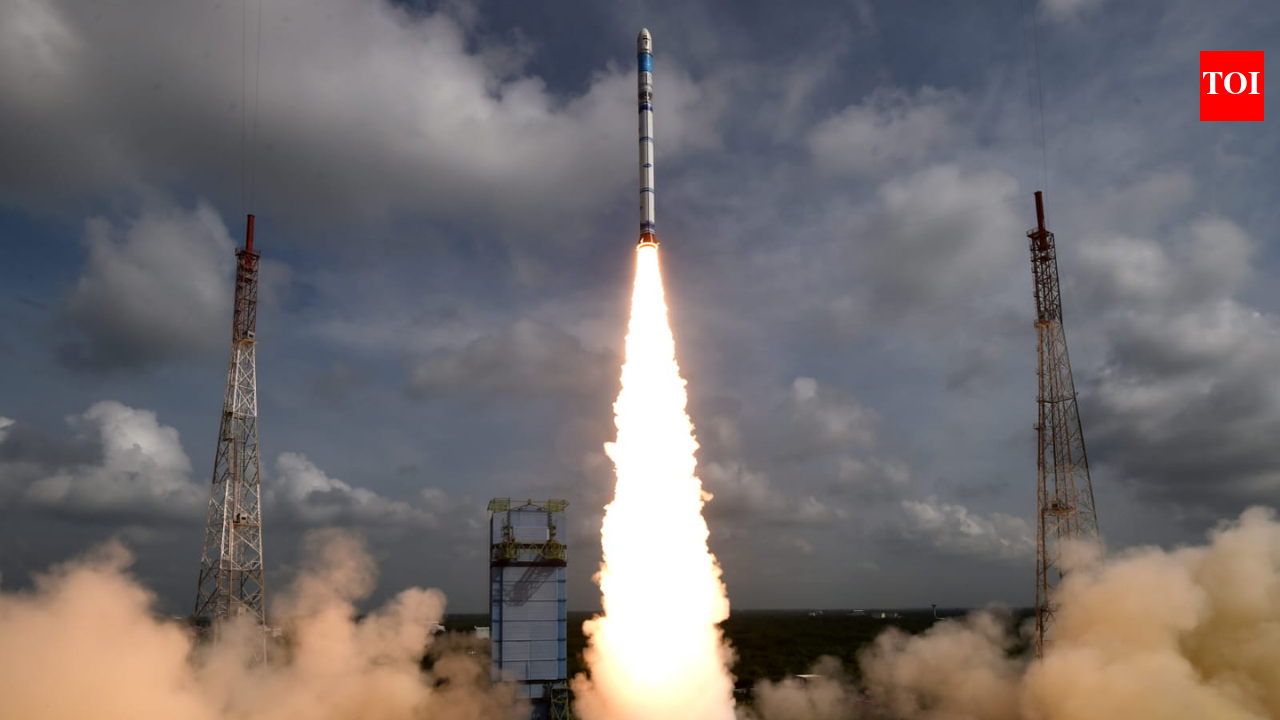
BENGALURU/NEW DELHI — In the high-stakes arena of commercial space exploration, momentum is measured not merely in successful telemetry readouts, but in the velocity of capital realization and market capture. Speaking exclusively to financial media following the historic operational milestone of the Vikram-1 launch vehicle, Skyroot Aerospace Co-Founder and Chief Executive Officer Pawan Chandana signaled a decisive transition for the enterprise: the definitive pivot from experimental rocketry to scaled commercial flight operations.
The successful flight sequence of Vikram-1—India’s premier privately developed orbital-class rocket—validates years of intensive research, iterative engineering, and strategic risk mitigation. For institutional investors, venture capital syndicates, and aerospace strategists tracking the New Space economy, Chandana’s declaration that Skyroot is "getting into commercial flights" marks a foundational inflection point. The enterprise is moving past the proof-of-concept phase, entering a hyper-competitive global marketplace demanding rigorous infrastructure scalability, predictable scheduling, and compelling enterprise ROI.
The Catalytic Significance of Vikram-1
Test Our Free AI & Tech Utilities Suite
Calculate LLM API token costs, analyze article dwell-time, or simulate tech DCA returns.
To understand the gravity of Chandana’s announcement, one must examine the engineering and economic architecture underpinning the Vikram-1 program. Built around advanced carbon-composite solid propulsion stages, a liquid-fueled upper stage, and a proprietary avionics architecture, Vikram-1 was designed from inception with a relentless focus on manufacturing cost efficiency and modularity. In an industry historically plagued by protracted supply chain delays and ballooning R&D expenditures, Skyroot’s lean development model has served as a masterclass in capital allocation.
The successful flight test demonstrated critical capabilities: multi-stage separation dynamics, precise orbital insertion algorithms, and robust telemetry transmission under extreme thermal and aerodynamic loads. By proving the reliability of its proprietary architecture, Skyroot has effectively removed the existential technical risks that typically depress early-stage aerospace valuation multiples. The resultant de-risking opens direct pathways to lucrative enterprise launch contracts with global constellation operators, earth-observation firms, and telecommunications conglomerates.
"The technical validation we achieved with Vikram-1 is not just an engineering triumph; it is a balance sheet transformation," notes a senior aerospace equity analyst based in Mumbai. "When a private launch provider moves from static ground tests to flawless flight execution, its risk profile shifts dramatically, unlocking lower-cost debt financing and institutional market liquidity."
Strategic Infrastructure Scalability and Cloud Compute Integration

Transitioning from developmental flights to a high-cadence commercial flight manifest requires more than aerodynamic prowess; it demands industrial-scale manufacturing and sophisticated operational logistics. Skyroot is currently executing an aggressive infrastructure expansion plan across its design, testing, and fabrication facilities in Hyderabad.
Central to this scaling strategy is the integration of advanced cloud compute architecture and digital twin simulations. By leveraging high-performance computing clusters to model propellant thermodynamics, structural stress points, and trajectory dispersion profiles, Skyroot’s engineering teams can iterate designs rapidly while minimizing physical prototype waste. This digital-first approach significantly compresses the production timeline for successive flight units.
Furthermore, streamlined regulatory compliance with national space authorities—facilitated by IN-SPACe (Indian National Space Promotion and Authorization Centre)—has established a predictable legal framework for private operators. This frictionless regulatory environment gives Skyroot a distinct operational advantage over Western counterparts, who frequently navigate protracted licensing backlogs.
Comparative Market Metrics: Vikram-1 vs. Global Small-Sat Launchers
To evaluate Skyroot’s competitive positioning within the global New Space ecosystem, we examine key technical and economic parameters relative to international market peers:
| Launch Vehicle | Developer / Country | Primary Propulsion | Payload to LEO (kg) | Target Market Positioning |
|---|---|---|---|---|
| Vikram-1 | Skyroot Aerospace (India) | Carbon-Composite Solid / Liquid Upper | ~300 kg | Cost-effective small-sat constellations & LEO payloads |
| Electron | Rocket Lab (USA / NZ) | Rutherford Liquid (Electric-pump) | ~300 kg | Dedicated frequent rideshares & responsive launch |
| LauncherOne (Defunct) | Virgin Orbit (USA) | Liquid Oxygen / RP-1 (Air-launched) | ~300 kg | Flexible air-launch operations (Ceased operations 2023) |
| Prime | Orbex (UK) | Bio-propane / Liquid Oxygen | ~150 kg | Micro-launch with zero-carbon footprint focus |
Industry and Market Implications: Winners and Losers
Pawan Chandana’s commitment to initiating commercial flights carries profound repercussions across the global aerospace value chain. As private Indian launch providers achieve flight heritage, the macroeconomic balance of power begins to shift.
The Winners
- Satellite Constellation Operators: Operators requiring dedicated or semi-dedicated orbits gain access to a highly competitive, cost-efficient launch alternative, driving down capital expenditures for deployment.
- Indian Aerospace Supply Chain: Domestic component manufacturers, metallurgy firms, and electronics providers stand to benefit from multi-year procurement contracts, fostering a robust local industrial ecosystem.
- Early-Stage Venture Capitalists: Syndicates that backed Skyroot during its seed and Series A rounds are positioned to realize substantial valuation gains as the company scales toward profitability.
The Losers
- Legacy Incumbents with High Fixed Costs: Traditional government-run or heavily bureaucratic aerospace contractors struggling with bloated cost structures will face intense pricing pressure.
- Undercapitalized Western Micro-Launch Startups: Competitors failing to secure immediate flight validation or struggling with cash-burn metrics will find it increasingly difficult to attract institutional capital as Skyroot captures market share.
Frequently Asked Questions (People Also Ask)
What is the primary payload capacity of Skyroot’s Vikram-1 launch vehicle?
Vikram-1 is engineered to deliver payloads of approximately 300 kilograms to Low Earth Orbit (LEO), making it ideally suited for small-satellite constellations, technology demonstration payloads, and earth-observation clusters.
How does Skyroot achieve a competitive cost advantage in the global market?
Skyroot leverages advanced carbon-composite solid propulsion, modular rocket architecture, a lean manufacturing methodology in India, and cloud-integrated simulation tools to significantly compress both development timelines and per-kilogram launch costs relative to Western peers.
What regulatory bodies govern commercial space launches in India?
Commercial space activities and launch authorizations in India are regulated by IN-SPACe (Indian National Space Promotion and Authorization Centre), an independent single-window agency created under the Department of Space to facilitate private sector participation.
What is the significance of the shift toward commercial flights for Skyroot's valuation?
Transitioning from R&D and developmental testing to active commercial flight operations de-risks the enterprise from a technology standpoint, expanding market liquidity, validating revenue models, and paving the way for potential large-scale institutional funding or public market listing.
Future Outlook: Milestones to Watch
As Skyroot Aerospace transitions into its commercial execution phase, financial markets and industry watchdogs will monitor several critical milestones over the next 12 to 24 months:
- Manifest Execution: Successful execution of signed commercial payload contracts without schedule slippage, demonstrating operational reliability and cadence.
- Facility Scaling: The expansion of automated manufacturing lines in Hyderabad to support a higher run-rate of vehicle production per annum.
- Next-Gen Development: Progress on heavier-lift iterations within the Vikram series, designed to capture mid-market orbital logistics demand.
- Capital Markets Activity: Potential pre-IPO capitalization rounds or strategic partnerships with multinational defense and aerospace conglomerates.
In summary, Pawan Chandana’s announcement is more than a milestone celebration; it represents the maturation of India’s private space sector into a formidable global commercial force. With Vikram-1 validated and operational horizons expanding, Skyroot is poised to redefine the economics of orbital access.