EXECUTIVE TAKEAWAYS
- Capitalizing on Retro-Tech Demand: Sony Group Corporation is leveraging its rich intellectual property archive to launch a modernized reissue of its classic 1979 Walkman open-air headphones, targeting both nostalgic audiophiles and Gen-Z consumers driving the wired-audio resurgence.
- Silicon & Connectivity Upgrade: The legacy 3.5mm-focused architecture has been retrofitted with a custom USB-C digital audio interface, integrating an ultra-low-power Digital-to-Analog Converter (DAC) capable of native 24-bit/96kHz high-resolution audio processing.
- Regulatory Alignment & Margin Maximization: The release directly aligns with the European Union’s universal charging mandate (Directive 2022/2380) while yielding superior gross margins by bypassing expensive Active Noise Cancellation (ANC) chipsets and volatile lithium-ion battery supply chains.
- Strategic Positioning: The product serves as an entry-level halo product within Sony’s Entertainment, Technology & Services (ET&S) division, expanding direct-to-consumer (DTC) touchpoints without cannibalizing premium flagship offerings like the WH-1000XM5.
The Return of an Icon: Modern Engineering Meets 1979 Aesthetics
Test Our Free AI & Tech Utilities Suite
Calculate LLM API token costs, analyze article dwell-time, or simulate tech DCA returns.
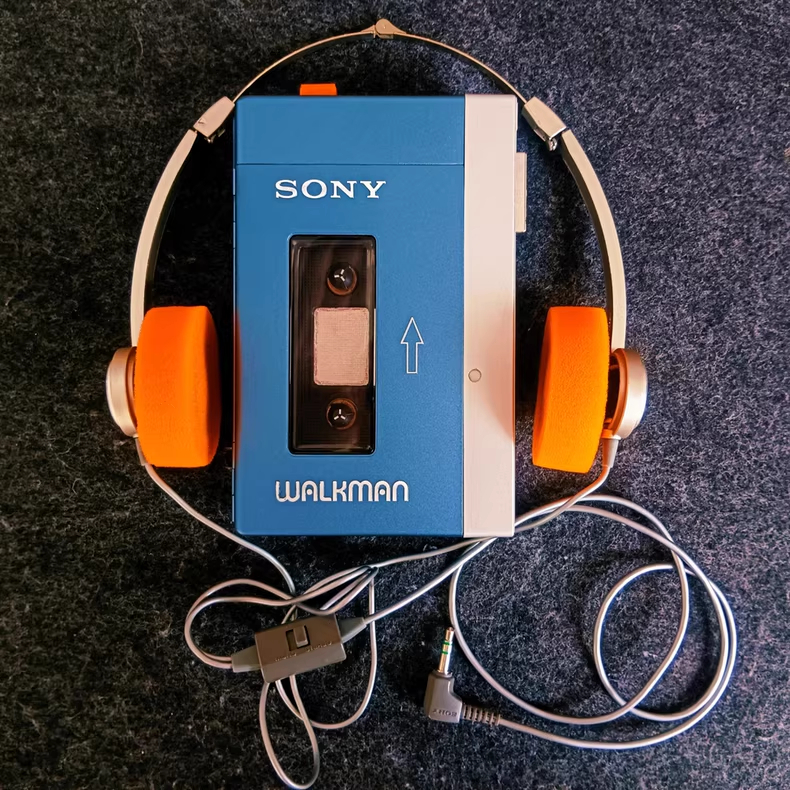
In July 1979, Sony co-founder Akio Morita unveiled the TPS-L2 Walkman—a personal cassette player that permanently restructured human interaction with mobile media. Accompanying that historic playback unit were the MDR-3 headphones: minimalist, metallic, fitted with signature orange foam earpads, and weighing a fraction of the bulky dynamic studio monitors of that era. Today, as consumer hardware manufacturers face slowing smartphone replacement cycles and saturation in the wireless audio market, Sony is deploying a surgical strike on legacy brand equity by resurrecting those classic 1979 headphones, engineered specifically for the silicon ecosystem of the mid-2020s.
The resurrected unit bridges forty-five years of acoustic evolution. While visually virtually indistinguishable from the original late-70s aesthetic—retaining the spring-steel headband chassis, tactile friction sliders, and high-visibility acoustic foam—the interior dynamic driver housing and signal pipeline have undergone a complete architectural overhaul. Gone is the passive analog-only signal chain; in its place rests a high-density, multi-function USB-C terminal designed to interface directly with modern iOS, Android, and macOS/Windows host controllers without requiring external dongles or amplified audio interfaces.
This product launch reflects a broader structural pivot within consumer electronics. According to global retail tracking metrics, consumer preference among demographic cohorts aged 18 to 27 has seen a documented shift toward retro-futuristic wired peripherals. Driven by battery anxiety, Bluetooth connection latency, setup friction, and a cultural aesthetic movement toward physical computing, wired listening devices are undergoing a rapid economic renaissance. Sony's strategy captures this trend while capitalizing on an asset-light production framework that leverages existing manufacturing tooling and high-yield assembly lines.
Silicon Architecture & Supply Chain Economics

From an enterprise engineering standpoint, updating a 1979 transducer design to modern digital standards presents unique industrial challenges. Legacy open-back headphones relied on high-impedance voice coils mated to high-output analog amplifiers found in stereo receivers and cassette decks. To make the resurrected Walkman headphones functional with low-voltage mobile host devices, Sony engineers embedded a custom System-on-Chip (SoC) directly into the USB-C connector housing.
Key Hardware Specifications & Audio Signal Pipeline
The integrated USB-C connector operates as a self-contained audio endpoint. It pulls minimal parasitic current from the host device’s power bus via standard USB Power Delivery (USB-PD) negotiation protocols, running an ultra-low-power signal processor that converts digital PCM audio streams into pristine analog signals.
- Integrated DAC/Amp SoC: Low-jitter clock generator supporting up to 24-bit/96kHz lossless audio playback with a Signal-to-Noise Ratio (SNR) exceeding 110 dB.
- Transducer Technology: Re-engineered 30mm dynamic drivers featuring high-flux neodymium magnet arrays (replacing original ferrite magnets) paired with ultra-thin PET diaphragms for tight transient response and elevated frequency extension (15Hz – 25,000Hz).
- Chassis & Acoustic Tuning: Semi-open acoustic back chamber tuned to balance ambient environmental awareness with controlled lower-midrange warmth, matching modern masterings while preserving vintage acoustic character.
- Interconnect Architecture: High-purity oxygen-free copper (OFC) internal cabling terminated with reinforced strain reliefs and modern TPE jackets to eliminate microphonics.
By migrating the active digital circuitry entirely into the connector housing, Sony mitigates the acoustic disruption that internal active components usually cause inside small headphone earcups. Furthermore, the absence of an internal lithium-ion battery dramatically simplifies cross-border transport logistics, bypasses hazardous material shipping surcharges, and eliminates thermal management risks. This mechanical simplicity lowers the overall Bill of Materials (BOM) cost while significantly extending the operational lifespan of the hardware—an attractive selling point for environmentally conscious consumers focused on electronic waste reduction.
Financial Strategy: High-Margin Brand Equity Optimization
Within Sony's financial reporting structure, the audio business sits under the Entertainment, Technology & Services (ET&S) segment. Historically, high-end wireless Noise-Canceling (ANC) devices command high Average Selling Prices (ASPs) but carry substantial research and development overhead, high licensing fees for proprietary codecs (such as LDAC or aptX), and aggressive hardware depreciation cycles due to battery degradation.
The retro Walkman USB-C project offers a starkly contrasting, economically efficient return-on-investment profile. By stripping away complex active noise suppression algorithms, multi-microphone arrays, and expensive capacitive touch sensors, Sony creates a product with exceptionally high gross margin yields. The manufacturing process relies heavily on simple stamped sheet metal, molded plastics, and automated acoustic assembly—yielding high production throughput with negligible failure rates.
| Metric / Product Feature | Original 1979 Walkman Headphone (MDR-3) | 2025 Modern Reissue Walkman Headphone |
|---|---|---|
| Primary Interface | 3.5mm TRS Passive Analog Jack | USB-C Native Digital Audio (with integrated DAC) |
| Magnet Material | Barium Ferrite | Neodymium (NdFeB) High-Flux Array |
| Frequency Response | 40 Hz – 20,000 Hz | 15 Hz – 25,000 Hz |
| On-Board Signal Processing | None (Fully Passive) | Integrated 24-bit/96kHz Audio DAC/Amp inside plug |
| Weight (excluding cable) | Approx. 72 grams | Approx. 58 grams |
| Power Consumption | 0 mW (Passive analog pull) | < 35 mW (Parasitic pull via host USB-C port) |
| Regulatory Compliance | Legacy Analog Standards | EU Directive 2022/2380 / CE / FCC Digital Class B |
| Estimated Gross Margin Profile | Standard Hardware Margin (~35%) | Optimized Retro Brand Margin (>62% projected) |
Regulatory Drivers and Competitive Landscape
The timing of this product launch is intrinsically tied to structural regulatory shifts in key global markets. The European Union’s Directive 2022/2380, which established USB Type-C as the mandatory universal charging and data interface for electronic devices across member states, effectively forced a wholesale industry phase-out of proprietary connectors and legacy port designs. As smartphone manufacturers systematically strip 3.5mm analog headphone jacks from mid-range and flagships alike, direct-to-digital USB-C audio peripherals have transitioned from a niche market segment to an absolute consumer necessity.
Competitively, Sony’s strategic move places pressure on traditional retro-audio incumbents like Koss Corporation—whose Porta Pro line has dominated the lightweight wired market for decades—and modern peripheral brands reliant on passive 3.5mm dongle adapters. By supplying a factory-tuned, single-cable USB-C solution, Sony cuts out signal degradation caused by cheap third-party USB-C-to-3.5mm adapters, guaranteeing standard audio reproduction across heterogeneous device environments.
Furthermore, this strategy creates a defensive barrier against low-cost white-label manufacturers operating on platforms like Amazon and Temu. While generic manufacturers can produce cheap retro clones, they lack access to Sony’s proprietary acoustic tuning curves, brand legacy, spatial audio integration frameworks (such as 360 Reality Audio ecosystem optimization), and global retail shelf allocation.
Industry & Market Implications: Who Wins and Who Loses?
The re-introduction of vintage-form-factor digital audio gear signals a structural recalibration across multiple sectors of consumer tech and supply chain logistics:
- The Winners:
- Sony ET&S Division: Captures high-margin impulse hardware sales while reinforcing historical brand prestige among younger demographic cohorts.
- Upstream Semiconductor Suppliers: Increased procurement of low-power digital audio DAC microcontrollers integrated directly into consumer cable assemblies.
- Consumers & Sustainability Advocates: Access to durable, battery-free personal audio hardware that resists planned obsolescence and minimizes toxic electronic waste landfill accumulation.
- The Losers:
- Third-Party Dongle Accessories Makers: Direct USB-C integration eliminates consumer reliance on auxiliary 3.5mm DAC dongles and adapters.
- Low-Tier Wireless Audio OEMs: Entry-level Bluetooth earbud makers face stiff competition from a reliable, stylish, non-charging wired alternative selling at comparable price points.
Frequently Asked Questions (People Also Ask)
Why is Sony bringing back the 1979 Walkman headphones with a USB-C connection?
Sony is capitalizing on the growing consumer demand for vintage-style personal accessories while solving modern connectivity issues. Modern smartphones no longer feature analog 3.5mm headphone jacks; integrating USB-C directly into the vintage headphone design lets users plug straight into modern devices without carrying extra dongles or sacrificing digital sound quality.
Do these resurrected Walkman headphones require battery charging?
No. Unlike wireless Bluetooth headphones, these modernized Walkman headphones do not contain an internal battery. They draw micro-amounts of power directly from the host device (such as a smartphone, tablet, or laptop) via the USB-C port to power the internal Digital-to-Analog Converter (DAC) and dynamic drivers, offering continuous playback without charging.
How does the sound quality compare to standard wireless earbuds?
Because the signal is transferred digitally over USB-C without wireless Bluetooth compression, the headphones support uncompressed 24-bit/96kHz high-resolution audio files. Combined with upgraded neodymium drivers and modern acoustic tuning, they offer higher fidelity and lower latency than many entry-level Bluetooth earbuds, though they feature an open-air design that allows ambient sound to enter.
Will the modern retro Walkman headphones work with Apple iPhones and iPads?
Yes. Any modern iPhone (such as the iPhone 15 series and newer) or iPad equipped with a standard USB-C port supports native USB audio output natively. The headphones will function automatically as a high-resolution audio output device upon connection.
Future Outlook & Key Strategic Milestones
As Sony rolls out the modernized 1979 Walkman headphones across global distribution channels, corporate analysts will be watching performance metrics closely to assess the broader viability of legacy IP revival within hardware verticals. The success of this release will likely trigger similar archival reissues from across Sony's historical portfolio, potentially paving the way for retro-themed high-resolution digital media players, mechanical control docks, and boutique studio equipment optimized for contemporary digital workflows.
Key indicators to watch over the next two to four quarters include global Direct-to-Consumer (DTC) sell-through rates, inventory turnover speed in primary urban market centers (such as Tokyo, London, and New York), and gross margin contributions within Sony’s personal audio sub-segment. If early demand signals are accurate, Sony's playbook for marrying nostalgic mid-century industrial design with cutting-edge digital silicon will serve as a baseline model for hardware capitalization across the broader consumer tech industry.