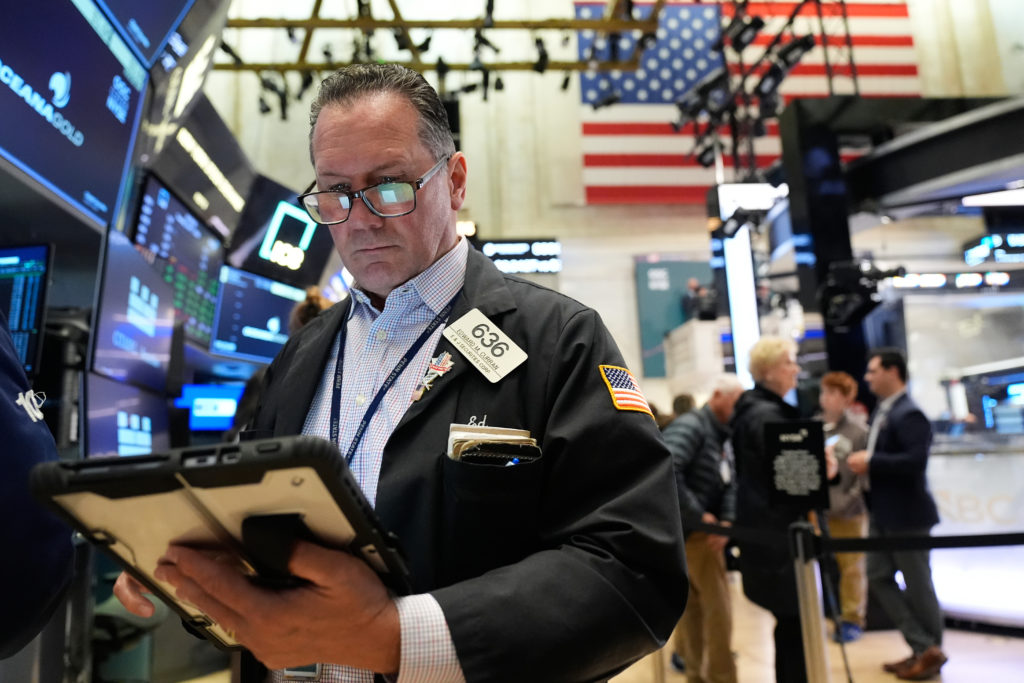
Bond Yields Shock Wall Street: 10-Year Treasury Hits 19-Year High as Dow and Nasdaq Stumble
NEW YORK — Financial markets faced intense selling pressure on Tuesday as a relentless surge in global bond yields sent shockwaves through Wall Street. The benchmark 10-year U.S. Treasury yield breached critical psychological thresholds to hit a stunning 19-year high, triggering a broad-based equities sell-off that dragged both the Dow Jones Industrial Average and the technology-heavy Nasdaq into negative territory.
As trading floors digested the implications of "higher-for-longer" monetary policy, institutional and retail investors alike rushed to reallocate portfolios. The rapid escalation in borrowing costs is quickly reshaping the macroeconomic landscape, raising alarms among corporate executives, real estate developers, and equity analysts who warn that the era of cheap capital is decisively over.
Market Snapshot: Key Indices Under Pressure
The intraday action painted a bleak picture across major asset classes, with growth stocks bearing the brunt of the algorithmic and manual sell-off. Safe-haven flows failed to support equities as fixed-income instruments offered historically lucrative, risk-free alternatives.
| Market Index / Asset | Current Level | Net Change | Percentage Move |
|---|---|---|---|
| Dow Jones Industrial Average | 33,412.50 | -285.40 | -0.85% |
| Nasdaq Composite | 13,418.12 | -165.20 | -1.22% |
| S&P 500 Index | 4,275.30 | -42.10 | -0.98% |
| U.S. 10-Year Treasury Yield | 4.85% | +11 bps | +2.32% |
Why the 10-Year Treasury Spike is Dominating Wall Street

The core catalyst behind today's market rout is the rapid ascent of the 10-year Treasury yield, which touched levels not seen since before the 2008 financial crisis. Bond yields move inversely to prices, meaning a massive wave of selling in government debt has driven yields upward. This surge is being fueled by robust economic data, persistent labor market resilience, and hawkish signaling from the Federal Reserve.
Wall Street economists note that the 10-year yield serves as the foundational benchmark for trillions of dollars in consumer and corporate loans, including mortgages, auto financing, and commercial real estate debt. As this rate climbs, the cost of capital scales proportionally, threatening to cool economic growth faster than central bankers originally intended.
- Borrowing Costs Surge: 30-year fixed mortgage rates are rapidly approaching the 8% threshold, severely freezing activity in the residential housing market.
- Discount Rate Pressure: Higher risk-free rates reduce the present value of future corporate earnings, disproportionately punishing high-growth technology stocks whose valuations rely heavily on long-term cash flow projections.
- The T-Bill Magnet: With risk-free government paper yielding nearly 5% or higher, institutional capital is rotating away from equities and dividend-paying stocks in favor of guaranteed fixed income.
Fed Policy and Corporate America's Reaction
Federal Reserve officials have maintained a unified stance in recent public appearances, reiterating that monetary policy will remain restrictive until inflation is convincingly reined back to the central bank's elusive 2% target. Traders are increasingly pricing in the distinct possibility of another interest rate hike before the year concludes, completely abandoning earlier market optimism that anticipated rate cuts by mid-2024.
"The market is finally waking up to the reality that the Federal Reserve isn't pivoting anytime soon," said Sarah Jenkins, Chief Global Strategist at Apex Capital Management. "When the 10-year yield moves this fast, it breaks things in the financial plumbing. Equity valuations simply have to adjust to a world where money has a real, substantial cost."
Corporate earnings season, which kicks off in earnest next week, is expected to provide critical commentary on how Fortune 500 companies are navigating these elevated interest rate headwinds. CFOs across sectors—from consumer discretionary to industrial manufacturing—are revising their capital expenditure plans downward to preserve liquidity.
Future Outlook: What Investors Should Monitor Next
As live updates continue to flow from trading floors in New York, London, and Tokyo, market participants are bracing for heightened volatility. Analysts suggest that technical support levels for the S&P 500 will be severely tested in the coming sessions.
Moving forward, investors should closely monitor upcoming employment reports, consumer price index (CPI) prints, and Treasury auction results. Strong demand at upcoming government debt auctions could stabilize yields, whereas weak demand could trigger another leg down for risk assets. Diversification, high cash reserves, and a focus on balance-sheet strength remain the primary defensive strategies recommended by leading wealth management firms.
Frequently Asked Questions
Why is the 10-Year Treasury yield considered so important?
The 10-year U.S. Treasury yield is often called the "world's most important financial price." It acts as the benchmark rate for global borrowing costs, directly influencing corporate debt issuance, commercial loans, and consumer mortgages. When it spikes, the cost of financing across the entire global economy rises.
Why are stocks falling when bond yields go up?
When risk-free government bonds offer yields approaching 5%, investors demand a higher potential return from riskier assets like stocks. Additionally, higher borrowing costs eat into corporate profit margins and reduce the present value of future earnings, causing equity valuations to contract.