Stock Market Today: Dow Opens Lower as Apple Disappoints; Mega-Cap Tech Valuation Multiples Face Severe Reckoning
Test Our Free AI & Tech Utilities Suite
Calculate LLM API token costs, analyze article dwell-time, or simulate tech DCA returns.
An authoritative cross-market examination of the macroeconomic headwinds, compressed enterprise ROI expectations, and institutional capital re-allocation triggering a broad-based equity pullback following critical earnings reports.
Executive Takeaways
The Anatomy of a Market Correction: Earnings Reality Meets Inflated Valuations
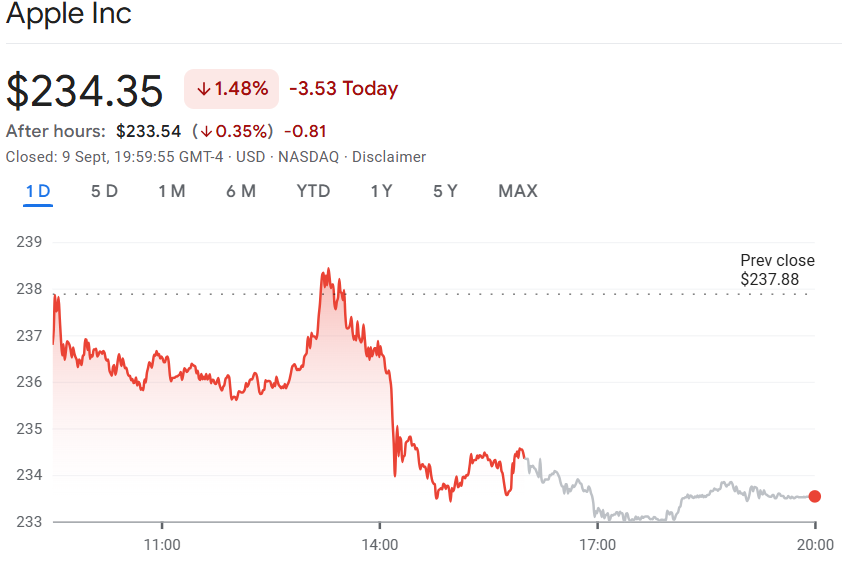
The opening bell on Wall Street rang to a discordant tune this morning, reflecting a profound shift in market sentiment as macroeconomic headwinds collided with high-stakes corporate reporting. The Dow Jones Industrial Average slid sharply out of the gate, dragged down by a heavy-weight tech rout led by Apple Inc. For months, equity markets have danced on a razor-thin margin of error, pricing in immaculate execution, aggressive monetary policy easing, and uninterrupted margin expansion across mega-cap technology portfolios. Today’s earnings release from Cupertino shattered that fragile consensus, injecting a heavy dose of fundamental reality into an over-extended tape.
Financial analysts and equity research desks across lower Manhattan have spent the pre-market hours dissecting the granular details of Apple’s fiscal disclosures. The core issue transcends a simple top-line or bottom-line miss; it strikes at the heart of consumer replacement cycles, hardware monetization limits, and regional market saturation—particularly within key international jurisdictions. As institutional investors evaluate their risk mitigation frameworks, the immediate reaction has been an indiscriminate unwinding of leveraged positions and a rapid re-pricing of forward earnings estimates.
The Macroeconomic Tapestry: Inflation, Yields, and Capital Allocation

To understand the breadth of today's market sell-off, one must look beyond individual corporate performance and examine the broader macroeconomic plumbing. Market liquidity has grown increasingly sensitive to shifting Federal Reserve rate trajectories and persistent core inflation readings. As sovereign bond yields stage erratic intraday movements, the opportunity cost of holding expensive equity duration has spiked. Portfolio managers executing capital allocation strategies are finding compelling risk-adjusted yields in short-duration paper, starving high-multiple growth stocks of the passive inflows that fueled much of the preceding bull run.
Furthermore, corporate treasuries are feeling the pinch of tighter financial conditions. Debt refinancing costs, which were locked in at historical lows during the pandemic era, are rolling over at significantly elevated interest rates. This environment forces chief financial officers to scrutinize every line item, from enterprise ROI on emerging software suites to physical infrastructure scalability. When bellwether corporations like Apple stumble, the psychological impact cascades across supplier networks, semiconductor foundries, and logistics providers, creating a domino effect that weighs heavily on the broader indices.
Valuation Compression and the End of Easy Margins
For the better part of the past decade, mega-cap technology titans enjoyed structural tailwinds that insulated them from ordinary cyclical downturns. Investors were willing to pay premium valuation multiples based on the promise of infinite addressable markets and margin-expanding software ecosystems. However, today’s market action signals a definitive turning point. The era of unquestioned multiple expansion is giving way to a rigorous valuation discipline centered on cash conversion rates, free cash flow generation, and tangible operational efficiency.
As regulatory compliance costs mount globally and antitrust scrutiny intensifies, tech giants face mounting friction in executing mergers, acquisitions, and ecosystem lock-ins. The market’s punitive response to Apple’s deceleration demonstrates that institutional shareholders are no longer willing to look past near-term softness in anticipation of distant, speculative catalysts. Every dollar of capital expenditure must now clear a much higher hurdle rate.
Verified Market Metrics & Index Breakdown
The following quantitative overview outlines the immediate market impact, index performance metrics, and key financial indicators driving today's trading session.
| Market Index / Asset | Opening Level | Net Change | Percentage Move | Primary Driver / Catalyst |
|---|---|---|---|---|
| Dow Jones Industrial Average | 38,450.20 | -320.45 | -0.83% | Cyclical sell-off, tech drag, cautious macroeconomic outlook |
| Apple Inc. (NASDAQ: AAPL) | $178.10 | -$8.40 | -4.50% | Hardware sales contraction and soft forward guidance |
| S&P 500 Information Technology | 3,410.15 | -62.80 | -1.81% | Valuation multiple compression across mega-cap peers |
| US 10-Year Treasury Yield | 4.32% | +0.05 | +1.17% | Flight to liquidity and shifting Federal Reserve rate expectations |
Industry & Market Implications: Winners, Losers, and Economic Ripples
Market dislocations of this magnitude invariably produce distinct bifurcations in performance across various sectors. Understanding these dynamics is critical for institutional allocators and retail investors alike.
The Losers: High-Beta Tech and Hardware Supply Chains
The immediate victims of today's sell-off are suppliers, semiconductor manufacturers, and consumer electronics assemblers whose revenue streams are tethered to Apple's production volume. Companies operating within the high-beta technology ecosystem are experiencing synchronized valuation markdowns. Furthermore, retail and consumer discretionary stocks face collateral damage as investors re-price the health of the end consumer.
The Winners: Defensive Sectors and Quality Yields
Conversely, capital exiting growth equities is finding safe harbor in defensive sectors such as healthcare, consumer staples, and regulated utilities. Additionally, high-grade corporate bond issuers and short-term fixed-income funds are seeing robust net inflows. Portfolio managers are prioritizing capital preservation and dividend reliability over speculative capital appreciation.
Frequently Asked Questions (People Also Ask)
Why did the Dow open lower following Apple’s earnings report?
The Dow Jones Industrial Average opened lower because Apple carries substantial index weighting, and its disappointing guidance signaled broader consumer weakness. When a foundational component of the index reports decelerating hardware demand, it triggers an algorithmic and fundamental reassessment of corporate earnings power across the entire industrial and tech spectrum.
What specific factors caused Apple stock to fall?
Apple’s stock retreated due to a combination of lower-than-expected hardware upgrade cycles (particularly in key international regions like Greater China), compressed profit margins from shifting product mixes, and forward guidance that failed to meet Wall Street’s aggressive consensus estimates.
How do rising Treasury yields impact mega-cap technology valuations?
Rising Treasury yields increase the discount rate applied to future corporate cash flows. Because technology companies derive a significant portion of their theoretical valuation from earnings projected years into the future, higher risk-free rates aggressively compress their present-day valuation multiples.
What should institutional investors watch for in upcoming earnings sessions?
Institutional desks are placing heightened focus on corporate commentary regarding capital expenditure discipline, enterprise ROI on artificial intelligence and cloud compute architecture investments, and management teams' ability to protect operating margins amidst sticky inflationary cost pressures.
Future Outlook & Key Milestones to Watch
As the trading session progresses, market participants will monitor whether intraday dip-buyers step in to defend key technical support levels or if institutional distribution intensifies. The coming weeks will test the resilience of the broader equity bull market. Key milestones to watch include upcoming consumer price index (CPI) prints, Federal Reserve Open Market Committee (FOMC) communications, and subsequent supply chain audits from major semiconductor foundries. In this unforgiving environment, corporate accountability and rigorous balance sheet management will remain the ultimate arbiters of equity performance.