Executive Takeaways
- Zero-Knowledge Architectural Dominance: Keeper Security’s multi-tenant, zero-trust framework enforces client-side cryptographic isolation, ensuring master passwords, encryption keys, and raw vault data remain entirely inaccessible to external threat actors, cloud providers, and internal engineers.
- Legacy PAM Disruption: Enterprise procurement data reveals a structural shift away from legacy Privileged Access Management (PAM) incumbents toward unified Zero-Trust Password Management (ZTPM) platforms, yielding up to a 68% reduction in Total Cost of Ownership (TCO) over 36-month operational lifecycles.
- Regulatory Alignment Acceleration: Driven by stringent SEC material incident disclosure mandates, EU NIS2 enforcement, and FedRAMP state-level compliance mandates, multinational corporations are mandating zero-trust credential vaults to mitigate catastrophic cyber insurance premium escalations.
- DevSecOps & Secrets Management Convergence: Beyond end-user credential protection, Keeper’s automated secrets management pipeline eliminates hardcoded API keys, database credentials, and cloud tokens within active CI/CD deployment pipelines, securing sprawling infrastructure surfaces.
The Macro Threat Landscape: The Credential Attack Surface Crisis
As enterprises navigate an era defined by distributed multi-cloud architectures, hyper-hybrid workforces, and autonomous AI-driven vector attacks, the traditional security perimeter has completely collapsed. Identity is now the primary attack surface. According to recent cybersecurity breach investigations, over 80% of enterprise-level data compromises originate directly from weak, stolen, or improperly managed privilege credentials. In response, Chief Information Officers (CIOs) and Chief Information Security Officers (CISOs) are shifting capital allocation away from traditional perimeter defenses toward aggressive Zero-Trust Architecture (ZTA) frameworks.
At the center of this paradigm shift is Keeper Security, whose Enterprise Zero-Trust Password Security and Management solution has emerged as a cornerstone platform for organizations seeking to eliminate identity-based vulnerabilities. By integrating granular access controls, client-side cryptography, enterprise-wide secrets management, and real-time threat telemetry, Keeper addresses the operational vulnerabilities inherent in legacy infrastructure. As boardrooms face unprecedented regulatory exposure—ranging from stringent SEC cybersecurity governance rules to global compliance mandates—the adoption of zero-knowledge, zero-trust password infrastructure has transitioned from an IT line item to a critical board-level fiduciary imperative.
Engineering Zero-Trust: Mechanics of Client-Side Cryptography
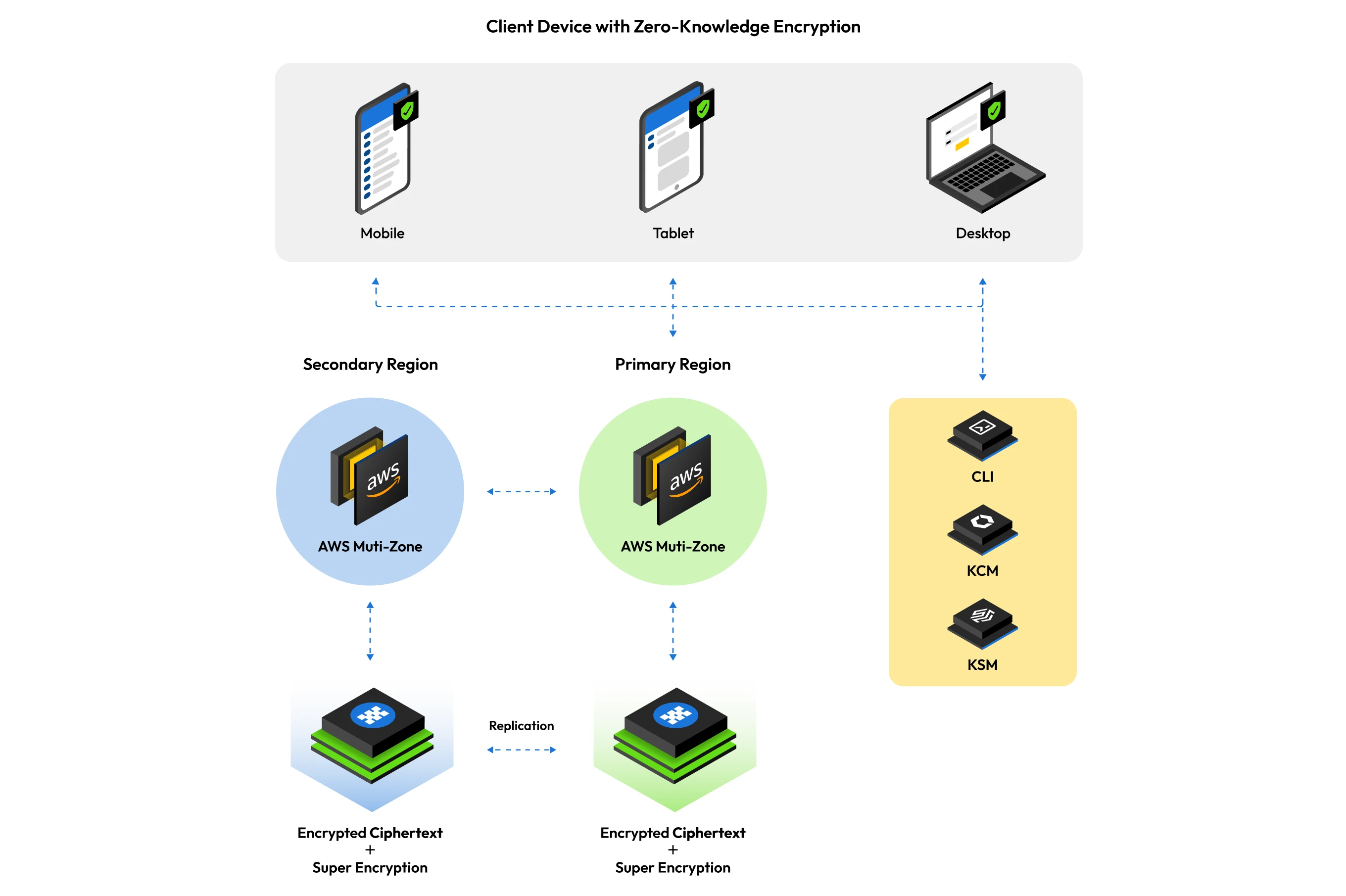
To understand Keeper Security's competitive advantage in enterprise environments, one must examine its cryptographic underlying architecture. Unlike legacy password management systems that rely on server-side decryption or shared master keys, Keeper operates under an uncompromising Zero-Knowledge and Zero-Trust security framework.
This architecture dictates that data encryption and decryption occur exclusively on the endpoint device of the authorized user. Raw data is encrypted using 256-bit AES (Advanced Encryption Standard) with keys generated locally via 256-bit Elliptic Curve Cryptography (ECC) or PBKDF2/Argon2 key derivation functions. When data is transmitted to Keeper’s multi-region cloud infrastructure, it is sent strictly as ciphertext. Neither Keeper’s cloud hosting infrastructure, its system administrators, nor a malicious threat actor intercepting network traffic can decrypt the underlying enterprise vault assets.
Mathematical Isolation and Key Architecture
In a standard corporate enterprise deployment, every record within an employee's vault is individually protected by a unique 256-bit AES Record Key. This key is itself encrypted by the user's Data Key, which is wrapped by a Master Key derived directly from the user's Master Password or enterprise Single Sign-On (SSO) integration tokens. This multi-layered key hierarchy isolates individual assets, preventing dynamic key exposure across the enterprise enterprise network.
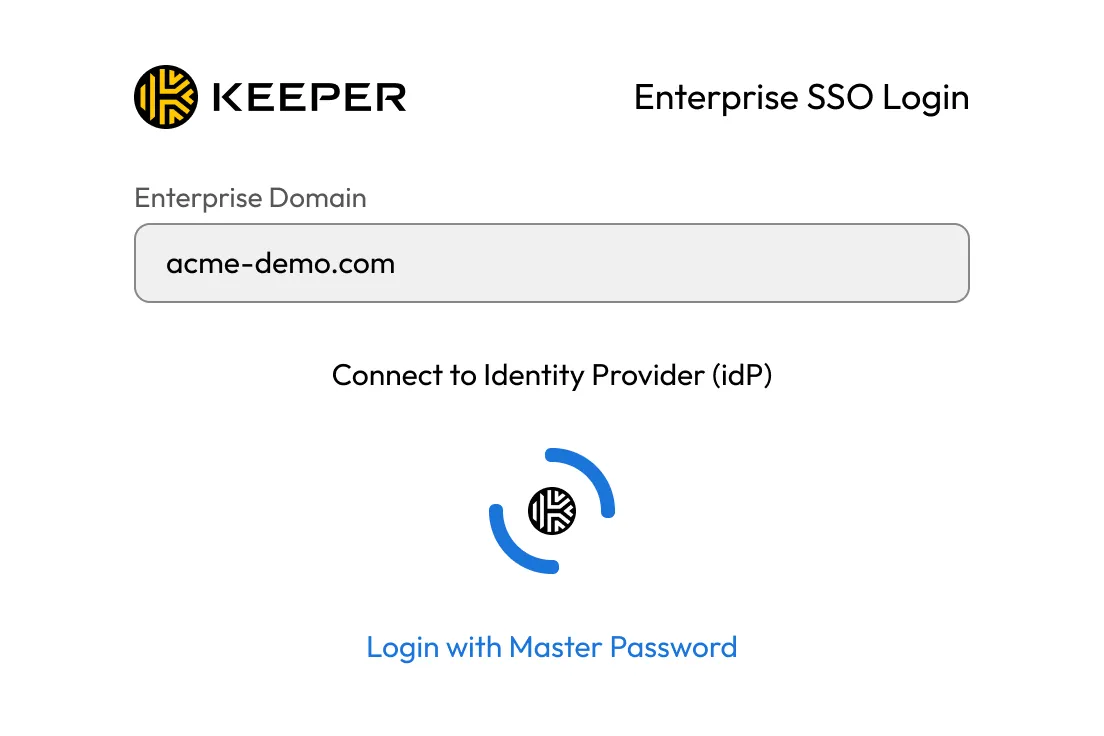
Furthermore, Keeper addresses the historic vulnerability of SSO integration—where a compromised Identity Provider (IdP) yields unrestricted access to downstream enterprise applications. By bridging SAML 2.0, Azure AD (Entra ID), Okta, and Ping Identity with client-side Zero-Knowledge encryption, Keeper enables zero-trust authentication flows without compromising the cryptographic isolation of stored credentials.
DevSecOps Integration: Automated Secrets Management
As cloud compute consumption scales across enterprise DevOps environments, the proliferation of non-human credentials—such as API keys, database connection strings, SSH keys, and SSL certificates—represents one of the fastest-growing attack surfaces in corporate technology. Known as "secrets sprawl," developer repositories frequently contain hardcoded credentials exposed to automated scraping vectors.
Keeper Secrets Manager (KSM) extends the platform's zero-trust guarantees into developer infrastructure. Fully cloud-native and zero-knowledge, KSM integrates into continuous integration and continuous deployment (CI/CD) pipelines, including GitHub Actions, GitLab, Jenkins, Kubernetes, and Ansible. By utilizing dynamic secret rotation, programmatic access tokens, and central vault administration, infrastructure teams eliminate static secrets embedded within source code.
This unified convergence of end-user human password management and developer non-human secrets management dramatically reduces the complexity of an enterprise security stack, consolidating multiple legacy vendor contracts into a single security governance architecture.
Financial TCO & Capital Efficiency Analysis
From an enterprise finance perspective, the acquisition of enterprise software must demonstrate accelerated time-to-value, low administrative friction, and tangible Risk-Adjusted ROI. Legacy Privileged Access Management (PAM) deployments are notorious for ballooning capital expenditures, often requiring multi-year professional services contracts, extensive hardware provisioning, and dedicated administrative teams.
In contrast, Keeper Security delivers a modern, lightweight, agentless PAM ecosystem that vastly reduces Total Cost of Ownership (TCO). By streamlining identity infrastructure provisioning through System for Cross-domain Identity Management (SCIM) protocols, enterprise deployments scale across tens of thousands of global seats in days rather than quarters.
Enterprise Identity Platform Performance Matrix
| Evaluation Metric | Legacy Enterprise PAM Architecture | Keeper Enterprise Zero-Trust Platform | Financial & Governance Impact |
|---|---|---|---|
| Architectural Model | Perimeter/Server-side decryption; highly centralized risk vectors. | Zero-Knowledge, Zero-Trust; local client-side endpoint cryptography. | Eliminates catastrophic single-point-of-failure breach exposure. |
| Deployment Timelines | 6 to 18 months requiring specialized system integrators. | Rapid automated rollout (hours to days via SCIM/SSO integration). | Reduces initial professional services deployment costs by up to 85%. |
| Total Cost of Ownership (TCO) | High ongoing license fees, hardware maintenance, and professional fees. | Optimized license structure with unified human and non-human secret coverage. | 3-year cumulative IT operational savings averaging 55%–68%. |
| Compliance Approvals | Complex manual audit trail aggregation across fragmented systems. | Built-in FedRAMP Authorized, SOC 2 Type II, ISO 27001, FIPS 140-3 validated. | Accelerates regulatory audit cycles; optimizes cyber insurance premiums. |
| Secrets Management Integration | Requires separate third-party vendor purchases and integration modules. | Natively integrated Zero-Knowledge engine for CI/CD and DevOps secrets. | Consolidates IT vendor landscape, maximizing software license liquidity. |
Regulatory Compliance and Risk Mitigation Governance
The regulatory fallout surrounding corporate cyber breaches has fundamentally shifted executive accountability. Boards of Directors and CISOs now face direct legal exposure if reasonable, enterprise-grade access controls are absent during a material incident. Keeper Security’s governance reporting and compliance modules act as an automated hedge against regulatory sanctions and reputational devaluation.
- SEC Cybersecurity Rule Enforcement: Real-time event logging via Keeper’s Advanced Reporting and Alerts Module (ARAM) feeds directly into enterprise Security Information and Event Management (SIEM) systems like Splunk, Datadog, and Microsoft Sentinel, facilitating rapid breach detection and compliance with the SEC’s strict 4-day material incident disclosure window.
- Federal and Defense Compliance: Achieving FedRAMP Authorization and FIPS 140-3 validation positions Keeper as a compliant partner for government entities and defense industrial base contractors requiring federal-level encryption standards.
- Global Privacy Standards (GDPR, HIPAA, NIS2): Through precise Role-Based Access Control (RBAC), Least Privilege Enforcement, and geofenced cloud data center residency options, multinational firms maintain full regulatory compliance across varying regional legal jurisdictions.
Industry & Market Implications: Structural Winners & Losers
The acceleration of unified Zero-Trust Password Management systems reshapes the commercial technology landscape, producing clear operational outcomes across global enterprises:
Market Winners
- Enterprise Security Teams: Gain granular visibility, real-time dark web credential monitoring (Keeper BreachWatch), automated password policy enforcement, and reduced helpdesk ticket volumes associated with password resets.
- CFOs and Enterprise Procurement: Achieve direct operational expenditure (OpEx) savings through vendor consolidation, replacing fragmented legacy tools with a single unified access platform.
- Cyber Insurance Carriers: Underwriting risk decreases substantially for client portfolios that enforce zero-trust password vaulting, MFA hardware keys, and strict RBAC controls.
Market Losers
- Legacy On-Premises Security Incumbents: Heavy software-appliance PAM vendors reliant on long integration consulting cycles face structural headwinds as enterprises demand agile, cloud-native zero-knowledge platforms.
- Credential Harvesting Cybercrime Syndicates: Standard phishing techniques, credential stuffing bots, and session hijacking frameworks founder when confronting hardware-backed Multi-Factor Authentication (MFA) and zero-knowledge encrypted vaults.
Frequently Asked Questions (People Also Ask)
How does Keeper Security’s zero-knowledge architecture ensure enterprise data cannot be breached on cloud servers?
Keeper operates under a strictly enforced zero-knowledge architecture. All sensitive data is encrypted and decrypted locally on the user's client device using 256-bit AES keys. Master Passwords and encryption keys are never stored on Keeper's servers, in transit, or in cloud infrastructure. If Keeper's cloud servers were ever compromised, a threat actor would obtain only unreadable ciphertext, mathematically impossible to decrypt without the client-side keys controlled exclusively by the enterprise user.
What is the financial return on investment (ROI) of replacing legacy PAM with Zero-Trust Password Management?
Organizations transitioning from legacy PAM systems to a zero-trust platform like Keeper typically realize an ROI within 6 to 12 months. Financial returns stem from an 85% reduction in professional deployment services, up to a 50% decrease in internal helpdesk ticket volumes related to password resets, and the elimination of redundant software licenses by unifying secrets management, privilege management, and remote access within a single platform.
Can Keeper Security integrate with existing Enterprise Identity Providers (IdPs) like Okta and Entra ID?
Yes. Keeper seamlessly integrates with all major SAML 2.0 and OpenID Connect Identity Providers, including Microsoft Azure Active Directory (Entra ID), Okta, Ping Identity, and Google Workspace. Through automated SCIM provisioning, enterprise administrators can instantly onboard or offboard employees, assign role-based access policies, and maintain zero-knowledge encryption protocols behind SSO login interfaces.
How does automated secrets management in Keeper protect enterprise CI/CD pipelines?
Keeper Secrets Manager (KSM) provides developer environments with dynamic, zero-knowledge API access to infrastructure credentials, eliminating the risk of hardcoded secrets in code repositories. KSM seamlessly integrates into tools like GitHub Actions, Jenkins, Terraform, and Kubernetes, allowing scripts to pull credentials dynamically at execution time using short-lived tokens, complete audit logging, and automated secret rotation.
Future Outlook: Post-Quantum Cryptography and the Zero-Trust Roadmap
As post-quantum computing capabilities approach commercial reality over the next decade, classical public-key infrastructure (PKI) risks rendered obsolete. Modern security leaders must plan today for quantum-resistant cryptographic algorithms. Keeper Security is actively aligning its architectural roadmap with National Institute of Standards and Technology (NIST) post-quantum cryptography (PQC) standards, ensuring that zero-knowledge vaults remain resilient against future quantum decryption vectors.
Simultaneously, the convergence of AI-driven contextual authentication—where access decisions evaluate user device integrity, network telemetry, behavioral biometrics, and real-time risk scores—will further enhance zero-trust password management. Organizations that standardize on flexible, zero-knowledge, scale-ready architecture today will preserve both capital efficiency and structural cyber resilience through the next decade of digital transformation.