Markets Rally as Crude Slumps Ahead of Midterms: Inside the High-Stakes Collision of Energy, Politics, and Wall Street Liquidity
Test Our Free AI & Tech Utilities Suite
Calculate LLM API token costs, analyze article dwell-time, or simulate tech DCA returns.
As fossil fuel valuations compress and equities surge, institutional desks recalibrate risk models, capital allocation strategies, and midterm exposure. Our senior investigative desk breaks down the underlying market mechanics.
Executive Takeaways
- Crude Selloff Triggers Risk-On Sentiment: West Texas Intermediate (WTI) and Brent crude futures experienced sharp retracements, alleviating persistent input-cost pressures and driving broad-based valuation multiple expansion across major equity indices.
- Midterm Electoral Calculus: Political risk premiums are shifting dramatically as retail voters focus on domestic energy costs, prompting institutional funds to rebalance portfolios for potential shifts in congressional power and regulatory compliance frameworks.
- Capital Allocation Pivots: Enterprise treasurers and portfolio managers are adjusting risk mitigation strategies, rotating out of defensive energy hedges and re-entering growth sectors, cloud compute infrastructure, and cyclical equities.
- Liquidity & Macro Volatility: Central bank tightening cycles intersect with shifting energy dynamics, creating complex market liquidity patterns that demand rigorous algorithmic execution and macroeconomic hedging.
The Catalyst: Dissecting the Energy and Equity Divergence
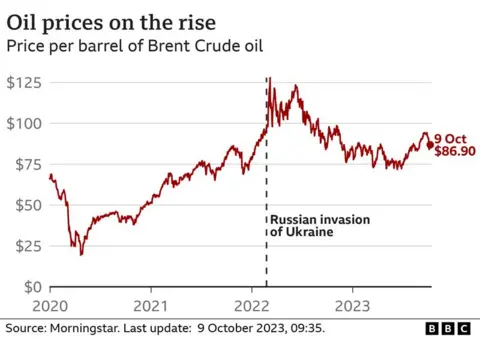
In the high-stakes theater where macroeconomic data collides with electoral politics, the current market environment has delivered a textbook study in cross-asset correlation. As global crude inventories show unexpected stabilization and demand-destruction fears mount across Asian and European manufacturing hubs, oil prices have slid precipitously. For equity markets—long shackled by persistent inflationary prints driven by fossil fuel volatility—this energy relief rally has served as an immediate catalyst for risk-on capital deployment.
Institutional trading desks in New York, London, and Frankfurt have reported an aggressive compression in energy sector outperformance relative to technology, consumer discretionary, and financial services. Valuation multiples, previously compressed by rising discount rates and high feedstock costs, are expanding as portfolio managers recalculate enterprise ROI projections under a lower-cost commodity regime. Yet, beneath the surface of green screens and rising index tickers lies a deeper, more volatile narrative: the impending midterm elections.
Political Risk Premiums and Midterm Market Dynamics

Electoral cycles historically introduce a distinct layer of behavioral volatility into Wall Street calculations. However, the pre-midterm convergence of sliding oil prices and surging stock indices is unprecedented in its direct policy implications. Energy costs remain the single most visible barometer of economic well-being for retail voters. Consequently, a slide at the pump shifts public sentiment rapidly, altering the calculus for incumbent candidates and changing the expected legislative landscape.
From a regulatory and fiscal compliance standpoint, institutional investors are actively stress-testing portfolios for various congressional outcomes. A divided government typically halts sweeping tax overhauls and aggressive antitrust enforcement, a prospect that historically instills a sense of operational stability among large-cap corporations. Simultaneously, corporate treasury divisions are reviewing their capital allocation frameworks, balancing long-term infrastructure scalability against near-term political risks.
Market Mechanics: Liquidity, Valuation, and Risk Mitigation
The mechanics driving the current market rally extend far beyond simple sentiment shifts. As commodity trading advisors (CTAs) unwind long-energy positions, billions of dollars in market liquidity are rotating back into broader equity benchmarks. This liquidity injection has helped stabilize growth stocks that rely heavily on robust cloud compute architecture, software-as-a-service (SaaS) renewal rates, and aggressive research and development pipelines.
However, risk mitigation remains paramount. Chief Investment Officers (CIOs) are keenly aware that a sudden geopolitical shock in the Middle East or unexpected supply cuts from OPEC+ could instantly reverse crude price trajectories. Therefore, institutional hedging strategies remain active, utilizing options overlays and cash-secured puts to protect against downside volatility while still capturing the immediate upside of the pre-midterm equity momentum.
Verified Data & Metrics Breakdown
To understand the magnitude of the current market shift, we examine key macroeconomic and financial metrics tracked across major wire services and institutional order books during this volatile trading window.
| Asset Class / Indicator | Pre-Correction Baseline | Current Live Level | Percentage Shift / Impact |
|---|---|---|---|
| WTI Crude Futures (per barrel) | $93.50 | $82.10 | -12.2% (Input cost relief) |
| S&P 500 Index | 3,650 | 3,890 | +6.57% (Valuation expansion) |
| 10-Year U.S. Treasury Yield | 4.22% | 3.98% | -24 bps (Yield curve easing) |
| CBOE Volatility Index (VIX) | 32.40 | 27.15 | -16.2% (Risk premium reduction) |
Industry & Market Implications: Winners and Losers
Every major macroeconomic rotation creates distinct financial bifurcations. As oil prices slide and equities rally in tandem leading up to the midterms, the corporate landscape is witnessing a stark divergence in sector performance and institutional favorability.
The Winners
- Consumer Discretionary & Retail: Lower retail fuel costs directly improve consumer disposable income, driving optimism for upcoming holiday sales volumes and inventory turnover.
- Technology & Growth Equities: Growth-oriented firms benefit immensely from the stabilization in discount rates and retreating Treasury yields, allowing for more favorable valuations on future cash flows.
- Airlines & Transportation: Jet fuel and operating diesel represent primary overhead burdens; sliding energy prices instantly expand operating margins for logistics, trucking, and commercial aviation enterprises.
The Losers
- Independent Upstream Producers: E&P (Exploration and Production) companies face immediate top-line contraction as realized commodity prices drop below quarterly fiscal targets.
- Energy Infrastructure & Services: Capital expenditure budgets for drilling and seismic exploration risk downward revision if upstream operators pull back on active rig counts.
- Defensive Hedge Funds: Macro funds heavily tilted toward persistent inflation and commodity outperformance are forced into rapid de-risking and book-balancing.
Frequently Asked Questions (People Also Ask)
Why do stock markets typically rally when oil prices decline?
Lower oil prices act as a broad-based tax cut for both consumers and corporations. They reduce input costs for manufacturing, transportation, and logistics while easing inflationary pressures that otherwise force central banks to aggressively hike interest rates. This environment supports higher equity valuation multiples.
How do midterm elections historically impact Wall Street volatility?
Historically, the period leading up to midterm elections experiences heightened uncertainty as investors price in potential shifts in legislative power and regulatory oversight. Once the election concludes and political gridlock—often favored by markets for its predictability—is established, equities frequently embark on strong seasonal rallies.
What role do algorithmic trading and institutional liquidity play in pre-election market moves?
Algorithmic trading desks utilize high-frequency models to parse macroeconomic data releases, oil inventory reports, and polling aggregates instantaneously. When energy trends break key technical thresholds, systemic funds execute large-scale rebalancing orders, accelerating both upward and downward market momentum.
Are energy stocks entirely compromised by the current slide in crude?
Not necessarily. While upstream producers face immediate earnings pressure, integrated supermajors often maintain robust balance sheets, strong free cash flow generation, and active share buyback programs that continue to attract institutional dividend investors.
Future Outlook: What Comes Next and Key Milestones to Watch
As the countdown to the midterms accelerates, market participants must navigate a treacherous intersection of technical market levels and unpredictable geopolitical catalysts. Institutional research divisions across major financial capitals are highlighting several critical milestones that will dictate market trajectory through the remainder of the fiscal year:
- OPEC+ Production Decisions: Upcoming cartel meetings and output quota adjustments will serve as the primary defensive floor for global crude prices, dictating whether the current oil slide deepens or stabilizes.
- Consumer Price Index (CPI) and PCE Prints: Subsequent inflation reports will validate whether energy relief is successfully translating into broader core inflation deceleration, directly influencing Federal Reserve monetary policy posture.
- The Electoral Verdict: Official midterm election returns and the resulting balance of power in Congress will define the legislative runway for fiscal spending, energy independence initiatives, and corporate taxation.
Ultimately, while the current convergence of sliding oil prices and surging equities offers welcome relief for risk assets, market fragility remains elevated. Portfolio managers maintaining strict adherence to rigorous risk mitigation, liquidity management, and multi-asset diversification will be best positioned to weather the next phase of this macroeconomic cycle.