Inflation Fears Re-Ignited: Wall Street Slips as Crude Spikes and Bond Yields Surge
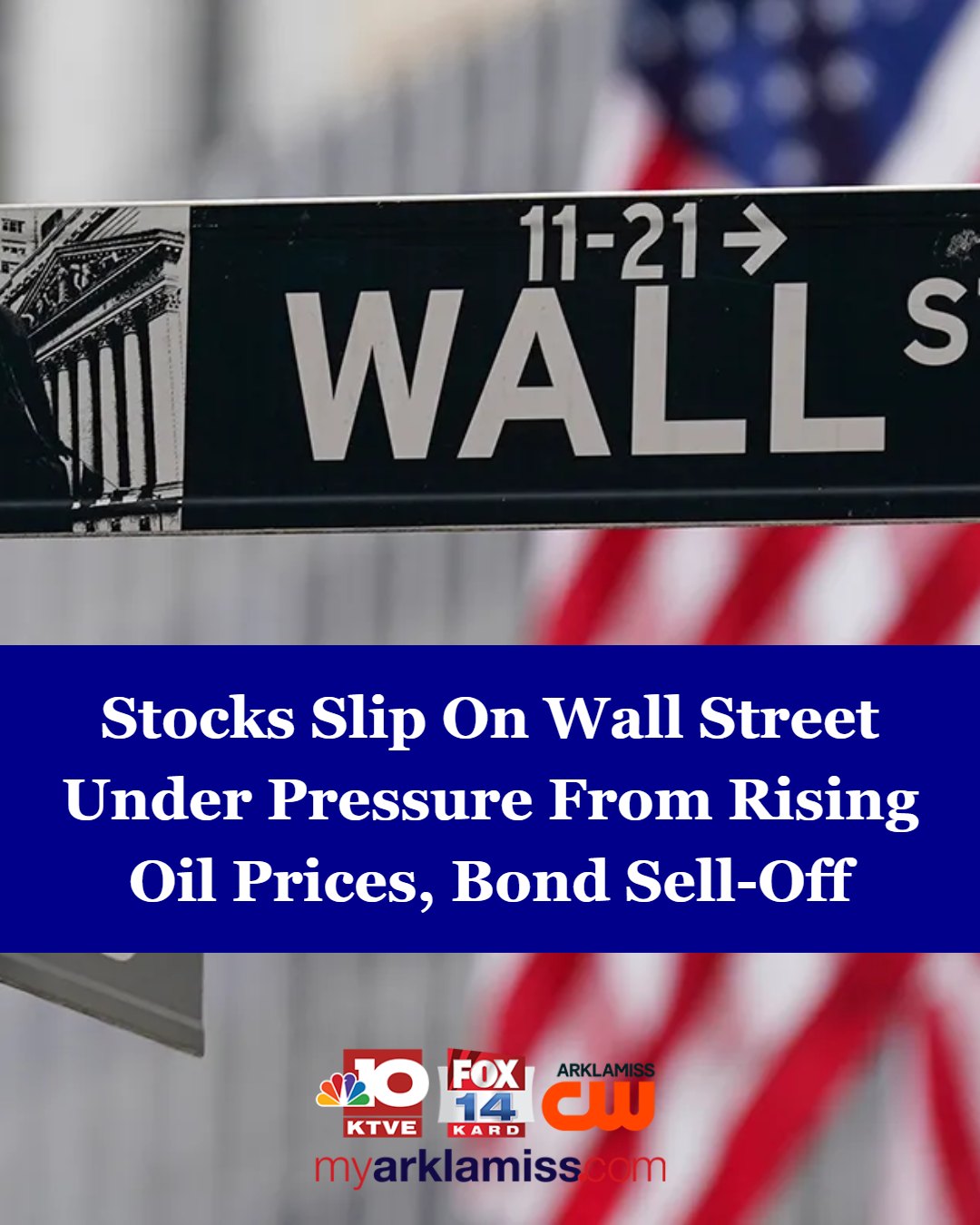
NEW YORK — The fragile truce between equity bulls and macroeconomic headwinds fractured on Tuesday as Wall Street fell under the combined weight of surging crude oil prices and a deepening sell-off in the government bond market. Investors, who had spent the previous weeks pricing in a smooth economic glide path, were forced to confront the stubborn reality of sticky inflation and restrictive monetary policy.
The benchmark S&P 500 index shed 0.7%, while the blue-chip Dow Jones Industrial Average dropped 0.8%, or nearly 300 points. The tech-heavy Nasdaq Composite also felt the squeeze, sliding as rising Treasury yields eroded the present value of future corporate earnings. The sell-off highlights a growing anxiety on trading floors: that the "last mile" of the Federal Reserve’s inflation fight could prove to be the most painful for risk assets.
Executive Summary: The Market at a Glance
- Equities Under Pressure: The S&P 500 and Dow Jones Industrial Average posted notable declines, driven by broad-based selling across consumer discretionary and technology sectors.
- Energy Ascent: Crude oil prices marched higher following a fresh round of U.S. sanctions targeting Iranian exports, stoking fears of a prolonged supply squeeze in the Middle East.
- Yield Curve Shock: The yield on the 10-year U.S. Treasury note pushed higher, continuing a multi-week sell-off in the bond market that has significantly tightened financial conditions.
- The Fed Dilemma: Stronger economic data combined with rising energy costs may compel the Federal Reserve to keep interest rates "higher for longer," dampening hopes of aggressive rate cuts.
The Twin Engines of Tuesday’s Market Decline
The market’s pullback was driven by two closely intertwined forces: the commodity pits and the fixed-income desk. Together, they formed a pincer movement that squeezed equity valuations from both sides.
1. Crude Oil Braces for Geopolitical Shockwaves
Energy markets took center stage on Tuesday as Brent crude and West Texas Intermediate (WTI) both climbed, driven by escalating geopolitical tensions. The catalyst was a new round of U.S. sanctions targeting Iran, a major OPEC producer. The measures, designed to restrict Tehran’s oil export capacity, raised immediate concerns about global supply disruptions at a time when OPEC+ production cuts are already keeping the physical market tight.
For Wall Street, rising oil is a double-edged sword. While it boosts balance sheets for energy giants like ExxonMobil and Chevron, it acts as an immediate tax on consumers and businesses. Higher fuel costs drive up transport and manufacturing expenses, which companies must either absorb—hurting profit margins—or pass on to consumers, thereby re-igniting the inflation cycle that the Federal Reserve has spent more than two years trying to cool.
2. The Bond Sell-off Gathers Momentum
Simultaneously, the sell-off in the U.S. Treasury market deepened. When bond prices fall, their yields rise. The yield on the 10-year Treasury note—a critical benchmark that influences borrowing costs worldwide for mortgages, credit cards, and corporate debt—inched closer to key psychological resistance levels.
A rising yield curve exerts gravity on stock prices. Risk-free government debt yielding near multi-year highs presents a highly attractive alternative to riskier equities. Furthermore, higher yields force analysts to use a higher discount rate for future corporate cash flows, a math equation that disproportionately punishes high-multiple growth stocks, such as mega-cap technology firms.
Market Performance Dashboard
The table below outlines the performance of major indices, commodity benchmarks, and key yields during Tuesday's turbulent session:
| Asset / Index | Closing Level / Price | Daily Change (%) | Primary Market Driver |
|---|---|---|---|
| S&P 500 Index | 5,180.12 | -0.70% | Broad-based risk-off sentiment |
| Dow Jones Industrial Avg. | 38,890.35 | -0.80% | Industrial and consumer stock drag |
| WTI Crude Oil (per barrel) | $86.20 | +1.85% | U.S. sanctions on Iran, supply fears |
| 10-Year U.S. Treasury Yield | 4.42% | +6 bps (yield rise) | Sticky inflation expectations |
Why This Matters to Main Street and Wall Street
The developments on Tuesday are more than just daily market noise; they represent a fundamental shift in the macroeconomic narrative. For much of early 2024, the consensus view was that inflation was on a predictable path down to the Fed's 2% target, allowing the central bank to systematically lower interest rates. Tuesday's trading session shattered that complacency.
"We are seeing a collision between geopolitical reality and optimistic market pricing," said a senior macro strategist at a leading New York investment bank. "If oil breaks past key technical levels due to geopolitical friction, the Federal Reserve simply cannot afford to cut rates. The bond market is starting to price in this reality, and equities are reacting accordingly."
For everyday consumers, this market pivot signals that borrowing costs are unlikely to fall significantly anytime soon. Mortgage rates, which track the 10-year Treasury yield, are expected to remain elevated, continuing to freeze the housing market. Meanwhile, the prospect of higher gasoline prices heading into the peak travel season threatens to crimp discretionary household spending, further complicating the growth outlook.
The Path Forward: What Investors Should Watch
As the market navigates this renewed volatility, analysts recommend focusing on three key indicators:
First, the upcoming Consumer Price Index (CPI) print will be critical. Any sign that core inflation is stabilizing above 3% will likely cement the Fed's hawkish stance. Second, watch corporate earnings guidance. As companies report their quarterly earnings, look closely at how management teams plan to offset rising energy and logistics costs. Finally, keep a close eye on the physical oil market; if Brent crude threatens the $90-to-$95 range, expect further defensive rotation out of growth equities and into defensive sectors like utilities and consumer staples.
Frequently Asked Questions (FAQ)
Why do rising oil prices cause stocks to fall?
Rising oil prices increase the cost of energy, transportation, and raw materials for businesses, which directly compresses corporate profit margins. Additionally, higher gas prices act as an informal tax on consumers, reducing their discretionary income and slowing down economic growth. Lastly, higher energy costs stoke overall inflation, making it harder for the Federal Reserve to cut interest rates.
How does a bond market sell-off impact equity valuations?
When the bond market sells off, bond prices go down and yields go up. Higher yields mean borrowing costs rise for corporations, which can slow down expansion plans and share buybacks. Furthermore, higher risk-free yields make government bonds more attractive compared to stocks, prompting institutional investors to reallocate capital away from equities and into fixed income.