The Battle for the Driver’s Seat: Teamsters Sue California Over Self-Driving Trucks, Igniting a Generational Labor War
SACRAMENTO, CA — In a high-stakes legal gambit that could reshape the future of the American supply chain, the International Brotherhood of Teamsters has filed a sweeping lawsuit against the California Department of Motor Vehicles (DMV) and other state regulatory agencies. The lawsuit, first reported by POLITICO, aims to halt the rollout of autonomous, self-driving heavy-duty trucks on public roads, marking a major escalation in the mounting war between organized labor and Silicon Valley’s tech elite.
At the heart of the legal challenge is the allegation that state regulators took shortcuts, underestimated the economic devastation of automation, and bypassed critical safety and cost assessments to fast-track the deployment of driverless semi-trucks. For California, which acts as the gateway for global trade through its massive ports, the outcome of this legal battle will reverberate across the national logistics sector.
Executive Summary: The High-Stakes Legal Battle
- The Legal Action: The California Teamsters union is suing the DMV, other state agencies, and their leadership over newly adopted rules allowing the deployment of autonomous vehicles (AVs) weighing over 10,000 pounds without human drivers.
- The Core Allegation: The Teamsters argue the DMV fundamentally "cooked the books" by severely underestimating the economic impact of AVs. They allege the agency focused narrowly on data-reporting costs rather than the systemic displacement of human labor.
- The Existential Threat: The lawsuit claims the regulations pose an immediate, existential threat to hundreds of thousands of union trucking jobs in California and nationwide.
- The Political Firestorm: The litigation places California’s current administration and the state’s next gubernatorial contenders in a delicate political bind—forced to choose between their powerful labor base and the state's signature tech economy.
The Lawsuit: How the DMV Allegedly Underestimated the Economic Toll
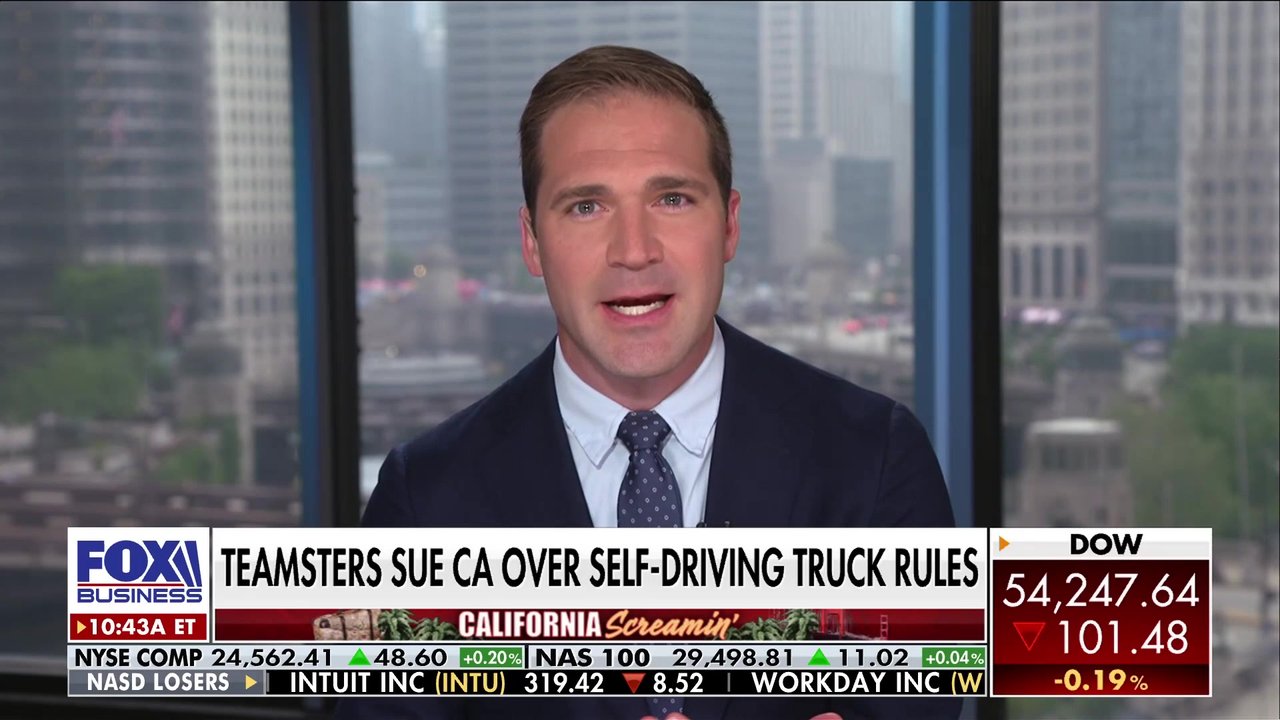
According to court documents, the Teamsters allege that the DMV failed to conduct a legally sound assessment of the economic consequences of allowing heavy-duty autonomous trucks on state highways. Under California law, state agencies must complete a Standardized Regulatory Impact Assessment (SRIA) for regulations expected to have a major financial impact exceeding $50 million.
The union's lawsuit alleges that the DMV vastly understated these figures by focusing its economic calculations almost exclusively on the administrative and data-reporting costs incurred by tech developers. By failing to calculate the massive economic fallout of job losses, wage depression, and the cascading impact on local communities dependent on the trucking industry, the Teamsters argue the state violated administrative procedure.
"The DMV has treated this transition as a minor administrative update rather than the seismic industrial shift that it is," said a labor attorney familiar with the filing. "You cannot evaluate the cost of replacing human beings with software by simply calculating how much it costs to file a data report. It is a profound dereliction of regulatory duty."
Key Figures in the Autonomous Trucking Debate
| Stakeholder Group | Primary Argument / Concern | Estimated Impact / Value at Stake |
|---|---|---|
| Teamsters Union | Widespread job displacement, safety risks on public highways, and flawed economic impact studies by state regulators. | Over 250,000 professional driving jobs threatened in California alone. |
| Autonomous Vehicle (AV) Developers | Increased supply chain efficiency, reduced long-haul transit times, and improved safety through tire-less, alert AI systems. | Estimated $150 billion global logistics optimization market. |
| California DMV & State Agencies | Maintaining California's status as a global hub for technological innovation while following regulatory review processes. | Billions in tech venture capital and corporate tax revenue. |
An "Existential Threat" to the Blue-Collar Middle Class
For the Teamsters, the fight against driverless trucks is not merely a policy disagreement; it is a battle for survival. Long-haul trucking has historically provided one of the few remaining pathways to a stable, middle-class life for workers without a college degree. The introduction of heavy-duty AVs threatens to dismantle this economic engine overnight.
The lawsuit explicitly asks the court to intervene and prevent the implementation of the DMV’s new rules, arguing that the threat to union jobs is immediate and irreversible. Labor leaders argue that once the infrastructure and legal frameworks for driverless trucks are codified, there will be no turning back, leaving hundreds of thousands of workers stranded in an increasingly automated economy.
“We are talking about an existential threat to our families, our livelihoods, and our communities,” a union representative stated. “If we allow the tech lobby to dictate public safety and labor policy behind closed doors, we are consenting to the destruction of the blue-collar middle class.”
The Political Tightrope for California’s Leadership
The lawsuit, first brought to light by POLITICO, sets up an incredibly difficult challenge for the state’s political leadership, particularly those eyeing the governor’s mansion in the next election cycle. California has long prided itself on being both a progressive bastion for organized labor and the undisputed global capital of technological innovation.
Now, those two core identities are in direct conflict. Democratic politicians, who rely heavily on Teamsters endorsements and campaign ground games, must navigate the furious opposition of labor unions without alienating the Silicon Valley donors, executives, and developers who power the state's economic engine. Governor Gavin Newsom has previously vetoed legislation that would have banned driverless trucks without a human safety driver present, a move that drew sharp criticism from labor allies. This lawsuit forces the state's legal and executive branches back into the spotlight on this highly polarizing issue.
What Lies Ahead: Legal Timelines and Supply Chain Outcomes
If the court rules in favor of the Teamsters, it could put the brakes on California's autonomous trucking plans for months, if not years, forcing the DMV to conduct exhaustive economic and labor-impact studies. Such a delay would represent a massive blow to AV truck developers who have invested billions in testing and development, anticipating a near-term rollout along major freight corridors like the I-5 and I-10.
Conversely, if the court dismisses the suit, it will signal a green light for commercial deployment, setting off a rapid transformation of the logistics sector that could quickly spread to other business-friendly states across the Sunbelt.
Frequently Asked Questions (FAQ)
Why are the Teamsters suing the California DMV specifically?
The Teamsters are suing the DMV because the agency is responsible for drafting and adopting the safety and operational regulations governing autonomous vehicles on state roads. The union alleges that the DMV violated state administrative laws by failing to properly assess the massive economic impact and job losses associated with deploying driverless heavy-duty trucks, choosing instead to focus only on minor administrative and data-reporting costs.
How could this lawsuit impact the future of autonomous trucking across the United States?
As the largest state economy and the nation's primary gateway for international trade, California sets the regulatory tone for the rest of the country. If the Teamsters succeed in halting or delaying California’s autonomous truck regulations, it will create a significant roadblock for AV developers nationwide, slowing down commercialization, limiting interstate freight lanes, and prompting other states to reconsider their own regulatory frameworks regarding labor displacement and highway safety.