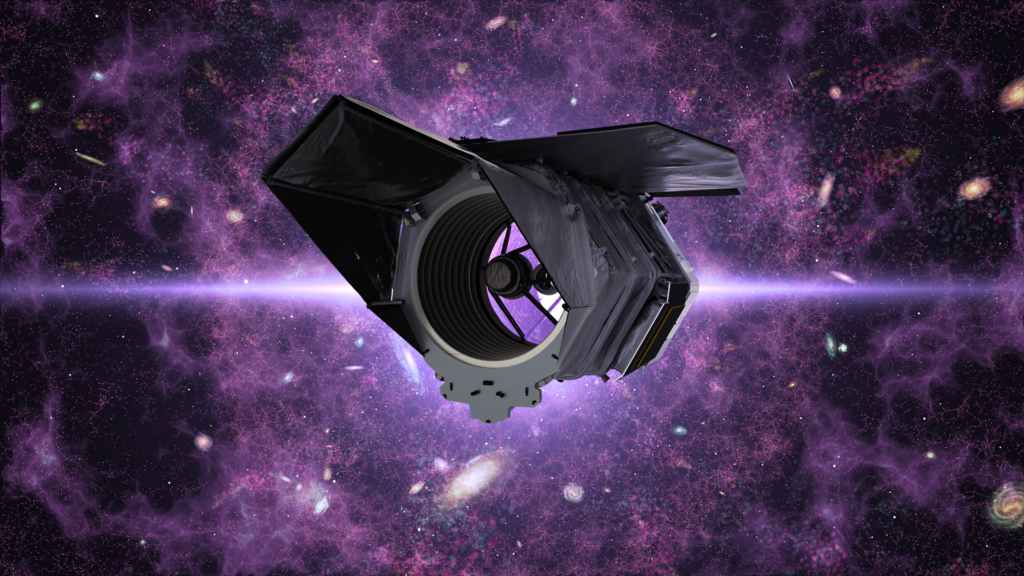
WASHINGTON — For decades, humanity has peered into the cosmic dark through the metaphorical keyhole of legacy observatories. Now, space agencies are preparing to fling open the doors of perception. NASA is on the precipice of launching a revolutionary space telescope engineered to rewrite astronomy textbooks, solve decades-old astrophysical mysteries, and fundamentally change how we see the universe.
The impending launch—highlighted extensively across major science desks and public media, including NPR’s flagship science podcast Shortwave—comes at a pivotal inflection point for space exploration. Building upon the monumental successes of the James Webb Space Telescope (JWST) and the aging Hubble, this next-generation asset promises deeper visibility, sharper resolution, and an unprecedented capacity to capture the earliest epochs of cosmic history.
For investors, technologists, and science enthusiasts alike, the stakes couldn't be higher. The aerospace sector is watching closely as mission parameters are finalized, signaling a massive leap forward in optical engineering, data analytics, and commercial-public space partnerships.
Inside the Mission: What Makes This Telescope Different?
Unlike previous iterations that focused primarily on narrow optical bands or specific thermal signatures, this new class of space telescope integrates wide-field infrared capabilities with ultra-sensitive spectroscopy. According to mission planners, the primary objective is twofold: map the invisible architecture of dark matter and accelerate the hunt for habitable exoplanets.
Astronomers have long grappled with the "cosmic blind spot"—the inability to capture wide-area deep space imagery without sacrificing high-resolution detail. This new hardware bridges that gap, surveying swathes of the sky up to 100 times faster than Hubble.
- Unprecedented Field of View: Captures expansive cosmic vistas while maintaining pinpoint stellar resolution.
- Dark Energy Tracking: Employs advanced sensors to measure the acceleration of the expanding universe with extreme precision.
- Exoplanet Atmospheric Profiling: Scans distant planetary atmospheres for biosignatures, water vapor, and organic molecules.
- Next-Gen Optics: Utilizes lightweight, ultra-polished primary mirrors designed to withstand extreme thermal fluctuations in deep space.
Why This Matters for Science and the Global Economy

Beyond the breathtaking imagery destined for front pages worldwide, missions of this scale act as formidable economic multipliers. The technological trickle-down effect—ranging from advanced cryogenics to machine-learning algorithms capable of filtering petabytes of celestial noise—directly benefits terrestrial industries, including telecommunications, healthcare imaging, and renewable energy.
Market analysts note that every dollar invested in flagship NASA astrophysics missions yields substantial returns in high-tech patents and skilled labor development. As international space agencies pool resources, the geopolitical landscape of space exploration is shifting toward collaborative, high-yield scientific endeavors.
| Metric / Feature | Specification | Strategic Value |
|---|---|---|
| Primary Mirror Diameter | Multi-meter segmented architecture | Maximizes light collection while fitting inside commercial payload fairings. |
| Primary Observation Band | Near-Infrared to Optical | Pierces through interstellar dust clouds to reveal forming stars and planets. |
| Primary Goal | Cosmic Expansion & Exoplanets | Resolves the Hubble Constant tension and identifies potentially habitable worlds. |
| Data Generation Rate | Multiple Terabits per day | Drives innovation in big data analytics, cloud computing, and AI filtering. |
The Road Ahead: Launch Windows and Next Steps
As final integration and rigorous ground testing conclude, engineers are running through meticulous checklists to ensure zero margin for error. Launch integration is complex, requiring precise coordination between launch vehicle providers, ground control stations, and deep space communication networks like the Deep Space Network (DSN).
Public interest has surged, with science communicators and media outlets dedicating significant airtime—such as recent deep-dives on NPR—to demystify the complex physics driving the mission. As the countdown ticks down, the global scientific community waits with bated breath.
When the payload finally clears Earth's atmosphere and unfurls its solar arrays, it won't just be looking at the stars—it will be looking back in time, capturing light that began its journey billions of years ago. For humanity, the universe is about to get a whole lot bigger, and a whole lot clearer.
Frequently Asked Questions
1. When is the official launch date, and where will it launch from?
NASA and mission partners are finalizing the exact launch window, which is slated for the coming months. The observatory will lift off from a primary aerospace launch complex utilizing a heavy-lift commercial launch vehicle capable of propelling the spacecraft toward its designated operational orbit.
2. How does this telescope compare to the James Webb Space Telescope (JWST)?
While JWST is optimized for ultra-deep, highly focused infrared views of the early universe, this new telescope is designed for expansive, wide-field surveys. Think of JWST as a high-powered microscope examining specific cellular structures, and the new telescope as a wide-angle lens capturing an entire ecosystem at once. They will work in tandem to cross-verify astronomical discoveries.