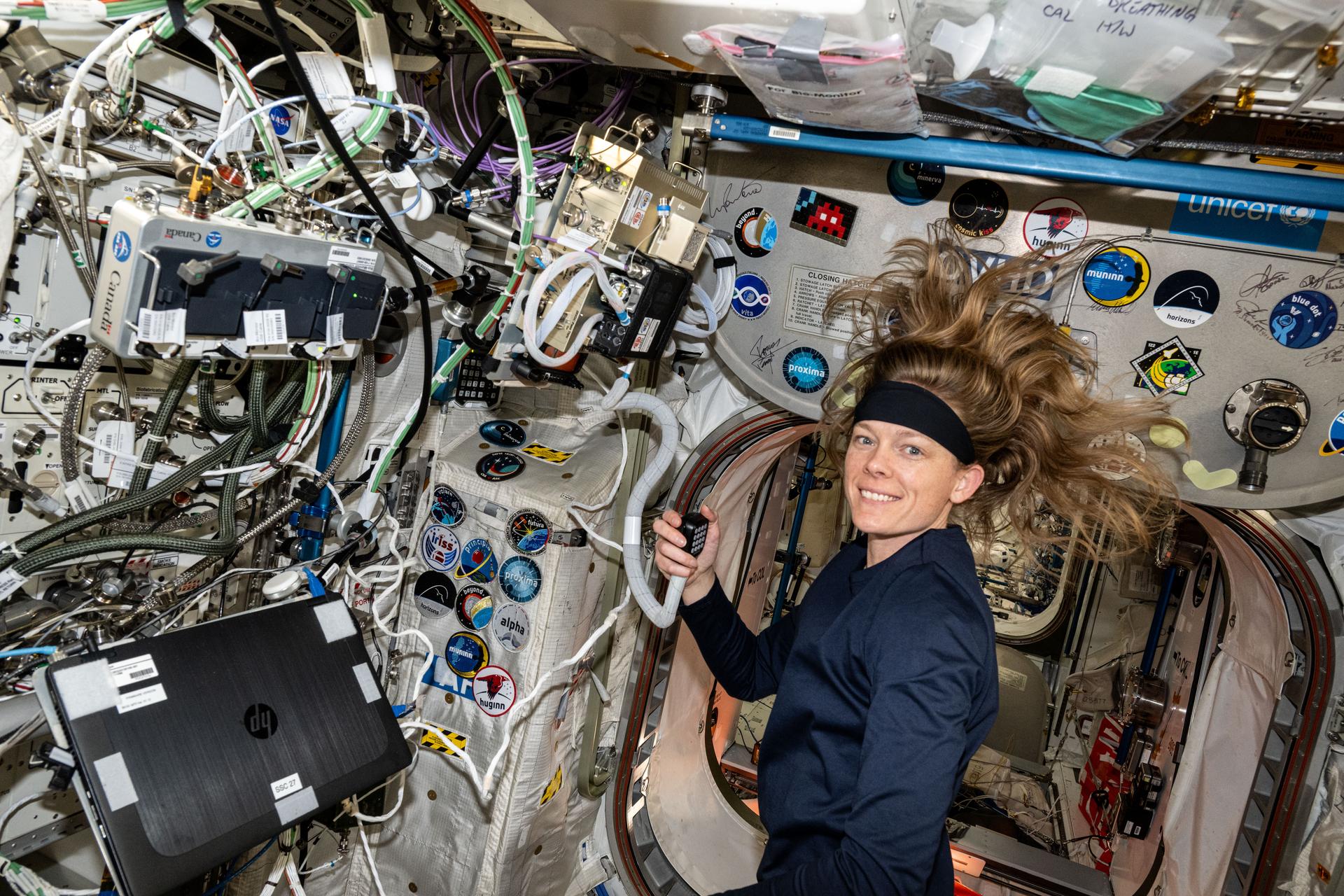
Orbiting at 17,500 MPH: How 25 Years Aboard the Space Station Rewrote the Rules of Human Progress
WASHINGTON — Twenty-five years ago, humanity crossed a quiet threshold that permanently altered our relationship with the cosmos. On a bitterly cold November morning in 2000, Expedition 1 Commander William Shepherd and Flight Engineers Sergei Krikalev and Yuri Gidzenko floated through the hatch of the International Space Station (ISS). They found a humming, metallic outpost the size of a football field—and a new home that has been continuously inhabited ever since.
As NASA and global space agencies mark a quarter-century of uninterrupted human presence in low-Earth orbit, the station's legacy extends far beyond jaw-dropping photography or geopolitical cooperation. Today, the orbiting laboratory stands as the ultimate catalyst for a multi-trillion-dollar space economy, the primary proving ground for humanity's return to the Moon and eventual voyage to Mars, and an engine of medical breakthroughs that have saved countless lives right here on Earth.
Yet, as the clock ticks toward the planned late-decade retirement of the aging platform, policymakers, scientists, and private sector titans face an urgent question: Can humanity successfully bridge the gap before the orbital outpost plunges into the Pacific Ocean, or risk forfeiting its fragile foothold in space?
Building the Road to the Moon and Mars
When the first modules of the ISS were bolted together 250 miles above our heads, critics dismissed the station as an expensive engineering stunt with no clear destination. Twenty-five years later, that narrative has been utterly dismantled. The station has served as the critical testbed for life-support systems, radiation shielding, and long-duration spaceflight physiology required for deep-space exploration.
Without the decades of operational data gathered aboard the ISS, NASA’s Artemis program and commercial Mars architectures would be flying blind. Researchers have spent a quarter-century analyzing how human muscle mass, bone density, and cardiovascular systems degrade in microgravity—and, crucially, how to combat those effects through rigorous exercise and precise nutritional protocols.
- Closed-Loop Life Support: Systems developed on the station now recycle nearly 98% of all crew water, including sweat and urine, paving the way for autonomous deep-space voyages.
- Radiation Mitigation: Continuous monitoring of cosmic radiation aboard the ISS has informed the advanced shielding required for future crewed vehicles destined for Martian transit.
- Commercial Integration: The station proved that a public-private partnership model—exemplified by SpaceX and Northrop Grumman cargo and crew resupply missions—can successfully sustain a high-tempo orbital infrastructure.
Sustaining Life: From Orbit to Emergency Rooms
While the geopolitical symbolism of the station—bringing together former Cold War adversaries like the United States and Russia alongside European, Japanese, and Canadian partners—is monumental, its economic and medical dividends are equally striking.
Microgravity removes the distorting effects of sedimentation and convection, creating a pristine environment for crystal growth and fluid dynamics. Pharmaceutical researchers have utilized this environment to crystallize complex protein structures, leading to the development of advanced cancer-fighting drugs that cannot be manufactured with the same purity on Earth.
Furthermore, technologies invented to monitor astronauts' vital signs have found their way into terrestrial intensive care units. Water purification systems built for the station are now deployed in disaster-stricken regions worldwide to provide clean drinking water, showcasing an immediate, tangible return on taxpayer investment.
| Metric / Milestone | Data / Value | Significance |
|---|---|---|
| First Continuous Habitation | November 2000 (Expedition 1) | Marks 25 unbroken years of human presence in space. |
| Orbital Speed | 17,500 mph (28,000 km/h) | Circumnavigates the Earth every 90 minutes. |
| Scientific Investigations | Over 3,000 experiments | Conducted by researchers from more than 100 countries. |
| Total Human Visitors | 270+ individuals | Spanning professional astronauts, cosmonauts, and private spaceflight participants. |
The Looming Twilight and the Commercial Future
Despite its remarkable productivity, the ISS is showing its age. Metal fatigue, stress fractures, and aging computer systems have required increasingly complex maintenance routines by modern crews. NASA and its international partners have agreed to safely de-orbit the station around 2030, guiding the colossal structure into an intentional, fiery reentry over an uninhabited region of the South Pacific known as Point Nemo.
The impending retirement leaves a high-stakes vacuum. To prevent a multi-year gap in human spaceflight capabilities—which could severely cripple the burgeoning space economy and pharmaceutical research pipelines—NASA is heavily subsidizing the development of commercial low-Earth orbit destinations (CLD).
Private aerospace firms are racing to design next-generation, modular space stations that will succeed the ISS. These new outposts are expected to be leaner, more automated, and explicitly tailored to commercial ventures, ranging from space tourism to advanced manufacturing in microgravity.
Frequently Asked Questions
1. When is the International Space Station officially scheduled to retire?
NASA and its international partners plan to decommission and de-orbit the ISS around 2030, directing the spacecraft into a controlled descent over the Pacific Ocean.
2. How has the ISS contributed to life on Earth?
The station has hosted thousands of experiments leading to breakthroughs in cancer treatment, water purification, vaccine development, and advanced materials science, while driving down the cost of commercial space access.
As the ISS enters its final chapter, its legacy is already secure. It proved that humanity can build, maintain, and live within a permanent bridge between worlds—setting the stage for the next giant leap into the solar system.