RIYADH / LONDON / NEW YORK — International aviation and sovereign risk profiles underwent an aggressive recalibration this morning following a verified kinetic strike targeting critical infrastructure at King Khalid International Airport (RUH) in Riyadh. The incident, which marks a dramatic escalation in a sustained campaign of cross-border asymmetric warfare, underscores the profound vulnerabilities facing Gulf capital infrastructure. For institutional investors, multinational corporations, and sovereign wealth strategists, the ongoing attacks demand an immediate overhaul of risk mitigation protocols, capital allocation strategies, and regional supply chain resilience.
The latest strike on Riyadh's premier aviation hub comes on the heels of a relentless multi-day barrage executed by Yemen-based Houthi forces. Utilizing advanced loitering munitions and long-range ballistic missile systems, the persistent campaign has breached high-tier integrated air defense architectures, forcing temporary airspace closures, flight diversions, and widespread operational friction for global carriers. As geopolitical risk premiums surge across Middle Eastern asset classes, financial markets are closely monitoring the cascading economic and systemic implications of persistent kinetic threats on Saudi Arabia’s ambitious long-term economic diversification roadmap.
Executive Takeaways
- Critical Infrastructure Vulnerability: Repeated kinetic targeting of King Khalid International Airport (RUH) demonstrates the persistent limitations of regional air defense systems against sophisticated, low-radar-cross-section loitering munitions.
- Market Liquidity & Valuation Pressures: Regional equity indices, particularly in real estate, tourism, and transport, face immediate valuation multiples contraction as investors re-price sovereign risk premiums.
- Capital Allocation Re-evaluation: Multinational enterprises and institutional investors are rapidly recalibrating capital expenditure (CapEx) and operational risk mitigation frameworks for ventures linked to the Kingdom’s multi-trillion-dollar Vision 2030 projects.
- Supply Chain & Aviation Disruption: Temporary groundings and flight rerouting are introducing operational inefficiencies, driving up cargo and passenger insurance underwriting costs globally.
Anatomy of an Escalation: The Catalytic Events at Riyadh Airport
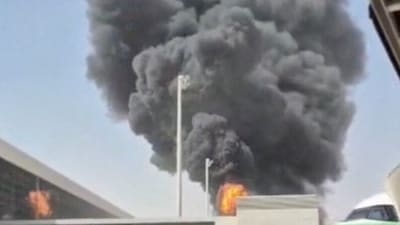
The sequence of events leading to the latest strike on King Khalid International Airport reflects a calculated shift in asymmetric targeting strategy. Over the past week, intelligence assessments indicate a coordinated surge in unmanned aerial vehicle (UAV) deployments originating from the southwestern theater of the Arabian Peninsula. These platforms, frequently utilizing decentralized launch protocols and pre-programmed waypoint navigation, have systematically tested the multi-layered Patriot and terminal high altitude area defense (THAAD) networks protecting Saudi Arabia’s primary administrative and financial hub.
Operational disruption at RUH carries systemic weight. As the primary international gateway to the capital and the central operational base for national carrier Saudia, any disruption to the airport's runway infrastructure or terminal throughput directly impacts commercial aviation networks, diplomatic channels, and executive mobility. While Saudi authorities have maintained stringent operational security protocols—rapidly deploying counter-measure systems and debris-clearing teams to minimize downtime—the psychological and economic fallout of repeated breaches cannot be overstated.
Defense analysts emphasize that the tactical objective of these strikes extends beyond physical asset destruction. By forcing recurring airspace suspensions, the campaign aims to degrade investor confidence, inflate corporate insurance premiums, and introduce friction into the Kingdom’s burgeoning tourism and business ecosystems. This strategy directly challenges the foundational assumptions of infrastructural scalability and long-term regulatory stability required to attract foreign direct investment (FDI) at scale.
Verified Data & Metrics Breakdown
To contextualize the scale of the disruption and the financial exposure facing stakeholders, the following matrix outlines key operational, financial, and strategic metrics associated with the current security climate surrounding Riyadh’s aviation infrastructure:
| Metric Category | Pre-Crisis Baseline | Current Status / Impact | Strategic Implication |
|---|---|---|---|
| Daily Passenger Throughput (RUH) | ~85,000 – 100,000 passengers | Variable delays, 12-15% throughput reduction | Immediate revenue compression for aviation & retail sectors. |
| Aviation Hull & War Risk Insurance | Standard baseline rates (<0.05% hull value) | Upward adjustment of 15% to 30% for regional routes | Elevated operating expenditures for international and domestic carriers. |
| Airspace Availability | 100% operational uptime | Episodic closures lasting 2 to 4 hours per incident | Schedule fragmentation and increased fuel burn from holding patterns. |
| Sovereign CDS (Credit Default Swaps) | Stable historical ranges (55-65 bps) | Modest upward drift (+8 to 12 bps) | Marginal increase in government and corporate borrowing costs. |
Industry & Market Implications: Winners, Losers, and Economic Fallout
The recurrence of kinetic strikes on core Saudi infrastructure triggers an immediate re-pricing mechanism across multiple asset classes. While macroeconomic fundamentals within the Kingdom remain underpinned by robust hydrocarbon revenues and substantial sovereign wealth reserves, the secondary and tertiary effects on non-oil sectors demand rigorous portfolio adjustments.
The Losers: Aviation, Tourism, and Real Estate Valuation Multiples
Commercial aviation and tourism are bearing the immediate brunt of the operational disruption. Airlines operating regional and international routes into Riyadh face compressed margins driven by rising war-risk insurance premiums, increased fuel consumption from flight rerouting, and potential passenger demand softening. Similarly, real estate developers and hospitality conglomerates relying on foreign business travelers and high-net-worth tourists face near-term sentiment headwinds.
Equity analysts note that foreign institutional investors (FIIs) are exercising heightened caution, leading to temporary compression in valuation multiples for publicly listed entities with heavy geographic exposure to central Saudi Arabia. Risk mitigation budgets across multinational corporations operating in the region are expanding rapidly as corporate security teams mandate upgraded physical protection and business continuity redundancies.
The Winners: Defense Contractors and Cybersecurity/Surveillance Providers
Conversely, global defense contractors specializing in integrated air and missile defense systems, counter-UAV (C-UAV) technologies, and radar architectures stand to benefit from accelerated procurement cycles. Saudi Arabia, already one of the world's leading defense spenders, is expected to fast-track capital allocation for advanced interceptor batteries and artificial intelligence-driven threat detection systems.
Furthermore, providers of enterprise risk management software, cloud-based supply chain visibility platforms, and critical infrastructure hardening services are experiencing surging enterprise demand. As boardrooms prioritize resilience over pure cost-efficiency, technology vendors offering robust regulatory compliance and real-time threat telemetry are commanding premium valuations.
Frequently Asked Questions (People Also Ask)
1. How are airlines handling flights into Riyadh following the recent airport attacks?
Airlines operating into King Khalid International Airport (RUH) have implemented dynamic routing and schedule adjustments in coordination with the General Authority of Civil Aviation (GACA). While the airport remains operational, temporary ground stops are enforced during active interception phases. International carriers are closely monitoring NOTAMs (Notices to Air Missions) and evaluating individual risk thresholds, resulting in occasional delays and optimized flight paths.
2. What impact do these regional security incidents have on foreign investment in Saudi Arabia's Vision 2030?
While long-term foreign direct investment (FDI) into mega-projects remains structurally supported by government backing and attractive fiscal incentives, short-term sentiment among risk-averse institutional investors experiences episodic friction. Portfolio managers are placing greater emphasis on risk mitigation strategies, comprehensive insurance underwriting, and robust compliance frameworks before committing capital to projects within immediate proximity to urban centers.
3. Why are traditional air defense systems occasionally challenged by Houthi drone and missile attacks?
Asymmetric actors increasingly employ low-altitude, low-radar-cross-section loitering munitions, composite-material drones, and non-ballistic flight trajectories. These platforms are engineered to exploit radar horizon limitations and terrain masking, requiring densely layered, multi-spectral detection arrays—including acoustic, thermal, and advanced radio-frequency sensors—to ensure reliable interception before reaching high-value civilian infrastructure.
4. Are insurance premiums rising for businesses and shipping lanes operating in the Gulf region?
Yes. Marine hull war risk and aviation insurance underwriters have adjusted pricing models to reflect heightened geopolitical risk in the broader Middle East. While primary shipping lanes and air corridors remain open, policy renewals increasingly incorporate specific navigational surcharges and elevated deductibles for operations traversing high-exposure zones.
Future Outlook and Key Milestones to Watch
As diplomatic channels navigate the complex architecture of regional ceasefires and peace negotiations, the immediate operational environment for critical infrastructure in Saudi Arabia will remain defined by heightened vigilance. The upcoming quarters will serve as a critical stress test for the Kingdom’s infrastructural scalability and its capacity to insulate its economic diversification initiatives from ongoing geopolitical friction.
Institutional stakeholders and market analysts should monitor several critical milestones over the next 6 to 12 months:
- Defense Procurement Announcements: Accelerations in capital allocation toward next-generation C-UAV and laser-based air defense systems will signal the Kingdom’s technical strategy for neutralizing asymmetric airborne threats.
- FII Capital Flow Metrics: Quarterly reports from the Saudi Exchange (Tadawul) detailing foreign institutional investor inflows will provide a clear gauge of international risk appetite.
- Insurance Market Adjustments: Trajectories in war-risk underwriting rates for aviation and maritime logistics will reflect the actuarial community's confidence in regional stability.
- Megaproject Execution Timelines: Progress updates on primary Vision 2030 developments—including NEOM, Qiddiya, and downtown Riyadh expansions—will demonstrate whether physical security challenges are impacting construction milestones or foreign corporate relocations.
Ultimately, while the kinetic strikes introduce acute operational volatility, the underlying economic momentum of the Gulf region continues to force a sophisticated balancing act between aggressive growth aspirations and uncompromising risk mitigation.