WASHINGTON & NEW YORK — In the high-stakes theater of orbital mechanics and federal capital allocation, an impending catastrophe is quietly unfolding above our heads. A pioneering NASA space telescope, once heralded as a triumph of engineering and scientific discovery, is now on an uncontrolled, terminal trajectory back toward Earth following the ultimate failure of a last-ditch orbital rescue mission.
As the asset enters the final phase of its orbital decay, institutional stakeholders, aerospace contractors, and risk mitigation underwriters are closely monitoring the fallout. What began as a technical anomaly has escalated into a high-profile case study in space asset management, highlighting the acute vulnerabilities inherent in low-Earth orbit (LEO) infrastructure scalability and long-term mission sustainability.
Executive Takeaways
Test Our Free AI & Tech Utilities Suite
Calculate LLM API token costs, analyze article dwell-time, or simulate tech DCA returns.
- Terminal Re-Entry: The aging NASA telescope is suffering from catastrophic orbital decay, with atmospheric drag accelerating its uncontrolled plunge back to Earth following a failed salvage operation.
- Enterprise & Capital Losses: The failure underscores severe risks in aerospace capital allocation, insurance valuation multiples, and the lack of robust servicing infrastructure for legacy space assets.
- Regulatory & Debris Exposure: Federal regulators and international space traffic management bodies face mounting scrutiny regarding liability, public safety protocols, and the management of high-altitude space junk.
- Strategic Pivot: The incident is forcing a fundamental reevaluation of cloud compute architecture used for telemetry tracking and predictive risk mitigation across both public space agencies and commercial space ventures.
Comprehensive Narrative: The Anatomy of a Mission Failure
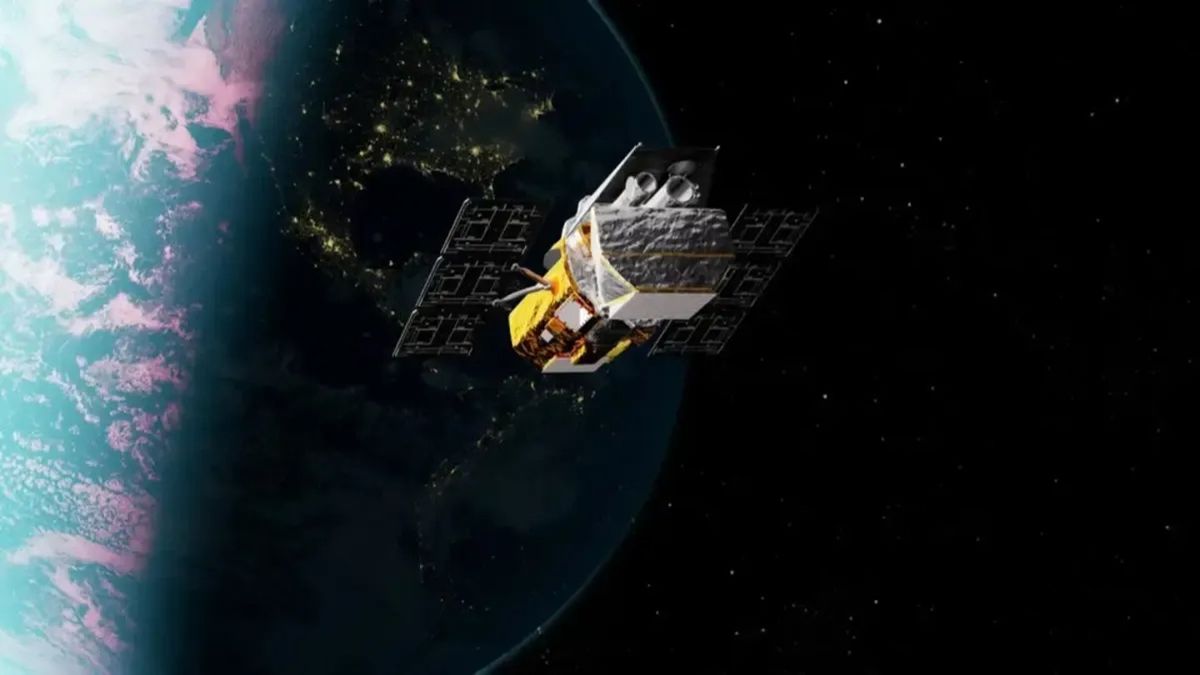
To understand how a multi-million-dollar scientific instrument reached this precarious precipice, one must examine the intersection of budgetary constraints, technological obsolescence, and the unforgiving physics of low-Earth orbit. Launched during an era of shifting federal priorities, the telescope was designed to push the boundaries of astrophysical observation. However, like many assets operating beyond their initial operational lifespans, the spacecraft gradually suffered from degraded attitude control systems, propellant depletion, and thermal insulation fatigue.
The crisis reached a tipping point when autonomous telemetry flagged an alarming degradation in perigee. Initial attempts by mission control to execute contingency burn maneuvers failed due to unresponsive thruster valves—a legacy hardware failure compounded by years of thermal cycling in the harsh vacuum of space. Recognizing the escalating risk, NASA, in coordination with commercial aerospace partners, greenlit an ambitious, high-risk rescue mission. The objective: rendezvous with the disabled satellite, secure a hard dock, and either boost it to a safe graveyard orbit or execute a controlled de-orbit.
However, the complexities of orbital rendezvous proved insurmountable under compressed timelines and tight budgetary guardrails. The rescue vehicle encountered software synchronization anomalies during the final approach phase, forcing an abort to prevent a high-velocity collision that could have generated thousands of dangerous orbital debris fragments. With the rescue attempt officially abandoned, the telescope was left to the mercy of atmospheric drag. As solar activity fluctuates and expands the Earth's upper atmosphere, the rate of descent has accelerated exponentially, turning a managed retirement plan into a high-stakes countdown.
| Mission Parameter | Original Specification | Current Status / Reality | Economic & Operational Impact |
|---|---|---|---|
| Operational Lifespan | 5 to 7 Years | Exceeded by over 40% | High baseline enterprise ROI achieved, but deferred maintenance increased failure risk. |
| Orbital Altitude | ~550 km Low-Earth Orbit | Below 280 km and dropping rapidly | Severe atmospheric drag acceleration; uncontrolled re-entry window narrowing. |
| Rescue Mission Status | Commercial-Public Partnership | Aborted post-approach anomaly | Capital write-off for participating contractors; revised valuation multiples for in-space servicing firms. |
| Debris Liability | Zero-Risk Protocol | Potential unburned fragment impact | Heightened regulatory compliance scrutiny and complex insurance risk mitigation adjustments. |
Industry & Market Implications: Who Wins, Who Loses
The impending demise of the telescope is already sending shockwaves through the global aerospace and financial sectors. From an economic perspective, the incident serves as a stark reminder of the financial exposure tied to uninsurable or underinsured orbital assets. While the scientific community mourns the loss of a premier observation platform, private-market stakeholders are analyzing the broader implications for enterprise valuation and market liquidity within the burgeoning commercial space economy.
The Losers: Traditional legacy satellite manufacturers and firms relying on outdated servicing models face immediate headwinds. The failure of the rescue mission demonstrates that current in-space repair capabilities are not yet mature enough to salvage complex, non-standardized hardware. Insurance underwriters face significant payout pressures, which will likely translate into hardened underwriting standards and sharply higher premium rates across commercial satellite constellations. Furthermore, public confidence in federally managed deep-science initiatives faces renewed skepticism, potentially impacting future congressional budget allocations.
The Winners: Conversely, innovators specializing in autonomous docking software, advanced trajectory modeling, and predictive cloud compute architecture stand to gain. The incident highlights an urgent market demand for real-time risk mitigation tools and hyper-accurate tracking systems. Companies that can demonstrate robust infrastructure scalability and fail-safe automated de-orbit mechanisms will capture significant institutional capital as regulatory bodies enforce stricter end-of-life protocols for orbital assets.
Frequently Asked Questions (People Also Ask)
What caused the NASA telescope rescue mission to fail?
The rescue mission was aborted during the final rendezvous phase due to software synchronization anomalies and unexpected telemetry discrepancies between the interceptor vehicle and the aging target. Because the target satellite lacked standardized docking fixtures and possessed compromised attitude control systems, the risk of a high-velocity impact forcing catastrophic fragmentation outweighed the potential benefits of continuing the intervention.
When and where is the telescope expected to re-enter Earth's atmosphere?
Due to the unpredictable nature of solar weather—which directly affects the density and expansion of Earth's upper atmosphere—exact impact windows fluctuate daily. Aerospace tracking commands currently estimate re-entry within the coming weeks. While the vast majority of the spacecraft is expected to burn up intensely during atmospheric friction, engineers are calculating the statistical probability of surviving titanium and structural alloy fragments reaching the Earth's surface.
How does this incident impact future commercial space missions and satellite insurance?
This high-profile failure is triggering a comprehensive reassessment of risk mitigation and regulatory compliance across the global space industry. Underwriters are adjusting valuation models to account for higher casualty rates among aging LEO assets, resulting in stricter insurance terms. Consequently, satellite operators are being forced to integrate reliable, automated end-of-life de-orbit propulsion systems directly into their initial design architecture.
Can space debris mitigation policies prevent similar events in the future?
International space agencies and regulatory bodies are actively tightening compliance mandates regarding orbital cleanup and post-mission disposal timelines. While existing legacy hardware grandfathered into older frameworks remains a liability, new international guidelines increasingly require operators to incorporate active de-orbit capabilities, ensuring that future satellites can be safely guided out of orbit rather than left to uncontrolled decay.
Future Outlook: Strategic Milestones to Watch
As the countdown to re-entry ticks down, attention is shifting from crisis management to systemic reform. The immediate priority for NASA and international tracking networks is precision telemetry: mapping the decay curve with maximum fidelity to provide accurate footprint projections and protect commercial aviation and maritime lanes.
Over the medium term, market participants should watch for three critical catalysts: First, expect a tightening of federal procurement standards requiring guaranteed active de-orbit systems for all future government-contracted payloads. Second, look for a surge in venture capital deployment toward autonomous in-space servicing, assembly, and manufacturing (ISAM) startups capable of solving the engineering bottlenecks exposed by this failed rescue. Finally, anticipate new international summits focused on establishing standardized docking interfaces across commercial and government spacecraft.
Ultimately, the burning of this telescope in Earth's atmosphere will mark the end of a storied scientific chapter, but it will permanently alter how enterprise leaders, engineers, and financial markets calculate the true cost of operating in the final frontier.