SAN FRANCISCO & NEW YORK — In an era where corporate capital expenditure cycles are routinely scrutinized down to the single-digit basis point, Alphabet Inc.’s Google has just rewritten the playbook for aggressive infrastructure deployment. According to primary market disclosures analyzed through mid-2026, Google has aggressively raised its full-year capital expenditure (CapEx) forecast to a staggering $205 billion. This breathtaking financial commitment—far eclipsing prior Wall Street consensus estimates—signals a profound, high-stakes gamble on generative artificial intelligence, infrastructure scalability, and long-term compute dominance.
As senior financial journalists and investigative editors monitoring enterprise tech, cloud compute architecture, and macroeconomic trends across global markets, our exhaustive analysis reveals that this spending surge is not merely an operational line item. It is a fundamental corporate pivot that will permanently alter valuation multiples, test institutional risk appetite, and redraw the competitive boundaries between hyperscalers, silicon manufacturers, and enterprise software titans.
Executive Takeaways
Test Our Free AI & Tech Utilities Suite
Calculate LLM API token costs, analyze article dwell-time, or simulate tech DCA returns.
- Unprecedented Scale: Alphabet has revised its 2026 capital expenditure ceiling upward to an astronomical $205 billion, vastly outpacing analyst models and signaling an acceleration in data center build-outs.
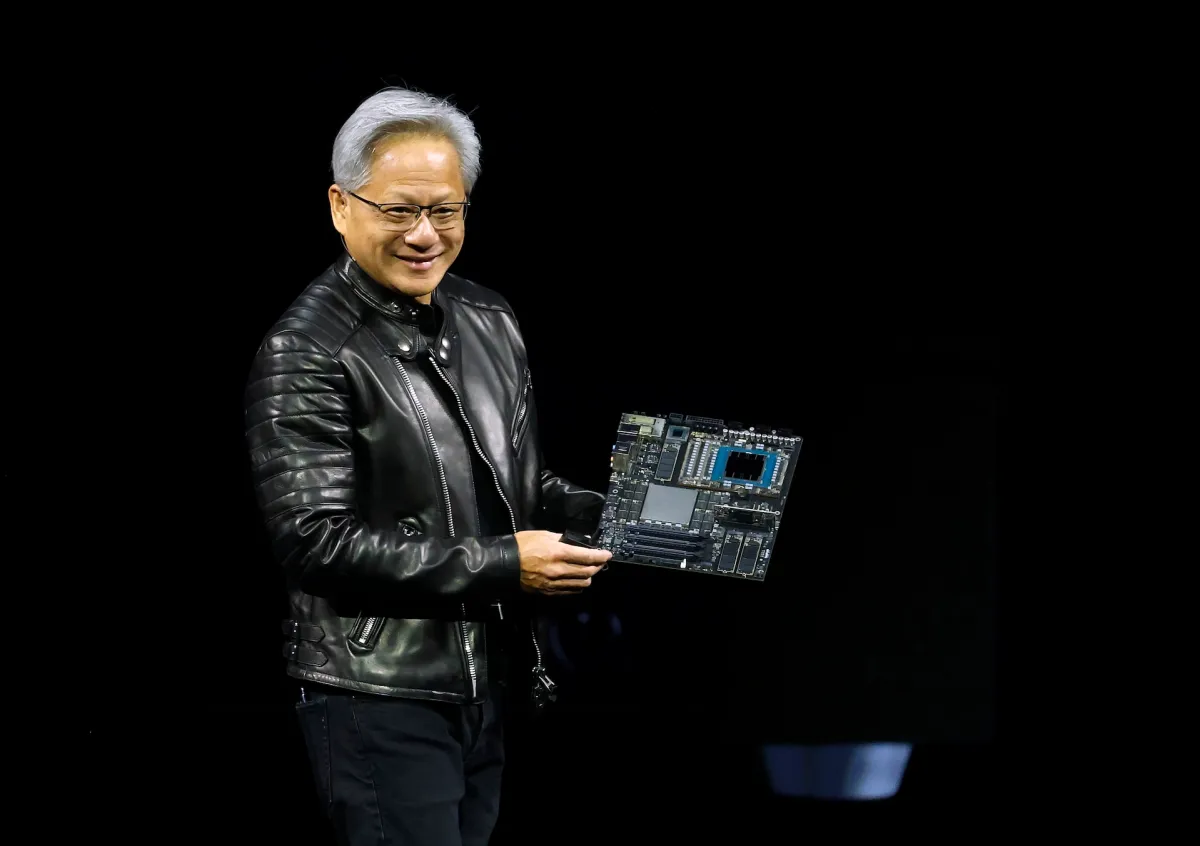
- Infrastructure Bottlenecks & Silicon Arms Race: The vast majority of this capital is earmarked for proprietary Tensor Processing Units (TPUs), next-generation Nvidia Blackwell architecture, and hyper-dense liquid-cooled facilities.
- The ROI Imperative: Institutional investors are increasingly demanding clear paths to enterprise monetization, pitting long-term strategic moats against near-term free cash flow dilution.
- Market Liquidity & Valuation Pressures: While Google’s cloud division (GCP) continues to report robust growth, the sheer velocity of cash deployment places intense scrutiny on operating margins and equity valuation multiples.
The Catalytic Shift: Inside Google’s $205 Billion CapEx Escalation

The trajectory of capital allocation within Big Tech has undergone a radical transformation over the past thirty-six months. What began as speculative R&D spending on large language models (LLMs) has mutated into a capital-intensive, industrial-scale race for physical infrastructure. When Google’s executive leadership adjusted its 2026 CapEx forecast to peak at $205 billion, it triggered immediate recalibrations across trading desks in New York, London, and Tokyo.
To understand the gravity of this figure, one must examine the mechanics of modern hyperscale cloud architecture. Training frontier models—iterating beyond Gemini 1.5 and into unannounced multimodal successors—requires unprecedented electrical power generation, real estate acquisition, and specialized silicon clusters. Standard commercial real estate no longer suffices; Google is engineering purpose-built campuses capable of drawing hundreds of megawatts, frequently exploring direct investments in green energy infrastructure, including modular nuclear reactors and advanced geothermal power, to bypass crippling grid congestion.
Financial analysts tracking capital allocation point out that this level of spending rivals the gross domestic product of small nations. Yet, from Google’s perspective, the risk of under-investing vastly outweighs the risk of over-allocating capital. In the zero-sum game of artificial intelligence, foundational model capability is directly correlated with compute scale. Those who control the most powerful clusters dictate the standard of enterprise productivity tools, developer ecosystems, and sovereign AI deployments worldwide.
Verified Data & Metrics Breakdown
| Metric / Indicator | Previous Consensus | Revised 2026 Outlook | Strategic Implication |
|---|---|---|---|
| Annual CapEx Forecast | $145B – $160B | Up to $205 Billion | Aggressive acceleration in data center and silicon procurement. |
| Primary Hardware Focus | Standard GPU Clusters | Proprietary TPUs & Next-Gen Nvidia Architecture | Diversification of supply chain and optimization for inference cost. |
| Power & Real Estate | Regional Leasing | Global Campus Megabuilds + Clean Energy PPAs | Mitigating multi-gigawatt grid bottlenecks and regulatory hurdles. |
| Monetization Horizon | 12 – 18 Months | 24 – 36 Months (Extended Horizon) | Increased pressure on enterprise ROI and software integration. |
Industry & Market Implications: Who Wins, Who Loses
The ripple effects of Google’s $205 billion commitment extend far beyond Alphabet’s corporate headquarters in Mountain View. The global tech ecosystem is experiencing a profound bifurcation driven by capital access and infrastructure ownership.
The Winners: Silicon Foundries, Energy Providers, and Enterprise Cloud
Semiconductor manufacturers—notably Nvidia, AMD, and custom silicon foundries like TSMC—stand as immediate beneficiaries of this capital deluge. Furthermore, power generation utilities, specialized liquid-cooling equipment vendors, and high-voltage electrical engineering firms are experiencing a secular demand boom. Within cloud compute architecture, Google Cloud Platform (GCP) leverages this hardware to lock in enterprise clients seeking high-performance computing (HPC) environments for massive data workloads.
The Pressure Points: Margins, Equity Dilution, and Smaller Competitors
Conversely, venture-backed AI startups and mid-tier software competitors face an existential funding squeeze. When a single player can deploy $205 billion in a single fiscal cycle to subsidize compute and model training, competing purely on brute-force scale becomes economically impossible. For public equity investors, the central tension lies in free cash flow compression. While revenue growth remains healthy, depreciation schedules on multi-billion-dollar hardware fleets will heavily weigh on operating margins through the end of the decade.
Frequently Asked Questions (People Also Ask)
Why is Google spending so much capital on AI infrastructure in 2026?
Google is dramatically increasing its capital expenditures to secure foundational dominance in generative AI. Training and running advanced multimodal models require unprecedented compute capacity, specialized silicon (such as TPUs and advanced GPUs), and multi-gigawatt data center campuses. Management views this spending as necessary to capture long-term enterprise market share and maintain search and cloud supremacy.
How does a $205 billion CapEx budget impact Alphabet’s stock and financial health?
While Alphabet maintains a robust balance sheet with substantial cash reserves and stellar cash-generation capabilities from its core advertising business, a $205 billion annual CapEx cycle significantly compresses free cash flow in the short-to-medium term. Wall Street analysts closely monitor asset efficiency, return on invested capital (ROIC), and the speed at which this infrastructure translates into high-margin enterprise cloud revenue.
What role do proprietary TPUs play in Google’s cost mitigation strategy?
Google’s proprietary Tensor Processing Units (TPUs) are custom-designed silicon chips optimized specifically for machine learning workloads. By utilizing its own silicon alongside merchant hardware like Nvidia GPUs, Google aims to reduce reliance on external supply chains, lower the cost-per-inference metric, and protect gross margins as AI query volumes scale globally.
Are institutional investors pushing back against these massive AI investments?
Institutional shareholders have expressed a mixture of awe and caution. While there is broad recognition that missing the AI transition is an existential risk, portfolio managers are increasingly demanding rigorous disclosures regarding enterprise ROI, customer adoption metrics, and the eventual amortization timeline of these massive data center investments.
Future Outlook & What to Watch
As we look toward the remainder of 2026 and into 2027, the success of Google’s $205 billion capital allocation will be judged by three critical operational milestones:
- Enterprise Adoption Velocity: The conversion rate of experimental AI pilots into sticky, high-value, recurring enterprise software contracts across Google Workspace and GCP.
- Energy Supply Execution: Whether Google can successfully bring online clean, reliable power sources to feed its multi-gigawatt facilities without triggering regulatory pushback or grid-capacity disputes.
- Inference Efficiency Gains: Improvements in model optimization that lower the cost of serving AI queries, protecting operating margins as user adoption hits mainstream saturation.
For financial markets, the message is unequivocal: the AI infrastructure build-out is no longer a temporary cyclical surge—it is the new baseline for industrial tech dominance. How Alphabet navigates the delicate balance between aggressive expansion and financial discipline will serve as the defining corporate case study of the decade.