Executive Takeaways
- Staggering Capital Outlay: Google has aggressively revised its 2026 capital expenditure forecast to an eye-watering $205 billion, vastly outpacing Wall Street consensus estimates.
- Infrastructure Scalability Race: The massive expenditure is primarily funneling into next-generation data centers, specialized TPU (Tensor Processing Unit) silicon, and advanced cloud compute architecture to dominate generative artificial intelligence.
- Investor Anxiety & Valuation Pressures: While institutional bulls view the spending as an aggressive moat-building exercise, cautious analysts are flagging compressed valuation multiples and questioning the timeline for enterprise ROI.
- Ecosystem Fallout: The unprecedented capital intensity is reshaping the competitive landscape, raising the barriers to entry across the tech sector and triggering heightened scrutiny from financial markets and regulators alike.
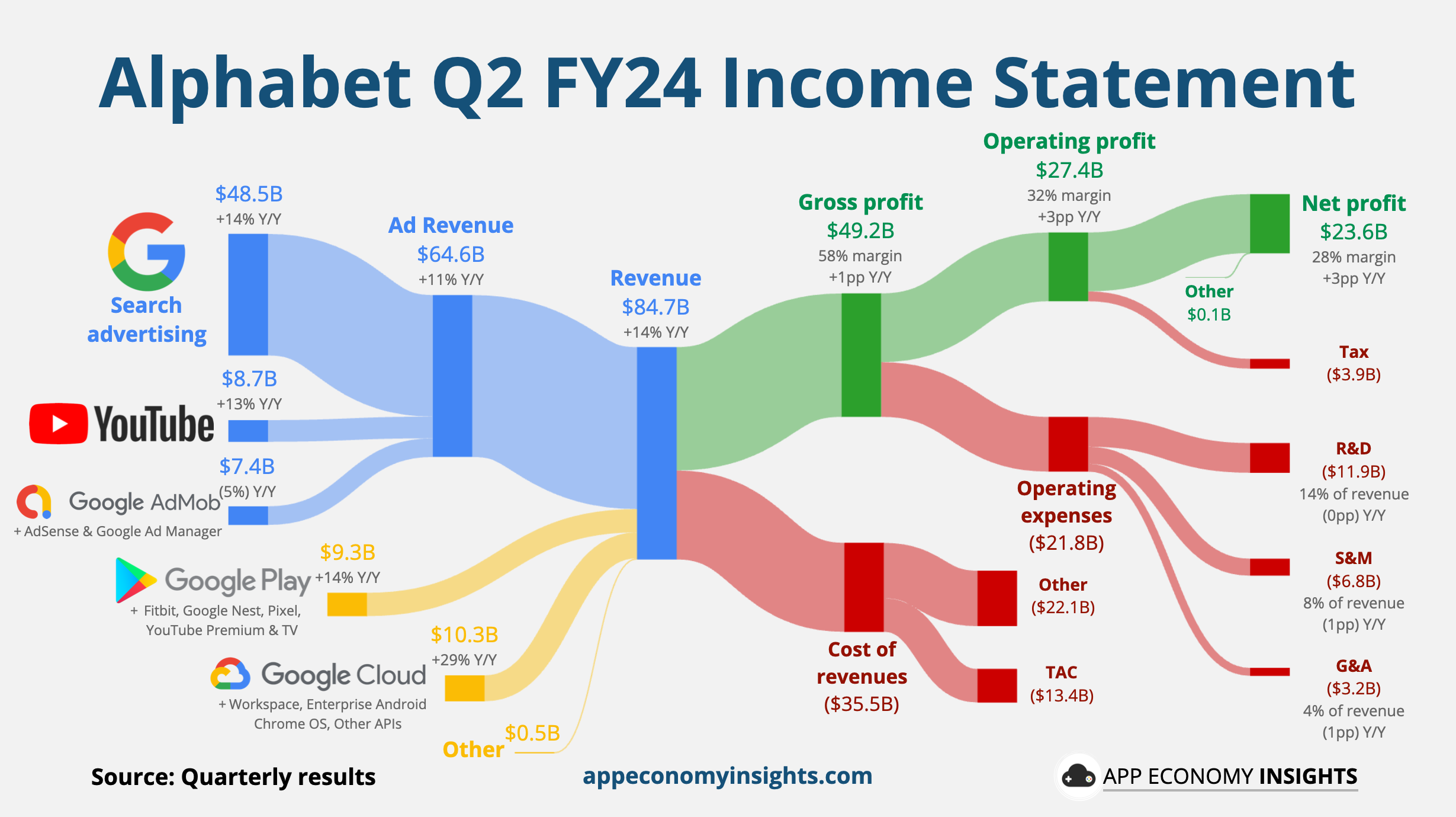
SAN FRANCISCO — In an era defined by high-stakes technological supremacy, Alphabet Inc.’s Google has crossed a financial Rubicon. According to breaking reports originating from industry intelligence desks and wire services like TechRepublic, Google has escalated its fiscal ambitions to a degree that has left even the most seasoned market observers recalibrating their models. The tech behemoth has aggressively raised its capital expenditure (CapEx) forecast for the 2026 fiscal year to a staggering $205 billion.
This unprecedented capital allocation shatters conventional corporate spending norms. For context, $205 billion rivals the gross domestic product of small nations, yet it represents a single corporate bet on artificial intelligence infrastructure scalability. As global enterprises race to deploy generative AI tools, large language models (LLMs), and automated workflows, Google is choosing to out-spend, out-build, and out-maneuver its fiercest rivals—chiefly Microsoft, Amazon Web Services, and Meta Platforms—regardless of near-term margin dilution.
The Catalytic Shift: Why Google Upgraded Its CapEx
Test Our Free AI & Tech Utilities Suite
Calculate LLM API token costs, analyze article dwell-time, or simulate tech DCA returns.
The decision to vault expenditure projections toward the quarter-trillion-dollar mark did not occur in a vacuum. Over the past twenty-four months, the paradigm of software development has shifted decisively from traditional cloud storage and SaaS applications to hyper-dense, compute-intensive AI workloads. Google’s executive leadership, spearheaded by CEO Sundar Pichai and Chief Business Officer Philipp Schindler, has recognized that owning the underlying infrastructure is the only definitive way to secure long-term market dominance.
At the heart of this expansion is the relentless demand for high-performance computing clusters. Training frontier models like Gemini requires thousands of specialized accelerators operating in concert across massive data center campuses. Power constraints, liquid cooling technologies, and proprietary silicon development—specifically Google's custom Tensor Processing Units (TPUs)—have transformed data center construction from a standard real estate endeavor into a capital-intensive scientific enterprise.
Furthermore, enterprise adoption has moved past the proof-of-concept phase. Fortune 500 companies are demanding robust, low-latency, and highly secure AI integrations. To meet this enterprise demand without risking service degradation or capacity bottlenecks, Google is committing massive liquidity reserves to secure long-term hardware supply chains, green energy power purchase agreements (PPAs), and next-generation networking architecture.
Wall Street Reaction: Visionary Moat or Capital Destruction?

The financial markets have responded to Google’s revised guidance with a mixture of awe and acute anxiety. On one hand, growth-oriented institutional investors argue that this aggressive stance is a necessary preemptive strike. By cementing its position as the foundational layer of the global AI economy, Google is effectively building an insurmountable economic moat. In this view, short-term free cash flow contraction is a minor price to pay for generational market capture.
Conversely, value-focused equity analysts and risk-mitigation specialists are raising urgent red flags. A CapEx run-rate of $205 billion places immense pressure on operating margins. Investors are increasingly demanding clear metrics on enterprise ROI, questioning how long it will take for these capital-draining server farms to generate sufficient top-line revenue to justify the outlay. Valuation multiples for Alphabet are facing compression as portfolio managers weigh the risk of diminishing returns on compute investments against an uncertain macroeconomic backdrop.
| Metric / Indicator | Prior Consensus Estimate | Revised 2026 Guidance | Strategic Impact |
|---|---|---|---|
| Total CapEx Forecast | $140B – $160B | Up to $205 Billion | Aggressive acceleration of AI infrastructure buildout. |
| Primary Investment Focus | Standard Cloud & Search | Custom TPUs, Data Centers, Power Grid Integration | Securing hardware independence and energy supply. |
| Market Liquidity Pressure | Moderate Free Cash Flow Burn | Substantial Capital Outlay Strain | Forces disciplined capital allocation across non-core divisions. |
| Competitive Positioning | Parity with Hyperscalers | Definitive Spending Leadership | Raises entry barriers for mid-tier technology competitors. |
Industry & Market Implications: The Broader Economic Ripple Effect
Google’s fiscal pivot carries profound implications extending far beyond Mountain View. As one of the world's premier technology titans, Alphabet's procurement strategies dictate market liquidity and supply chain dynamics across global commerce.
Winners: Semiconductor foundries, specialized hardware manufacturers, renewable energy providers, and commercial real estate developers specializing in high-density data center zoning are reaping immediate windfalls. Companies that supply advanced liquid cooling systems, optical networking equipment, and high-voltage electrical transformers are experiencing historic demand spikes directly attributable to hyperscale expansion.
Losers & Vulnerabilities: Mid-tier tech companies and venture-backed AI startups lacking access to balance sheets of this magnitude face an increasingly hostile competitive environment. The cost of acquiring proprietary compute resources is skyrocketing, potentially squeezing out innovative players who cannot compete with Google’s capital firepower. Furthermore, internal Google divisions outside of core AI and Cloud risk facing austere budgeting as corporate finance departments funnel available cash toward the AI behemoth.
Frequently Asked Questions (People Also Ask)
Why is Google spending so much on artificial intelligence infrastructure in 2026?
Google is dramatically increasing its CapEx to meet the exponential enterprise demand for generative AI, large language model training, and low-latency cloud computing. Owning proprietary hardware (such as custom TPUs) and hyper-scale data centers allows Google to secure long-term market dominance and prevent capacity bottlenecks as AI becomes deeply embedded in global enterprise workflows.
How does a $205 billion CapEx forecast impact Alphabet’s stock and valuation multiples?
The massive spending forecast has created a split sentiment on Wall Street. While bulls view it as an essential, high-return moat-building exercise, conservative analysts worry about compressed operating margins and short-term free cash flow contraction. This tension has led to heightened scrutiny regarding the timeline and certainty of enterprise ROI.
What are the primary areas receiving these multi-billion-dollar investments?
The capital is predominantly directed toward building and outfitting next-generation data centers, securing long-term renewable energy power purchase agreements (PPAs), scaling custom silicon manufacturing (TPUs), and upgrading global optical networking and cloud compute architecture.
How does Google’s spending compare to other hyperscalers like Microsoft and Amazon?
While all major hyperscalers—including Microsoft, Meta, and Amazon—are executing historic infrastructure buildouts, Google’s revised $205 billion target places it at the bleeding edge of the current CapEx super-cycle, reflecting an aggressive strategy to out-invest competitors in the race for AI supremacy.
Future Outlook: Milestones to Watch
As the industry digests the sheer magnitude of Google’s financial commitment, attention now turns to execution and measurable returns. Over the next twelve to twenty-four quarters, institutional stakeholders will closely monitor several key performance indicators:
- Cloud Revenue Growth: Google Cloud must demonstrate accelerating top-line growth that directly correlates with the capital deployed into AI infrastructure.
- Energy & Grid Partnerships: Given power constraints facing modern data centers, Google’s ability to successfully integrate nuclear, geothermal, and advanced renewable energy sources into its grid will dictate operational feasibility.
- Monetization Metrics: Wall Street will demand granular reporting on the enterprise adoption rates of Gemini-powered enterprise suites and developer APIs to validate the long-term profitability of the $205 billion bet.
In summary, Google’s escalated spending is not merely an operational adjustment; it is a definitive declaration of industrial strategy. By betting its balance sheet on the absolute ubiquity of artificial intelligence, Google is reshaping the global technology landscape—forcing competitors, regulators, and investors to adapt to a high-stakes new economic reality.