Executive Takeaways
- Agentic Defense Paradigm Shift: Google Cloud debuted three autonomous AI agents within Google Security Operations at Next '26, effectively replacing manual SOC triage with real-time machine speed countermeasures.
- The Expanded Wiz Partnership: The deepening integration between Google Cloud and Wiz tackles multi-cloud and AI-native application architectures, closing security blind spots across complex enterprise codebases.
- Data Lakehouse & Cross-Cloud Analytics: Leveraging BigQuery's lakehouse architecture alongside Model Context Protocol (MCP) standards to deliver scalable security telemetry processing at petabyte scale.
- Capital Allocation & Risk Mitigation: CISO budgets are rapidly pivoting from reactive patching to automated mitigation, driven by compounding infrastructure scalability risks and tightening regulatory frameworks.
SAN FRANCISCO & NEW YORK — In an era where corporate networks face hyper-sophisticated, AI-driven cyber threats, the dividing line between enterprise survival and catastrophic data breach is measured in milliseconds. Against this backdrop, Google Cloud kicked off its flagship Next '26 conference by fundamentally rewriting the rules of digital defense. In a blockbuster announcement that sent ripples across Silicon Valley and Wall Street boardrooms alike, Google Cloud unveiled a sweeping, next-generation security architecture headlined by a powerful expansion of its strategic alliance with cloud-native application protection pioneer Wiz.
For chief information security officers (CISOs) and enterprise risk committees, the message is unequivocal: traditional, human-led security operations centers (SOCs) are no longer viable against automated, machine-speed attacks. By marrying Google Cloud’s hyperscale infrastructure and advanced machine learning models with Wiz’s comprehensive posture management, the tech titan is pioneering a new epoch of "agentic defense." This investigative report breaks down the architectural shifts, financial implications, and market dynamics defining Next '26.
The Catalytic Shift: Moving Beyond Reactive Patching
Test Our Free AI & Tech Utilities Suite
Calculate LLM API token costs, analyze article dwell-time, or simulate tech DCA returns.
For years, enterprise security has suffered from an asymmetric economic reality. Attackers need to find only a single vulnerability to breach a perimeter, while defenders must secure millions of lines of code, thousands of cloud instances, and sprawling multi-cloud environments 24/7/365. Thisdefender's dilemma has triggered burnout across security teams and inflated enterprise risk liabilities.
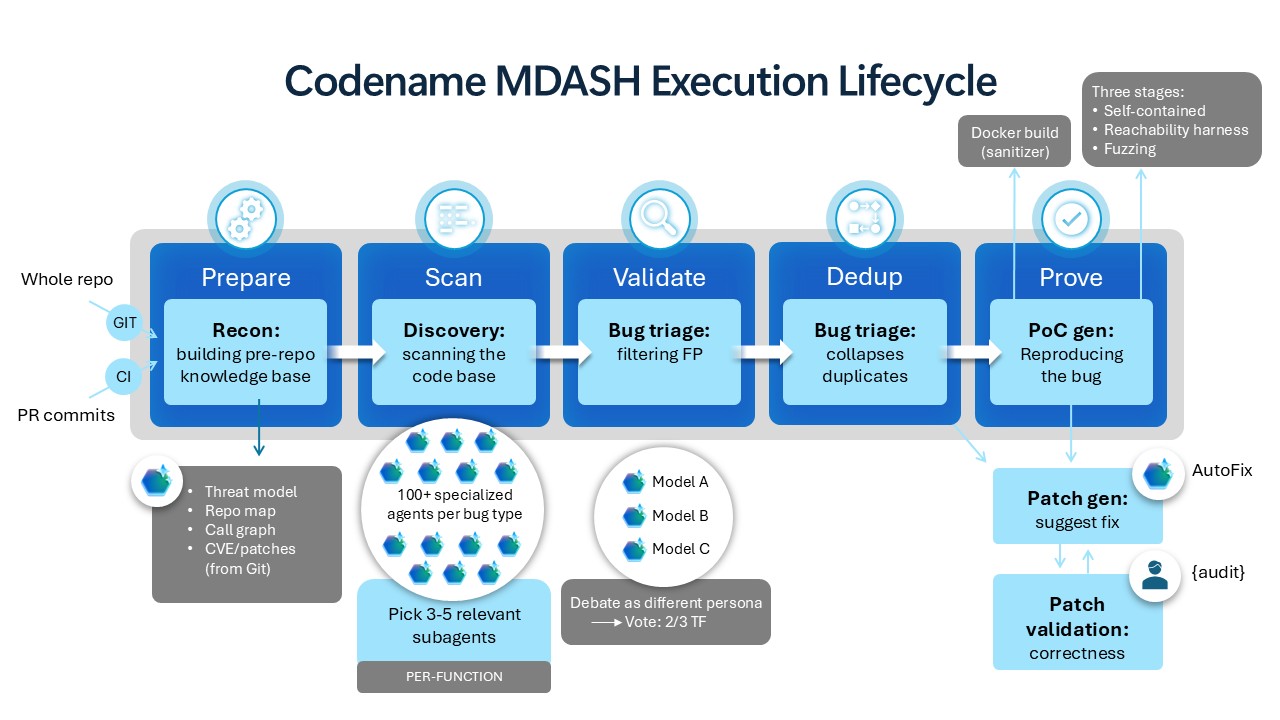
At Next '26, Google Cloud confronted this structural flaw head-on. The centerpiece of the conference's security keynote was the formal introduction of three autonomous security agents embedded directly within Google Security Operations. Unlike traditional rule-based Security Information and Event Management (SIEM) systems that flood analysts with false positives, these new agents utilize advanced reasoning engines to investigate anomalies, correlate threat intelligence across disparate endpoints, and initiate remediation protocols autonomously.
Industry analysts note that this shift from analytical assistance to autonomous execution represents a profound maturation of enterprise artificial intelligence. Rather than simply suggesting queries, these agents operate under strict policy guardrails to neutralize threats in real time, drastically reducing the dwell time of malicious actors inside corporate perimeters.
Securing the AI Stack and Multi-Cloud Frontiers

As enterprises accelerate their capital allocation toward generative AI workloads, they are inadvertently expanding their attack surfaces. Large language models (LLMs), vector databases, and complex data pipelines introduce entirely novel vulnerabilities—ranging from prompt injection and data poisoning to unauthorized model exfiltration.
To mitigate these risks, the expanded integration between Google Cloud and Wiz provides end-to-end visibility across the entire AI development lifecycle. By combining Wiz’s agentless vulnerability scanning with Google Cloud’s native telemetry, security teams gain immediate insight into misconfigurations within training pipelines, containerized microservices, and cross-cloud environments.
Furthermore, Google Cloud showcased BigQuery’s evolving lakehouse architecture, emphasizing its integration with the Model Context Protocol (MCP) and enhanced cross-cloud analytics. By unifying security telemetry from AWS, Azure, and Google Cloud into a single, queryable data repository, organizations can run complex forensic analyses without the traditional latency and cost penalties associated with data movement.
Verified Data & Metrics Breakdown
| Metric / Dimension | Legacy Security Frameworks | Next '26 Google Cloud & Wiz Architecture | Enterprise Financial & Operational Impact |
|---|---|---|---|
| Threat Triage & Response Speed | Hours to Days (Manual SOC analysis) | Seconds to Minutes (Agentic Defense) | Drastic reduction in dwell time and potential breach blast radius. |
| Multi-Cloud Visibility Coverage | Siloed agents, high blind-spot rates | Unified posture management via Wiz + BigQuery | Eliminates compliance blind spots across heterogeneous infrastructures. |
| AI Workload Protection | Ad-hoc python scripts and manual code audits | Native security posture governance for LLMs & pipelines | Accelerates secure AI deployment without sacrificing velocity. |
| Data Telemetry Scalability | Expensive log storage with slow query speeds | BigQuery lakehouse + MCP cross-cloud analytics | Optimized cloud compute architecture and lower total cost of ownership. |
Industry & Market Implications: Who Wins and Who Loses
The announcements at Next '26 carry profound macroeconomic and competitive consequences across the enterprise software landscape:
- The Winners: Cloud hyperscalers that successfully embed autonomous AI into their core infrastructure, specialized cloud-native security platforms like Wiz that maintain deep platform integrations, and enterprises that leverage these tools to drive down insurance premiums and compliance overhead. Wall Street analysts point out that valuation multiples for security vendors capable of executing at agentic scale will likely command a premium as corporate IT spend concentrates on automation.
- The Losers: Legacy point-solution vendors relying on manual dashboards, sluggish alert correlation, and isolated data siloes face an existential threat. Furthermore, managed security service providers (MSSPs) that rely purely on basic human tier-1 triage will be forced to rapidly pivot their business models toward higher-value strategic advisory or risk obsolescence.
From a regulatory compliance standpoint, the integration of automated logging and cross-cloud verification directly addresses tightening global mandates. As boards face heightened accountability under frameworks such as SEC cybersecurity disclosure rules and European Union directives, automated audit trails and immutable telemetry provide essential risk mitigation.
Frequently Asked Questions (People Also Ask)
What is "agentic defense" as introduced at Google Cloud Next '26?
Agentic defense refers to the deployment of autonomous, AI-driven security agents within Google Security Operations. Rather than merely alerting human analysts, these agents possess reasoning capabilities to investigate threats, analyze multi-cloud telemetry, and autonomously execute containment and remediation protocols at machine speed.
How does the partnership between Google Cloud and Wiz enhance security?
The expanded collaboration integrates Wiz’s industry-leading cloud-native application protection platform (CNAPP) directly with Google Cloud’s security infrastructure. This provides enterprises with comprehensive, agentless visibility across multi-cloud environments, covering everything from standard containerized microservices to complex generative AI training pipelines.
What role does BigQuery play in the new security architecture?
BigQuery acts as the high-performance data lakehouse backbone for security analytics. Supported by Model Context Protocol (MCP) standards and cross-cloud analytics capabilities, it ingests petabytes of security telemetry from diverse cloud sources, enabling rapid threat hunting and forensic auditing without performance bottlenecks.
What are the primary financial benefits for enterprises adopting these tools?
By automating threat triage and remediation, enterprises reduce operational overhead, optimize cloud compute architecture expenditures, minimize potential breach damages, and streamline regulatory compliance—ultimately protecting valuation multiples and lowering overall risk mitigation costs.
Future Outlook: Milestones to Watch
As the dust settles on Next '26, the immediate focus shifts to execution. Enterprise buyers will be closely monitoring the general availability timelines for the newly announced agentic defense modules and evaluating early return on investment (ROI) metrics from pilot deployments.
Key milestones to watch over the next 12 to 18 months include:
- The depth of cross-platform orchestration between Wiz and Google Security Operations in enterprise production environments.
- Adoption rates of MCP standards across third-party security vendors seeking integration into Google's lakehouse ecosystem.
- Evolving regulatory stances regarding autonomous AI decision-making in critical national infrastructure and financial services sectors.
Ultimately, Google Cloud and Wiz have signaled that the future of security is autonomous, collaborative, and deeply embedded in cloud architecture. For the enterprise market, adapting to this paradigm is no longer optional—it is the foundational price of admission in the AI era.