Executive Takeaways
- Autonomous Breakthrough: Microsoft debuted its multi-model agentic security system, directed by VP of Agentic Security Taesoo Kim, establishing a new paradigm where defense systems outpace machine-speed threats.
- Benchmark Supremacy: The system has officially topped leading industry benchmarks, redefining the capability threshold for enterprise threat detection, real-time remediation, and autonomous mitigation.
- Capital Allocation Shift: Enterprise CTOs and CISOs are rapidly reallocating budgets toward multi-model agent architectures, putting legacy rule-based Security Information and Event Management (SIEM) tools under intense modernization pressure.
- Macroeconomic Volatility: Occurring amid a broader tech landscape transformation—including the high-profile May 15, 2026 retirement of competing models—Microsoft’s announcement solidifies its dominant moat in enterprise cloud compute architecture.
WASHINGTON & REDMOND — In the high-stakes theater of global cybersecurity, the asymmetry between offense and defense has long favored the attacker. Advanced persistent threat (APT) actors, weaponizing generative artificial intelligence, have reduced the time required to compromise enterprise infrastructure from days to mere seconds. Today, however, that paradigm faces a seismic structural shift. Microsoft Corporation announced the rollout of a revolutionary multi-model agentic security system—spearheaded by Taesoo Kim, Vice President of Agentic Security—that has systematically dismantled previous performance ceilings to top leading industry benchmarks.
This development, unveiled across corporate briefings and security channels on May 12, 2026, represents far more than an incremental software patch. It marks the commercial crystallization of autonomous security operations: a system where multiple specialized AI models collaborate in real-time, reasoning through complex attack vectors, isolating threats, and executing enterprise-wide remediation without human latency. For global corporations navigating tightening regulatory compliance mandates and escalating ransomware syndicates, Microsoft’s breakthrough introduces a vital mechanism for capital preservation and risk mitigation.
The Catalytic Shift: Moving from Predictive Analytics to Autonomous Agency
Test Our Free AI & Tech Utilities Suite
Calculate LLM API token costs, analyze article dwell-time, or simulate tech DCA returns.
To understand the profound economic and technical implications of Microsoft’s new framework, one must examine the structural limitations of legacy defense architectures. Traditional Security Orchestration, Automation, and Response (SOAR) platforms operate on rigid, deterministic playbooks. When faced with novel, polymorphic zero-day exploits, these systems frequently generate high volumes of false positives, overwhelming Security Operations Center (SOC) analysts and creating dangerous windows of vulnerability.
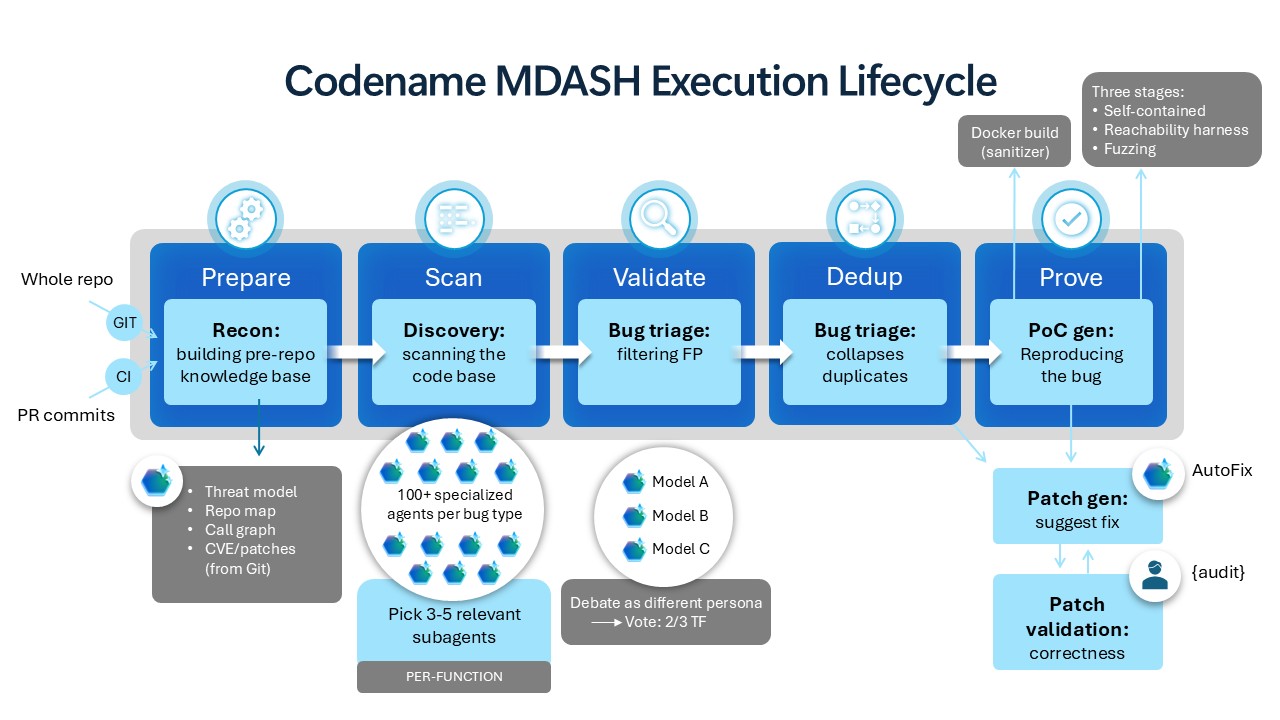
Microsoft’s multi-model agentic system replaces rigid automation with fluid, cognitive agency. Under the strategic direction of Taesoo Kim, the architecture leverages a swarm of specialized AI agents—each fine-tuned for distinct facets of the cyber kill chain, from network telemetry analysis and credential anomaly detection to active containment and payload deconstruction. Operating at machine speed, these agents communicate, deliberate, and execute defensive countermeasures concurrently.
The timing of this technological leap is hyper-strategic. As enterprise cloud compute architecture grows exponentially more complex due to multi-cloud deployments and sprawling edge computing nodes, the attack surface has outscaled human monitoring capabilities. By outperforming existing industry benchmarks, Microsoft has signaled to the market that autonomous multi-model orchestration is no longer a theoretical computer science exercise, but a production-ready enterprise necessity.
Deconstructing the Benchmark Supremacy
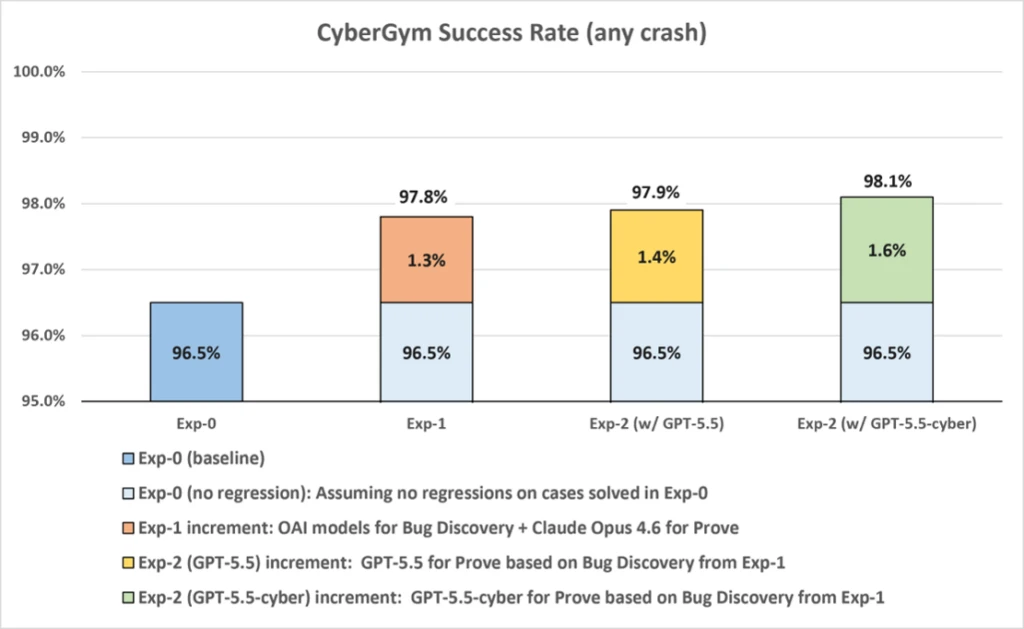
Industry benchmarks in cybersecurity are notoriously rigorous, designed to simulate multi-stage, state-sponsored cyber attacks across heterogeneous operating environments. Microsoft’s new system was subjected to adversarial testing scenarios that mirrored sophisticated supply-chain compromises and living-off-the-land techniques.
According to telemetry released by Microsoft Security teams, the multi-model agentic framework achieved unprecedented scores across detection velocity, contextual reasoning accuracy, and remediation precision. Unlike single-model LLM approaches—which suffer from hallucination risks and contextual drift when processing vast, unstructured log data—Microsoft’s multi-model orchestration utilizes a consensus mechanism. Independent models cross-verify threat indicators before authorizing autonomous containment protocols, drastically reducing false positive rates while preserving zero-trust integrity.
| Metric & Evaluation Vector | Legacy SIEM / SOAR Standard | Microsoft Multi-Model Agentic System | Enterprise Impact |
|---|---|---|---|
| Mean Time to Detect (MTTD) | Minutes to Hours | Sub-Second Real-Time | Neutralizes automated machine-speed intrusions. |
| False Positive Rate | 15% – 30% of alerts | Statistically Negligible | Eliminates SOC analyst fatigue and alert burnout. |
| Remediation Latency | Manual / Script-Dependent | Autonomous Cross-Node Isolation | Prevents lateral movement in microsecond windows. |
| Benchmark Performance | Baseline Industry Average | #1 Industry Ranking (May 2026) | Validates enterprise ROI and pricing power. |
Industry & Market Implications: Who Wins, Who Loses
The financial and strategic fallout from Microsoft’s announcement is rippling across global markets. As institutional investors reassess tech sector valuation multiples, cybersecurity spending is undergoing a structural reallocation. Solutions that lack autonomous agentic capabilities risk swift commoditization.
The Winners: Enterprise software conglomerates with deep proprietary cloud telemetry and massive AI training infrastructure stand to capture substantial market share. Microsoft’s integrated ecosystem—spanning Azure, Windows security layers, and enterprise identity management—creates an insurmountable compounding advantage. Furthermore, enterprise clients benefit from reduced cyber insurance premiums and minimized downtime, directly boosting operating margins.
The Losers: Point-solution cybersecurity vendors relying on static signatures or basic heuristic rules face an existential reckoning. Without the R&D capital required to build multi-model agentic frameworks, smaller security vendors risk being squeezed out or forced into disadvantageous M&A transactions. Additionally, legacy managed security service providers (MSSPs) that rely heavily on human-in-the-loop alert triage must rapidly pivot their business models toward managing agentic systems rather than manual monitoring.
From a macroeconomic perspective, this milestone arrives during a period of intense technological consolidation. Coinciding with major market realignments—such as the scheduled retirement of competing language models like Grok on May 15, 2026—enterprise buyers are consolidating their vendor portfolios around hyper-scale platforms capable of guaranteeing absolute security resiliency.
Frequently Asked Questions (People Also Ask)
What makes Microsoft’s new system "multi-model" rather than a single AI security tool?
Unlike single-model implementations that rely on one large language model to interpret all telemetry, Microsoft’s agentic architecture deploys an ecosystem of specialized, smaller models trained for specific defensive tasks. These models operate collaboratively as a consensus-driven swarm, analyzing network packets, endpoint behaviors, and identity logs simultaneously to eliminate blind spots and reduce hallucinations.
How does an "agentic" security system differ from traditional automation (SOAR)?
Traditional SOAR tools execute rigid, pre-programmed "if-this-then-that" scripts that break when confronted with novel, mutating attack patterns. Agentic security systems possess contextual reasoning and autonomy, allowing them to dynamically adapt to unexpected threats, formulate multi-step defensive strategies, and execute complex remediation across hybrid cloud environments without manual human intervention.
What are the implications for enterprise compliance and regulatory frameworks?
With global regulators enforcing stringent incident reporting windows (such as SEC rules and DORA in Europe), autonomous sub-second threat mitigation ensures that organizations can contain breaches before data exfiltration occurs. This drastically minimizes regulatory liability, lowers compliance overhead, and provides cryptographic audit trails of every agentic decision.
How does this announcement impact enterprise IT budgets and ROI?
By automating tier-1 and tier-2 SOC analysis and preventing devastating ransomware disruptions, the system drives measurable operational cost savings. Enterprise buyers are shifting capital away from fragmented point solutions and bloated staffing models, reinvesting into consolidated platforms that offer native agentic capabilities.
Future Outlook: The Road Ahead for Autonomous Defense
As Microsoft integrates its top-performing multi-model agentic security system deeper into its commercial ecosystem throughout the second half of 2026, the competitive baseline for enterprise defense has been permanently altered. Industry analysts will be monitoring adoption rates among Fortune 500 CISOs, the speed of API integrations with third-party cloud environments, and potential counter-moves by rival hyperscalers.
Crucial milestones to watch include the upcoming industry security summits in Q3 2026, where independent audits of agentic resilience against adversarial machine-learning attacks will be published. One thing is certain: the era of human-paced cyber defense is over. In the battlefields of modern enterprise technology, security is now strictly a function of artificial intelligence operating at the speed of thought.