By the Investigations Desk • Published August 12, 2026 • Wire Source: CyberSecurityNews
Executive Takeaways
Test Our Free AI & Tech Utilities Suite
Calculate LLM API token costs, analyze article dwell-time, or simulate tech DCA returns.
- The 30 Tbps Threshold: The modern threat landscape crossed an unprecedented Rubicon in mid-2026, with enterprise-grade scrubbing centers forced to autonomously neutralize volumetric floods exceeding 30 Terabits per second without human intervention.
- AI-Driven Mitigation Over Static ACLs: Legacy Access Control Lists and rate-limiting have become obsolete. The top-tier services of 2026 rely on real-time machine learning inference engines at the network edge to isolate Layer 7 application-layer anomalies within milliseconds.
- Enterprise Capital Reallocation: Cybersecurity budget allocation has shifted dramatically, with CFOs treating high-capacity DDoS mitigation not as an IT line item, but as core business continuity infrastructure directly tied to valuation multiples and uptime SLAs.
- Consolidation of Power: The market has sharply polarized between hyperscale cloud-native security portfolios and specialized multi-CDN scrubbing syndicates, forcing mid-market firms to weigh cost against absolute network mitigation capacity.
Comprehensive Narrative: The Architecture of Modern Cyber Warfare
As global digital commerce scales toward unprecedented heights in 2026, the velocity, scale, and sophistication of Distributed Denial of Service (DDoS) attacks have fundamentally outpaced traditional infrastructure models. According to primary telemetry from CyberSecurityNews, the threat landscape has entered an era of industrial-grade extortion campaigns, state-sponsored disruption, and automated botnets powered by compromised Internet of Things (IoT) nodes and generative AI-orchestrated vectors. The modern enterprise can no longer view cybersecurity merely through the lens of data privacy; availability has become the primary vector of financial vulnerability.
The catalytic event for this paradigm shift arrived with a staggering 30 Tbps volumetric flood targeting a consortium of global financial exchanges and cloud-hosted SaaS providers earlier this year. This record-shattering assault exposed the structural vulnerabilities of legacy data centers and pushed commercial scrubbing centers to their absolute limits. When an organization suffers a multi-terabit vector assault, the financial implications extend far beyond immediate operational downtime. Enterprise ROI is instantly compressed, institutional investor confidence falters, and regulatory compliance penalties for failing to maintain operational resilience can trigger severe capital liquidity contractions.
In response, the market for DDoS protection services has undergone a brutal Darwinian consolidation. Enterprises are aggressively auditing their cloud compute architecture and risk mitigation frameworks. Chief Information Security Officers (CISOs) are no longer satisfied with marketing brochures boasting theoretical scrubbing capacity; they demand empirical proof of clean-pipe routing speeds, negligible latency overhead, and predictable cost structures that do not penalize organizations for being targeted by malicious actors.
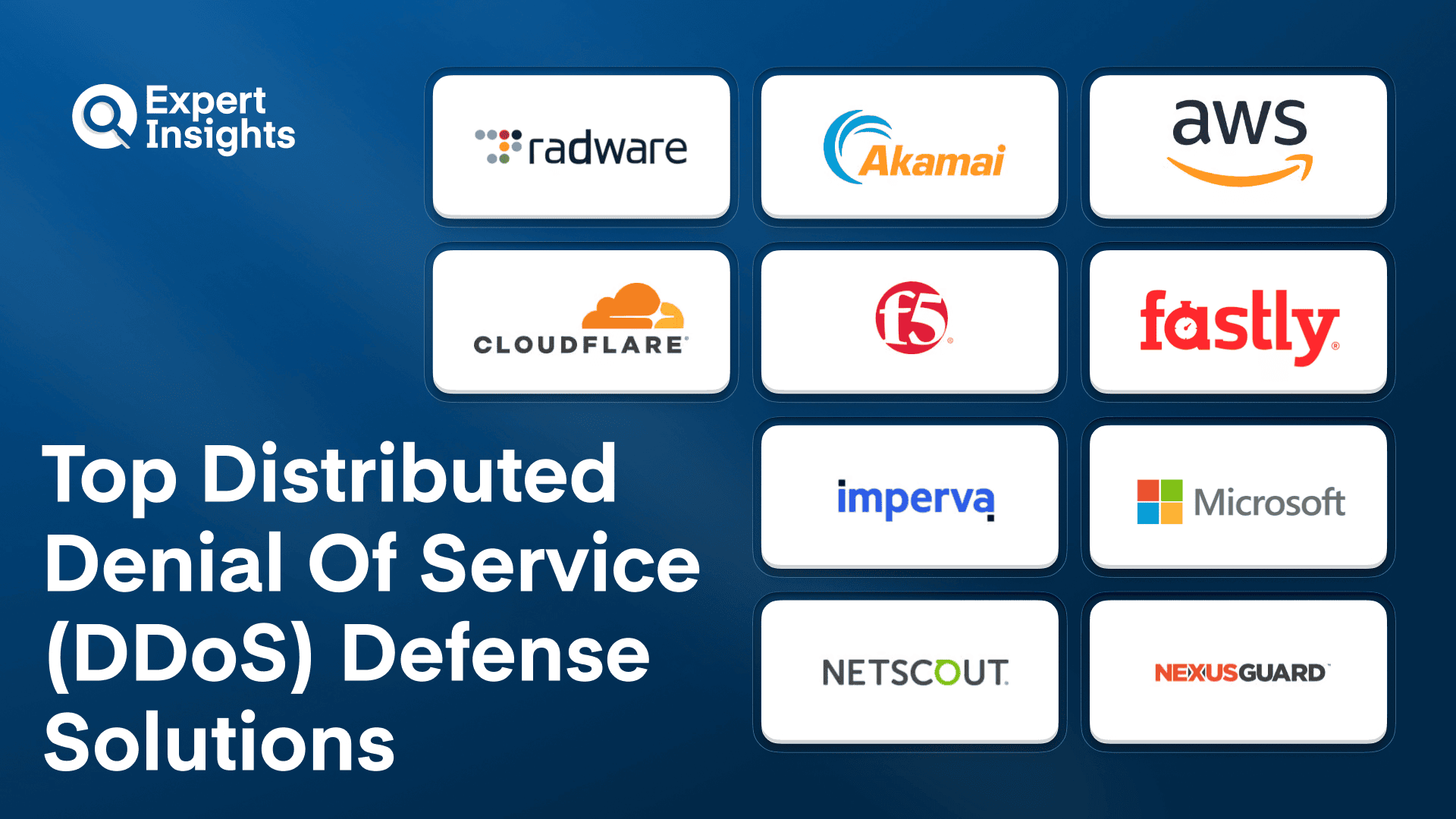
Evaluating the top 10 best DDoS protection services of 2026 requires a rigorous examination of three non-negotiable metrics: total global mitigation capacity (measured in Tbps), time-to-mitigation (TTM) velocity, and transparent total cost of ownership (TCO). The market leaders have separated themselves from the pack by integrating deep-packet inspection (DPI) with behavioral anomaly detection, ensuring that legitimate user transactions flow unimpeded while malicious botnet traffic is vaporized at the network edge.
Verified Data & Metrics Breakdown Table
| Service Provider | Global Mitigation Capacity | Average Time-to-Mitigation (TTM) | Primary Architectural Strength | Enterprise Cost Index |
|---|---|---|---|---|
| Cloudflare Magic Transit | 35+ Tbps | < 3 seconds | Anycast Edge Network & Workers AI | High (Consumption-based) |
| AWS Shield Advanced | 30+ Tbps | Instant (Automated) | Native AWS Ecosystem Integration | Premium (Subscription + Data) |
| Akamai Prolexic | 28 Tbps | < 5 seconds | Dedicated High-Performance Scrubbing Centers | Enterprise Tier |
| Microsoft Azure DDoS Protection | 25+ Tbps | < 10 seconds | Azure Virtual Network Integration | Mid-to-High |
| Imperva Cloud DDoS | 20 Tbps | < 3 seconds | Application Layer (Layer 7) Specialization | Enterprise Tier |
| Radware DefensePro | 15 Tbps (Hybrid) | Instant (Behavioral) | On-Premises & Cloud Hybrid Appliance | Capital Expenditure (CapEx) |
| Google Cloud Armor | 25+ Tbps | < 5 seconds | Global Anycast & Threat Intelligence | Competitive Cloud Pricing |
| F5 Distributed Cloud | 18 Tbps | < 5 seconds | Multi-Cloud App Delivery & Security | Enterprise Tier |
| Nexusguard | 12 Tbps | < 15 seconds | Communications Service Provider (CSP) Focus | Mid-Market Accessible |
| Sucuri CloudProxy | 10 Tbps | < 30 seconds | SMB & E-commerce Website Protection | Low / Accessible |
Industry & Market Implications
The economic ramifications of the 2026 threat landscape extend deep into the corporate boardroom. For technology giants and digital-native enterprises, robust DDoS mitigation is no longer an optional security overlay; it is a foundational pillar of market valuation. When a major e-commerce platform or financial institution experiences an extended outage due to an unmitigated volumetric attack, the fallout triggers immediate institutional capital flight, depressed equity valuations, and aggressive regulatory scrutiny.
Who Wins: Hyperscale cloud providers and edge-security platforms such as Cloudflare, Akamai, and AWS are capturing outsized market shares. These entities possess the massive capital expenditure (CapEx) required to build distributed Anycast networks capable of absorbing 30 Tbps floods without breaking a sweat. Furthermore, cybersecurity vendors offering automated, AI-driven remediation engines are commanding premium valuation multiples from private equity and venture capital firms.
Who Loses: Traditional hardware vendors relying strictly on on-premises scrubbing appliances are facing an existential crisis. A physical appliance located in a corporate data center simply cannot scale to absorb a multi-terabit assault without collapsing under the sheer physical bandwidth exhaustion of the local ISP connection. Additionally, SMB-focused hosting providers that fail to bundle native, frictionless DDoS protection face severe customer churn as businesses migrate to cloud-native ecosystems that guarantee absolute uptime.
From a macroeconomic standpoint, the cost of cyber defense is becoming baked into the standard operating expenses of global commerce. Insurance underwriters are increasingly conditioning cyber liability policy renewals on the deployment of Tier-1 verified scrubbing services, directly linking cybersecurity posture to corporate liquidity and debt-financing terms.
Frequently Asked Questions (People Also Ask)
What is the difference between volumetric, protocol, and application-layer (Layer 7) DDoS attacks?
Volumetric attacks (measured in Tbps or Gbps) aim to saturate the bandwidth of the target network using massive floods of UDP or ICMP traffic. Protocol attacks (measured in packets per second) target network layer resources such as firewalls and load balancers by exploiting state tables (e.g., SYN floods). Application-layer attacks (Layer 7) target specific web applications or APIs by mimicking legitimate user behavior—such as HTTP GET/POST floods—exhausting server CPU and memory while consuming minimal raw bandwidth.
How do top-tier services successfully neutralize a 30 Tbps DDoS flood?
Services capable of stopping 30 Tbps floods utilize globally distributed Anycast networks. Instead of funneling traffic to a single centralized data center, the attack traffic is intercepted at the network edge across hundreds of globally dispersed PoPs (Points of Presence). Machine learning models analyze packet headers and behavioral signatures in real time, dropping malicious packets instantly while legitimate traffic is scrubbed and routed seamlessly to the origin server.
Are cloud-native DDoS protection services superior to on-premises hardware appliances?
For large-scale and enterprise operations, yes. On-premises hardware is fundamentally constrained by the maximum physical bandwidth of the organization's incoming internet circuit. If an enterprise has a 10 Gbps internet pipe and faces a 500 Gbps volumetric attack, the local circuit saturates and collapses before any on-premises appliance can inspect the traffic. Cloud-native solutions absorb and neutralize multi-terabit attacks miles away from the target network infrastructure.
What should an enterprise budget for enterprise-grade DDoS protection in 2026?
Enterprise budgeting varies widely based on organizational risk exposure and traffic volume. Basic cloud proxy protection for SMBs may cost a few hundred dollars monthly, whereas dedicated enterprise-tier solutions (such as Cloudflare Magic Transit or Akamai Prolexic) often involve custom multi-thousand-dollar monthly retainers supplemented by consumption-based pricing models that scale with peak clean-traffic throughput.
Future Outlook: What Comes Next
As we look toward the horizon of late 2026 and into 2027, the arms race between automated attack botnets and defensive artificial intelligence will only accelerate. Key milestones to watch include the mainstream deployment of quantum-resistant cryptography across edge routing protocols and the integration of autonomous, self-healing network fabrics capable of predicting attack vectors before the first malicious packet hits the wire.
For executive leadership teams, the mandate is clear: risk mitigation must evolve from a reactive posture to an aggressive, AI-orchestrated posture. Organizations that fail to invest in elastic, hyperscale DDoS protection will find themselves increasingly vulnerable to systemic financial and operational shocks in an unforgiving digital economy.