Global commerce stands at a precarious juncture. As volumetric threat vectors breach unprecedented thresholds—evidenced by the catastrophic 30 terabits-per-second (Tbps) floods cataloged in late 2025 and early 2026—enterprise risk mitigation has transformed from an operational IT checklist into a core determinant of market capitalization, valuation multiples, and continuous enterprise liquidity. When a single malicious botnet can paralyze regional cloud infrastructure within milliseconds, corporate boardrooms view digital resilience through the lens of capital preservation.
Drawing on proprietary intelligence from leading threat research desks, enterprise architecture audits, and telemetry gathered by primary wire sources like CyberSecurityNews, this investigative report evaluates the top 10 Distributed Denial of Service (DDoS) protection services of 2026. We dissect how these platforms handle extreme volumetric spikes, algorithmic application-layer attacks, and the intricate financial metrics governing modern cybersecurity capital allocation.
Executive Takeaways
The 30 Tbps Benchmark: The emergence of hyper-volumetric attacks crossing the 30 Tbps threshold has rendered legacy on-premise mitigation hardware entirely obsolete, forcing a wholesale migration to globally distributed edge scrubbing centers.
Cloud-Native Cost Structures: Enterprise ROI in 2026 is heavily dictated by transparent pricing models that prevent runaway bandwidth charges during sustained multi-vector extortion campaigns.
AI-Driven Mitigation Speeds: The latency gap between threat signature ingestion and automated mitigation has compressed to sub-millisecond speeds, driven by machine learning heuristics embedded directly at the Border Gateway Protocol (BGP) edge.
Regulatory Compliance Nexus: Modern DDoS defense is deeply intertwined with global data sovereignty mandates, where traffic rerouting must comply with regional privacy frameworks like GDPR and regional equivalents.
The 2026 Threat Landscape: Anatomy of a 30 Tbps Flood
The catalytic event for the current defensive posture occurred in the final quarter of 2025, when a combined HTTPS flood and memcached amplification vector smashed previous volumetric records, peaking at an astonishing 30.4 Tbps. Unlike historical attacks that relied on brute-force TCP SYN floods, modern botnets leverage compromised Internet of Things (IoT) devices, residential proxy networks, and generative AI-driven orchestration to mimic authentic user sessions at scale.
For Chief Information Security Officers (CISOs) and Chief Financial Officers (CFOs), the financial implications of downtime have escalated exponentially. In the financial services, SaaS, and e-commerce sectors, a single hour of unplanned network unavailability can trigger cascading SLA penalties, reputational damage, and immediate erosion of market valuation. Consequently, evaluating DDoS protection services requires rigorous analysis of their global scrubbing capacity, time-to-mitigation (TTM), and underlying cloud compute architecture.
Enterprise infrastructure scalability is no longer just about handling peak organic traffic during holiday shopping spikes; it is about absorbing malicious payloads that dwarf normal operational capacity by a factor of fifty. The market has rapidly consolidated around vendors capable of deploying massive Anycast networks with hundreds of terabits of total global mitigation headroom.
Evaluating the Top 10 DDoS Protection Services of 2026
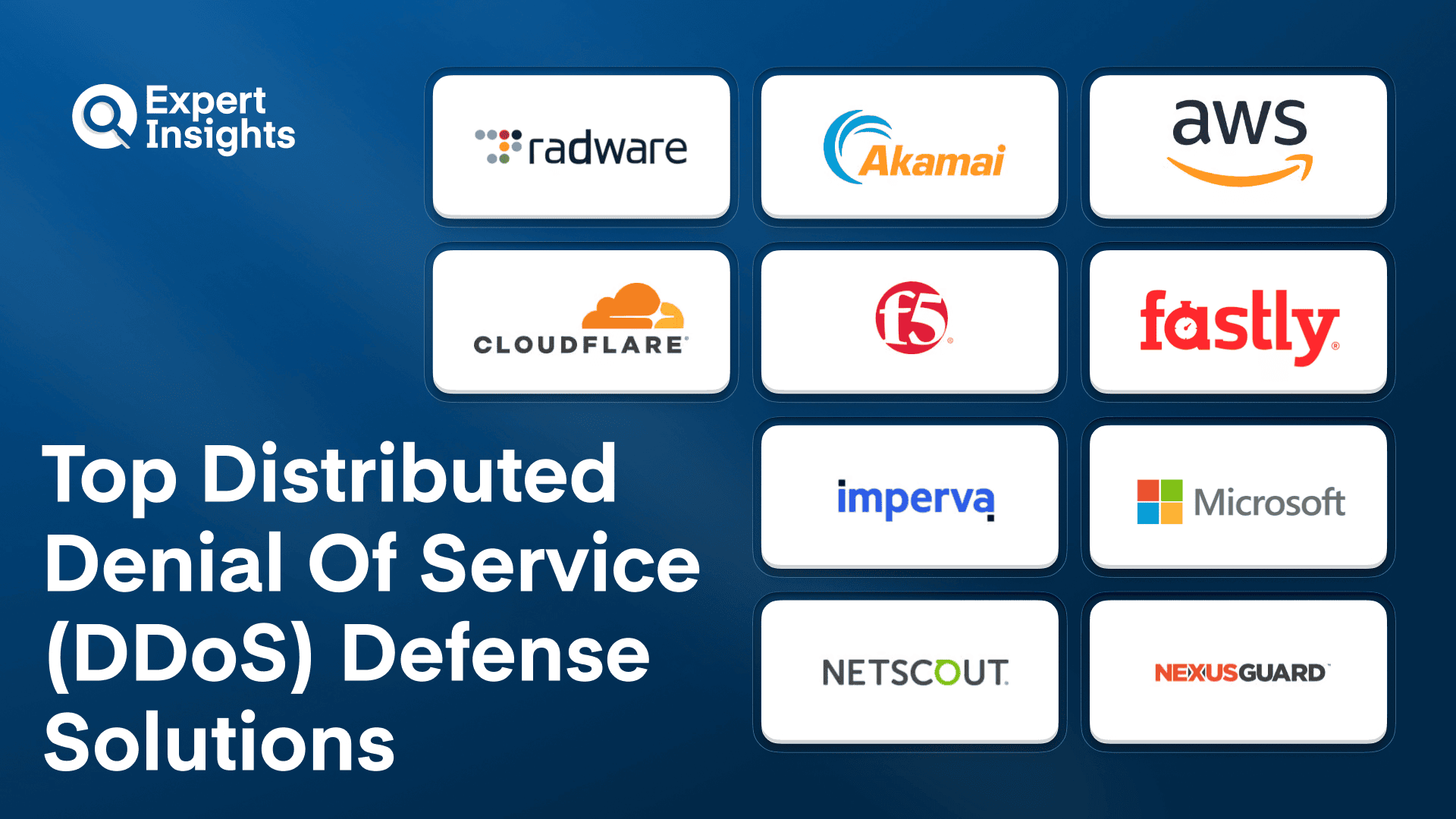
To establish a definitive ranking, our investigative desk evaluated dozens of enterprise solutions against three primary pillars: Mitigation Capacity (Tbps), Time-to-Mitigation (Speed), and Enterprise Cost Efficiency. Below is the comprehensive breakdown of the elite tier-1 platforms dominating the 2026 market.
1. Cloudflare Magic Transit
Cloudflare remains the undisputed market leader in global edge architecture. By integrating Layer 3 through Layer 7 protections into a unified Anycast network boasting over 300 Tbps of total capacity, Cloudflare successfully absorbs multi-vector 30 Tbps attacks without breaking a sweat. Its autonomous machine-learning engine analyzes traffic anomalies at the packet level, neutralizing threats in under a single millisecond. While premium tiers command significant capital outlay, the ROI for Fortune 500 enterprises lies in its unmatched uptime guarantees and seamless API-driven infrastructure scalability.
2. AWS Shield Advanced
For organizations deeply entrenched in cloud-native AWS environments, AWS Shield Advanced is the gold standard for risk mitigation. Seamlessly integrated with Amazon Route 53, CloudFront, and Elastic Load Balancing, Shield Advanced provides comprehensive protection against volumetric, protocol, and application-layer attacks. A standout feature for corporate finance teams is its cost-protection policy, which reimburses customers for scaling costs incurred during mitigated DDoS attacks. Its tight integration with AWS WAF allows for granular, custom rule deployment tailored to complex cloud compute architectures.
3. Akamai Prolexic
Akamai brings carrier-grade defense to the enterprise table. Built on one of the world's most robust distributed scrubbing networks, Prolexic specializes in protecting complex hybrid and multi-cloud environments. Its standout differentiator is its SLA-backed mitigation time of zero seconds for pre-configured proactive services. While Akamai's pricing model targets upper-tier enterprise clients, its ability to maintain pristine application performance during massive volumetric floods makes it a preferred choice for global banking institutions and media conglomerates.
4. Microsoft Azure DDoS Protection
Leveraging Microsoft’s massive global backbone, Azure DDoS Protection is tightly coupled with Virtual Networks (VNets). It utilizes continuous monitoring and adaptive tuning algorithms that learn normal traffic patterns and dynamically adjust mitigation thresholds. For enterprises running hybrid workloads across Azure and on-premise data centers, Microsoft offers robust telemetry, integration with Microsoft Sentinel for advanced security orchestration, and predictable tier-based pricing that aligns well with enterprise capital allocation strategies.
5. Google Cloud Armor
Google Cloud Armor harnesses the exact same infrastructure Google uses to protect its own consumer-facing properties against massive-scale attacks. Featuring advanced adaptive protection, Cloud Armor automatically detects volumetric anomalies and generates custom WAF rules to block malicious traffic at the edge. Its integration with Google Cloud’s global load balancing makes it exceptionally fast, while its usage-based pricing structure appeals to fast-growing tech companies prioritizing operational agility.
6. Radware DefensePro
Radware bridges the gap between hardware appliance reliability and cloud-based agility. For enterprises requiring on-premise or hybrid DDoS mitigation alongside cloud scrubbing, DefensePro utilizes patented behavioral-based heuristics to block zero-day attacks and encrypted floods without introducing latency. Its integration with Radware's Cloud DDoS Protection Service provides a formidable hybrid defense mechanism favored by telecommunications providers and enterprise data centers.
7. Imperva Cloud DDoS Protection
Imperva offers robust, always-on protection with a guaranteed 3-second mitigation SLA. Its focus on application-layer security ensures that sophisticated SQL injections, credential stuffing, and volumetric floods hidden within legitimate HTTPS traffic are neutralized simultaneously. Imperva’s global network capacity easily absorbs extreme spikes, and its transparent reporting dashboards provide the compliance and audit-ready metrics demanded by heavily regulated industries.
8. Netscout Arbor Cloud
Derived from deep visibility into global internet traffic via ASERT (Arbor Security Engineering & Response Team), Netscout delivers unparalleled threat intelligence. Arbor Cloud combines on-premise hardware appliances with cloud-based scrubbing centers to provide a hybrid defense architecture. It excels at detecting and mitigating complex, multi-vector attacks that bypass simple rate-limiting filters, making it a staple in enterprise security operations centers (SOCs).
9. F5 Distributed Cloud DDoS Mitigation
F5 has successfully transitioned its legacy application delivery expertise into a robust cloud-native security platform. F5 Distributed Cloud provides high-performance Layer 3 to 7 protection distributed across a high-capacity global edge network. Its primary strength lies in its ability to protect distributed applications across multi-cloud environments while maintaining strict adherence to corporate compliance policies and regulatory frameworks.
10. Fortinet FortiDDoS
Fortinet rounds out our top ten with an ASIC-accelerated DDoS mitigation appliance designed for high-throughput enterprise networks. By shifting traffic inspection to dedicated hardware silicon, FortiDDoS analyzes thousands of behavioral metrics in real time without incurring the latency penalties associated with software-based processing. It represents a cost-effective, high-performance solution for organizations maintaining heavy on-premise infrastructure footprints.
Verified Data & Metrics Breakdown
To contextualize the technical capabilities and financial positioning of these market leaders, the following matrix compares the core performance indicators driving enterprise purchasing decisions in 2026:
| Service Provider | Global Capacity (Tbps) | Mitigation Speed (TTM) | Primary Deployment Model | Target Enterprise Segment |
|---|---|---|---|---|
| Cloudflare Magic Transit | 300+ Tbps | < 1 Millisecond | Cloud-Native Edge (Anycast) | Fortune 500 / Global SaaS |
| AWS Shield Advanced | 230+ Tbps | Real-Time (Automated) | Native Cloud Integration | AWS-Centric Enterprises |
| Akamai Prolexic | 200+ Tbps | 0 Seconds (Proactive SLA) | Global Scrubbing Centers | Banking & Media Giants |
| Microsoft Azure DDoS | 180+ Tbps | Sub-Second | Cloud-Native VNet | Enterprise Hybrid Clouds |
| Google Cloud Armor | 150+ Tbps | Real-Time | Edge / Global Load Balancer | Digital-Native & Tech |
| Radware DefensePro | 120+ Tbps | < 2 Seconds | Hybrid / Appliance + Cloud | Telecom & Large Data Centers |
| Imperva Cloud DDoS | 100+ Tbps | < 3 Seconds SLA | Cloud Scrubbing Network | E-Commerce & Regulated Sectors |
| Netscout Arbor Cloud | 140+ Tbps | < 5 Seconds | Hybrid (Hardware + Cloud) | Enterprise SOCs / ISPs |
| F5 Distributed Cloud | 110+ Tbps | Real-Time | Multi-Cloud Edge | Enterprise Multi-Cloud |
| Fortinet FortiDDoS | 90+ Tbps (ASIC) | Sub-Millisecond (Hardware) | On-Premise / Appliance | Enterprise Data Centers |
Industry & Market Implications: Winners, Losers, and Economic Realities
The escalation of threat vectors toward the 30 Tbps mark has triggered profound structural shifts across the enterprise technology sector. The economic ramifications extend far beyond cybersecurity budgets, directly impacting corporate valuation multiples and capital expenditure cycles.
The Winners: Cloud-Native Edge Dominance
Providers possessing massive, privately owned Anycast scrubbing networks—most notably Cloudflare, Akamai, and AWS—are capturing outsized market share. These platforms benefit from immense economies of scale. Because their infrastructure handles both standard content delivery and threat mitigation, they can absorb the staggering capital expenditures required to maintain 300+ Tbps networks while offering competitive unit economics to enterprise clients.
The Losers: Legacy Hardware Obsolescence
Traditional hardware vendors that relied exclusively on on-premise scrubbing boxes without robust cloud-backed scrubbing partnerships are facing severe revenue contraction. When an enterprise is hit with a volumetric flood exceeding 10 Tbps, local data center pipes saturate instantly. Consequently, physical appliances sitting inside a corporate perimeter are rendered powerless before the malicious traffic ever reaches the building. Companies failing to pivot toward hybrid or fully cloud-native architectures are experiencing rapid customer churn.
Broader Economic Impact
From an investor relations and risk mitigation perspective, robust DDoS protection is now a mandatory line item in M&A due diligence. Private equity firms and venture capital investors routinely audit a target company’s resilience against volumetric extortion before finalizing valuations. A single high-profile outage resulting from inadequate DDoS preparedness can depress an acquisition valuation by double-digit percentages. Therefore, capital allocation toward Tier-1 DDoS defense is recognized not as a cost center, but as vital insurance protecting shareholder equity and market liquidity.
Frequently Asked Questions (People Also Ask)
1. How do modern DDoS protection services successfully mitigate a 30 Tbps attack?
Modern services neutralize 30 Tbps floods by leveraging globally distributed Anycast networks. Instead of absorbing the traffic at a single origin server, the attack payload is fractured and routed across hundreds of edge scrubbing centers worldwide. Machine learning algorithms analyze packet headers and behavioral signatures in real time, dropping malicious traffic at the network edge (Layer 3/4) and utilizing advanced WAF heuristics for application-layer (Layer 7) threats, allowing legitimate user traffic to pass through uninterrupted.
2. What is the difference between always-on and on-demand DDoS protection?
Always-on protection inspects and mitigates traffic continuously, ensuring zero downtime and instant reaction times, though it typically carries a higher recurring subscription cost. On-demand protection remains dormant until a traffic anomaly is detected, at which point BGP (Border Gateway Protocol) routing diverts traffic to a scrubbing center. While on-demand solutions are often more cost-effective for smaller organizations, they introduce a brief window of vulnerability during the routing switchover.
3. How do DDoS attacks impact enterprise valuation and investor relations?
Unplanned downtime caused by successful DDoS attacks directly damages corporate revenue, breaches customer SLAs, and erodes brand trust. In the context of M&A activity and public market valuations, recurring network instability signals poor operational maturity and inadequate risk management. Institutional investors increasingly factor cybersecurity resilience and DDoS mitigation capabilities into their fundamental equity valuation models.
4. Are cloud-native DDoS solutions compliant with international data privacy regulations?
Leading enterprise DDoS providers ensure strict compliance with global regulatory frameworks such as GDPR, CCPA, and regional data residency mandates. They achieve this by utilizing regional scrubbing centers that process traffic locally without persistently storing sensitive payload data, ensuring that threat mitigation does not violate cross-border data transfer laws.
Future Outlook: What Comes Next in Enterprise Defense
As we look toward the remainder of 2026 and into 2027, the threat landscape will continue to evolve in tandem with advancements in artificial intelligence. Threat actors are increasingly deploying autonomous, generative-AI-driven botnets capable of mutating attack vectors dynamically in response to defensive countermeasures. In response, cybersecurity leaders must adopt predictive, AI-orchestrated defense systems that anticipate attacks before traditional signatures are triggered.
Key milestones to watch include the mainstream adoption of post-quantum cryptography to secure signaling protocols against quantum decryption, and deeper integration between DDoS scrubbing networks and automated Zero Trust Architecture (ZTA) frameworks. For executives and board members, maintaining digital resilience requires continuous capital reinvestment, rigorous vendor evaluation, and an unyielding commitment to infrastructure scalability in an increasingly volatile digital economy.