As the digital economy scales to unprecedented heights, the threat matrix facing global corporate infrastructure has undergone a violent evolution. According to primary wire intelligence from CyberSecurityNews, enterprise security architecture is no longer merely tested by volume; it is being aggressively stress-tested by weaponized botnets capable of unleashing staggering volumetric attacks. The defining cybersecurity milestone of 2026 arrived when next-generation mitigation platforms successfully neutralized a record-shattering 30 Tbps Distributed Denial-of-Service (DDoS) flood. In an era where downtime directly pulverizes equity value, enterprise ROI and business continuity hinge entirely on selecting the right cloud compute architecture and mitigation partner.
For Chief Information Security Officers (CISOs), Chief Technology Officers (CTOs), and board-level risk committees, capital allocation toward robust DDoS protection is no longer viewed as an auxiliary operational expense. Instead, it is a foundational pillar of risk mitigation and regulatory compliance. As malicious actors leverage artificial intelligence, decentralized proxy networks, and compromised IoT fleets, enterprise risk management requires absolute precision. Below is our definitive, comprehensive investigative breakdown of the top 10 best DDoS protection services of 2026, rigorously scored and evaluated across global scrubbing capacity, time-to-mitigation speed, and total cost of ownership.
Executive Takeaways
Test Our Free AI & Tech Utilities Suite
Calculate LLM API token costs, analyze article dwell-time, or simulate tech DCA returns.
- The 30 Tbps Benchmark: The 2026 threat landscape crossed an inflection point, with elite mitigation engines successfully scrubbing record-breaking 30 Tbps volumetric floods without inducing service latency.
- Economic Stakes: Unmitigated downtime erodes enterprise valuation multiples and market liquidity; top-tier defense is now a core requirement for institutional investor confidence and regulatory compliance.
- Performance Divergence: While legacy providers struggle with sophisticated application-layer (Layer 7) vector shifts, modern edge-native scrubbing networks leverage predictive AI to achieve sub-second time-to-mitigation.
- Strategic Cost Optimization: Pricing models have pivoted from rigid pay-per-gigabit schemas to consumption-based enterprise licensing, fundamentally optimizing infrastructure scalability and total cost of ownership.
The 2026 Threat Landscape: Catalytic Events and Architectural Shifts
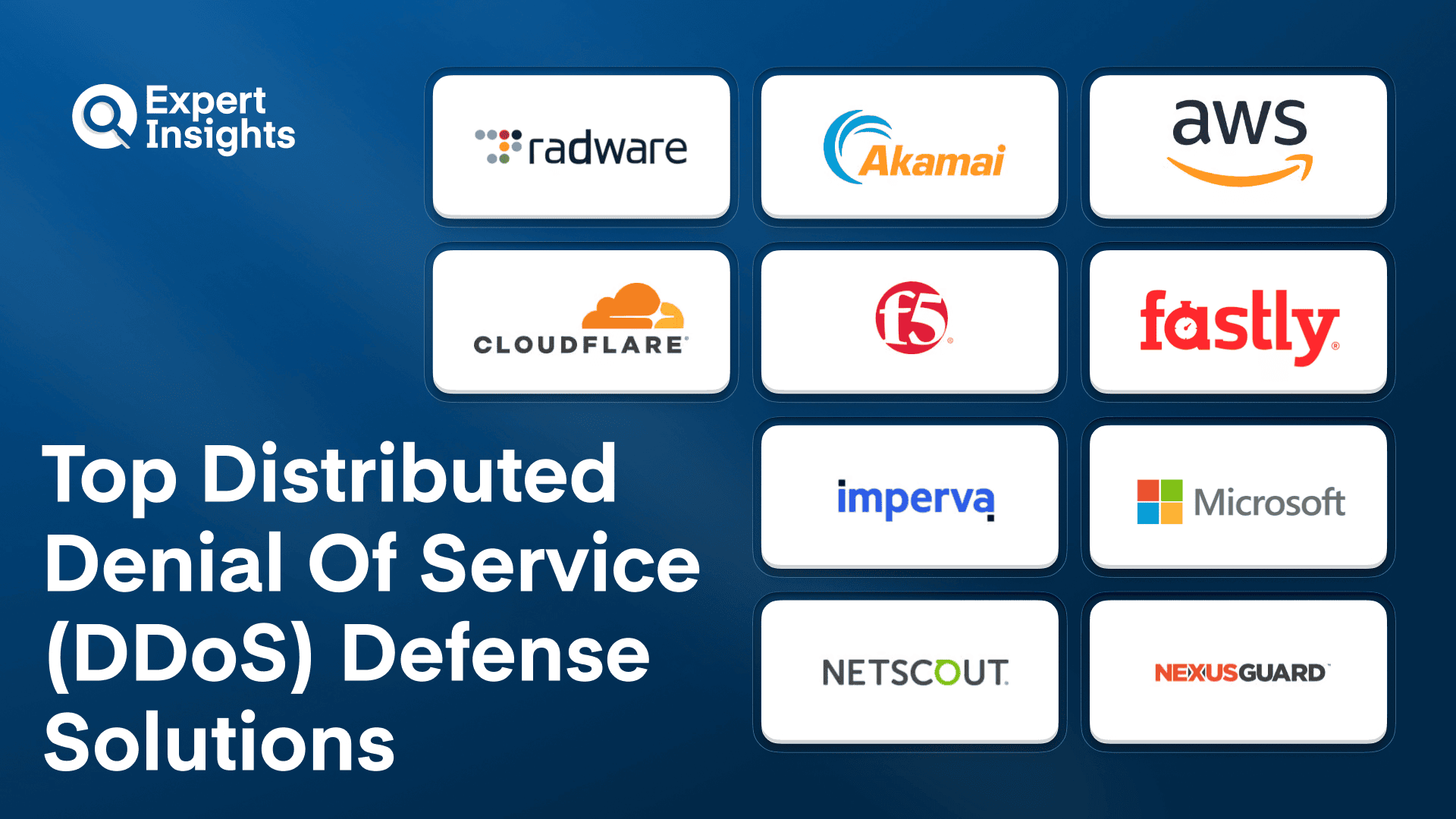
The escalation of cyber conflict to the 30 Tbps threshold marks a profound structural change in global network security. Historically, volumetric attacks relied on reflection and amplification techniques targeting network-layer (Layer 3 and Layer 4) infrastructure. However, the attacks documented throughout early 2026 represent a hybrid breed of threat—combining volumetric brute force with hyper-targeted, multi-vector application-layer onslaughts designed to exhaust backend database connections while simultaneously blinding traditional monitoring tools.
This catalytic shift has forced a massive reallocation of capital across the tech and financial sectors. In boardrooms from Wall Street to London's financial district, executives recognize that a single hour of systemic outage can trigger cascading liquidity failures, regulatory scrutiny, and catastrophic brand erosion. Consequently, the criteria for evaluating DDoS protection services have evolved. Procurement decisions now prioritize global network edge capacity, Anycast routing efficiency, behavioral machine-learning scrubbing algorithms, and seamless integration with existing SIEM (Security Information and Event Management) pipelines.
To navigate this high-stakes environment, organizations must look beyond marketing claims and evaluate providers based on empirical telemetry, scrubbing center (PoP) density, and proven resilience under extreme load conditions. The following analysis ranks the industry leaders shaping the 2026 defense architecture.
Comparative Analysis: The Top 10 DDoS Protection Services of 2026
| Provider | Scrubbing Capacity | Time-to-Mitigation | Pricing Model | Best Suited For |
|---|---|---|---|---|
| Cloudflare Enterprise | 35+ Tbps Anycast | Sub-second (Instant) | Consumption / Flat Enterprise Tier | Global Enterprises & SaaS Platforms |
| AWS Shield Advanced | Integrated AWS Backbone | Automated / Real-time | Monthly Retainer + Data Transfer | Cloud-Native AWS Environments |
| Akamai Prolexic | 20+ Tbps Dedicated | Immediate (< 1 sec) | Custom Enterprise Contract | Financial Services & Global Banking |
| Microsoft Azure DDoS Protection | Integrated Azure Backbone | Automated < 30 seconds | Protected Resource + Consumption | Enterprise Hybrid Cloud Ecosystems |
| Imperva Cloud DDoS | 10+ Tbps Global Edge | < 3 seconds | Tiered Subscription | E-Commerce & API-Driven Businesses |
| Radware Cloud DDoS Protection | 12+ Tbps Hybrid Scrubbing | Behavioral Real-Time | Flexible SaaS & Managed Service | Enterprise Telecommunications & ISPs |
| Google Cloud Armor | Global Google Network Scale | Instantaneous | Tiered Usage-Based | GCP-Centric Architectures & Media |
| F5 Distributed Cloud Defense | 8+ Tbps Global Edge | Real-Time API Inspection | Module-Based Enterprise Licensing | Complex Enterprise Application Stacks |
| Nexusguard | 7+ Tbps Specialized Scrubbing | Sub-second | Managed Service Provider Model | Communications Service Providers (CSPs) |
| DOSarrest | 5+ Tbps High-Performance | Immediate Routing | Predictable Fixed Pricing | Mid-to-Large Enterprises Seeking High-Touch Support |
Deep-Dive Evaluation: Market Leaders and Technical Performance
Analyzing the top contenders reveals distinct operational philosophies. Cloudflare Enterprise remains the undisputed heavyweight for raw edge scale, routinely handling the largest volumetric anomalies on record. Its distributed Anycast architecture absorbs attacks at the absolute periphery of the internet, ensuring that malicious traffic never reaches origin infrastructure. This makes it an essential asset for high-frequency trading platforms and global news conglomerates.
Meanwhile, AWS Shield Advanced and Microsoft Azure DDoS Protection dominate cloud-native deployments. For organizations deeply entrenched in hyper-scaler ecosystems, these services offer zero-latency integration with native Web Application Firewalls (WAF), load balancers, and monitoring dashboards. However, their cost structures require careful financial modeling, as egress data fees during prolonged mitigation campaigns can introduce budget volatility.
For regulated financial institutions requiring guaranteed SLA uptime and dedicated scrubbing infrastructure, Akamai Prolexic remains the gold standard. Akamai’s deep network integration and high-touch incident response teams provide the exact risk mitigation posture demanded by institutional compliance officers and central banking regulators.
Industry & Market Implications: Who Wins and Who Loses?
The validation of 30 Tbps mitigation capabilities fundamentally alters the economics of cyber warfare. For malicious botnet operators, the cost of mounting devastating attacks continues to drop, driven by automated infrastructure-as-a-service (IaaS) criminal syndicates. Conversely, the cost barrier to entry for robust corporate defense is shifting through AI-driven automation, which reduces the need for expensive, manual human intervention during massive security events.
The Winners: Advanced cybersecurity vendors boasting integrated, multi-layered edge architectures are experiencing unprecedented capital inflows and valuation expansion. Furthermore, managed security service providers (MSSPs) that bridge the talent gap for mid-market enterprises are capturing substantial market share as internal IT departments struggle with specialized threat intelligence.
The Losers: Organizations relying on legacy, on-premise hardware appliances (such as dedicated physical scrubbing boxes) are finding themselves dangerously exposed. Static hardware cannot scale dynamically to absorb multi-terabit floods without incurring severe capital expenditures and catastrophic single-point-of-failure risks. Additionally, hosting providers lacking native, carrier-grade network filtering are rapidly losing enterprise clients who demand absolute resilience.
Frequently Asked Questions (People Also Ask)
What is a volumetric DDoS attack, and how did services mitigate 30 Tbps in 2026?
A volumetric DDoS attack attempts to consume the entire bandwidth of a target network or service by flooding it with an immense volume of data traffic. In 2026, top-tier services successfully neutralized 30 Tbps floods by distributing the incoming traffic across massive global Anycast networks, utilizing advanced machine-learning algorithms at the network edge to instantly separate legitimate user packets from malicious botnet signatures without dropping legitimate connections.
How does cloud-native DDoS protection compare to dedicated hardware scrubbing centers?
Cloud-native protection services leverage hyperscale global networks and software-defined routing to absorb and filter traffic dynamically at the edge. This provides virtually limitless scalability and eliminates single points of failure. In contrast, dedicated hardware appliances installed on-premise face physical bandwidth limits and struggle to scale cost-effectively against modern multi-terabit attacks.
What factors drive the total cost of ownership (TCO) for enterprise DDoS solutions?
TCO is influenced by several variables: base subscription retainers, data transfer/egress fees incurred during an active mitigation campaign, professional managed services support fees, and internal resource allocation required for configuration and incident management. Selecting a predictable, consumption-optimized pricing model is critical for maintaining financial predictability.
Is application-layer (Layer 7) protection bundled with volumetric network defense?
While leading providers integrate both Layer 3/4 volumetric defense and Layer 7 WAF protection into a unified platform, many legacy or budget vendors treat them as separate modules. Enterprise buyers must verify that their chosen provider offers cohesive, simultaneous mitigation across all network layers to prevent sophisticated, multi-vector blending attacks from bypassing perimeter defenses.
Future Outlook: What Comes Next in Enterprise Defense
As we look past 2026, the convergence of artificial intelligence, 6G network rollouts, and the exponential expansion of connected IoT devices will continue to reshape the threat landscape. Industry analysts project that volumetric attacks will soon test the 50 Tbps barrier, driven by generative AI models optimized for automated network reconnaissance and dynamic botnet orchestration.
For corporate leadership, the imperative is clear: cybersecurity architecture must transition from reactive defense to proactive, AI-driven resilience. Organizations that fail to audit their infrastructure scalability, partner with Tier-1 mitigation providers, and allocate sufficient capital to risk mitigation risk severe financial penalties, operational paralysis, and irrecoverable reputational damage. In the modern economy, digital survival belongs exclusively to the architecturally fortified.