

Executive Takeaways
- The $4,000 Threshold Breached: Spot gold fell below the historic $4,000-per-ounce mark as a cascading global equity market selloff triggered a desperate scramble for cash.
- Systemic Liquidity Squeeze: Institutional asset managers were forced to liquidate profitable safe-haven bullion holdings to cover severe margin calls and equity market losses.
- Macroeconomic Catalysts: The sudden unwinding of the Japanese Yen carry trade compounded volatility, forcing leveraged funds to dump risk-off assets to meet immediate capital requirements.
- Capital Allocation Paradigm Shift: Corporate treasuries and institutional allocators are re-evaluating risk mitigation strategies as traditional correlation models between equities and precious metals temporarily break down.
LONDON & NEW YORK — In a striking demonstration of forced institutional deleveraging, spot gold prices briefly breached critical psychological support below the $4,000-per-ounce threshold this week. According to market data from Equiti Global, the sudden downward fracture was not driven by a structural reassessment of inflation or fiat currency devaluation, but rather by an acute, systemic liquidity squeeze originating in the global equity markets.
As broad-based stock market selloffs intensified across Wall Street, European bourses, and Asian exchanges, leveraged institutional portfolios faced severe collateral shortfalls. In times of severe market stress, investment houses frequently sell what they can, rather than what they want to. Consequently, institutional investors turned to their most liquid, appreciating asset class—gold—to raise immediate cash, triggering a cascading wave of programmatic stop-loss executions that temporarily dragged the precious metal beneath the historic $4,000 barrier.
Anatomy of a Liquidity Crisis: How Equity Stress Weaponized Safe-Haven Assets
Test Our Free AI & Tech Utilities Suite
Calculate LLM API token costs, analyze article dwell-time, or simulate tech DCA returns.
To understand how gold—the ultimate historical store of value—found itself swept up in an equity-driven liquidation vortex, financial analysts must examine the mechanics of modern multi-asset portfolio management. Over the preceding quarters, institutional capital allocators had built significant long positions in gold as a hedge against persistent macroeconomic volatility, geopolitical friction, and fiscal expansion.
However, when equity valuation multiples compressed rapidly amid disappointing corporate earnings and tightening financial conditions, quantitative hedge funds and leveraged trading desks experienced acute margin pressure. Risk management protocols dictated immediate capital preservation and debt service, forcing traders to liquidate winning positions. Because gold markets remained deep, transparent, and continuously traded compared to illiquid private assets or frozen credit tranches, bullion became the primary ATM for margin clerks.
"When systemic liquidity evaporates, correlation tends toward one," noted a senior head of commodities trading at a major London-based clearing bank. "Portfolios experiencing heavy drawdowns in equity futures and corporate credit must rebalance aggregate risk limits instantaneously. Gold wasn't sold because investors lost faith in the asset; it was sold because it represented unencumbered capital in a market demanding immediate cash settlement."
The Yen Carry Trade Unwind and Bond Market Dynamics
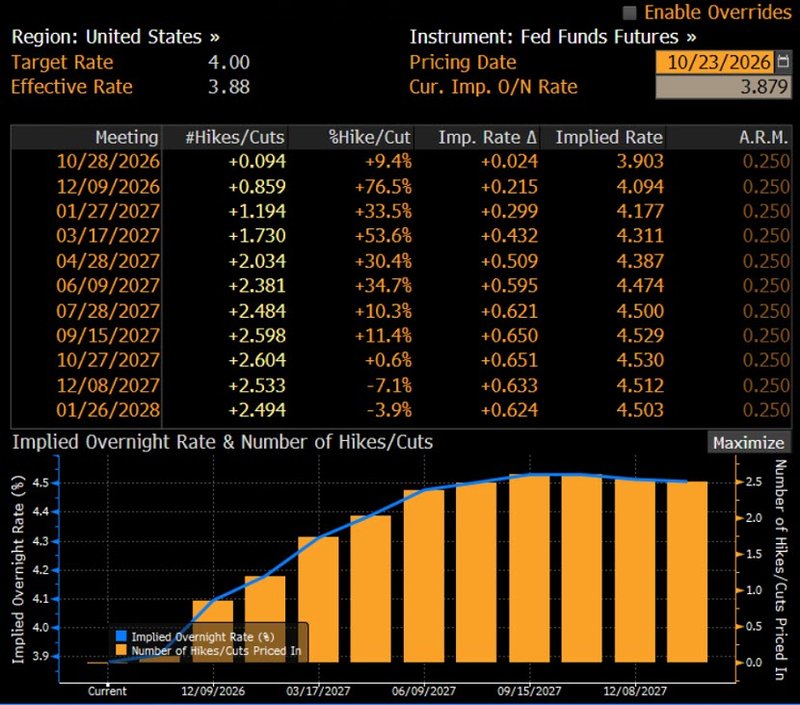
Compounding the equity market rout was the sudden resurgence of the Japanese Yen carry trade unwind. For years, institutional investors utilized low-yielding yen borrowings to fund higher-yielding global equities and commodities. As the Bank of Japan signaled monetary policy normalization and the currency strengthened sharply, leveraged players were forced into rapid position reversals.
This forced unwinding drained billions of dollars in daily liquidity from global financial architecture. Concurrently, bond market dynamics played a critical tug-of-war with precious metals. Elevated sovereign yields offered stiff competition for non-yielding bullion, adding further downward pressure as fixed-income securities recaptured institutional capital looking for guaranteed real returns.
As capital allocation models adjusted to higher-for-longer interest rate realities, algorithmic trading systems detected the breakdown of standard technical levels, amplifying the downward momentum as trailing stop-loss orders below $4,000 were systematically triggered.
Market Metrics & Liquidity Breakdown
The following data breakdown outlines the macro indicators, asset movements, and market pressures surrounding the $4,000 gold breach:
| Asset / Metric | Pre-Selloff Level | Trough / Stress Level | Primary Driver |
|---|---|---|---|
| Spot Gold (XAU/USD) | $4,085 / oz | $3,982 / oz | Forced institutional liquidation & margin calls |
| Global Equities (MSCI World) | +12% YTD | -3.8% Weekly Drawdown | Valuation compression & earnings misses |
| USD/JPY Exchange Rate | 152.40 | 144.10 | Yen carry trade rapid unwinding |
| 10-Year US Treasury Yield | 4.15% | 4.32% | Flight to cash & term-premium repricing |
Industry & Market Implications: Winners and Losers
The sudden fracture of the $4,000 threshold has sent ripples across multiple sectors, fundamentally altering near-term corporate and investment strategies:
- Institutional Asset Managers & Hedge Funds (Mixed): Quantitative funds caught on the wrong side of the momentum shift experienced severe drawdowns. However, macro funds holding dry powder capitalized on the price dislocation to accumulate physical bullion at a discount.
- Mining Corporations & Producers (Short-Term Pressure): Senior gold mining equities suffered alongside the commodity as junior and intermediate producers faced short-term revenue repricing, though long-term all-in sustaining costs (AISC) remain highly profitable relative to historical baselines.
- Corporate Treasuries & Central Banks (Net Buyers): Central banks, particularly in emerging markets, viewed the sub-$4,000 dip as an attractive entry point for sovereign reserve accumulation, stepping in to absorb excess supply and establishing a firm price floor.
- Retail Investors & Wealth Managers: Physical coin and bar dealers reported a surge in retail buying volume, contrasting sharply with institutional deleveraging as retail buyers interpreted the dip as a temporary market aberration.
Frequently Asked Questions (People Also Ask)
Why did gold fall below $4,000 when it is supposed to be a safe-haven asset?
While gold is a primary safe-haven asset during geopolitical and inflationary crises, it is also highly liquid. During severe stock market crashes, institutional investors face acute margin calls and equity losses. Because gold can be sold instantly to raise cash, funds routinely liquidate profitable bullion holdings to cover losses in other parts of their portfolios, creating a temporary liquidity-driven selloff.
What role did the Yen carry trade play in the precious metals correction?
The rapid unwinding of the Japanese Yen carry trade forced leveraged global investors to liquidate risk assets to repay low-cost yen loans as the Japanese currency strengthened. This sudden drain on global market liquidity forced widespread selling across equities, bonds, and commodities, including gold.
Is the drop below $4,000 a sign of a structural bear market for gold?
Market analysts and macroeconomic strategists largely view the move as a liquidity-driven event rather than a structural shift in gold's fundamental thesis. Central bank accumulation, persistent geopolitical tensions, and global fiscal deficits continue to support long-term bullish valuations.
How do institutional risk managers handle sudden multi-asset liquidity crunches?
Institutional risk frameworks rely on real-time Value-at-Risk (VaR) models and automated margin calculations. When equity volatility spikes, risk parameters automatically dictate deleveraging across all liquid asset classes to maintain regulatory capital compliance and prevent systemic insolvency.
Future Outlook: Milestones and Strategic Positioning
Looking ahead, market participants are closely monitoring central bank liquidity injections, upcoming employment and inflation prints, and equity market stabilization. If major stock indices establish a durable bottom and liquidity pressures subside, gold is anticipated by most major banking desks to reclaim and consolidate above the $4,000 handle.
For corporate treasuries, family offices, and institutional investors, the episode serves as a vital stress test for portfolio risk mitigation frameworks. Ensuring adequate cash buffers and understanding cross-asset correlation breakdowns during systemic shocks will remain paramount as global markets navigate an era of heightened macroeconomic volatility.


