NEW YORK — In what promises to be one of the most consequential corporate restructuring events in modern healthcare history, CVS Health is actively exploring a historic breakup of its foundational pillars. According to senior industry sources and regulatory filings, the healthcare colossus is laying the groundwork to structurally separate its retail and pharmacy services operations from its insurance titan, Aetna, and its pharmacy benefit manager (PBM), Caremark. This seismic shift threatens to upend the pharmacy-services industry, forcing institutional investors, healthcare administrators, and policymakers to re-evaluate the viability of the vertically integrated healthcare model.
For years, Wall Street championed the mega-merger thesis, arguing that combining retail storefronts, insurance underwriting, and drug distribution under a single corporate umbrella would unlock unmatched operational efficiencies, capture margin leakage, and deliver superior enterprise ROI. However, persistent compression in pharmacy reimbursement rates, mounting regulatory scrutiny from the Federal Trade Commission (FTC), and the compounding friction of managing disparate legacy infrastructure architectures have fundamentally altered the calculus. As CVS Health navigates this critical juncture, the impending structural realignment serves as a stark reminder that even the most ambitious corporate architecture is vulnerable to macroeconomic pressures and shifting regulatory tides.
Executive Takeaways
- Structural Realignment: CVS Health is evaluating a breakup plan that would untangle its retail pharmacy operations from its high-margin Aetna insurance business and Caremark PBM division.
- Regulatory Pressures: Intensifying antitrust scrutiny, congressional probes into PBM pricing transparency, and state-level investigations have catalyzed the urgent need for risk mitigation and strategic portfolio optimization.
- Capital Allocation Shift: The potential spinoff aims to unlock hidden valuation multiples, restore market liquidity, and provide each independent entity with targeted capital allocation flexibility.
- Market Repercussions: The decision signals the potential death knell for the vertically integrated healthcare conglomerate model, setting a precedent for sector-wide corporate restructuring.
The Genesis of a Titan: How CVS Assembled Its Healthcare Monopoly
Test Our Free AI & Tech Utilities Suite
Calculate LLM API token costs, analyze article dwell-time, or simulate tech DCA returns.
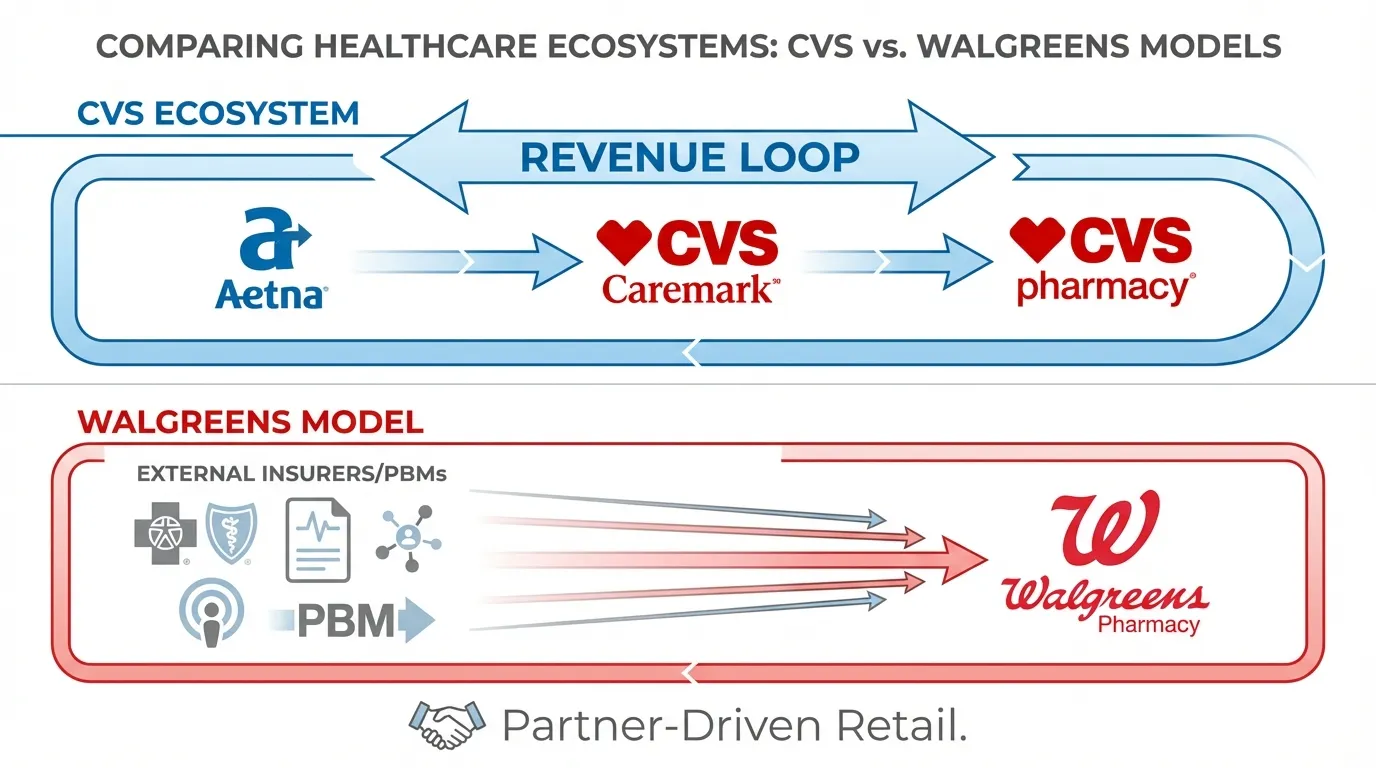
To understand the magnitude of the current restructuring talks, one must examine the audacious accumulation strategy that transformed CVS from a traditional neighborhood drug store chain into a formidable healthcare monolith. The transformation accelerated dramatically in December 2017, when CVS Health announced its definitive agreement to acquire Aetna for approximately $69 billion in cash and stock. At the time, executive leadership pitched the deal as a masterclass in infrastructure scalability and market disruption. The thesis was deceptively simple: by pairing Aetna’s massive health insurance subscriber base with CVS’s footprint of over 9,000 retail pharmacies and MinuteClinic locations, the company could curate a closed-loop healthcare ecosystem.
This vertical integration was further fortified by Caremark, one of the nation's largest pharmacy benefit managers. PBMs act as the vital middlemen in the American pharmaceutical supply chain, negotiating drug rebates with pharmaceutical manufacturers, establishing formularies, and reimbursing independent and chain pharmacies. By uniting the PBM, the payer, and the point of care, CVS Health executives believed they had engineered a self-sustaining financial engine capable of weathering cyclical downturns and delivering predictable, long-term enterprise growth.
Yet, the promise of seamless synergy routinely clashed with the harsh realities of execution. Integrating disparate software systems, unifying corporate cultures, and aligning divergent compliance protocols proved to be an uphill battle. While the conglomerate generated staggering top-line revenue—pushing past $320 billion annually—investors increasingly punished the stock for margin compression within the retail pharmacy segment and rising medical loss ratios (MLRs) within the insurance division. The anticipated valuation multiples failed to materialize, leaving Wall Street analysts questioning whether the sprawling enterprise had simply become too complex to effectively manage.
Catalytic Events: What Triggered the Breaking Point?
The decision to evaluate a structural split did not occur in a vacuum. A confluence of severe regulatory headwinds, margin erosion, and activist investor pressure forced the board of directors to reconsider the fundamental architecture of the firm. Over the past twenty-four months, the regulatory environment surrounding PBMs and health insurers has grown profoundly hostile.
The Federal Trade Commission, under aggressive leadership, launched sweeping inquiries into the business practices of major PBMs—specifically targeting Caremark, along with competitors Express Scripts and OptumRx. Regulators and lawmakers from both sides of the aisle have scrutinized how PBMs negotiate rebates, structure drug formularies, and allegedly squeeze independent pharmacies out of network participation. The threat of sweeping federal legislation aimed at unbundling PBM services and mandating 100% rebate pass-throughs has introduced existential regulatory risk, making a proactive corporate reorganization an attractive mechanism for risk mitigation.
Simultaneously, the operational economics of retail pharmacy have deteriorated significantly. PBM reimbursement models, which often fail to keep pace with the rising acquisition costs of brand-name pharmaceuticals and generic drug price deflation, have turned traditional retail storefronts into low-margin, high-liability operations. Labor shortages among pharmacists, escalating wage demands, and the capital expenditure required to modernize legacy cloud compute architecture and secure sensitive Protected Health Information (PHI) further exacerbated financial strain.
Faced with these compounding challenges, executive leadership recognized that keeping Aetna and Caremark tethered to the capital-intensive, low-margin retail pharmacy footprint was weighing down the parent company's valuation. A surgical separation has thus emerged as the most viable path to unlock shareholder value and restore operational focus.
Financial Mechanics: Valuation, Capital Allocation, and Market Liquidity
Executing a corporate separation of this magnitude requires navigating complex financial engineering. Unwinding CVS Health into distinct entities involves untangling billions of dollars in shared debt, establishing independent credit ratings, and determining the appropriate capital allocation strategies for each newly minted corporate body.
From a valuation perspective, pure-play businesses historically command higher valuation multiples than sprawling conglomerates. Insurance enterprises like Aetna and high-margin service providers like Caremark typically trade at distinct price-to-earnings (P/E) multiples compared to retail-heavy operations burdened by substantial brick-and-mortar overhead. By spinning off the retail pharmacy business, institutional investors would no longer have to apply a "conglomerate discount" to the high-performing insurance and PBM segments.
| Business Segment | Core Revenue Driver | Primary Margin Pressure | Projected Strategic Outcome |
|---|---|---|---|
| Aetna (Insurance) | Commercial & Medicare Advantage Premiums | Rising Medical Loss Ratios (MLRs), Utilization Trends | Enhanced underwriting focus; optimized risk-adjusted capital reserves. |
| Caremark (PBM) | Rebate Management, Claim Processing Fees | Intensifying FTC Scrutiny, Pricing Transparency Laws | Greater operational agility; independent contract negotiation leverage. |
| Retail Pharmacy / Health Hubs | Prescription Dispensing, OTC Sales, Clinical Care | Reimbursement Compression, Labor Costs, Footprint Maintenance | Standalone cost-structure optimization; targeted digital health integration. |
Furthermore, market liquidity stands to benefit significantly. Independent equities trade with distinct investor bases. Dedicated healthcare and insurance funds that historically avoided CVS due to its retail exposure could flood into a standalone Aetna-Caremark entity, while value investors seeking stable retail dividend yields could target the pharmacy business. This realignment of capital markets optimizes liquidity and empowers executive management teams to execute M&A strategies tailored exclusively to their specific industry verticals.
Industry & Market Implications: Who Wins and Who Loses?
The reverberations of CVS Health’s planned breakup will be felt across the entire healthcare landscape, instantly altering competitive dynamics for payers, PBMs, traditional retailers, and digital health disruptors.
The Winners: Independent pharmacies and localized grocery-anchored drug store chains stand to benefit from a decentralized market. Without the heavy hand of a massive conglomerate controlling both insurance networks and pharmacy distribution, independent operators may find more balanced contractual terms. Additionally, specialized PBM competitors and pure-play health insurers gain a clearer regulatory and operational playing field, as the dominant player de-risks its corporate structure.
The Losers: Traditional proponents of the mega-merger thesis on Wall Street face a reckoning. The unravelling validates critics who argued that administrative bloat and cultural friction outweigh the theoretical benefits of vertical integration. Furthermore, lenders and bondholders holding legacy CVS debt may experience short-term volatility as rating agencies reassess the creditworthiness and debt-service obligations of the newly bifurcated entities.
Frequently Asked Questions (People Also Ask)
Why is CVS Health considering splitting its pharmacy business from Aetna and Caremark?
CVS Health is evaluating this structural separation to combat persistent margin compression in its retail division, optimize capital allocation, and unlock hidden valuation multiples. Additionally, escalating regulatory scrutiny from the FTC and Congress regarding vertical integration and PBM pricing practices has made a decentralized model increasingly attractive for risk mitigation and strategic agility.
What will happen to my prescriptions and insurance coverage if the split occurs?
For everyday consumers and patients, a corporate restructuring does not immediately disrupt day-to-day operations, prescription fills, or insurance coverage terms. Regulatory approvals for such a split take many months, and operational continuity is a top priority for corporate leadership to prevent member churn and revenue loss.
How does this impact the future of pharmacy benefit managers (PBMs) in the United States?
The potential untangling of Caremark from CVS retail signals a broader industry trend toward unbundling healthcare services. As federal lawmakers push for sweeping transparency laws, PBMs are facing immense pressure to reform rebate models, which may accelerate independent operations and reshape how drug pricing is negotiated nationwide.
When is the official separation expected to take place?
Because the initiative is currently in exploratory and preliminary evaluation stages, no formal timeline has been officially ratified by the board of directors. Any eventual transaction would require extensive regulatory reviews, shareholder approvals, and complex debt restructuring, likely spanning a multi-year execution horizon.
Future Outlook: Strategic Milestones to Watch
As this corporate drama unfolds, institutional stakeholders and market observers must monitor several critical leading indicators. First, official declarations from the CVS Health board of directors regarding the exact mechanism of the split—whether via a tax-free spinoff, a carve-out IPO, or a targeted asset sale—will dictate the immediate trajectory of the stock price.
Second, regulatory posture from the FTC and the Department of Justice will determine whether antitrust concerns complicate the restructuring. Finally, executive compensation realigned with operational metrics of the newly formed entities will signal management's true long-term conviction. What is definitively clear is that the era of the undisputed, monolithic healthcare conglomerate is facing its sternest test, and the outcome will rewrite the playbook for American healthcare delivery for decades to come.