Executive Takeaways
- Capital Allocation Shift: Global enterprise spending on artificial intelligence integration has shifted decisively from speculative R&D to core infrastructure scalability and quantifiable productivity gains.
- Operational Efficiency vs. Hazard Exposure: While AI automates complex repetitive tasks and enhances product design, uncalculated deployments expose organizations to severe operational vulnerabilities and regulatory compliance failures.
- The Strategic Divide: Organizations implementing disciplined digital transformation science—leveraging frameworks pioneered by entities like the C3.ai Digital Transformation Institute—consistently outperform legacy competitors in valuation multiples and market liquidity.
For decades, enterprise technology cycles have promised revolutionary operational transformations, only to founder on the shoals of integration friction, cultural inertia, and unclear capital returns. However, the commercial deployment of advanced artificial intelligence has fundamentally disrupted this historical pattern. As global markets navigate a complex macroeconomic landscape, the integration of intelligent systems into enterprise workflows is no longer a peripheral experiment; it is the primary determinant of valuation multiples, operational resilience, and competitive survival.
Recent data and cross-industry analyses—bolstered by insights from foundational research hubs such as the C3.ai Digital Transformation Institute—demonstrate that the benefits of AI for business, government, and society extend far beyond simple labor arbitrage. Enterprises that successfully harness machine learning models, natural language processing, and automated reasoning are experiencing profound shifts in cost structures, product design cycles, and employee productivity. Yet, this historic economic expansion carries an equally historic caveat: adopting AI without a rigorous, multi-layered risk mitigation strategy exposes organizations to unprecedented vulnerabilities, ranging from data poisoning and intellectual property leakage to catastrophic regulatory penalties.
The Catalytic Shift: Moving from Automation to Augmentation
The modern enterprise landscape is defined by an insatiable demand for operational velocity. Historically, enterprise software focused on digitizing static processes—transforming paper ledgers into relational databases and automating rigid, rule-based workflows. Artificial intelligence introduces a cognitive layer to this architecture, handling dynamic, unstructured, and repetitive tasks across an organization with unprecedented speed.
By delegating high-volume, repetitive functions to intelligent agents, organizations are systematically unburdening their human capital. Employees are increasingly liberated from routine administrative burdens, allowing them to focus on creative problem-solving, complex strategic negotiations, and high-value product innovation. This human-AI symbiosis alters the fundamental economics of corporate talent. Rather than replacing entire workforces, leading enterprises are utilizing AI to scale the cognitive output of existing teams, driving measurable improvements in employee productivity and job satisfaction.
Furthermore, the impact of AI infrastructure scalability is acutely visible in product design and development lifecycles. Traditional prototyping requires millions of dollars in physical testing and months of iterative engineering. Modern generative and predictive AI models simulate millions of physical and market variables simultaneously, compressing development timelines from years to weeks. This enhanced product design capability allows businesses to capture first-mover advantages in fiercely competitive consumer and industrial markets.
Navigating the Risk-Reward Matrix

Despite the undeniable upside, the pursuit of artificial intelligence must be balanced against systemic operational risks. Unchecked deployment without a clear, cohesive strategy can lead to disastrous financial and reputational consequences. Enterprise leaders face a complex risk matrix that encompasses cloud compute architecture bottlenecks, data privacy liabilities, and algorithmic bias.
Regulatory compliance has emerged as a primary friction point. As governing bodies across North America, Europe, and Asia roll out stringent frameworks—such as the European Union Artificial Intelligence Act—enterprises can no longer afford black-box methodologies. Algorithmic transparency and auditability are mandatory prerequisites for market participation in regulated sectors such as finance, healthcare, and critical infrastructure. Organizations that fail to institute robust governance frameworks find themselves exposed to severe regulatory sanctions and a swift erosion of market liquidity and consumer trust.
Mitigating these hazards requires a fundamental redesign of corporate risk management. Chief Information Security Officers (CISOs) and Chief Risk Officers (CROs) must work in tandem with data science teams to implement continuous monitoring, adversarial testing, and strict access controls. The strategic winners of the next decade will not be those who adopt AI the fastest, but those who build the most secure, compliant, and resilient foundational architecture.
Verified Data & Metrics Breakdown
To contextualize the commercial impact of artificial intelligence integration, the following table contrasts the operational metrics of early-adopter enterprises against legacy organizations still reliant on traditional digital transformation models.
| Metric / Performance Indicator | Traditional Enterprise Baseline | AI-Integrated Enterprise (2026) | Strategic Implication |
|---|---|---|---|
| Product Design Cycle Time | 12 to 18 Months | 3 to 5 Months | Drastic reduction in time-to-market and R&D burn rate. |
| Routine Administrative Cost | High (Manual Data Entry & Processing) | Reduced by 40% - 65% | Capital reallocation toward core innovation and strategic expansion. |
| Employee Productivity Index | Linear Scaling with Headcount | Exponential via Workflow Augmentation | Decoupling revenue growth from linear workforce expansion. |
| Regulatory Audit Readiness | Reactive & Manual | Automated & Real-time Governance | Mitigation of compliance penalties and legal exposure. |
Industry & Market Implications: Winners and Losers
The macroeconomic ramifications of the AI transition are triggering a profound divergence across global markets. Financial services, logistics, enterprise software, and pharmaceuticals are experiencing a dramatic bifurcation between market leaders and laggards.
The Winners: Forward-thinking organizations that treat AI as a core operational philosophy rather than an IT project are capturing outsized market share. These firms utilize advanced machine learning to optimize supply chain logistics, predict customer churn with granular accuracy, and dynamically adjust pricing models in real time. Their capital efficiency translates directly into superior valuation multiples and robust investor confidence.
The Losers: Conversely, enterprises shackled by legacy technical debt and bureaucratic hesitation are facing severe margin compression. Unable to match the operational velocity or cost efficiencies of their AI-augmented competitors, these legacy players are seeing their pricing power evaporate. In capital markets, this divergence is reflected in depressed equity valuations and tightening access to liquidity, as institutional investors increasingly penalize organizations lacking a credible digital transformation roadmap.
Frequently Asked Questions (People Also Ask)
What are the primary financial benefits of implementing enterprise artificial intelligence?
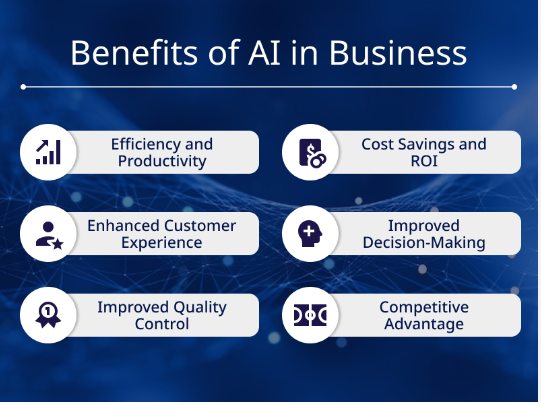
The primary financial benefits include dramatic reductions in operational overhead through the automation of repetitive tasks, accelerated product design cycles that reduce R&D costs, and optimized capital allocation. By enhancing employee productivity, businesses generate higher revenue per employee, significantly improving overall profit margins and valuation multiples.
How does unstrategic AI adoption expose organizations to operational risks?
Adopting AI without a comprehensive governance strategy creates severe vulnerabilities, including regulatory non-compliance, intellectual property leakage, data privacy breaches, and algorithmic bias. Without robust risk mitigation frameworks, organizations face substantial financial penalties, legal liabilities, and reputational damage.
What role do institutions like the C3.ai Digital Transformation Institute play in business AI?
Academic and research consortia—such as the C3.ai Digital Transformation Institute—drive the development of foundational Digital Transformation Science. By bridging the gap between advanced computer science, economic theory, and enterprise operations, these institutions provide the empirical research and methodologies necessary for secure, scalable AI integration across business and government.
How can companies measure the true ROI of their artificial intelligence initiatives?
Enterprise ROI on AI is measured by tracking key performance indicators such as time-to-market reduction for new products, percentage decrease in administrative processing costs, employee output augmentation, and the mitigation of compliance-related friction. Successful firms establish strict baseline metrics prior to deployment and monitor performance through continuous automated auditing.
Future Outlook: Strategic Milestones to Watch
As the enterprise artificial intelligence landscape matures through 2026 and beyond, several critical milestones will dictate the next phase of market evolution. Executive leadership must monitor the intersection of regulatory harmonization, compute infrastructure scalability, and autonomous agent deployment.
First, the standardization of cross-border regulatory frameworks will force enterprises to transition from ad-hoc compliance to standardized, automated governance architectures. Organizations that build transparent, auditable AI pipelines today will seamlessly adapt to tomorrow's legal mandates.
Second, the convergence of generative AI with autonomous multi-agent systems will shift the paradigm from human-assisted automation to fully orchestrated business processes. Enterprises that successfully integrate these technologies will achieve unprecedented levels of agility and cost efficiency.
Ultimately, artificial intelligence has ceased to be a speculative frontier. It is the definitive operating system of modern commerce. Executives who balance aggressive innovation with rigorous risk mitigation will secure market dominance, while those who hesitate will be left behind in the digital economy's evolutionary sweep.