By The Investigative Desk | Published by Special Arrangement with Wire Services
Trending Now — Comprehensive Analysis & Market Intelligence
Executive Takeaways
Test Our Free AI & Tech Utilities Suite
Calculate LLM API token costs, analyze article dwell-time, or simulate tech DCA returns.
- The Local Rebellion: Across key swing states and tech corridors, grassroots electorates used municipal referendums, zoning ballots, and local commissioner elections to effectively veto mega-datacenter developments.
- Grid Capacity Collisions: The primary catalyst driving voter pushback centers on soaring retail electricity rates, strained local power grids, and an imminent threat to residential energy reliability driven by surging AI compute architecture.
- Capital Allocation Shock: Hyperscale cloud providers and institutional real estate investors now face severe risk mitigation challenges, forcing a radical reevaluation of site selection, valuation multiples, and infrastructure scalability.
- Regulatory Compliance Pivots: Municipalities are rewriting zoning laws faster than tech giants can adapt, fundamentally altering the landscape for long-term enterprise ROI and digital infrastructure development.
The Catalytic Turning Point: When Digital Infrastructure Met Local Democracy
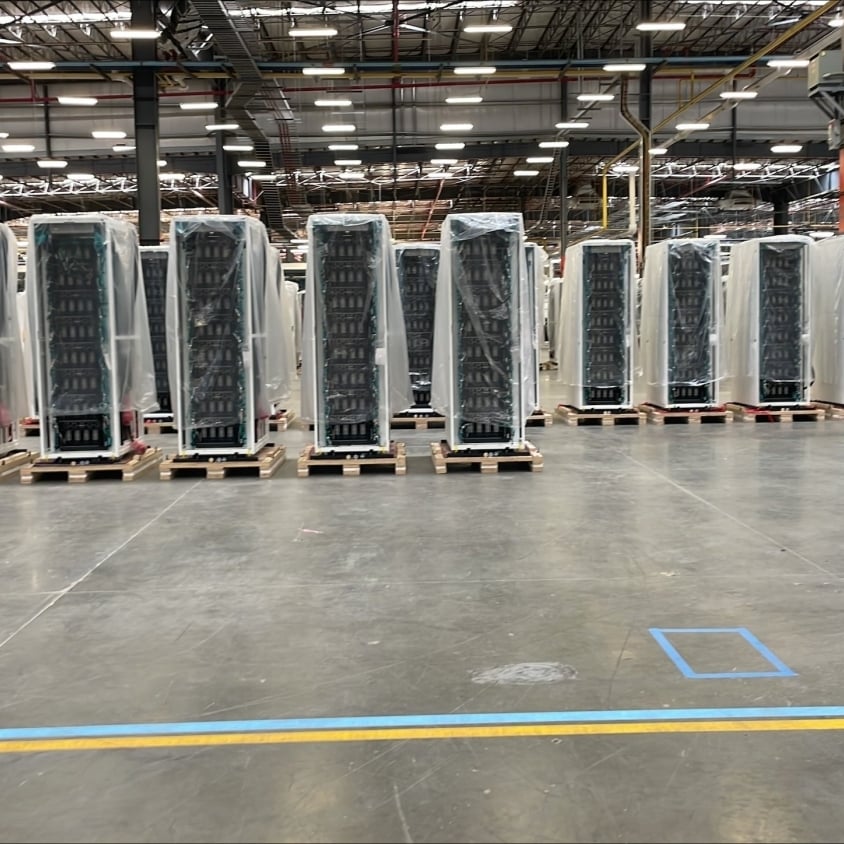
For the past decade, the rapid expansion of cloud compute architecture and generative artificial intelligence operated under a quiet, frictionless social contract. Hyperscalers—ranging from trillion-dollar tech conglomerates to specialized real estate investment trusts (REITs)—acquired sprawling tracts of semi-rural land, plugged directly into regional substations, and erected monolithic server farms with minimal public friction. Economic development boards welcomed the tax revenue, promising high-paying construction jobs and modest municipal windfalls.
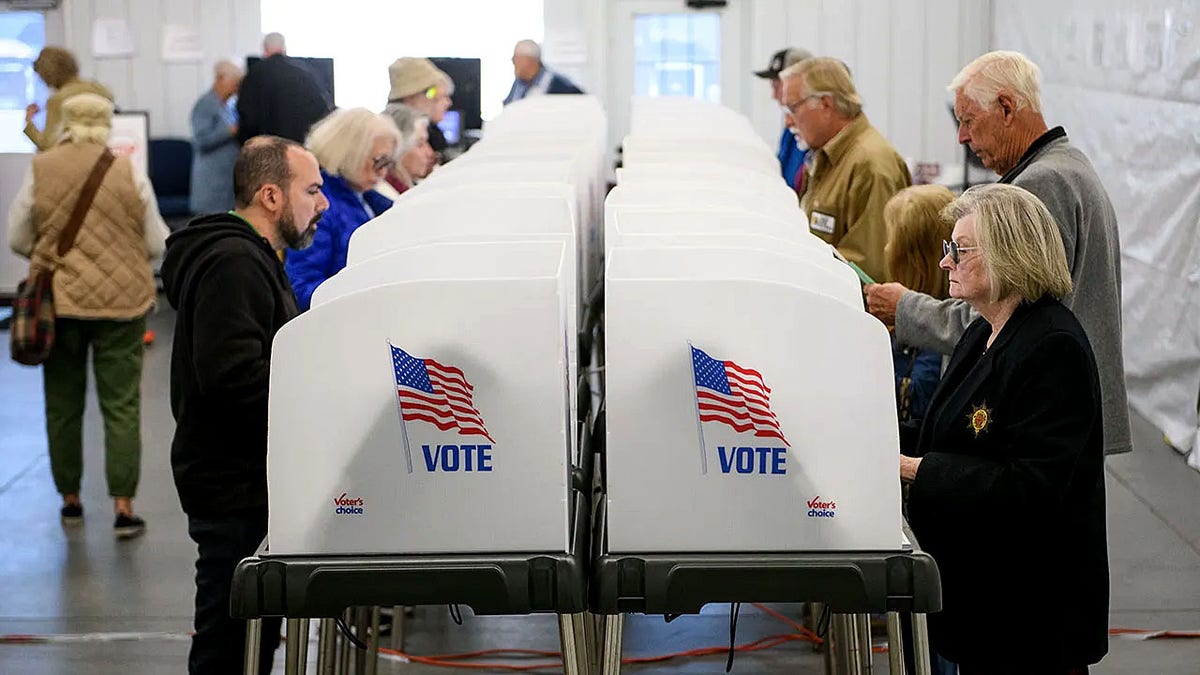
That quiet consensus has shattered. In the recent electoral cycle, datacenters were effectively placed on the ballot across multiple states, surfacing in county commissioner races, zoning referendums, and targeted bond measures. American voters, mobilized by concerns over hyper-inflationary utility bills, vanishing water tables, and industrial suburban blights, decisively rejected the unbridled expansion of Big Tech's physical footprint.
This unprecedented electoral pushback marks a historic inflection point. No longer viewed simply as clean, quiet server warehouses, datacenters are now recognized by local electorates as massive, resource-hogging industrial complexes. The collision between the insatiable power demands of Large Language Model (LLM) training and local community self-preservation has transformed digital infrastructure into one of the most volatile flashpoints in modern American politics.
Decoding the Backlash: Grid Stress, Water Scarcity, and the Cost of AI
To understand why voters pulled the emergency brake on datacenter expansion, one must examine the fundamental math governing modern cloud compute architecture. A single modern hyperscale campus can consume anywhere from 100 to upwards of 1,000 megawatts of continuous power—equivalent to the electrical draw of a mid-sized American city. Simultaneously, closed-loop and evaporative cooling systems routinely drain millions of gallons of municipal water daily.
In regions like Northern Virginia’s "Datacenter Alley," parts of suburban Atlanta, rural Arizona, and the outer rings of Dallas-Fort Worth, residents began receiving utility bills that reflected the hidden costs of this localized hyper-growth. Regional grid operators, scrambling to maintain baseline stability, approved massive new transmission line builds and fossil-fuel plant extensions, the costs of which were systematically socialized across residential ratepayer bases.
| Metric / Variable | Traditional Industrial Development | Modern AI Datacenter Campus | Voter / Community Impact |
|---|---|---|---|
| Power Consumption | 10 – 30 MW average | 100 – 1,000+ MW continuous | Substation strain & retail electricity rate hikes |
| Water Usage | Low-to-moderate industrial use | Millions of gallons/day (cooling) | Aquifer depletion & wastewater management friction |
| Permanent Job Creation | High labor-to-acre ratio | Ultra-low (often <50 technicians per facility) | Minimal local employment offset relative to footprint |
| Tax Revenue Realization | Steady property tax contributions | Heavy tax abatements/TIF districts | Initial strain on municipal services outstrips net yield |
Voters analyzed the ledger and identified a structural imbalance: massive capital allocation by tech giants yielding billions in valuation multiples, contrasted with localized negative externalities like humming generator noise, obstructed views, degraded air quality, and escalating utility bills. When given a direct mechanism via the ballot box to register their dissent, the electorate voted to stall the expansion.
Industry & Market Implications: Winners, Losers, and Capital Realignment
The sudden political rejection of datacenters sends shockwaves through global financial markets, forcing institutional asset managers and corporate strategists to overhaul their risk mitigation frameworks.
Who Wins?
- Alternative Energy & Microgrid Developers: Companies that can engineer off-grid, behind-the-meter power solutions (such as dedicated small modular nuclear reactors, localized solar-plus-storage, and geothermal arrays) suddenly possess unmatched pricing power.
- Brownfield Redevelopment Specialists: Real estate firms capable of retrofitting defunct heavy industrial sites—where zoning, electrical interconnects, and community acceptance are already established—will command premium valuations.
- Edge Computing Pioneers: Decentralized, smaller-scale edge architectures that reduce the need for monolithic, power-hungry mega-campuses stand to capture market share as centralized permitting grows increasingly hostile.
Who Loses?
- Greenfield Land Speculators: Investors who purchased agricultural acreage near major utility substations on the bet of rapid zoning conversions face catastrophic capital impairment.
- Traditional Hyperscale Real Estate Trusts: REITs heavily reliant on rapid municipal approvals for massive contiguous land parcels will experience elongated development timelines and depressed enterprise ROI.
- Pace-Dependent Cloud Providers: Tech giants whose AI infrastructure scaling roadmaps depend on uninterrupted access to cheap, abundant grid power face binding physical constraints on compute capacity growth.
Frequently Asked Questions (People Also Ask)
Why are voters suddenly rejecting datacenter developments?
Voters are pushing back primarily due to the unprecedented electrical and water demands of modern AI datacenters. As facilities scale into the gigawatt range, local residents face rising electricity bills, strained power grids, noise pollution, and threats to local water tables, all while receiving minimal permanent job creation in return.
How does this voter pushback affect tech stock valuations and AI growth?
If hyperscalers cannot secure reliable, low-cost power and expedited zoning approvals, their ability to scale compute architecture for large language models is restricted. This introduces bottlenecks that could compress valuation multiples for firms betting on unfettered AI deployment and infrastructure scalability.
Are datacenters completely banned, or are they being relocated?
Datacenters are not federally banned, but they are facing severe municipal friction. Rather than halting development entirely, the industry is being forced to pivot toward behind-the-meter power generation (such as pairing datacenters directly with nuclear or renewable microgrids) and brownfield industrial sites where community pushback is historically lower.
What role do utility companies play in this political backlash?
Utility companies find themselves caught between lucrative multi-million-dollar wholesale contracts with tech giants and angry residential ratepayers. As utilities attempt to recover the cost of grid upgrades and new generation assets, rising retail rates have served as the primary catalyst mobilizing voters at the ballot box.
Future Outlook: Strategic Milestones to Watch
As the dust settles on recent municipal elections and zoning referendums, the datacenter asset class enters a definitive maturation phase. The era of frictionless, rubber-stamped land acquisition is over. Moving forward, executive leadership teams across the tech and real estate sectors must navigate a complex matrix of regulatory compliance, community relations, and technological innovation.
Key indicators to monitor over the next 12 to 24 months include:
- State-Level Legislative Interventions: Watch for state legislatures attempting to preempt local municipal zoning bans in the name of economic development and national security competitiveness, setting up bitter legal battles over states' rights versus local home rule.
- Behind-the-Meter Nuclear Deals: Track commercial agreements pairing hyperscalers directly with nuclear power plants (such as recent Federal Energy Regulatory Commission rulings on co-located loads), which bypass traditional regional transmission organizations.
- Valuation Compression Metrics: Monitor capital expenditure revisions in upcoming earnings calls from major cloud providers as site-selection delays begin impacting revenue realization horizons and enterprise ROI timelines.
Ultimately, the ballot box rejection of datacenters serves as a stark reminder to Wall Street and Silicon Valley: physical infrastructure must maintain a social license to operate. Until tech giants successfully decouple their exponential compute demands from local resource degradation, community resistance will remain a permanent, pricing-altering variable in the digital economy.