Executive Takeaways
- Financial Alignment: Winning Zero Trust stakeholder support requires framing security not as an IT cost center, but as a balance-sheet protector that prevents valuation-crushing data breaches.
- Bridging the Technical-Executive Divide: CISOs must translate complex technical concepts like micro-segmentation and continuous identity verification into risk mitigation metrics that resonate with CFOs and CEOs.
- Capital Allocation & ROI: Demonstrating infrastructure scalability and risk reduction convinces capital allocators that Zero Trust reduces long-term cyber insurance premiums and compliance overhead.
- Phased Deployment: Moving away from "rip-and-replace" strategies toward an iterative, asset-centric implementation plan minimizes operational friction and secures sustained stakeholder endorsement. >
In the high-stakes theater of modern corporate governance, enterprise security has graduated from a back-office IT concern to a front-page boardroom priority. Yet, despite mounting regulatory pressures and escalating geopolitical cyber threats, chief information security officers (CISOs) frequently hit a brick wall when attempting to secure capital expenditure for comprehensive Zero Trust architectures. The stumbling block is rarely technical feasibility; rather, it is a profound communication disconnect between security teams speaking the dialect of packet inspection and executive stakeholders speaking the language of enterprise ROI, capital allocation, and risk-adjusted returns.
Recent insights from Barracuda Networks emphasize that winning stakeholder support for Zero Trust implementation is fundamentally an exercise in business alignment. To unlock enterprise budgets, security leaders must reframe Zero Trust from an expensive infrastructural overhaul into an indispensable driver of operational resilience and market liquidity. This investigative report dissects the financial, technical, and strategic playbook required to navigate corporate politics, align cross-functional stakeholders, and successfully orchestrate a Zero Trust transformation.
The Anatomy of the Boardroom Stalemate: Why Traditional Security Pitches Fail
For decades, perimeter-based security models relied on a flawed premise: trust the user once they clear the corporate firewall. As enterprise hybrid workforces expand and cloud compute architecture decentralizes data assets across multi-cloud environments, that perimeter has effectively evaporated. Yet, when CISOs approach the C-suite for Zero Trust funding—anchored on the core principle of "never trust, always verify"—they often encounter budget freezes and skeptical stares from Chief Financial Officers (CFOs) and General Counsels.
The root cause of this friction lies in how the business case is presented. Technical justifications that lean heavily on acronyms like IAM (Identity and Access Management), EDR, and SIEM without linking them to business outcomes invariably fail. Executives evaluating capital expenditure look through the prism of valuation multiples and regulatory compliance. If a CISO pitches Zero Trust as a tool to "reduce lateral movement," the CFO hears capital outflow with ambiguous returns. To secure buy-in, the narrative must pivot toward risk mitigation, lower insurance underwriting premiums, and the avoidance of catastrophic regulatory fines levied under frameworks such as GDPR, HIPAA, and the SEC’s stringent cyber disclosure rules.
Building the Bulletproof Business Case: Translating Code to Capital
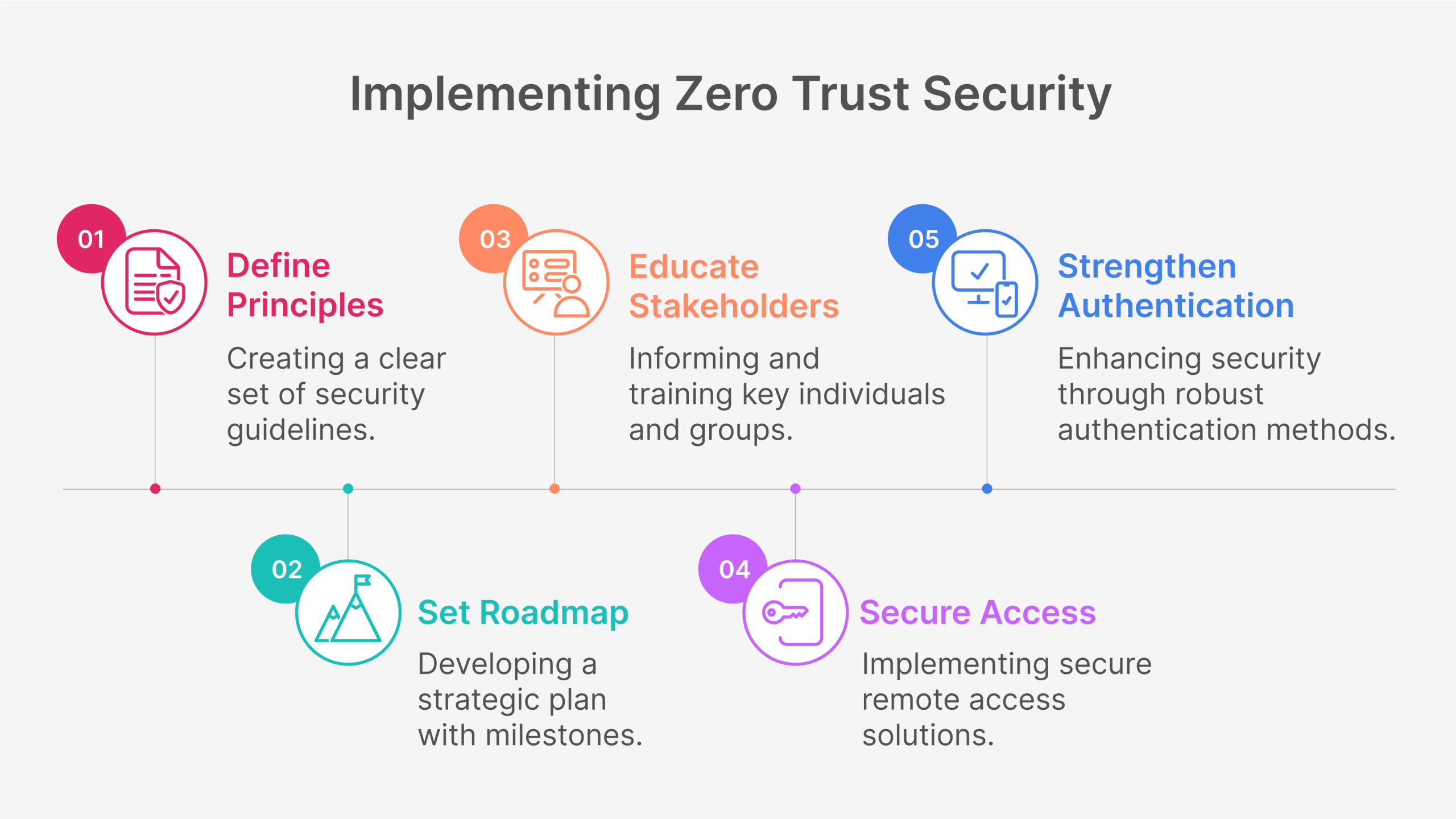
Securing executive sponsorship requires structuring the Zero Trust proposal as a strategic business initiative rather than an IT upgrade. This requires orchestrating a coalition of key stakeholders across the enterprise:
- The Chief Financial Officer (CFO): Receptive to arguments centered on TCO (Total Cost of Ownership). Zero Trust eliminates the compounding costs of legacy VPN maintenance, reduces insurance premiums by demonstrating advanced risk mitigation, and prevents catastrophic breach-related losses that can devastate market capitalization.
- The General Counsel & Chief Compliance Officer (CCO): Highly motivated by regulatory compliance. Zero Trust provides granular access controls and immutable audit trails that satisfy evolving SEC, FTC, and international data privacy mandates, drastically reducing litigation exposure.
- Business Unit Leaders: Concerned with operational velocity. Stakeholders outside IT fear that security controls will stifle productivity. The winning pitch demonstrates that modern Zero Trust solutions enhance user experience through frictionless, context-aware single sign-on (SSO) while safeguarding intellectual property.
Furthermore, technical justification must be woven directly into financial modeling. By deploying micro-segmentation and continuous identity verification, enterprises protect high-value corporate assets—such as proprietary algorithms, customer databases, and financial ledgers—from lateral escalation should a single endpoint be compromised. This containment capability directly safeguards enterprise valuation multiples from the sudden, precipitous drops associated with major public data breaches.
Verified Data and Metrics Breakdown
To evaluate the financial impact and operational shift required for Zero Trust adoption, enterprise leaders examine the following comparative metrics:
| Metric / Dimension | Legacy Perimeter Security | Zero Trust Architecture | Business Impact |
|---|---|---|---|
| Access Validation | Implicit trust post-perimeter authentication | Continuous, real-time identity & device verification | Drastic reduction in insider threat and credential abuse vectors. |
| Breach Containment Time | Days or weeks (unrestricted lateral movement) | Minutes (micro-segmentation halts expansion) | Limits data exfiltration, minimizing regulatory fines and PR damage. |
| Cyber Insurance Premiums | Subject to steep hikes or coverage denial | Eligible for preferred underwriting rates | Direct operational OPEX savings, improving bottom-line profitability. |
| Compliance Audit Overhead | High friction, manual log collection | Automated, policy-driven verification trails | Accelerates audit cycles and minimizes legal compliance exposure. |
Overcoming Technical and Cultural Friction
Even with executive sponsorship secured, implementation often stumbles over cultural resistance and infrastructural complexity. Employees accustomed to legacy access models may view strict multi-factor authentication (MFA) and device posture checks as bureaucratic bottlenecks. Similarly, IT administrators managing legacy monolithic applications may push back against the architectural overhaul required for micro-segmentation.
Industry best practice dictates a phased, asset-centric deployment strategy rather than a disruptive "rip-and-replace" maneuver. Security teams should begin by identifying "Crown Jewel" data assets—the intellectual property or financial systems most critical to corporate survival. By applying Zero Trust policies to these high-value domains first, organizations can demonstrate quick wins, refine their deployment playbook, and build internal momentum.
Change management must run parallel to technical deployment. Transparent communication emphasizing *why* security protocols are evolving transforms employees from passive resistors into active participants in the defense posture. When staff understand that Zero Trust protects corporate solvency and job security against sophisticated ransomware syndicates, cultural friction dissipates.
Industry & Market Implications: Who Wins and Who Loses
The macroeconomic shift toward Zero Trust is reshaping the enterprise software and cybersecurity vendor landscapes. Enterprises that successfully implement Zero Trust architecture position themselves as secure, reliable partners in global supply chains, gaining a distinct competitive advantage in enterprise sales cycles where vendor risk assessments are increasingly rigorous.
Conversely, organizations that cling to legacy perimeter defenses face compounding vulnerabilities. Insurance underwriters are increasingly denying coverage or pricing out firms lacking verifiable identity-first controls. In capital markets, institutional investors and private equity firms now factor cybersecurity maturity directly into due diligence evaluations during M&A transactions. A lax security posture can single-handedly depress acquisition valuations or derail deals entirely.
Frequently Asked Questions (People Also Ask)
How do I convince a CFO who views Zero Trust purely as an IT cost center?
Frame Zero Trust as a balance-sheet protector and operational risk mitigator rather than an expense. Present data showing how breach prevention avoids catastrophic valuation losses, lowers cyber insurance premiums, and reduces regulatory penalty exposure. Tie every technological requirement directly to financial protection and business continuity.
What is the most effective way to start a Zero Trust implementation without disrupting business operations?
Adopt an asset-centric, phased approach rather than a sweeping overhaul. Identify and secure your organization’s "Crown Jewels"—such as sensitive financial records, proprietary source code, or customer databases—first. Implement micro-segmentation and continuous verification around these critical nodes before expanding policies outward to secondary systems.
How does Zero Trust impact regulatory compliance and audit processes?
Zero Trust architectures inherently generate comprehensive, immutable audit trails through continuous identity verification and least-privilege access logging. This automated tracking significantly reduces the manual friction, labor hours, and legal exposure associated with proving compliance to frameworks like GDPR, HIPAA, and SEC cybersecurity guidelines.
How long does a typical enterprise Zero Trust transformation take?
Because Zero Trust is a strategic architectural journey rather than a single software installation, full implementation typically spans 18 to 36 months depending on enterprise scale, legacy tech debt, and multi-cloud complexity. However, targeted risk reduction and initial asset isolation can be achieved within the first 90 days of deployment.
Future Outlook: The Road Ahead for Enterprise Security
As artificial intelligence accelerates the sophistication of automated cyber attacks, static perimeter defenses are obsolete. Zero Trust is no longer a forward-thinking optional strategy; it is the baseline architectural standard for modern digital enterprises. Looking forward, the integration of AI-driven behavioral analytics with Zero Trust policy engines will enable instantaneous, adaptive access decisions that balance unyielding security with frictionless user experience.
For executive stakeholders and security leaders alike, the mandate is clear. Winning support for Zero Trust is not merely about securing network packets—it is about fortifying the enterprise's financial integrity, protecting shareholder value, and ensuring enduring resilience in an increasingly volatile digital economy.